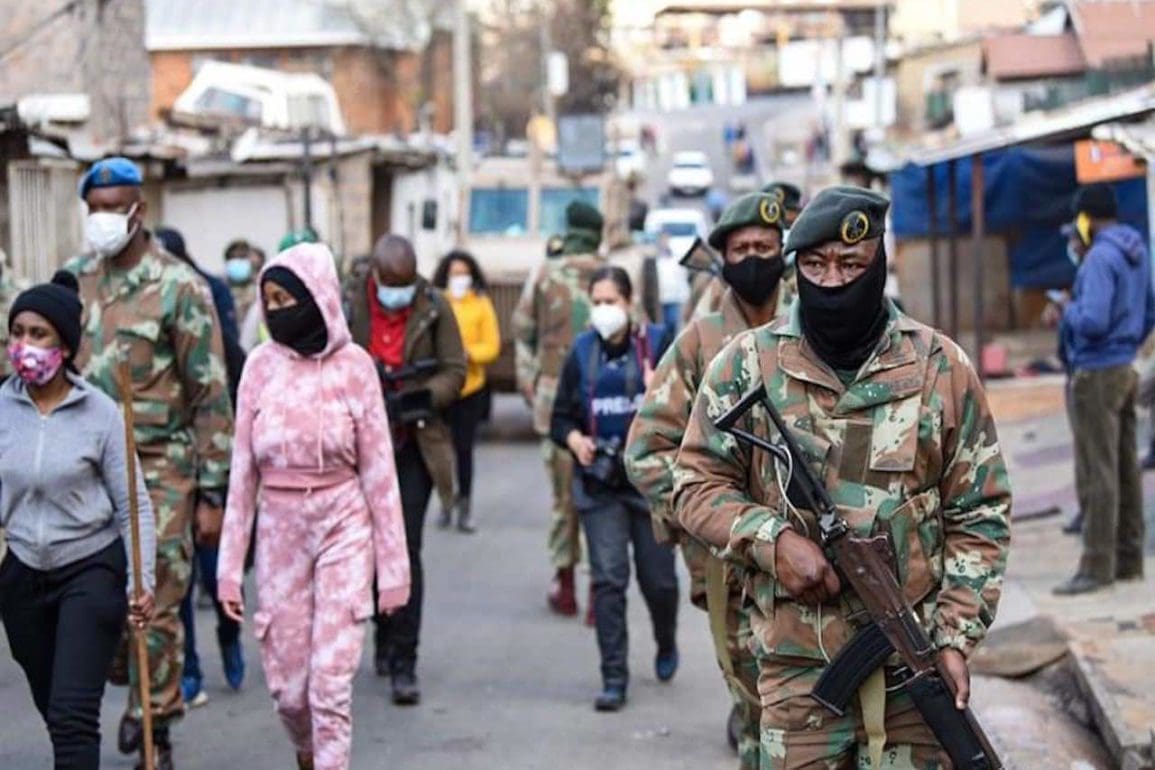
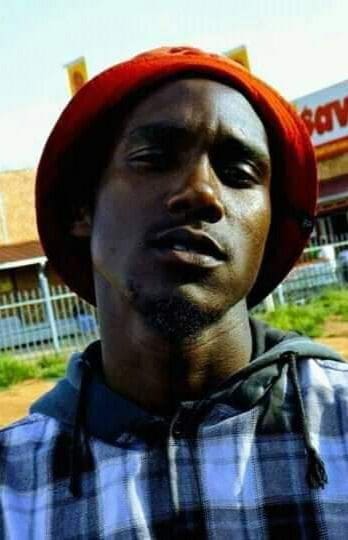
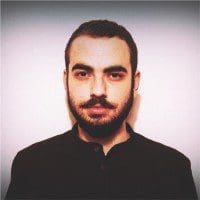
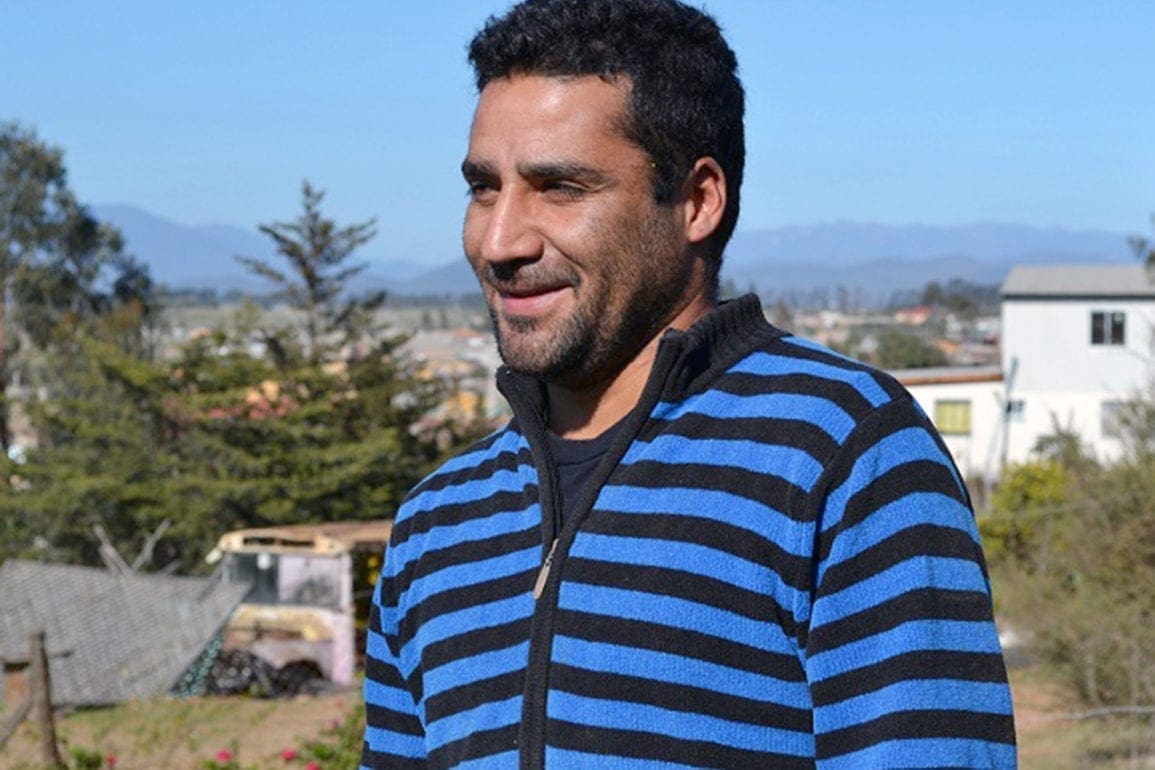
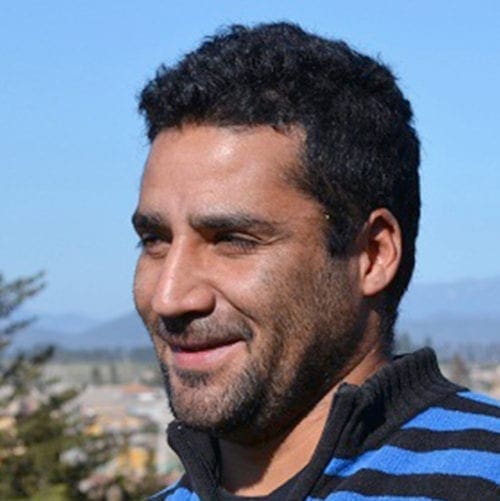
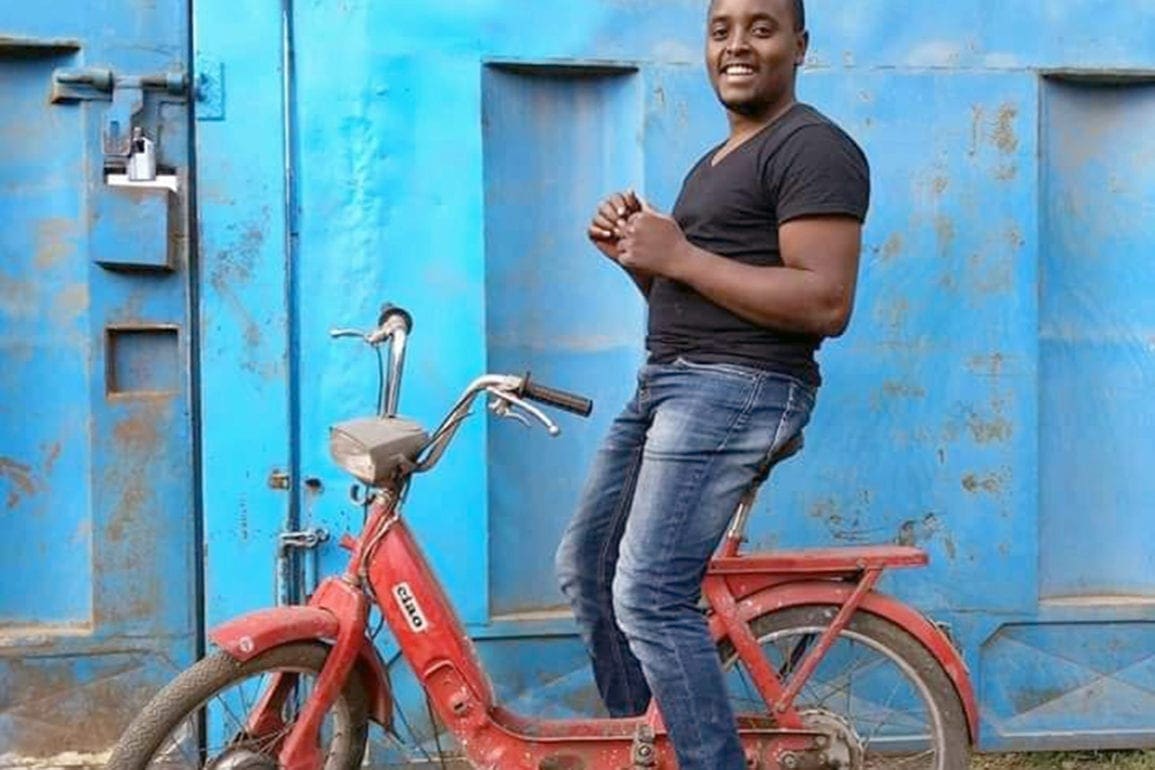
Mpho Mahlangu, 31, found his brother shot in the street in July during the 2021 pro-Zuma protests in Johannesburg, South Africa. His brother Molekhule Mahlangu was participating in the riots with a friend when he was shot in the head. Molekhule died of his wounds.
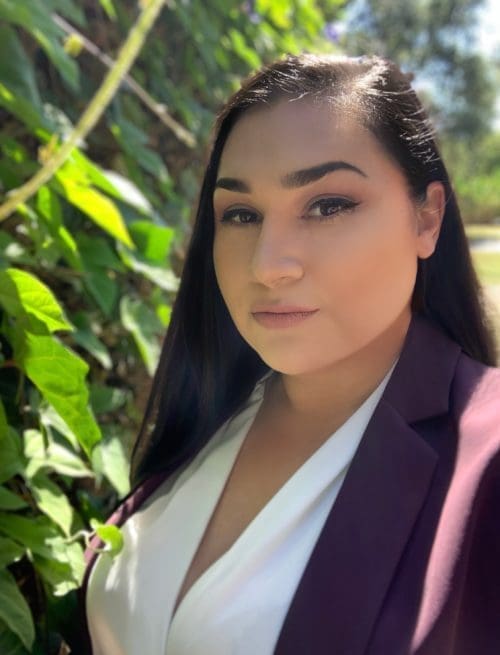
Arjun Patel is a business owner and his store was looted in Durban, South Africa during the riots. He lost all of his merchandise and rioters burned the shop to the ground.
Background
In July, South African former President Jacob Zuma was sentenced to 15 months in jail for contempt of court which triggered a slew of pro-Jacob Zuma protests, starting in his home province of KwaZulu-Natal and later spreading to Johannesburg, South Africa.
More than 200 people died during the unrest. South African president Cyril Ramaphosa authorized the deployment of 3,000 troops to help the police quell disorder in the country. Over 2,500 people have been arrested and over 200 shopping malls were looted.
Many casualties at Jabulani Mall emerged during stampedes as scores of people looted for liquor, food, clothing, and electrical equipment.
Other deaths resulted from explosions when people tried to break into ATMs. Security guards and the police officers also shot people as they tried to stop the violent riots.
Reports indicate 180 people died in the eastern KwaZulu-Natal province and 32 in the province of Gauteng which encompasses Johannesburg.
Mpho Mahlangu and Arjun Patel each tell their stories from the pro-Zuma protests in Johannesburg and Druban, South Africa.
JOHANNESBURG, South Africa — On July 12, 2021, thousands of people pillaged the Jabulani Mall in Johannesburg to protest the imprisonment of former South Africa President Jacob Zuma.
My brother Molekhule Mahlangu, 27, joined the mob, but I refused to go.
When I heard something happened to my brother, I rushed to the mall and I found him lying down, dead, with blood still gushing from his head.
A nightmare at the Jabulani Mall
On the day of the riots, my brother urged me to join him, but I was not feeling well. He went instead with his friend Ngcobo.
I was perplexed when Ngcobo came back later in the afternoon, alone, empty-handed and crying, with bloodstains on his white t-shirt.
He ran straight to me and hugged me tightly as he cried and said he was sorry. I asked him what he was sorry about and where my brother was, but he did not reply.
Vexed, I continued to question him. I asked what happened and whose blood was on his shirt. That is when Ngcobo told me my brother was shot to death during the rioting at Jabulani Mall.
I went into shock; I did not believe a word he was saying.
Ngcobo couldn’t explain who shot my brother, so without telling anyone at home, I went straight to where he was.
In five minutes, Ngcobo and I arrived at Jabulani Mall. My young brother was lying on the ground and blood was still gushing out of his head. That is how my brother left me. It renders me speechless.
My brother had three children and a wife at home. I worry about their future without a father.
Arjun Patel loses his livelihood in the riots
DURBAN, South Africa — It was a free for all. The police gave up and people were looting one of my biggest shops in Durban.
When the pro-Zuma riots started in South Africa, there were sporadic reports of shops being looted, as police failed to control the situation.
I knew it was a matter of time before I would bear the brunt of the unrest. There was nothing I could do about it.
There were so many looters, and they were so violent, it was a waste of time to try and stop them from vandalizing and stealing.
Still, it was a surreal moment, watching people feast on what I had worked so hard for, and for so many years.
When the stampede of people entered my shop, I suffered head and leg injuries. The police officers tried to fire rubber bullets and tear gas at the crowd but their efforts were in vain.
The saddest part is that, after looting my shop, the rioters burnt it to ashes and nothing was left.
I had groceries and stock worth more than 5,000,000 rupees ($67,161 USD). All my workers are now jobless, and I will not be able to restart that business anytime soon.
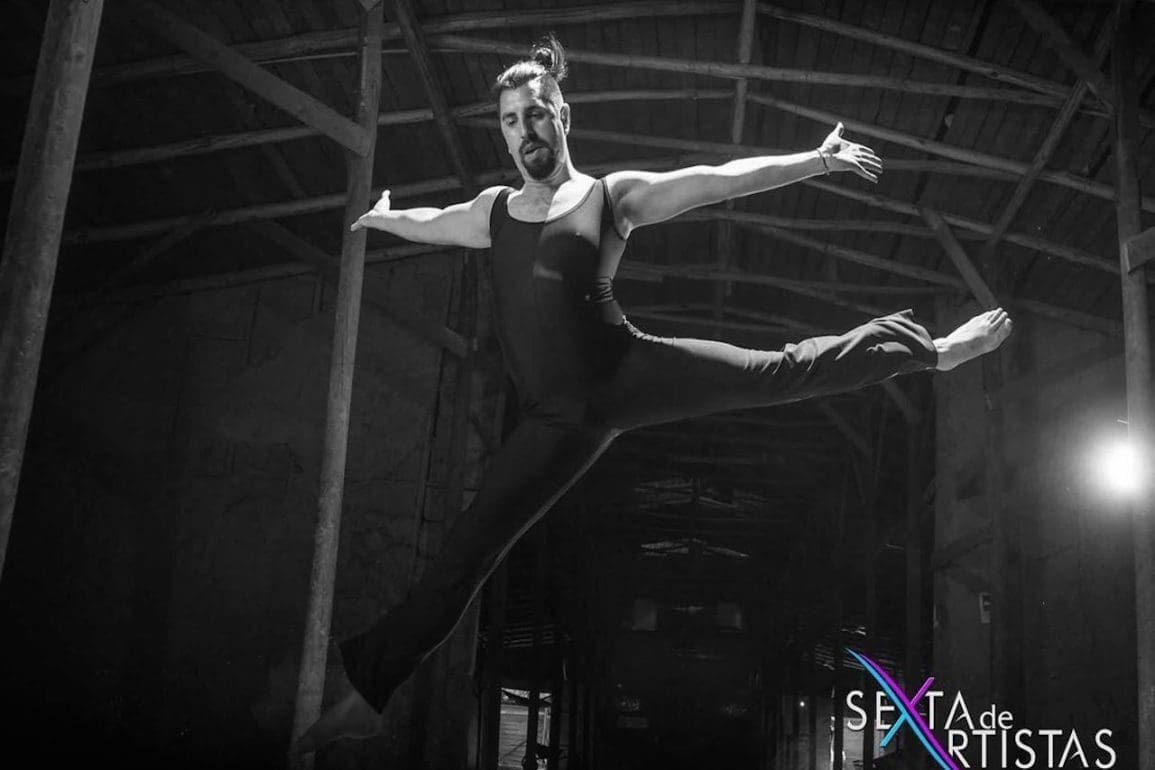
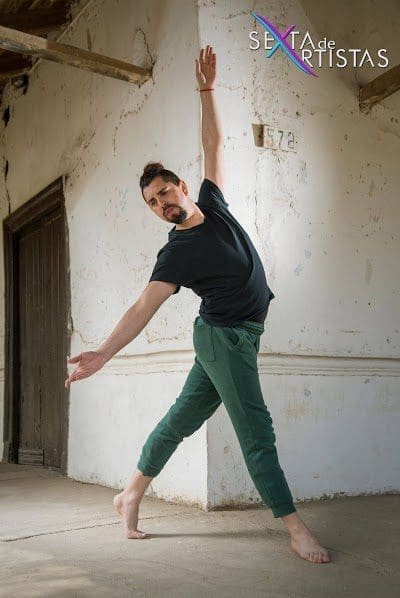
Dagoberto Antonio Huerta Aruestra is a professional deaf dancer, artistic director, choreographer, teacher, member of the International Dance Council at UNESCO, and a Master’s degree student in Journalism.
Background
In Chile, there are 2,832,818 people with disabilities. Of these, 27.3 percent have some degree of hearing loss (712,005), and 179,268 people are totally deaf.
Dagoberto Huerta led the First International Encounter of Deaf Art, a funded project by the National Disability Service (SENADIS).
The objective of this meeting is to make visible and promote inclusive culture through art. It promotes the professional development of deaf people around various artistic disciplines, giving them a space for exhibition, exchange, learning, and dialogue to be able to build, strengthen, and expand national and international cooperation networks that contribute to the joint development of their community.
MARCHIGÜE, Chile — At the age of 18, I began to progressively lose my hearing. By 25, I was completely deaf.
Losing my hearing stripped me of my greatest passion – listening to the music that made me fly – but it did not stop me.
My passion for dance was stronger. I discovered a method to feel the vibration of the songs, and thereby became the first professional deaf dancer in Chile.
Deafness pushed me to reinvent myself
I remember the day when I realized I heard absolutely nothing.
That day, I told myself, “I’ll keep dancing. I’ll keep doing what I love. I’ll reinvent myself.”
Every morning, I woke up motivated to learn a new rhythm. In my quest to keep dancing, I found that by turning the music up loud and touching the speaker with my hands, I could feel the vibrations of the songs through the beat of the bass.
I began experimenting with various materials. For example, if I laid down on a wooden floor, I felt the vibrations throughout my entire body. This discovery opened up a world of opportunity for me because I managed to capture musical timing by detecting the vibrations, and with them, I could create choreography.
It is true, I can’t listen to music anymore, but I have learned to watch it. Now, silence is my ally. Auditory memory and my methodology will allow me to continue developing dance.
I am proud to bring a song that I love to the choreography; to create what I imagine. Several people have told me I can’t do this because something terrible happened to me. I disagree.
A whole new world of opportunity
I owe a lot to dance. It helped me express myself, face my fears, gave me the courage to fulfill my dreams despite adversity, and taught me never to give up. Without a doubt, dance has been my therapy.
After becoming a professional dancer, I won a scholarship to study in Argentina with a specialization in musical theater. Later, I returned to my hometown to open my own academy of dance in Marchigüe.
I wanted to contribute to the culture because there were no dance schools in Marchigüe when I was a child. I wanted to give new generations the opportunity I did not have.
I have taken my methodology to meetings for deaf artists and I am a member of the UNESCO International Dance Council. I have participated in several plays and documentaries. Deafness has not prevented me from achieving any of my goals.
Sometimes, having everything is not necessary. With less, you can do so much more. Life wanted me to be a dancer. It wanted me to show the world there is another way to dance and that the traditional way is not the only way.
If life or fate has challenged you as a deaf person, there is a reason. It might be to inspire other people. I prefer to be a deaf dancer over a hearing one because before, when I listened to music, I moved mechanically. Since I learned to listen to music in a new way, I dance with my soul and perform intensely and naturally.
If I had to reinvent myself to dance in the future, I would do it because dance is what I am most passionate about. This discipline has given me the best moments of my life.
XINJIANG, China – On March 26, 2017, at 10 a.m. I was at my parents’ house with my brothers and sisters when two police cars pulled up outside.
First-person source
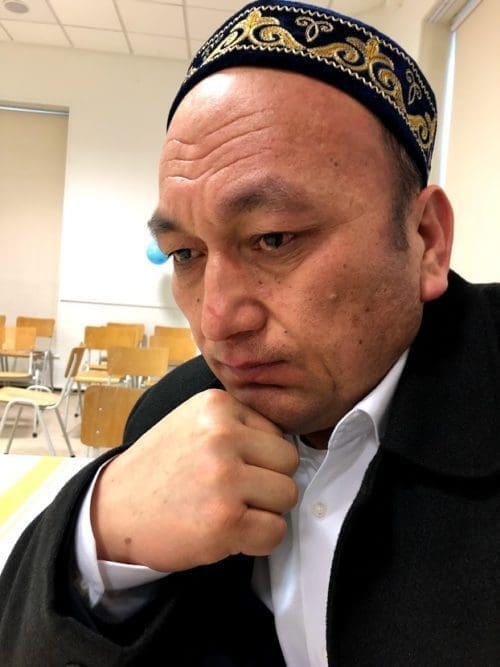
Omar Bekali, 45, is considered the first person to speak publicly about being detained in China’s concentration camps for Uyghurs. He was held and tortured by Chinese authorities from March 26, 2017 to November 24, 2017.
Following his release to Kazakhstan, Omar Bekali gave a deposition to the International Criminal Court in the Hague, Netherlands in March 2019. A number of other Uyghur survivors, mostly Kazakh nationals, have come forward to give testimonies that corroborate Omar’s story.
The Chinese government doesn’t deny the existence of these camps but disputes the camps’ purpose and the conditions described by survivors.
Omar and his family are currently applying for refugee status in the Netherlands and learning Dutch. He believes the best way to combat the genocide against Uyghurs is to boycott Chinese products and urge governments to sanction the people involved.
Background
More than 1 million Uyghurs are estimated to be in detention camps in Xinjiang, China, according to Chinese government documents that were leaked to the New York Times and published on November 16, 2019.
Other accounts from inside the camps say women were raped, experienced forced sterilization, and many were put in work camps to make products sold around the world. One coalition of human rights advocates says one in five cotton products are made under forced labor conditions in Xinjian, China’s Uyghur concentration camps.
Omar Bekali said he met 200 to 300 other detainees while in prison. In the hopes they are found, here are some of their names and what Omar remembers about them:
Azizjan, 26-28 years old, went to a Han Chinese school and arrested for visiting Egypt. His condition is unknown.
Ametjan, a carpenter, 23 to 24-years-old, very thin. He worked decorating houses and was arrested for watching a video. His condition is unknown.
A man who is the son of Abliz Yunus, arrested for running a Halal restaurant. His condition is unknown.
Tahir, a literature teacher at No. 2 High School. He was arrested for inciting ethnic hatred and secession. His condition is unknown.
Atawullah worked at an oil company as a douser and a lawyer. He was arrested for being “double-faced”.
Akan, a pensioner, from Tokkuztara County, Ghulja (Yili) prefecture, Xinjiang. He was arrested for sending the equivalent of $3,000 USD to his daughter in Turkey. He was detained with his son, Nokash.
Ablajan Awut ran a restaurant next to No. 2 High School. Mahsat, arrested for visiting Kazakhstan.
Five armed police officers emerged from the cars, came into our home, and arrested me. They never presented me with a warrant.
Like many other prisoners I met, I was accused of things like propagating terrorism and smuggling people out of China. I was targeted and discriminated against for being a Uyghur ethnic minority.
This was only the beginning of the torture I would endure.
Discrimination and genocide plague the Uyghur people
I was visiting Xinjiang five to six times per year since I had moved to Almaty, Kazakhstan in 2006. Sometimes I went for work and other times to visit my family.
Armed vehicles patrolled the streets. Body scanning devices flashed over me at the entrance to shopping malls, restaurants, and schools.
The streets were laden with surveillance cameras and police checkpoints stood guard between each city, town, and village.
Most strikingly was how the people there changed – their faces full of fear as they exited their homes under the watchful eye of government cameras.
Uyghurs stopped visiting each other, stopped being social, and our normally communicative culture evaporated.
Facing racial discrimination for being Uyghur and the Islamaphobia that came with it pushed me out of my home.
At first, I worked in the textile business in Kazakhstan before getting a job at a tourism company called Tumar-Trans, where I got promoted to the director of the company’s Chinese tourism department.
Crucially, I became a Kazakh citizen.
Dangerous border crossings and arrests cause fear and confusion
The border crossing into Xinjiang from Kazakhstan always involved a thorough search of our vehicles and a 30-minute interrogation.
People in Xinjiang started telling me about “schools” the government was building in 2014.
It was a very sensitive topic and Uyghurs were sent there to “study” for two to six months at a time. They were really detention centers. My brother spent two months in one of them.
I didn’t know then that this was the beginning of a genocide.
The last time I went to visit my hometown was on March 26, 2017.
The interrogation from the border guards was especially intense and much longer than usual.
That morning, I was at my parents’ house with my brothers and sisters when two police cars pulled up outside.
Five armed police officers emerged from the cars, came into our home, and arrested me.
They never presented me with a warrant, saying they had one on their computer.
Neighbors peered through their windows and saw me being placed into their car.
I was brought to Dighar Village Police Station where I was made to wait for two hours.
Every chance I got, I’d ask to call my parents, a lawyer, the Kazakh embassy, or my wife.
No one knew where I was and I couldn’t call for help.
Tortured and brutalized in isolation
From the police station I was brought somewhere I didn’t recognize, in completely unfamiliar territory.
The police made me take off my clothes and examined my body, making notes about my condition. That’s when the torture started. They transferred me to the police station, in Kelamayi, Xinjiang.
Every morning at 8:30 a.m. I was put in the Tiger Chair.
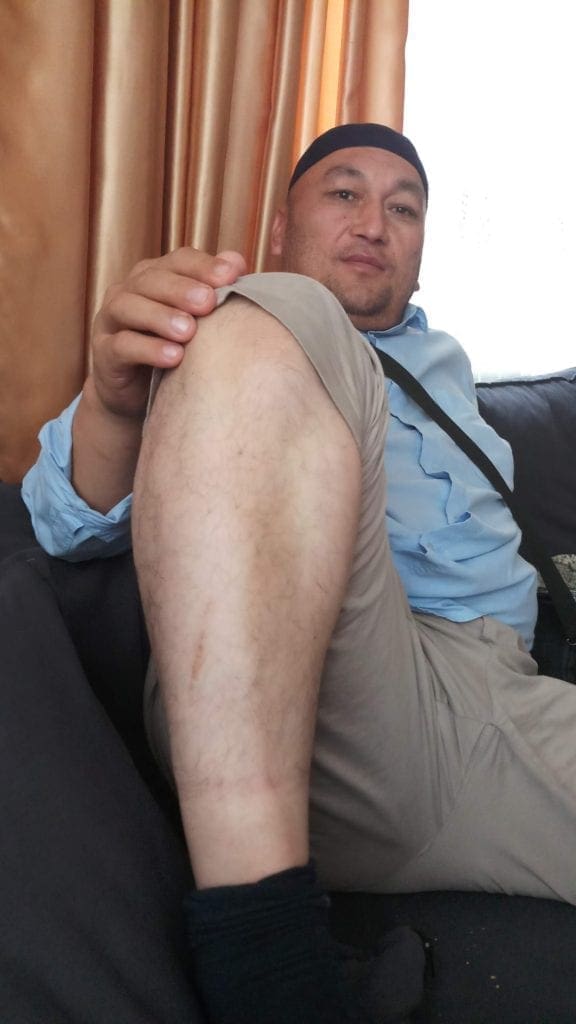
Omar Bekali shows his scars
My hands were strapped onto the arms on the chair and my feet were constrained at the bottom while needles were gradually slid into my fingers.
That would last four to eight hours every day.
From April 3 to April 7, 2017, they would put me in the Tiger Chair to try and extract information from me and compel me to admit to crimes I wasn’t guilty of.
They would say I was organizing terrorist activities, propagating terrorism, or covering up for terrorists.
The police would show me photos of Uyghur and Kazakh people in Kazakhstan and ask me for their information.
I was given a letter accounting for all of my supposed crimes and asked to sign it as a confession.
My job was used against me and the police claimed I was using my tourism career as a way to smuggle people out of China and into neighboring countries.
Needles and nails were inserted into my body every time I told them “no” or “I’m innocent”.
An iron wire was shoved into my penis.
Resisting forced confessions leads to severe abuse
Through it all, I never admitted to anything or signed a single document.
“Where is the evidence,” I would ask, which led to more torture as punishment.
The police realized they needed to ramp up the pressure to get me to say what they wanted me to say.
Rope was tied to the ceiling and around my wrists so tight that my feet couldn’t touch the ground. The rope ripped through the skin on my wrists while my body weight pulled me down.
Other days I was put in a “flying plane” position, where both my wrists and feet were tied to the ceiling, pulling my arms and legs out of their sockets while I was left dangling.
The guards would laugh as my body pulled itself apart.
Kazakhstan diplomat arrives but torture continues
It wasn’t until July of 2017, four months after I was arrested, when I met with Kazakhstan’s Ambassador to China.
He wasn’t allowed to ask me any questions about my treatment by the Chinese authorities and I wasn’t allowed to speak about them.
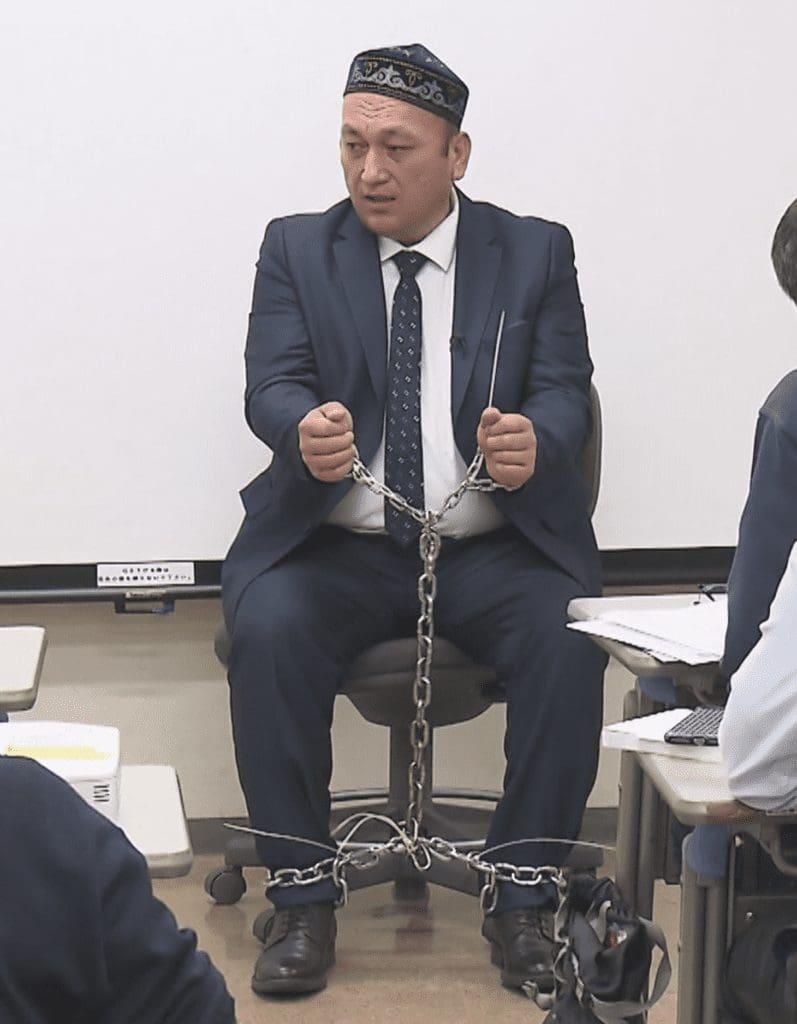
Omar Bekali recreates the conditions of his imprisonment at the International Criminal Court in The Hague, Netherlands.
Incredibly, that was only the beginning of my detention. Any strategy the Kazakh representative had to get me out was not working.
The only time I saw the world outside of the concentration camp was when I first arrived and when I left. Even then, I had a black hood over my head and my hands and feet were handcuffed together.
I briefly saw armed police outside who are the only people let in and out of the facility. Usually, prisoners aren’t permitted to leave while they’re alive.
When I first got there they substituted my handcuffs for shackles and I resisted. It took me seeing armed guards with rubber rods approaching me to trigger the haunting memories of my earlier torture before I agreed to be shackled. I couldn’t stand to have my hands and feet broken again.
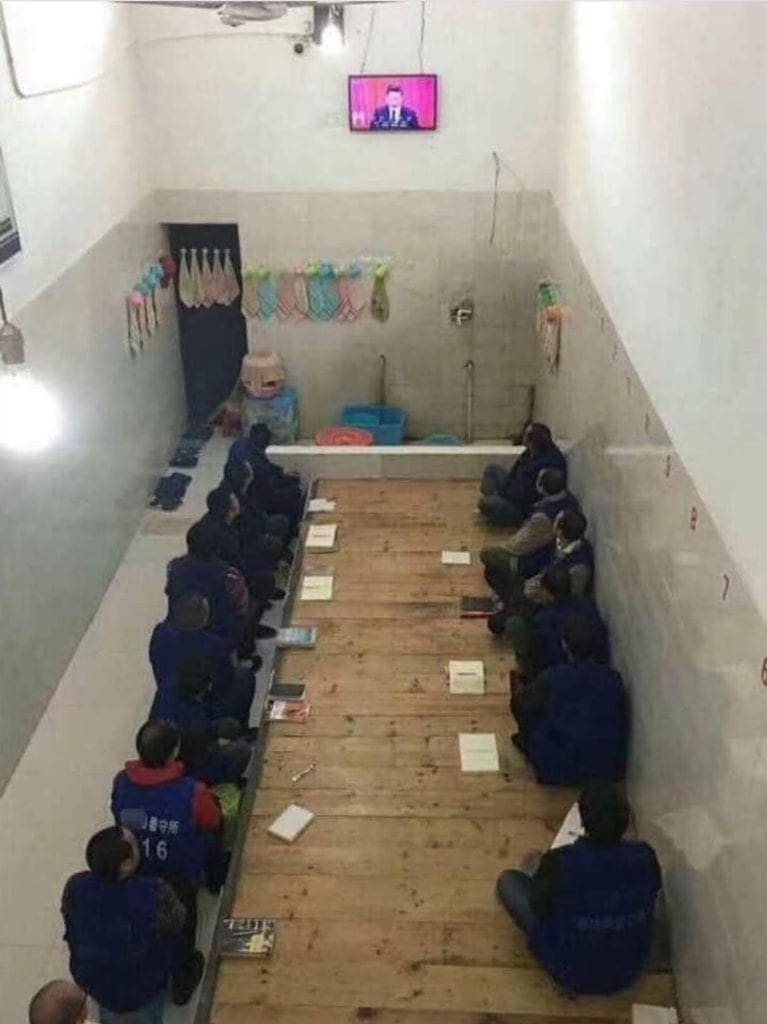
A recreation of what the Uyghur detention rooms looked like by the direction of the survivors.
At the new detention center, prisoners abound
They brought me to a room where they unlatched one foot shackle and attached it to a fixed iron tube on the ground. I had seven other cellmates and we were all kept shackled for three months and 10 days.
All you have is time in prison. I spent my time counting.
After the first few months, I was transferred to a room with 35 to 40 other detainees. The room was three meters wide, six meters long, and four meters high.
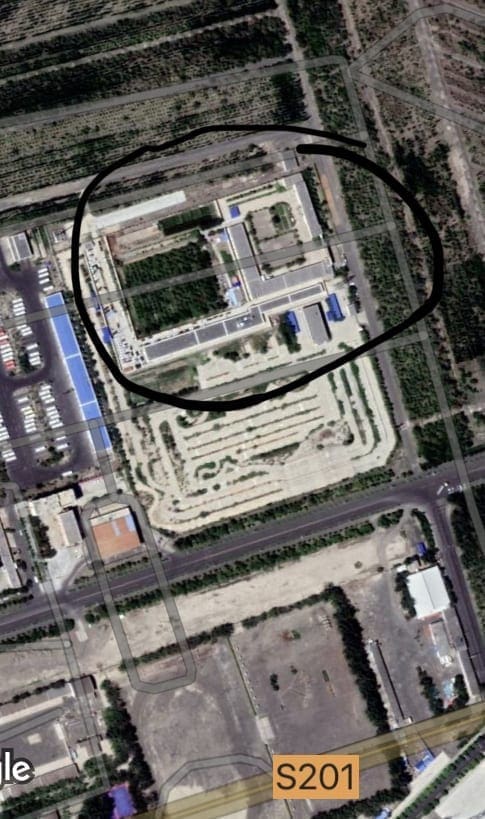
I counted three corridors in the compound with 34 rooms in each corridor. My estimation is there were 4,000 prisoners in that one camp. There was one window in the room and it was intentionally small, so no one could escape.
Every week, eight to 10 prisoners, aged 18 to 40-years-old, were removed from the room and replaced by new detainees.
Concentration camps used to force compliance and indoctrination
Satelite image of the concentration camp where Omar Bekali was held
Many people believe the purpose of these concentration camps is to indoctrinate Uyghurs into obeying the Chinese government. Some say they use sophisticated mechanisms to brainwash us.
I was told by the guards I had been poisoned by extreme ideologies during my life outside of China and needed to attend a political studies course.
We were denied food for not agreeing to sing anthems that praised the Chinese government, otherwise known as Red Songs.
Denouncing our Uyghur identity and Muslim religion was a key demand of our captors. My personal belief is they never actually planned on indoctrinating us. The plan was always to exterminate the Uyghur population and harvest our organs.
I was made to read a list of 60 types of common crimes, like associating with my ethnic or religious identity, praying to Allah, having a beard, attending a Muslim marriage, and communicating with people outside China.
Systematic punishment employed
There were five types of punishment we endured whenever we didn’t robotically follow the guards’ orders.
First, they’d make me face a wall for 24 hours without food or drink while they beat me with rubber rods.
Second, we were put in the Tiger Chair where needles were shoved into our fingers and feet.
Third, we’d be left in solitary confinement with no light for 24 hours.
Fourth, they’d put us into scorching hot rooms in the summer or freezing cold rooms in the winter.
Finally, a punishment I thankfully never experienced was called water prison. I heard of many detainees who were put in the water prison, but I don’t know what it is.
All of the prisoners stood accused of the exact same ludicrous crimes like being part of a terrorist organization or jeopardizing national security. We were also accused of attending Friday prayers, attending the Qurban Islamic festival, or abiding by the Muslim tradition of abstaining from alcohol and cigarettes.
Discharge papers given to Omar Bekali by Chinese authorities.
Arrested for being Uyghur
Being a Uyghur or a Kazakh was enough to land you in a concentration camp.
They forced us all to eat pork on Fridays, the holy day for Muslims.
Despite their attempts at humiliating me, it was my religious beliefs and my conviction of my innocence that kept me going in there.
I refused to speak to them in Mandarin, learn their so-called laws, and I kept asking for a lawyer, which landed me in a lot of trouble.
Whenever they hauled me off to one of their punishments, I would tell them to release me or shoot me in the head.
In the end, they answered my ultimatum.
Released from prison; over a million remain detained
To my great surprise on November 24, 2017, I was informed of my release and expulsion to Kazakhstan. I had been detained for eight months.
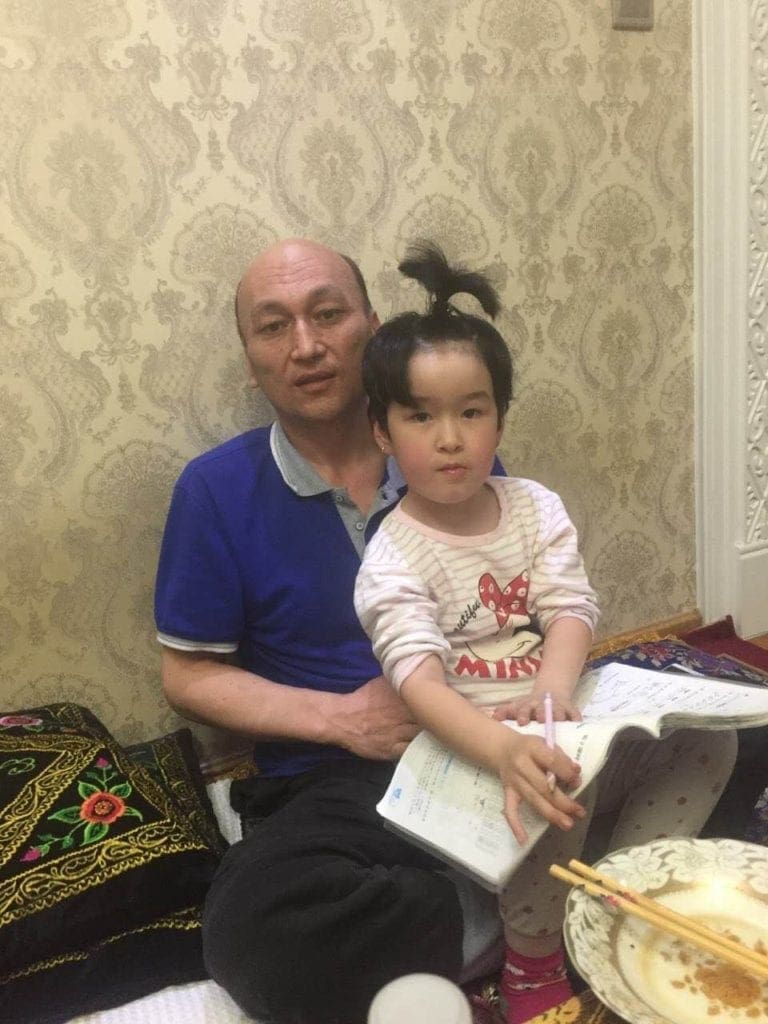
Omar Bekali with his daughter one day after his release.
Two police officers, one of them named Pehirdin, told me I was innocent and threatened me to keep my mouth shut. If I didn’t, they said, my family would suffer.
A pregnant policewoman named Wang Xiaomei came to see me the next day and gave me a visa to Kazakhstan.
I would later learn my wife sent a number of letters to the UN Human Rights Commission and the Kazakhstan Foreign Minister attesting to my innocence.
The considerable press coverage of my illegal detainment was a major factor in my release.
Upon my release, I immediately called my children and parents to tell them I was alive.
You might think that all of my friends and the people I knew would be overjoyed to see me. Truthfully, many Uyghurs in Xinjiang were uncomfortable associating with me out of fear of the Chinese state surveillance.
I returned to Kazakhstan and kissed the soil out of joy for my unbelievable freedom.
Now my life’s meaning is entwined with the over one million Uyghurs in concentration camps. I want to see them obtain their freedom.
Can Eren, 27, lives in Ankara, Istanbul, and is a psychological counselor for LGBTQ+ and transgender youth at the Pembe Hayat LGBT+ Solidarity Association.
Eren has been attending Pride Parades in Turkey since the 2013 Gezi Park protest, which is still the biggest Pride ever held in Turkey or Eastern Europe, attracting more than 100,000 demonstrators.
Can Eren identifies as non-binary and gay.
Background
Istanbul is the only city in Turkey that doesn’t have an explicit ban on Pride Parades but has found one way or another to break them up by force since 2013.
This year, the parade wasn’t given a permit because of COVID-19.
Police arrested 25 people including AFP photographer Bulent Kilic, who were all released at midnight the same day without facing charges.
There are no laws explicitly targeting LGBTQ people in Turkey, but the loosely defined “Offence against public morality” law is often used to target the queer community.
Turkey does not recognize same-sex marriage, civil unions nor does it have laws protecting against workplace discrimination based on sexual orientation.
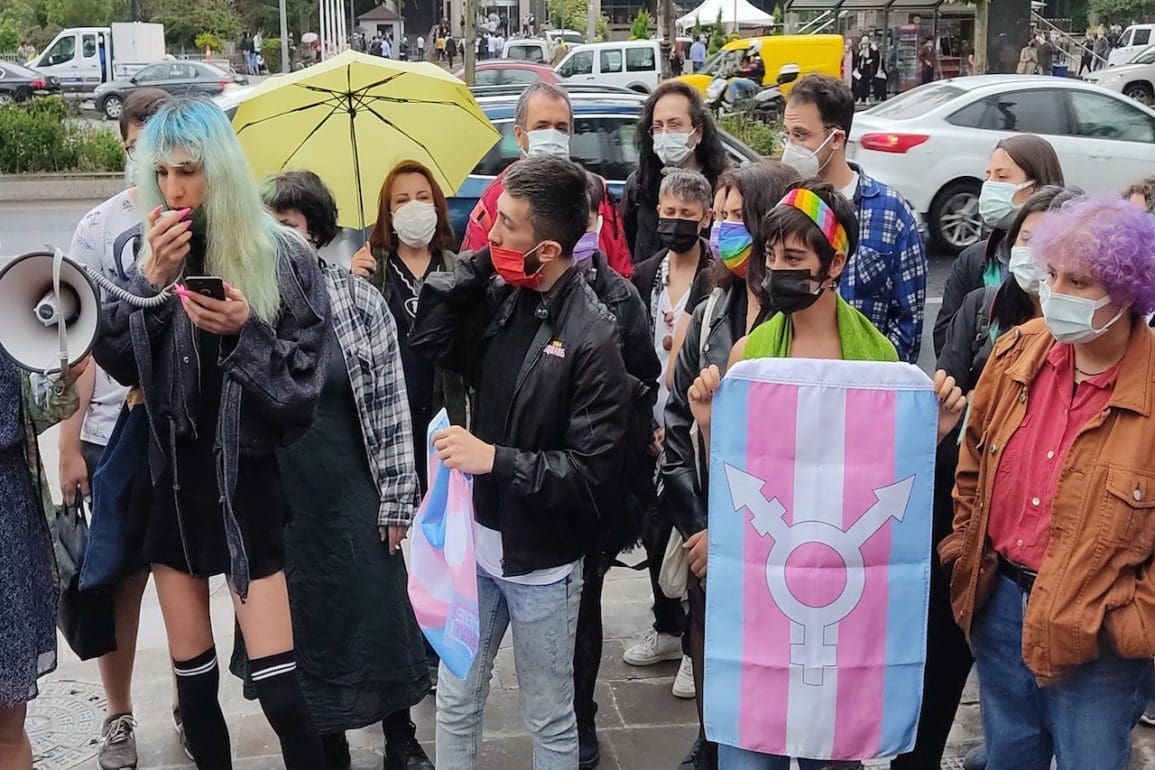
ISTANBUL, Turkey — When you’ve been to as many Pride Parades in Turkey as I have, you come to expect police violence.
But even I was surprised when I arrived at Taksim Square on June 26, 2021, at 3 p.m. to see police surrounding protesters two hours before the parade was scheduled to begin.
No one was allowed into the square.
I could see from outside of the police perimeter three protesters being beaten.
Cops whipped their bodies with batons as they tried to defend themselves.
I pulled out my phone and started recording.
A transgender woman cried out in agony as she faced the full force of the officers.
Police put their hands up and blocked the view of my video.
Tear gas canisters were fired into the crowd and seeped into the surroundings where I was stationed.
My gas mask kept me from coughing and the water I brought for my fellow protesters’ eyes came in handy.
We faced more than one enemy that day
Anti-LGBTQ+ protesters, whom I call fascists, waited for us in the nearby religious neighborhood of Beyoğlu.
They carried clubs and chanted obscenities.
Pride Parade protesters in Taksim Square were getting pushed toward Tophane in a purposeful attempt by police to put us in danger.
In Turkey, we say that everywhere we walk, on any given day, is our own individual Pride Parade and nothing can stop that.
On the scheduled day of the parade, however, being openly part of the LBGTQ+ community means you have a target on your back.
My colleagues, who arrived at the Pride Parade with me, moved away from Taksim Square onto an adjacent street.
That’s when we saw something no queer person ever wants to see
A swarm of police started running towards us, batons at the ready. We ducked into a cafe.
The owners hid us as customers in our time of greatest need.
Queer-friendly businesses are a savior at times like these and some get busted for serving “disreputable” members of society.
Thankfully, we were spared a confrontation with the cops that day.
My last run-in with the authorities had been earlier that very month.
I was there holding a Trans Pride Flag while the team prepared the script and filming equipment.
A police officer grabbed my flag and tore it down.
When I tried to film the interaction with my phone, they beat my hands with batons.
The team and I crossed the street and attempted once again to hold our press conference.
We were followed by the police and their batons once again swung for our hands. We were simply trying to tell the truth about justice for transgender women in our country.
Following the dispersal of the 2021 Istanbul Pride Parade, cities and towns around the country emerged with their own Pride events, defying local bans.
Even conservative small towns saw Pride marches in their streets
Turkey’s welcoming approach to the LGBTQ+ community in the early 2000’s quickly reversed following the 2013 Gezi Park protests.
The political uprising that sought to oust President Recep Tayyip Erdoğan’s political party from power occurred during Pride month and included a number of queer activists.
Suppressing queer expression has become part of the government’s effort to concentrate control.
I’m optimistic, however, that people’s opinions are changing and the new generation will usher in the end to this government by the next federal election.
One sign things are changing, for example, is that the media has stopped calling us “perverts” and started using the acronym “LGBTI”.
Orato World Media interviewed five survivors of residential treatment centers operating in the troubled teen industry between 2001 and 2019. The survivors’ ages when they were sent to these centers range from 12 to 17-years-old.
Chelsea Filer (pictured above) was held at Casa by the Sea for two years against her will. Her mom paid $3,000 per month for her to be held there. The other survivors have been granted anonymity to protect their safety.
Aaron was held at Teen Challenge Adventure Ranch. His parents paid $20,000 for him to stay there for nine months in 2017.
Allan was held at Elevations RTC from March 2018 to May 2019. His adopted parents paid $16,000 per month for him to be held there.
Four of five of the survivors reported being strip-searched upon arrival. Three out of the five survivors reported being held in pressure positions where staff members held their limbs in painful positions for extended periods of time. Two out of the five survivors reported being sexually assaulted by another child at the facility.
Chelsea Filer helped found Breaking Code Silence in 2012 and it has since become a movement of survivors seeking mental health care for children in North America and the end to the troubled teen industry.
Filer went to a residential treatment center for two years run by the largest company of its kind called WWASPS, which formally shut down in 2019 after a series of criminal and civil suits. Filer made police reports and participated in a civil suit against WWASPS following her release.
Filer said she believes WWASPS’ founder still rents property to troubled teen industry companies that follow the WWASPS model. The #BreakingCodeSilence movement estimates 100,000 teens are being held against their will at over 1,000 facilities in the U.S. every year.
Elevations RTC responds
Orato World Media contacted every institution mentioned in this article that is still active:
Only Elevate RTC responded, denying all claims made by the survivor Allan. General counsel for Elevate RTC, Steven Brigance, said his clients took over the company in 2014 and no longer practiced physical restraint or conversion therapy.
Brigance said the company does not prescribe pharmaceutical drugs, and only the family doctors of the patients would do that. Elevate RTC’s lawyer says the company does make mistakes, including with dosage, but not to the degree of what Aaron claimed.
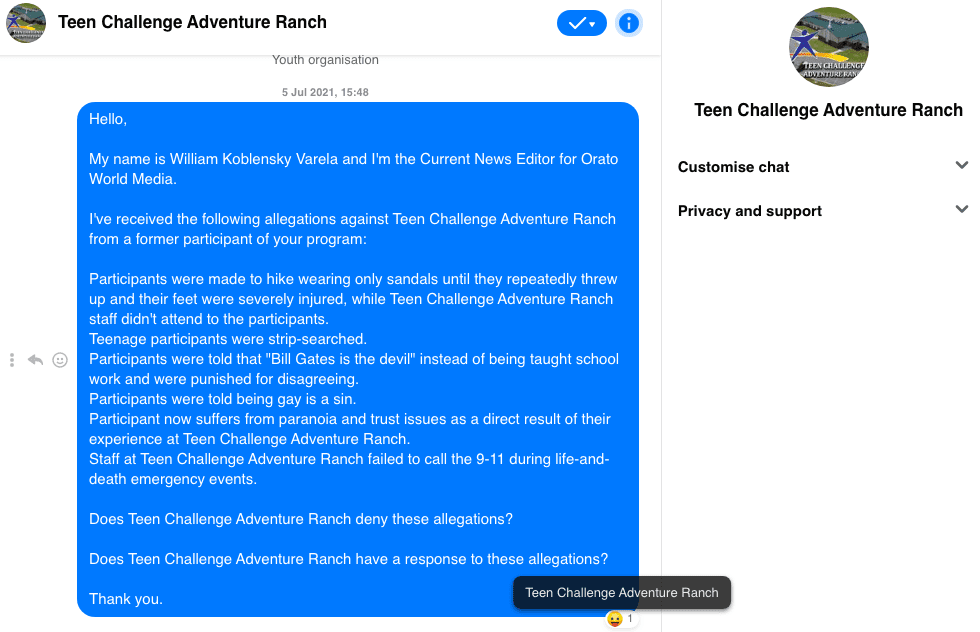
According to Brigance, this type of treatment is “more of an art than a science” and that there would be nowhere else for children with mental health issues to go without organizations like Elevate RTC. Teen Challenge Adventure Ranch reacted to a Facebook message seeking comment using the tongue-out emoji.
Chelsea Filer (real name), institutionalized at 15-years-old
SAN DIEGO, California —If I were to tell you I was locked in a dog cage, burned, and made to eat my own vomit, you’d probably wonder how I got there.
My teen years in San Diego, California were marked by average grades, smoking cigarettes, and the uncomfortable stigma of having ADHD in 2001.
Like a lot of kids, my parents divorced and they began to realize I was becoming my own person independent of their control.
That’s when my life took a violent turn.
The most shocking part of this story is how incredibly commonplace it actually is.
One day I woke up in my bedroom, startled to see two large, male strangers standing over me, waiting for me to wake up.
They told me I needed to come with them or they would physically force me into their vehicle.
“We can do this the easy way or the hard way,” they said.
I asked where we were going, to no avail.
“Can I bring any clothes?” I asked. They said it was out of the question.
Not wanting to cause trouble or test the threat of zip tie restraints from these men, I went along with what they demanded.
We entered their car and left my home, family, and friends for a journey into a trauma factory for the next two years.
The entire car ride south from San Diego, in a state of utter confusion. I cried and hyperventilated.
I wondered how my boyfriend at the time would think I’d disappeared.
Welcome to prison
When we crossed the Mexican border I was told we were going to Casa by the Sea, a residential treatment center for troubled teens in a seaside town called Ensenada.
The building had once been a hotel where vacationers could stroll into the Pacific Ocean from their rooms.
Now, there was a towering 14-foot high wall encapsulating the facility and teenage girls in blue uniforms marching in single file, entering a compound with barred windows.
I was in a prison and I hadn’t done anything wrong.
In the facility, I was ordered to remove all my clothes. Strip-searching teenagers was only the beginning of the abuse I’d become accustomed to from Casa by the Sea staff.
They examined me and gave me a uniform I was to wear at all times.
After feeling violated by the strip search, the staff brought plyers to remove my tongue ring as I hastily tried to take it out myself.
Teens and staff alike threw me to the ground and held me in an excruciating stress position.
The walls were crawling with mushrooms and black mold, the floors were yellow, and the water we all shared and were forced to shower under together was tainted.
Getting sick and suffering without medical attention was common.
Parents pay for abuse
The physical conditions at Casa by the Sea are one example of a troubled teen industry corporation that scammed parents using multi-level marketing strategies and traumatizing residents into submission.
The program I was sent to was among the cheapest, charging my parents $3,000 USD per month.
While I was at Casa by the Sea, there were 200 other participants there. Today, former residents of these programs have come together through the WWASPS Survivors group, which has 5,000 members.
This isn’t where my story ends and for many survivors, it’s still ongoing.
Torture, plain and simple
Casa by the Sea’s approach to troubled youth was called attack therapy.
Casa by the Sea from outside the compound. A large 10-foot wall encapsulated the building and a steep pit awaited anyone who made it over. | WWASPS Survivors
Residents would be pitted against each other in group sessions. We were instructed to gang up on each other, hurling insults, and tearing our fellow prisoners down.
This method served the dual purpose of shocking prisoners into obedience and preventing us from banding together.
Coupling those mind games with sedating prescription drugs made for a controlling cocktail.
People who wouldn’t participate were given demerit points and prevented from advancing in the program. Advancement in the program led to eventual graduation and return home.
They trained us to spy on each other and push others down so we could gain favor with the staff and higher-level prisoners.
My ADHD prevented me from progressing in the program, as I’d constantly get demerit points for fidgeting or having a pen in my hair.
We’d be thrown into isolation in dark rooms for days at a time as punishment.
Accused of being non-compliant
One time, program administrator Jade Robinson was performing one of their signature stress positions on me as punishment.
I had been accused of being non-compliant by other residents, who had alleged I’d been squirming under their supervision.
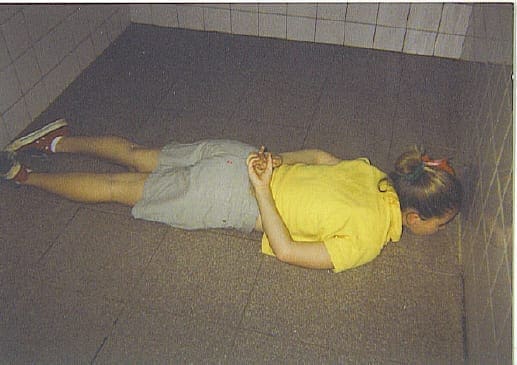
A woman reenacts the pressure positions children are put in at Troubled Teen Industry camps. | WWASPS Survivors.
Staff threw me facedown on the floor, lifted my chin, flattening it on the ground, pulled my hair, and lifted my head. Robinson put a knee in between my shoulders, and the staff pulled my arms back as far as they could.
It felt like I was going to die, like I couldn’t breathe. My throat was stretched to its limit on the ground.
My legs were lifted behind me into a hogtie position.
To this day, movement in my arm is limited from the many times I was put in stress positions at Casa by the Sea and High Impact. One of the disks in my back is permanently out of place.
Robinson claimed I had scratched him sometime during his assault on me and I was thrown into a dark room. Keeping track of time was difficult then. I knew the day of the week by the type of meal they brought me. When I was served fish for the second time in isolation, I realized I had been there for a week.
Sent to High Impact
One of the hallmarks of the Troubled Teen Industry is the severe restriction on communication with the outside world. In my two years at Casa by the Sea and High Impact, I was never allowed to call anyone.
My mom was told I’d try to manipulate them into letting me out of the program by claiming I was being abused. My mom and I were constantly told I’d be dead or in jail without the program, something she fully embraced.
She began to recruit other parents into the WWASPS like a parent within a cult.
After my incident with Jade Robinson, he called my mom and convinced her I had to go to High Impact. High Impact was a boot camp for people who couldn’t cut it at Casa by the Sea.
Actual image from High Impact, showing a child in a cage. | WWASPS Survivors
You can imagine my horror when I learned there was another ring of hell I’d not yet reached.
We were made to run laps in the rain until we passed out. We dug holes that the staff told us were our graves.
I didn’t want to rebel, I just wanted out of there. My ADHD prevented me from staring straight ahead at all times. Punishment came in the form of skin burns from staff. When I’d vomit from the awful food and constant exercise, they forced me to eat my vomit.
This led to isolation where I was placed in a dog cage.
Freedom and a lifelong cause
Getting discharged from High Impact back to Casa by the Sea was initiated by my grandmother. After I told her about the torture I endured, she started asking poignant questions to the administration.
The FBI and Mexican federal police were ramping up their investigation of Casa by the Sea at that time, so the administration attempted to transfer the prisoners to other WWASPS programs and rush through graduations.
High Impact was raided and shut down for operating an illegal pharmacy. In 2003, I was transferred back to Casa by the Sea, where many of the High Impact employees were also transferred. Casa by the Sea was shut down in 2004 for child endangerment and deplorable conditions shortly after I returned to the U.S.
Other WWASPS programs continued to operate until as recently as 2016, closing down one by one after facing a plethora of criminal and civil charges.
The Troubled Teen Industry continues to thrive in states like Utah, Montana, and Massachusetts where detention of a teen for more than 30 days with parental permission is still legal. There is no federal legislation regulating the industry.
As a survivor, I beg parents not to send children to a residential treatment facility that cuts off communication with their children. There are thousands of children who’ve experienced what I have and continue to now, even as you read this story.
Aaron (pseudonym), institutionalized at 17-years-old
TUSLA, Oklahoma — If you look up the definition of a troubled teen, I would have checked all the boxes when I was a kid in 2017.
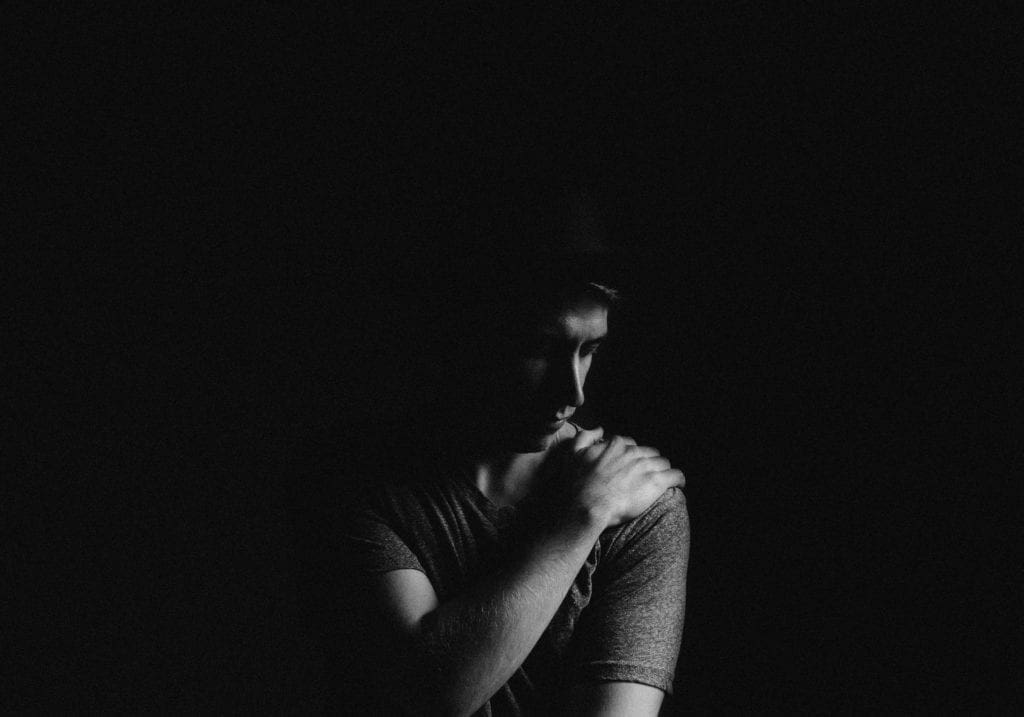
Photo from Unsplash | Mitchell Hollander
My drug habit fed into my stealing habit which fed into my manipulation tactics against the people I loved the most. Being gay in Owasso, Oklahoma, two hours outside Tulsa, didn’t exactly win me brownie points in the broader community either.
The possibility of getting sent to Teen Challenge Adventure Ranch was held over me by my parents as a looming threat if I kept up my behavior. The so-called addiction treatment center in Morrow, Arkansas had a nasty reputation.
Eventually, my parents told me I was being sent to a “therapeutic boarding school” to cure my addiction. I’d be driven there by my parents the next day, they said. I kept asking if it was Teen Adventure and they just kept repeating I wouldn’t have a choice.
Running away
So, I found my way to a friend’s place in the hopes of evading everything awaiting me over the state line. My parents found me the next day and coaxed me into the car, assuring me that going to Teen Challenge Adventure Ranch willingly was far better than what would happen if I resisted.
I remember thinking on the car ride over about my boyfriend and how he probably thought I just disappeared on him. No one outside of my immediate family was told I was going away for nine months.
My parents dropped me off and left me in the care of the Teen Challenge Adventure Ranch staff and drove away. I was forced to take off all my clothes, raise my arms and spin around. When I complained about not wanting to take off my underwear, the staff said I didn’t want to test them and to do what I was told.
A person was introduced to me as a therapist and he began interrogating me for two hours. They repeatedly asked about my sexuality and what kind of drugs I took. Their goal wasn’t just to get me sober, their goal was to make me straight.
The folks at Teen Challenge Adventure Ranch weren’t big on pop music either. I got punished one time for humming a Michael Jackson song because it wasn’t Christian music.
The staff there would hold me in these pressure positions where my arms were lifted behind my back and I was held on the ground. Other times we’d be sent to isolation for a few hours at a time and be made to take off my shirt or shoes.
Despite having asthma, staff would make me run without my inhaler for extended periods of time until I couldn’t breathe.
There were about 50 to 60 other residents. We were supposed to have high school classes where we could earn credits, but our teacher, Jean, would go on these long political rants. He’d say things like Bill Gates was the anti-Christ. Of course, when any of us would speak up and say it wasn’t true, we’d face the aforementioned punishment techniques Teen Challenge Adventure Ranch used on its program participants.
Orato World Media asked Teen Challenge Adventure Ranch to respond to allegations made by Aaron. The addiction treatment center responded with a tongue-out emoji.
One time we were having a movie night in the dorm and one of the other kids there started touching my private parts, sexually assaulting me. He told me not to tell anyone and I felt consumed with shame and confusion. I still had my boyfriend who didn’t know where I was.
Couldn’t tell anyone I was gay
The environment at the ranch was incredibly hostile towards gay people, so I couldn’t afford to tell anyone I was gay. That’s when I started hiding small sharp objects I’d find around the compound. At the time, I believed I’d never leave Teen Challenge Adventure Ranch and I had to take things into my own hands. Any small pointy thing I could find might help me escape in my own way, I thought.
Over the course of two days, I attempted to end my life 11 times. I severely lacerated my wrist with a sharp object and tried again with my teeth, once I was patched up. The staff at Teen Challenge Adventure Ranch never once called 911.
Following my eleventh failed suicide attempt, the staff called my parents and discharged me from the ranch. I reunited with my boyfriend and we’re still together. As soon as I could, I left home and never spoke to my parents again.
People have to know what’s going on, this has to stop. State courts can still legally require children to attend the ranch.
Teen Challenge Adventure Ranch continues to operate addiction therapy facilities throughout the U.S. and Canada.
Grace (pseudonym), institutionalized at 12-years-old
LAKE TOXAWAY, North Carolina — One morning in May 2016, a married couple who looked like they were in their 50’s showed up at my home.
Photo from Unsplash | Peter Forster
They told me I was going to a fun, week-long summer camp in North Carolina and I should pack my bag. They followed me as I loaded my things and wouldn’t leave me alone in my room.
All I can remember from the drive to the wilderness therapy program, Trails Carolina, was thinking I’d faint from fear.
I was told I could send one piece of mail to a friend. I later found out that my friend never received my mail.
When we arrived in Lake Toxaway, North Carolina, the couple left me in the care of two young women. The women brought me to a shed where there were transparent boxes full of other people’s belongings like hairbrushes, clothes, iPods, shoes, books, and bottles of shampoo.
They told me to take off my clothes. I felt terror and total humiliation. The staff searched my clothes and ordered me to spin around, squat, cough, and shake my hair.
I remember them being angry that I had scraped myself. They told me my minor scrape was self-harm, despite it being a small accident I hadn’t even noticed.
They gave me new clothes—even a new bra and shoes.
No outside communication
The first few nights I was wrapped up in a tarp and it was boiling hot, I would cry constantly. Every time I asked to call my parents, they would tell me phone calls weren’t allowed.
Our only form of communication was written letters, which I’m convinced were cut open and censored before they made it to our parents.
The staff at Trails Carolina probably wouldn’t want our parents knowing we were only allowed to shower once per month or that we hiked carrying huge backpacks full of camping gear for so long that we would faint.
We ate cold, half-cooked food if we couldn’t start a fire on our camping trips. We didn’t have matches or a lighter and we were never told what time it was.
Zoloft instead of medical care
The diet and exhaustion gave me severe migraines but that went untreated. I suppose the Zoloft they gave us was meant as a cure-all.
We weren’t given tents and instead slept on the forest floor, under a tarp. When it predictably rained, we were left soaked and cold through the night.
There were a handful of other preteen girls with me there too, some for months and some for days. One night, one of the longer-tenured girls sexually assaulted a girl who had only been there a couple of days. Nothing happened.
Then, the same girl sexually assaulted me. Trails Carolina tried to cover up what happened. Our therapist told me I was at equal fault and not to tell anyone else. My parents were told that I fooled around with another student.
Wilderness therapy programs are not a summer camp, they are traumatizing.
After that, the two of us who were sexually assaulted were sent to Moonridge Academy in Utah. There, they overfed us until we threw up, restricted our washroom use until we got bladder problems, and would repeatedly restrain autistic children.
The troubled teen industry has given me trust issues, nightmares about my time at Trails Carolina and Moonridge Academy, worsened my anxiety, worsened my depression, lowered my self-esteem, and gave me severe trauma from the things I experienced and witnessed.
I hope this helps people realize how truly terrible these places are.
Allan (pseudonym), institutionalized at 16-years-old
BAY AREA, California — Getting discharged from a psychiatric hospital comes with a certain amount of hope that you’re going to a better place.
Photo from Unsplash | Miroslav Kurac
I insisted to the hospital I didn’t want to rejoin my adopted parents in the Bay Area of California.
A psychiatrist would later tell me that adopted children’s brains will choose one set of parents to bond to and one to reject, and my brain had rejected my adopted parents.
I struggled with psychosis, suicidal ideation, chemically-induced mania, anxiety, and ADHD. My conditions made the strip search upon entry to Elevations RTC in March 2018 all the more terrifying.
During my stay at the psych ward prior to Elevations RTC, I was given a wild cocktail of pharmaceutical drugs from several doctors whose prescriptions would overlap and interfere with each other.
Elevations RTC gave me a dosage of Vyvanse that, in my understanding, was above the legal amount. The maximum size of a Vyvanse capsule is 70 mg and I was taking 100 mg doses.
A broken hand
One time a participant at Elevations RTC called me the N-word and attempted to beat me up. The staff said it was my fault. My reactions in those regular altercations would range from trying to defend myself to punching a wall, because I thought it was a better reaction than punching someone else.
During one incident, my hand broke against the wall and I experienced swelling and searing pain. The staff there didn’t even bring me to the nurse and I have arthritis in my hand for the rest of my life because of that incident.
Elevations RTC staff were recruited from the nearby Hill Airforce Base or the alumni of the Weber State Wildcats football program. They were there to physically restrain us.
We didn’t stand much of a chance when they tackled us to the ground or held us in pressure positions that wouldn’t be allowed in the UFC. One time I got held up against the wall by staff because I was crying about another participant trying to sexually assault me.
Every night another participant would threaten to kill me.
The 45 to 50 kids at the center would face a lot of group punishments for one of us acting out. It would cascade from us losing gym class privileges, to participants expressing pent-up anger, to one resident starting a fight with another.
Kept in a hallway for 14 days
We were kept in this hallway for 14 straight days, with all 13 of my teammates in one hall.
When I casually recount stories like these to my friends in Oregon, where I live now, they react with horror and disgust. “They’re not even supposed to treat prisoners of war like that,” they’ll say.
It takes me a while to realize what I’ve gone through isn’t normal, even if it’s more common than most people realize.
After two years at Elevations RTC, I have difficulty speaking to strangers, forming friendships, and trusting anyone, especially doctors. I’ll wake up in shock from a nightmare of being sent back to that institution.
My advice to parents is to look up who owns the rehab clinic you’re considering sending your child to. If it’s not immediately clear, stay away.
Elevations RTC continues to operate in Syracuse, Utah.
Clair (pseudonym), institutionalized at 16-years-old
COLOMBUS, Ohio — I grew up in a small town outside Columbus, Ohio. Brainwashing from my conservative Christian family members was my version of normal.
No one understood that I was self-harming because I suffered from Post Traumatic Stress Disorder.
Photo from Unsplash | Robert Tumini
To my family, people violating my body was God testing me.
The trauma I had from being abused as a child by my father and from being followed home and raped, pushed me to hurt myself. My mom would start throwing up each time I was discovered self-harming, and the rest of the family simply didn’t talk about it.
In 2011, when I was offered a placement at Mercy Ministries, now called Mercy Multiplied, I was excited at the opportunity to finally be healed of my eating disorder and depression. I was informed 98 per cent of attendees were permanently transformed for the better.
Mental health issues deemed demonic
It wasn’t until years after I left the program that I realized what had really happened and who these people actually were.
Charismatic Christianity is a sect that strongly believes in the supernatural, spiritual realm. This was the sect Mercy Multiplied belonged to.
When I would talk about my eating disorder, Mercy Multiplied therapists told me I was possessed by demons. When I would talk about my PTSD, the staff said my family was under a curse. The cure to these spiritual ills was to lay hands on us and command the demons to leave our bodies or speak in tongues.
When I revealed I had been raped in group therapy, the therapist had me verbally recount every detail of what happened that day and ask God where he was. At the time, I thought I was being healed. The folks at Mercy Multiplied had a direct line to God, they told us, and we believed them.
Faith lost, trauma worsened
Ironically, my stay at their facility is what began to push me away from Christianity as well as my family.
We were told we couldn’t trust anyone but Mercy Multiplied and God, and I still have difficulty trusting anyone.
My PTSD grew from my experiences at that institution. I want people to know their daughters aren’t safe there.
Mercy Multiplied still operates in the U.S., UK, and Canada. It was shut down in Australia for false advertising and taking welfare money from program participants in 2012. The organization also operates in New Zealand under the name A Girl Called Hope.
Adrián Zarricueta, a resident of the La Serena commune, Coquimbo region, Chile, worked as a construction teacher, but also as a taxi driver. He was accused of robbery and rape of a young woman. He was detained for almost three months until the Chilean Supreme Court discovered that he was innocent through DNA testing.
Background
In 2013, a young woman from Santiago de Chile took a public vehicle to return home. She and a friend shared the vehicle and the friend’s stop was first. Unfortunately, the driver changed the road course, threatened her, raped her, and stole her cell phone.
In March 2014, Adrian Zarricueta received the first call notifying him that the PDI was investigating him for alleged robbery and rape. After that, in May, a relative told him that the police were distributing flyers with his photo saying that he was a rapist. For this reason, the accused decided to appear voluntarily before the courts, where the victim identified him.
However, she was not entirely sure. He was imprisoned. Finally, after a lengthy judicial process, his innocence was corroborated. Zarricueta initiated a lawsuit against the state that concluded with an economic compensation of 86 million Chilean pesos in the concept of consequential damages, loss of earnings, non-pecuniary damage, and the cancellation of employment contracts.
SANTIAGO DE CHILE, Chile — I was accused of a rape I did not commit.
During my 79 days in jail, I repeated over and over that I was innocent, but nobody believed me. The media and judicial system judged me harshly.
Finally, after three months and through a DNA test, the court determined I was innocent, but they had already perpetrated psychological damage on me.
The young female victim barely remembered her attacker, and the police looked for a scapegoat. They chose me.
Even though I was exonerated, it is difficult to remove the stigma. People filled my social media networks with posts attacking me and building a story against me.
My days in prison
My first days in jail were the worst of my life. I would not wish it on anyone, not even my worst enemy.
When I arrived, the police took advantage of my emotional fragility. The police said they would rape my family but that it would be much worse for me.
The criminals did not waste a single minute. They took me to the showers, with the collaboration of the acting officers, stripped me naked, and beat me while dousing me with ice water.
I was unconscious on the floor for several hours. My entire body ached, and I had no voice to cry out for help.
During that feeling of loneliness, all I wanted was to die.
The nights seemed endless. I could not sleep for fear they would enter my cell and abuse me in a moment of distraction.
I lived this way for 80 days, constantly alert.
In prison, I felt like time was not passing anymore. It became long, tedious, and intense. Nothing will ever be the same for me.
The media demonized me
In social networks and traditional media, people spoke like I was the most infamous human being on earth. They left no room for doubt, much less any hope that people could see I was innocent.
The media handed down a sentence before the justice system could, and I could not defend myself.
Moreover, they did not give me the right to reply, nor did they bring me a microphone.
When I finally received my freedom, no one apologized to me or published the new decision with the same intensity.
Many questions and no answers
This sinister experience led me to reflect on the number of innocent people who are in jail and like me, cannot respond to their charges.
I never-endingly wondered how many people are in court and innocent; who, like me, have to endure the hatred and shame of their loved ones.
I pondered whether the justice system in my country was even qualified to carry out a proper investigation and avoid these mistakes. Sadly, these kinds of errors cost lives.
In my case, I believe the police could not find the aggressor in time, so they looked for a scapegoat to close the case.
With all my might, I hope no innocent person is suffering the hell I experienced during my 79 days in prison.
Now, I simply want to take refuge in my family and I hope to erase that terrible mischaracterization of me. I wonder, will I ever succeed in removing this indelible black cloud over my life?
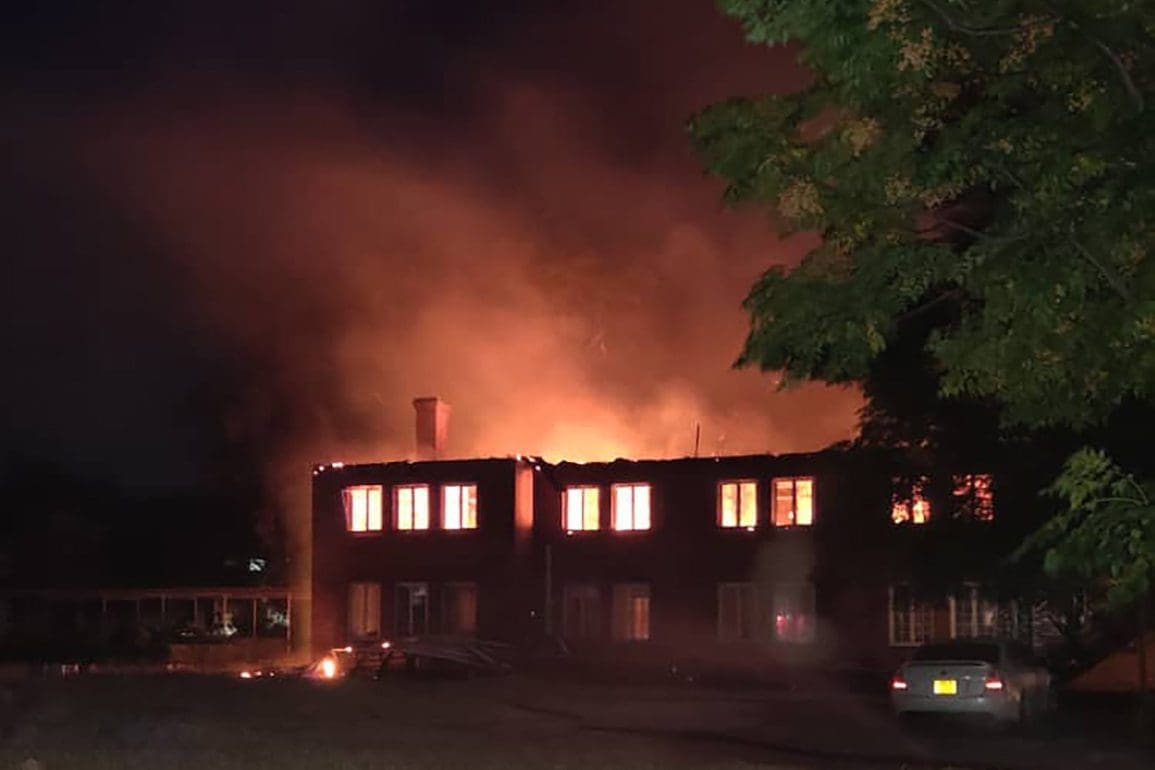
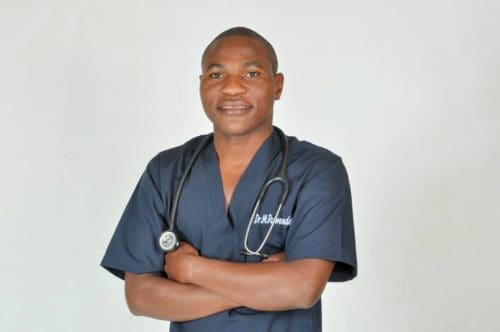
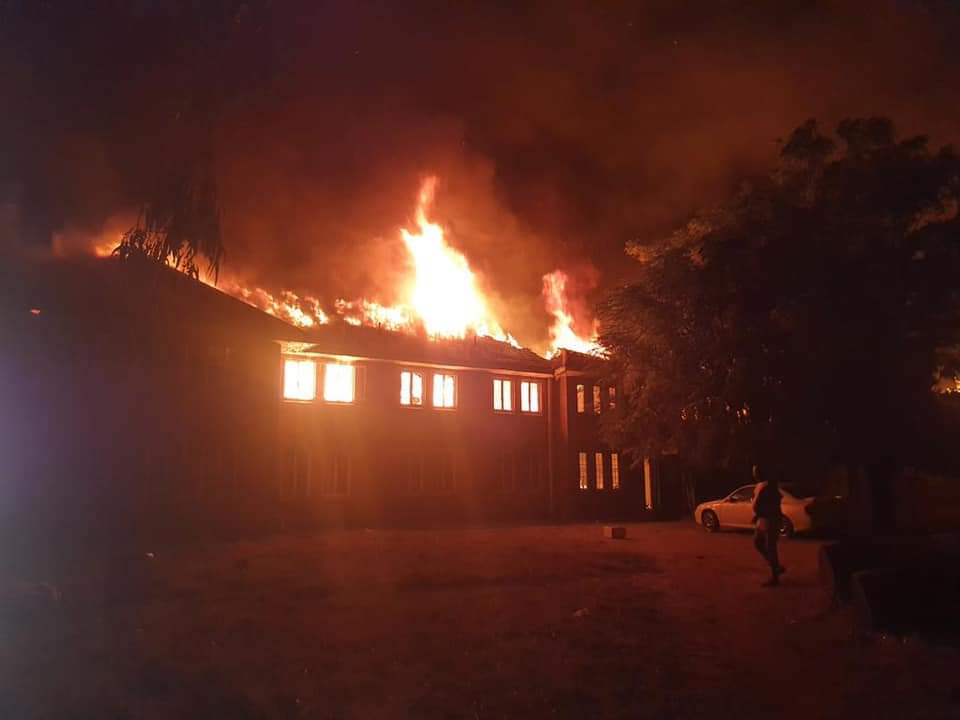
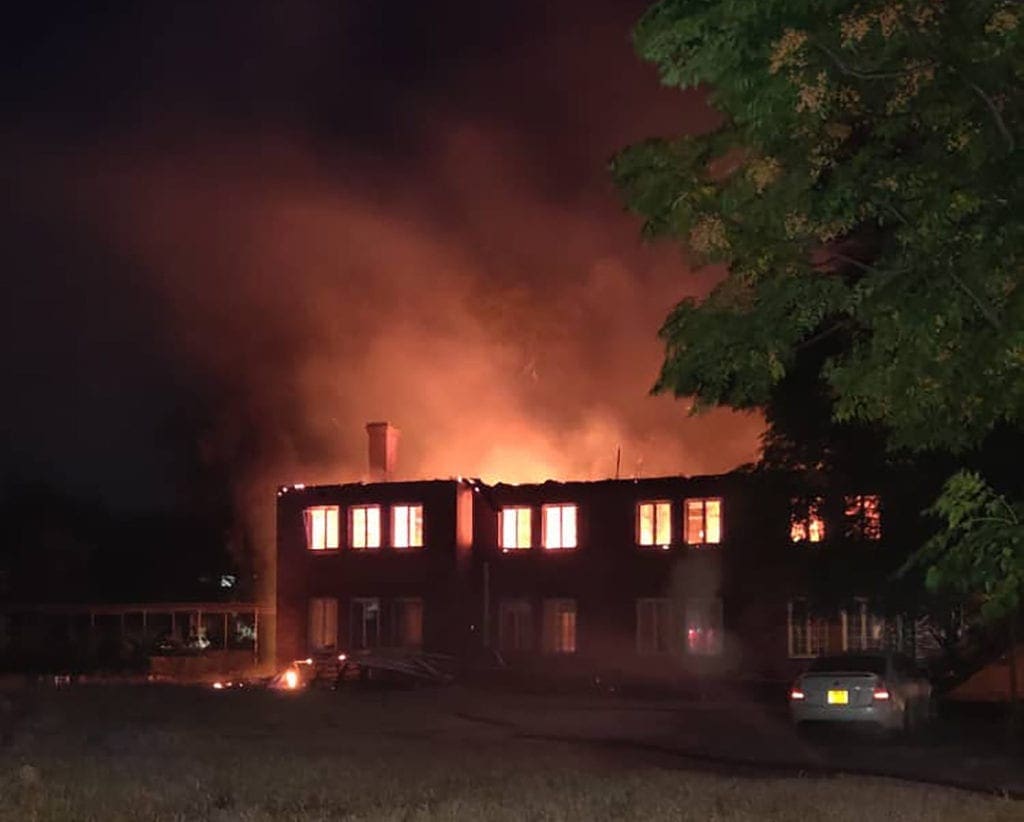
Dr. Ruwende (pictured) and Dr. Nyele Zvinei survived the Mpilo Hospital fire which devoured their residence on the night of May 26, 2021. Unfortunately, they did not manage to rescue or retrieve anything from the raging fire. Currently, all the survivors of the fires are staying at Bulawayo Polytechnic and Saint Patrick hotel, and they are waiting for the completion of the renovations for them to go back and stay at the hospital’s residence.
Background
The Mpilo Hospital flat caught fire on the evening of May 26, 2021. Thirty nine families were affected by the fire. The fire caused $500,000 (USD) of damage. In June 2019, the same incident happened at the Mpilo Hospital when another block burned. The government of Zimbabwe pledged $287,000,000 (USD) for the refurbishment of the flats. The Zimbabwean government is aiming to finish the renovations in 95 days. Mpilo Hospital is the referral health center for five provinces in Zimbabwe. The Mpilo Hospital fire victims are currently staying at Saint Patrick hotel and Bulawayo polytechnic. All Mpilo Hospital fire victims are being helped by the donations and government assistance.
Dr. Nyele Zvinei shares his survival story.
His colleague Dr. Ruwende also provides a testimony later in this article.
BULAWAYO, Zimbabwe — On the night of May 26, 2021, my family and I almost lost our lives. Thank God we survived.
It was getting late that night. Around 11:00 p.m., my wife and I left our two sons, ages 15 and 10, watching soccer in the sitting room and we went to bed.
From my deep stupor, I heard my son’s voice, shouting so loudly.
I woke up and looked at my wife, assuming I was having a dream. I was going to wake her up to ask if she also heard it, but he was already shouting again. Suddenly, he was knocking at our door yelling for us to wake up.
He said, there is a fire
My wife awoke and when I opened the door, she rushed straight to it, trying to understand what was transpiring and why the kids were making so much noise.
I asked my son where the fire was. Without responding to my question, he grabbed my hand firmly and dragged me to the main door where the flames were burning furiously. It had almost arrived at our room.
Mpilo Hospital burns on the night of May 26, 2021. Photo by Solwayo Ngwenya.
We opened the door, and with my wife following us, we encountered a dark cloud of heavy smoke emanating from the other side of our block. I could not believe it. I was still confused, having just woken from bed. The sound of the fire, together with the screaming children, made me more confused, but I had to act like a man and save my family.
When I rushed back to the bedroom to search for my essential documents, the whole room was already filled with smoke. It was coming through the broken ceiling. I had forgotten where exactly we had put the papers and time was running out.
Time to run
I quickly decided to take my family out of the house, which was already in danger because the fire was moving so fast from one room to another, devouring everything in its path. It was horrible.
Had we not been awakened by our sons, we would have died in our bedroom. The sense of smell does not work properly when one is asleep.
When we got out of the house, we saw our neighbors jumping down from the balcony, while others were climbing down the building by holding the water gutters.
The water gutter nearer to our balcony was vacant, so my wife and I had to climb down the gutter with our sons on our backs. We did not manage to save anything, and we came out with nothing, even our phones.
Mpilo Hospital burns on the night of May 26, 2021. Photo by Solwayo Ngwenya.
I think it could have been much more tragic if my sons were also asleep when the fire began devouring our block. Everyone else was battling for their lives, so no one came to warn us about the impending danger.
By the time we got down, furious flames were engulfing my bedroom. It’s not easy to see the property you have worked for being destroyed, without having the chance to retrieve anything. I was left with nothing, except for the pajamas I was wearing.
Even as I could hear the sound of an ambulance together with the Fire Brigade coming to attend to the disaster, there was not even a pinch of hope that the fire could be extinguished in time to rescue anything. It had already devoured everything in sight.
Homeless
We were left homeless, moneyless, and hopeless. I only had a few dollars in my bank account because it was almost month’s end, so we had already exhausted almost all the money that we had. This fire left me in unexplainable pain. It haunts me and will take me a long time to recover from the trauma.
We are staying at Bulawayo Polytechnic which is about seven kilometers (four and a half miles) away from Mpilo Hospital. The government of Zimbabwe has promised the refurbishment of our block, together with the block that was also destroyed in a fire in 2019, will be complete in 95 days.
We have received donations from Old Mutual, OK Mart, and the government; and have help from other individuals.
Since we lost all of our documents including passports, national identification cards, and educational papers, our government promised to replace them quickly and, hopefully, free of charge.
Now we look forward stressfully. My children need school fees, uniforms, and we also need clothes and personal items.
Dr. Ruwende is the victim advocate at Mpilo Hospital.
He recounts his brush with death and the aftermath.
The inferno at Mpilo Hospital happened on the night of May 26, 2021, as the result of a suspected electrical fault at one of the residential blocks. Mpilo Hospital in Bulawayo is one of the biggest referral hospitals in Zimbabwe. The fire gutted the staff quarters and destroyed $500,000 (USD) worth of property.
We lost almost everything in the fire. I managed to escape with my cell phone but everything else was left behind, including my educational certificates and my new property.
I have never seen a fire cause such extensive destruction. The local Fire Brigade tried to stop it but there was no way. Most of the nurses and doctors were left homeless.
I had to jump from the first floor to save my life because the fire was spreading so fast. No one could manage to think of the safest way out, except for jumping or going down holding the water gutter. It gave us no time to rescue anything.
Children forced to flee
Among those who jumped out of the raging fire were children. They were forced to seek alternative accommodations while members of the Fire Brigade and Ambulance Services were busy battling the fire for hours.
This near-death experience resulted in one of my workmates suffering a broken ankle from jumping out of the two-story block. Other residents were forced to come out of the building using a single-window as the raging fire spread throughout the whole building and blocked the exits.
A few days after the disaster, we received accommodations from the government. Some of us are now staying at Saint Patrick Hotel in Bulawayo, and others are at Bulawayo Polytechnic College.
The pain and trauma of the experience are difficult to deal with. It is like I am starting my life from scratch because I have to obtain everything again, from clothes to property.
We are being given nice food and blankets, but we will be starting over again when we leave our temporary accommodations.
My role now, as the Mpilo Hospital fire victims representative, is to send a list of people who lost their educational documents, passports, and national IDs to the government so they can be replaced.
The government has already begun to refurbish our block, which accommodated 39 health workers and their families. The Ministry of Finance and Economic Development also promised $287 million (USD) for the construction of single quarters and separate apartments for nurses and doctors together with the married quarters.
This happened before
This is not the first time Mpilo Hospital experienced such a disaster. In June 2019, another fire razed a smaller residence for doctors.
In this incident, one of the doctors dozed off during the night, leaving their heater on, which resulted in a fire that burned all the household property. When our Bulawayo Bureau arrived at the hospital the following day, firemen were clearing what was left of the building, which was only ashes and scraps.
One of the victims of the 2019 incident, Dr. Gabriel Magengezha, who was visibly confused, said he only escaped with his life and failed to save anything inside the house.
Those of us who survived the recent fire will be staying at the hotel for about 95 days. For now, we are looking forward to getting simple things like stethoscopes.
Hundreds of patients from at least five provinces are referred to Mpilo Hospital in Bulawayo every year, making it the biggest referral hospital in the southwestern part of Zimbabwe. The fire caused a serious problem, not to us health workers only, but also to the patients who need assistance from the affected hospital workers.
Mpilo Hospital is also a teaching hospital center for the National University of Science and Technology (NUST) and has links with the University of Zimbabwe (UZ) and several other higher education institutions around the country. The fire disturbed a lot of activities from healthcare to education.
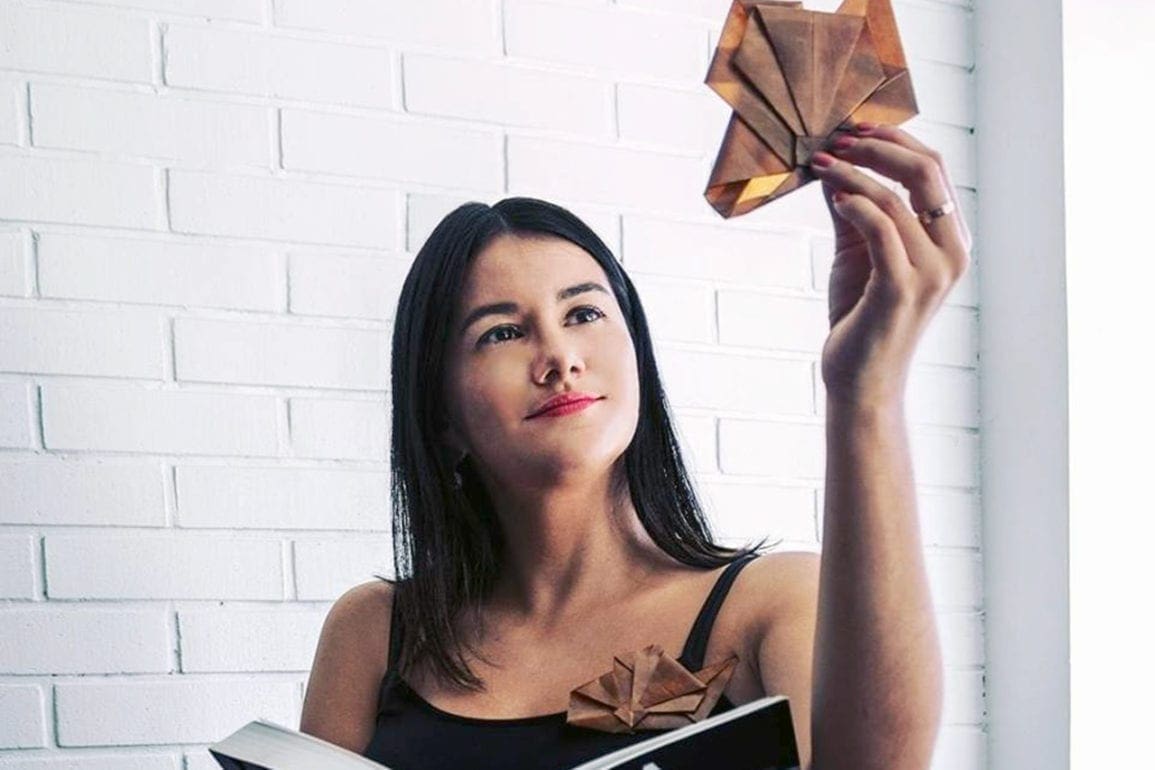
Verónica Bergottini is from Argentina and is 36-years-old. She has degrees in Genetics and Biological sciences, and is ambitious and loaded with innovative ideas. She is the first South American who managed to produce clothing and accessories from the Yerba Mate microbiome. Today, she markets her TILEX products through her brand ‘Karu Biodiseño.’
Yerba Mate (also known as Lex paraguariensis, yerba de Los Jesuitas or yerba del Paraguay) is a neotropical tree species native to the basins of the Upper Paraná River, Upper Uruguay River, and some tributaries of the Paraguay River, where it grows in a wild state, especially as part of the understory or the middle layer of the mountains.
From the dried and ground leaves and branches of this aquifoliaceae mate, an infusion is prepared. It is very common in Uruguay, Paraguay, Argentina, southern and eastern Brazil to select this ingredient in the preparation of drinks. In turn, the term mate, poro, or porongo is given to the “zucchini” that traditionally serves as a container from which to drink the infusion.
It has been widely cultivated commercially in Argentina, Brazil, and Paraguay since the 19th century, giving rise to an important industry. This has led to offshoots such as sustainable textiles made from the plant.
MISIONES, Argentina — I created a biomaterial for clothing and accessory production that takes animals out of the equation.
The satisfaction I feel after completing my latest research is palpable. What I have created will change fashion worldwide.
It is now possible to produce clothes and accessories with Yerba Mate, a plant species people drink daily. It can replace material like regular leather.
Sleepless nights, anxiety, euphoria, excitement, and tears marked my process but now it is bearing fruit.
A few years ago, this development was unthinkable; now, it is a reality.
Determination, perseverance, and discipline
As I began researching my project to use Yerba Mate for clothing and accessories, I experienced insomnia and anxiety.
The adrenaline rush of taking on this task meant that I couldn’t think of anything else. I would focus on advancing my research one step at a time; on completing one more stage.
The investigation consumed my schedule and I spent entire days without sleeping.
I wanted to contribute a grain of sand to the scientific world which was trying to develop alternative replacements for animal leather.
A dream come true
The investigation paid off.
Today, I explain that a biomaterial is produced by living cells and microorganisms (bacteria and yeast).
We take advantage of this to replicate traditional production processes.
From my discoveries, I started my own business cultivating microorganisms in yerba mate and other nutrients. I call these revolutionary idea TILEX..
From a very young age, I felt deeply connected with nature. The care of our planet seemed essential to me.
Could see the future
I knew that, through investigations, there was a future for my idea, and I combined that passion with a lot of study.
I earned a Bachelor’s Degree in Genetics. Being a woman in the world of science and research is not easy. There are a lot of stigmas.
After college, I traveled to Switzerland to specialize in microbiology and earned a Ph.D. in Biological Sciences.
It was a hard time for me.
I was alone, spending a lot of hours studying, with not much time for sleep. I was very stressed.
My goal was to delve into the microbiome of yerba mate, which, until then, served only to develop biofertilizers.
Along the way, something inside me sparked a taste for apparel design, so I started thinking about my endeavor.
TILEX in action
I created my clothing brand TILEX that allowed me to develop leather textures.
Then, I applied it to clothing, accessories, footwear, packaging, and decoration.
Almost without knowing it, “Karu Biodiseño” was born (biotechnology applied to fashion).
This entire process with TILEX was internationally recognized by Vogue Photos Italia, the Healthy Material Labs of the Parsons School of Design, and the Tech Fashion Week in New York.
At the national level, in 2019, I was appointed Ambassador of Sustainable Entrepreneurs. Upon achieving this, I joined as an INTI researcher.
When passion begins to mutate
I was not only passionate about design but also getting a message out there.
It fills me with pride to have created a biomaterial that takes animals out of the equation.
I am interested in telling the world that there is a new possible path in our hands to produce materials with out killing.
I am aware that my work is not complete. This concept is just taking off.
I always have new ideas and more functionalities for my projects.
I feel proud of Karu and great satisfaction in generating consciousness in humanity, at least with a small constructive contribution that looks to the future.
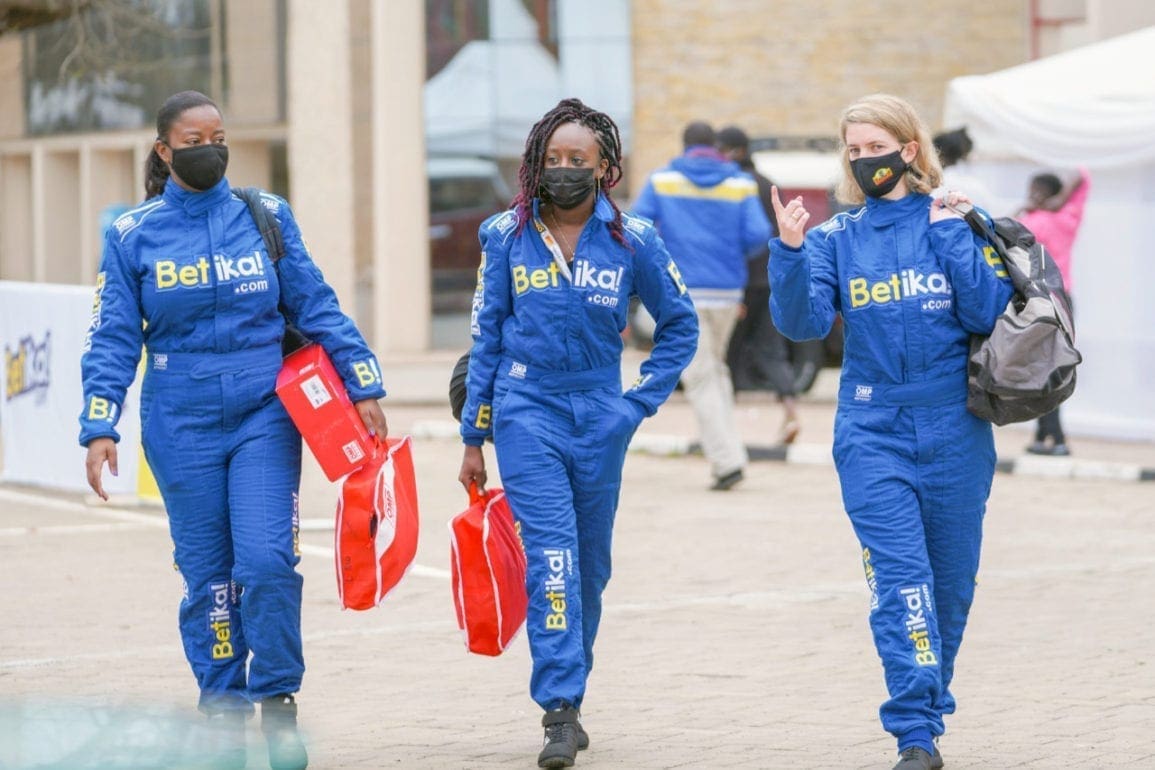
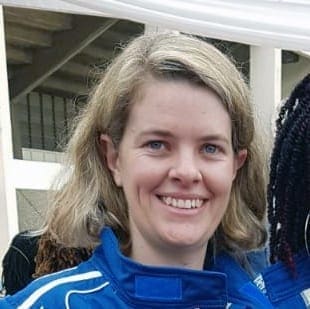
Chantel Young is a rally navigator who has worked with different rally drivers. She currently partners with driver Maxine Wahome.
Linet Ayujko is a legendary Rally navigator with close to 10 years of experience. She has participated in 22 rallies winning numerous titles. Her best finish in the Safari Rally was 14th. She partners with driver Hussein Malik.
Background
The Safari Rally will be part of the WRC Series this year, making a comeback on Kenyan soil after 19 years of absence. Kenya will be represented by four women.
The Safari Rally has been heralded as one of the toughest rallies on the World Rally Championship (WRC) calendar. The event kicked off on June 24 2021.
NAIROBI, Kenya — Seeing my name on the FIA World Rally Championship entry list is history in the making.
Before 2016, the auto racing field was male-dominated. For close to four years now, more and more women are coming on board.
Making my debut in the Safari Rally will encourage more women drivers and navigators to join the sport.
Joy and pride
My entry comes with joy and pride. It comes in honor of my granny and grandad, who stood beside me from my early days with the ‘Rally Chics’ when I partnered with Natasha Tundo.
Growing up, we savored watching the rally and international drivers like Joginder Singh, Patrick Njiru, Shekha Mehta, and Ian Duncan.
It was exciting, and I believed one day I would be in the rally myself.
Co-driving with Natasha Tundo and Samir Khan set the stage.
Making my debut in the World Rally Championship Kenyan leg is like coming home after 20 years. Calling the pace notes for fellow debutant Maxine Wahome is a dream come true.
I finally have an opportunity to navigate in a FIA competition and inspire women like me.
My faith is my foundation
Growing up watching the World Rally Championship, it is an incredible honor to be shortlisted as car number 59 where I can compete against ‘the greats.’
Even more joyful, I will make my debut in the international event hosted in my home.
In this rally, I am trusting God. I will partner with speedster Hussein Malik. Our car sustained damage after crashing into a ditch during the ARC Equator Rally, but we have repaired and fine-tuned it to safari specifications.
We are ready to roar.
Malik and I have been partners for some time. We work vigorously to get our pace notes. We have been testing our Mitsubishi Evolution 10 on rough terrains to be ready for the big showpiece because we want to make Kenya proud.
With the Safari back in the international scene, it generates significant excitement. You wake up thinking about it.
Only two women were part of the last Safari — me and Tuta Minka. Now four women are participating.
To be able to compete with men on the same playing field is a dream come true. We hope to beat them in some sections.
Success based on experience
I have been navigating races for close to 10 years and have won some awards. I’ve worked with different drivers throughout the journey and I have gained experience.
I started as a volunteer going out with drivers to learn, and I then became interested in being inside the car. I fell in love with navigating. I’m fearless now — an adrenaline junkie — and rallying has taught me never to give up.
During the ARC, we were not able to finish because we crashed in a ditch. Hussein is an impressive driver, and we have worked hard to ensure we finish the Safari. We have what it takes to make a mark this June.
More women than ever in the rally
I am happy that we have the all-women team Maxine Wahome and Navigator Chantal Louis Young. Slyvia Vindevogel is also navigating for Giancarlo Davite. She will be running on an Italian License.
We are looking forward to seeing more women join the sport, and actually, we have an association that seeks to bring young women onboard; it will be nice to see more women teams together in the races.
The Safari Rally has always been challenging. In Africa, Kenyan drivers are the best.
There will be stiff competition, and everyone will chase the glory. Hussein Malik is focusing on finishing inside the top 20 brackets.
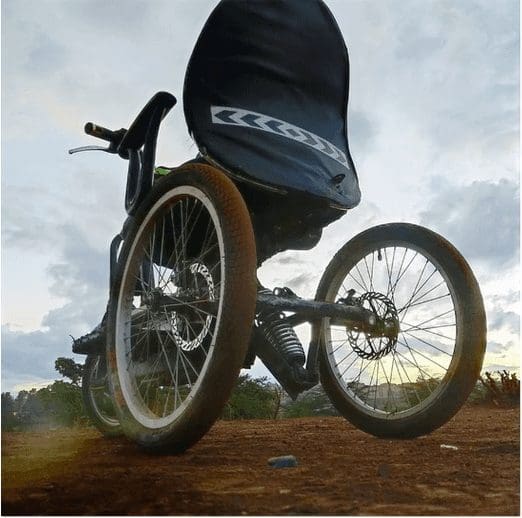
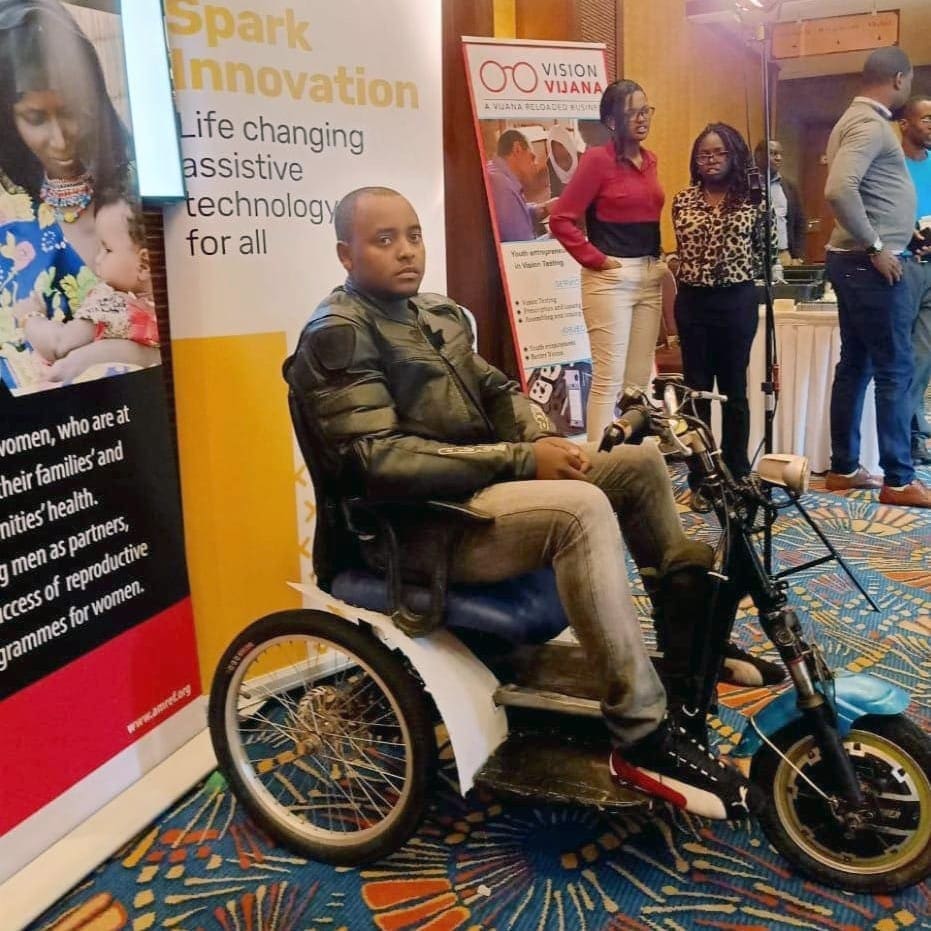
Lincoln Wamae is the founder of Lincell Technology. He is a self-taught engineer who makes electric wheelchairs from recycled parts for the disabled in Githurai, Kenya.
The father of one was forced to drop out of school due to financial challenges. Born in Nyeri and growing up in Laikipia, he came to Nairobi to look for opportunity. Though he started out building tricycles, he noticed that people living with physical disabilities trudged the muddy terrain when it rained so he decided to build a solution.
When he started Linccell Technology a year ago, his mission was clear. He wanted to provide effortless, durable, and affordable electric personal mobility for people in Africa.
In 2019 the Kenyan innovator won a cash prize of $20,000 USD for his electric wheelchair that can withstand potholes and untarmacked roads. He also won three months of technical dedicated support to scale up his innovation.
Background
Nairobi’s streets are cracked at best and nonexistent at worst. Coupled with crowded public transportation, personal travel is a challenge for any pedestrian but especially for disabled people.
Around 10 per cent of Kenya’s population, or about five million people, have a disability according to the World Health Organization. Of that number, around 26 percent have reduced mobility, according to Global Disability Rights Now. Kenya’s Persons with Disabilities Act, 2003, states that public buildings and transportation should be adapted to allow access for physically disabled people. The reality is that many official buildings do not have a ramp or elevator and the government has failed to apply the regulations to the transport sector.
GITHURAI, Kenya — Ever since I was a young boy, I dreamed of becoming a mechatronics engineer — combining mechanical, electrical, computer, and robotics engineering into one discipline.
The dream seemed far-fetched as our school did not have a single computer. Hope diminished when I had to drop out due to financial constraints.
Then, my cousin began a mechatronics course, and the dream returned. I decided to teach myself. I had never interacted with a computer before, but the internet quickly became my teacher and best friend.
From frustration to purpose
Before taking action, I experienced the hardships that result from a lack of education and formal employment.
I attempted to build a drone to fly away from Kenya and leave all my frustration behind.
Deep inside me, I was convinced I could foster change, but my surroundings made it impossible.
Building a drone was too expensive, and I gave up.
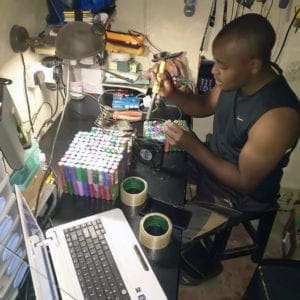
Lincoln Wamae in his workshop. | Lincoln Wamae
When I taught myself engineering, it led to a job installing security surveillance systems.
Every morning I commuted from my home in Githurai 44 to the city capital where I worked.
There, I saw how disabled people struggled to board public transportation, especially when it rained.
Due to the hustle and bustle of transport services in Nairobi, no one cared for them. They would wait long hours to get transport services.
This realization was a wake-up call for me, as I asked myself what I could do to alleviate their struggles.
I decided to make wheelchairs that were affordable and durable enough to transport them for long distances.
Developing electric wheelchairs
It took me three years to actualize my plan because it required finances I didn’t have. I built my first wheelchair in 2018. It was just a standard chair with three wheels like a tricycle.
Most disabled people I saw had a problem walking, and I decided to go further and build an electric wheelchair.
The electric wheelchair Lincoln Wamae designed for rough roads. | Lincoln Wamae
I sourced materials from junkyards and secondhand dealers and took lithium-ion batteries from old laptops to power the chairs. I had to import other components.
If I had all the materials needed, I could build a single electric wheelchair in a day.
Sourcing materials lengthens the process, but there is a benefit. I am conserving the environment through recycling.
In 2018 I also quit my job to focus on building electric wheelchairs from recycled materials and formed my company Lincell Technology.
Being a self-taught engineer, I follow a unique process. Rather than designing my ideas on paper, I develop them physically then put them into a design.
I face challenges. Some say my electric wheelchairs are too expensive given the labor, quality, and materials used. The country imports most wheelchairs, and there is a perception that local designers are not as competent, but I have a customer base.
I socialize with people living with disabilities. When I explain my line of work to them, they hire me.
My dream is to mass-produce wheelchairs to sell all over Africa.
Teaching myself to be an engineer, I have a simple mantra: “Just try!”
Milka Hadida is a volunteer at the Kenya Red Cross. She is a child rights advocate for girls, motivational speaker, and volunteer. She collects sanitary pads from family, friends, and donors, and distributes them using a bicycle to poor girls in her native Tana River County.
She won the Red Cross’ Florence Nightingale Medal – meant to recognize nurses or nursing aides who through their courage, hard work, and devotion bring positive change in the community.
Background
Tana River County is one of the more remote and poorest parts of Kenya. It is reported that two-thirds of Kenyan females cannot afford sanitary pads. A 2015 study of 3,000 women in Kenya found that among 15-year-old girls, one in ten were having sex to get money to pay for sanitary products.
Items like reusable pads that last six months or menstrual cups that last 10 years can be life changing. News reports reveal the COVID-19 Pandemic worsened the situation for poor Kenyans, increasing the impact of poverty. Girls who relied on schools that are now closed to supply sanitary products now go without.
TANA RIVER COUNTY, Kenya — As a teenager, I could not afford sanitary pads, which caused me to miss classes. It was shameful, and I lost hope, eventually dropping out of school.
I took on manual labor in the village to make a little money before joining the Red Cross. One day, I saw a schoolgirl crying. When I asked her what happened, she told me she was having her period and could not afford sanitary pads.
My father raised me because my mother died when I was young, and I missed out on the female guidance I needed. Now it is my mission to help the girls in my country and keep them in school.
Touched by the experience I had with this young girl, I started asking for sanitary pads from friends and relatives. My campaign began.
I remember the shame
Every day when I wake up, I think about that girl out there who may have missed school because she is having her period but cannot afford sanitary pads. I remember the shame I felt.
Motivated by this, I started a sanitary pad distribution campaign in 2016. To date, I have reached more than 30,000 girls in three sub-counties within Tana River County.
My determination attracted international attention, and this year, to my surprise, I won the much-coveted Florence Nightingale Medal.
Milka Hadida on the road with a bicycle distributing sanitary pads. | Ronald Muya
On the road with a bicycle
Every day, I wake up at 4 a.m., sort and load cartons of sanitary pads, and distribute village-to-village.
I use a bicycle to distribute the pads I collected from donors — mostly friends and relatives. Sometimes when the distribution location is far from home, I hire a car. I must pay the driver and buy fuel.
Milka Hadida prepares her load on her bicycle to distribute sanitary pads. | Ronald Muya
I have asthma, but I do it anyway, and I carry my inhaler with me. Some friends have criticized and deserted me. They question why I toil all day for no payment when I have my health issue. I even became the laughingstock of my community at one point. I continue anyway, guided by the desire to be of service to these young girls.
After distribution, I go to the Red Cross offices, where I also do volunteer work. At the end of the day am so drained, I can barely hug my children.
Helping the schoolgirls has trickled down to the community. I give one packet of sanitary pads to a girl in many instances, and she shares them with the entire family. Even mothers lack supplies. Many families have to choose between buying food and sanitary pads.
In a county where many live on less than a dollar a day, there is a slim chance a pad will make it into the budget.
Sex exploitation and early marriages
Tana River County is one of the most remote and most impoverished parts of Kenya.
Motorbike riders often take advantage of young girls by giving them little favors in exchange for sex. Girls may give in because they can use the money to buy supplies like sanitary pads. The trend has led to many underage pregnancies.
Here, poverty rates are so high that some parents force their daughters into early marriages. The little dowry they get by marrying their young daughters supports the entire family.
Currently, there are three schoolgirls I know who are pregnant due to poverty and deception by irresponsible men in the community. The parents share in the blame. They have failed in their supervisory duty.
Milka Hadida hands out sanitary pads. | Ronald Muya
Outreach and awareness
Today, I have an extensive network, and I talk to parents and girls. When I speak to parents, I explain the campaign and how they can be supportive.
My community is conservative so talking about menstruation is taboo in some circles. I have devised methods to engage them, and as a result, I often receive boxes of pads from well-to-do parents.
I also run a girls’ club, which is an engagement platform where I discuss the dangers of early marriage, pre-marital sex, and the importance of good values.
When COVID-19 hit, I faced a new challenge as the government restricted gatherings. To continue, I engaged parents and girls one-on-one. They told me stories they would not have said in a group discussion.
For the men who exploit innocent girls, my appeal to them is that they should instead throw a pad in my basket to reach the needy.
I believe girls, just as much as boys, are the future of our community. Empowering them at the educational level is the best foundation.
On winning the Florence Nightingale Medal
I have never even been to the capital city of Nairobi, but my work has received global recognition.
I was awarded the Florence Nightingale Medal by the International Committee of the Red Cross (ICRC). It recognizes nurses or nursing aides who have brought positive change to the community through their courage, hard work, and devotion.
Normally I would have traveled to Geneva to receive the award, but COVID-19 prevented that, so I will receive the medal in Kenya.
When you work for the sake of bringing change, you don’t think of things like awards. When they notified me, it reminded me that someone saw my determination and wanted to honor that.
This effort energizes me to work hard and bring hope and smiles to the girls in my community.
This award goes to all those who donate to my campaign and every girl who benefits from it.
Big ambitions for the future
My first goal is to make reusable sanitary pads as a sustainable solution for my country. Reusable pads would ease the financial burden on struggling families and keep girls in class.
I am appealing to the county authorities to set aside a budget for the project. I could lead at the level of distribution because I have the data and understand the demographics.
We have seen projects like this in other parts of Kenya and developing countries in Africa. A packet of 15 reusable pads can last at least half the year.
Secondly, I want to further my work on girls’ behalf to see them receiving the same opportunities as boys. It begins by gradually changing perceptions, like overcoming the taboo of discussing menstrual periods and embracing modern ways of living.
Third, I want to enlarge my collection base and device modalities to enable more people to donate to the charity. Many may want to give support to the girls but don’t know how to reach me. Social media is an excellent avenue to mobilize people of goodwill and collect more sanitary pads.
Through all of this, I want to keep close contact with the girls in the years ahead and measure progress.
Ultimately, we need government investment into the community to empower these girls economically. The inability to buy a sanitary pad is a precise measure of poverty, and that measure keeps girls out of school, where they would receive the advice that enables them to make the right choices in the future.
Julia is a young woman who was born in Cuba and is part of the incredible story of the three people who were stranded on a desert island for 33 days near the United States.
Background
The 2000 movie Cast Away staring Tom Hanks brought worldwide attention to what millions of human beings have experienced, either succumbing to a sinking ship or surviving a shipwreck. Famous shipwrecks like the Titanic, the sunken fleet of Kublai Khan off Japan, or the ships of Christopher Columbus are well known. Most, however, are unknown. According to the United Nations Educational, Scientific, and Cultural Organization, “An estimated three million shipwrecks are spread across ocean floors around the planet.” While some boats and ships sink as a result of weather or defect, many have been deliberately sunk to prevent passage. A castaway, by definition, is someone who is stranded on shore after surviving a shipwreck. Most shipwrecks and castaways are lesser known, and often not as fortunate as these story subjects who were rescued by the Coast Guard. The region in which this shipwreck took place is a hotbed for migrants fleeing Cuba in hope for a better life in America. According to the International Organization for Migration’s Missing Migrants report, there were 3,174 deaths by shipwreck, which does not include 15 or more “invisible shipwrecks” where the vessels were unrecovered. The Caribbean is made up of more than 700 islands, reefs, and caves. Cuba is the island with the largest land area in the region – 109,884 square kilometers in total. The deepest point in the waters of the Caribbean is the Cayman Trench. reaching 7,686 meters below sea level. This makes it one of the deepest locations on the Earth’s surface. Very little data exists in relation to the totality of shipwrecks and castaways throughout the world.
THE CARIBBEAN SEA, Cuba — I spent the longest days of my life stranded on a desert island.
After planning my dream trip with two friends, our boat wrecked.
We lost consciousness in the middle of the Caribbean Sea. When I opened my eyes, all I could see were palm trees, sand, and water.
After our boat sank, my friends and I swam the sea, almost unconscious, until we reached land.
My cry for help was like an echo.
Anguish set in
There we were — three of us, stranded on an island. Little by little, my friends opened their eyes.
Hopelessness immediately set in. There was no way to communicate with anyone as we only had each other.
We did not know where we were and we lacked food, clothing, and supplies, so we had to improvise to survive. The first days were the worst, and as night approached, we longed to wake up at home with a plate of food and a hot shower.
Today, we value those moments.
Trying to survive
My friends and I were the island’s sole inhabitants, which consisted of rocky soil, palm trees, and bushes.
I was surprised by the number of ideas that came to our minds to help us survive.
On the island, there were hardly any rainy days, so we could not collect water. Coconuts were our salvation as they became our only source of hydration.
As the days went by, our mouths became dry little by little, and our skin began to flake. Our menu included rats and snails. It sounds disgusting, but to us, it was a delicacy, because it was the only food that entered our stomachs.
We gathered leaves to collect the few drops of rain and dove into the salty waters to clean ourselves up. We created different weapons for protection with thick branches that we crushed with giant stones.
These activities were how we passed the time.
The makeshift camp and supplies. | USCG photo
Negative thoughts mixed with hope
Meanwhile, we got used to being there. Sometimes we thought no one would ever save us, that we would live forever on that desert island. This negative mindset brought more trouble.
One of my friends developed a fever, and we had no choice but to be creative. We invented a remedy, and little by little, her temperature dropped.
As the days passed, we got sick, our moods changed, and our bodies grew weaker and weaker.
Without energy, everything became significantly challenging.
We wrote “HELP” in the sand as you see in the movies, only this was real. Remembering it still makes me excited.
Every letter we wrote expressed our wish that someone would see us. It was our only hope.
The letters were gigantic. Every morning and afternoon, we would stand around them waving to the sky.
“Someone has to come by and see us,” we thought. Instantly my mind repeated, “You are not destined to stay on this island forever, Julia. There is still hope.”
Being away from home
I missed my family, going to college, and work, and I forgot about my routine, my bed, my chair, and the smell of delicious food my partner made.
All I wanted was to go back to those days and wished I had never been on that boat. The hours passed without pain or glory.
Before the island, I used to look at the clock every five minutes. Now I had no notion of time. We woke up, ate snails, hydrated with coconut water, and repeated it over and over again.
We were dying of cold, hunger, and thirst. Our feet ached from walking barefoot. The pain and anguish were on our faces, and we were devastated.
The days continued to pass, and we were running out of ideas. Our calls for help seemed to be in vain; we didn’t know what else to do. What hopes we had were exhausted over time, and everything seemed useless.
As my body’s defenses diminished, I could do nothing more. I couldn’t stand, and I couldn’t think. As the days became critical, it wasn’t easy to even speak. We babbled, but we understood each other.
The saddest part became how we felt every day: we wanted to let ourselves surrender. We stood between life and death.
The moment of rescue. | USCG photo
Hope reignites
One morning we opened our eyes, and we did not know everything was about to change.
We repeated our typical routine. We broke open a couple of coconuts and hydrated ourselves. For what felt like the thousandth time, we wrote the word “HELP,” which was longer and bigger.
We stood around screaming nonstop until we were speechless. We made movements with our hands as we looked up at the sky, our eyes glazed and crying.
Then, suddenly, an angel appeared from the clouds – a savior. A Coast Guard plane spotted us and our word, “HELP.” We shouted for them to come down and get us out of there.
We could not believe it was happening. A jumble of sensations flooded us, and we were ecstatic. Our time had come. We were getting out of there.
Right then, the Coast Guard threw us a bag with provisions and a radio so we could communicate. After that, everything was a celebration.
We received the alert that they would pick us up in the next few days. We lived those days like no other. Happiness returned. Our insomnia, our thousand attempts to shout for help, every moment on the island to survive had paid off.
With the food they dropped, we were already physically better. It was still freezing, we were dirty, and our defenses were down, but everything was about to change.
The end of a nightmare
At long last, that nightmare came to an end. When we touched dry land, we were so excited.
The Coast Guard transferred us to the Lower Keys Medical Center in Florida in the United States.
I heard one of the pilots say that it was fantastic we could survive so many days on a desert island; it was almost a miracle.
Thirty-three days on the island was an eternity for us.
The rescue was a dream, and we were in awe – relaxed and calm. Thanks to fate, I lived to tell the story.
To provide the best experiences, we use technologies like cookies to store and/or access device information. Consenting to these technologies will allow us to process data such as browsing behavior or unique IDs on this site. Not consenting or withdrawing consent, may adversely affect certain features and functions.
Functional
Always active
The technical storage or access is strictly necessary for the legitimate purpose of enabling the use of a specific service explicitly requested by the subscriber or user, or for the sole purpose of carrying out the transmission of a communication over an electronic communications network.
Preferences
The technical storage or access is necessary for the legitimate purpose of storing preferences that are not requested by the subscriber or user.
Statistics
The technical storage or access that is used exclusively for statistical purposes.The technical storage or access that is used exclusively for anonymous statistical purposes. Without a subpoena, voluntary compliance on the part of your Internet Service Provider, or additional records from a third party, information stored or retrieved for this purpose alone cannot usually be used to identify you.
Marketing
The technical storage or access is required to create user profiles to send advertising, or to track the user on a website or across several websites for similar marketing purposes.