A passion for teaching organic home gardening blooms in El Salvador

Ana Martínez
Interview Subject
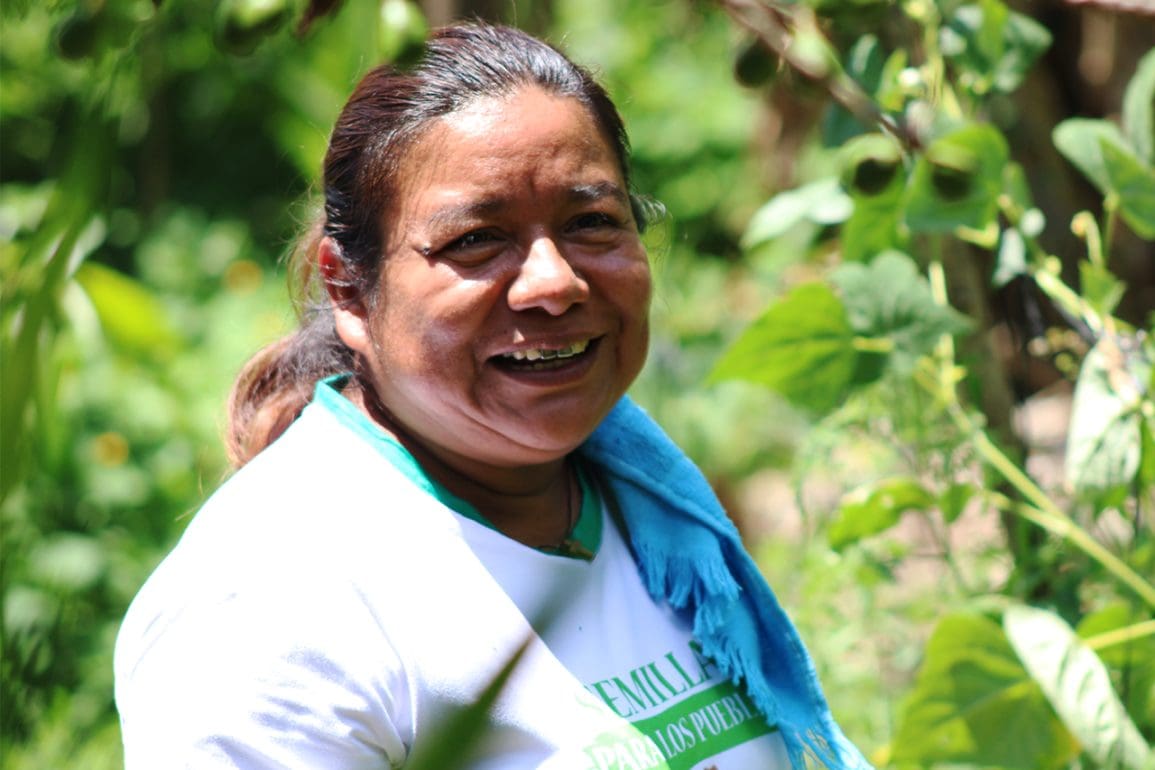
Ana Martínez is an expert in organic crops and a promoter of local initiatives in the development of home gardens.

She has more than 20 years of experience in cultivation and organic production . She is most active of the women’s group that promotes the creation of home gardens in her municipality to generate their own food and trade.
Background Information
Though interest and investment in organic farming and gardening initiatives in El Salvador are growing, they are still not as widespread as their non-organic counterparts.

In El Salvador, it is estimated that 12.5% of the adult population (over age 20) suffer from Type 2 diabetes, which, according to the recent population census, is equivalent to approximately 400,000 people.

On the other hand, more controlled but more lethal diseases such as chronic renal failure affect 12.6% of the adult population, with a mortality rate of 41.9% per 100,000 inhabitants.

SANTA CRUZ MICHAPA, El Salvador—From the moment I pick up my tools and prepare the land, motivation fills me. It is difficult for me to describe what this feeling entails, but it is as if my passion whispered in my ear that everything will work out.

Whether under the scorching summer sun or in the cold winter wind, there is no other feeling like embracing the fertile environment with its intense smell of damp earth flowing through the air. Nature has that ability to fill you with life. I feel a strong responsibility to respond to the environment by working with organic alternatives to grow crops without chemicals.

Discovering a love of agriculture and learning

As a child, I did not have any special fascination for agriculture. My whole family has worked in farming since I can remember, but the act of working the land gave me allergies. I collaborated from my trench, taking care of them by making food.

My mother’s motivation and the needs of our home slowly engaged me in the world of crops. As I learned its ways, my interest also grew.

When I turned 22, I felt so intrigued that I began to look for ways of learning new things. With the help of workshops organized by the Archbishopric of San Salvador through the Pastoral de la Tierra, my fascination for this world bloomed.

I was always at a disadvantage as I did not have the opportunity to go to school. I didn’t know how to read or write, so when I started receiving training, the only way I had to retain that information was to memorize it and practice it as much as I could.

My desire to learn was so great that I began to teach myself how to write. Usually, I would make up scribbles and lines that only I understood, but they helped me organize my ideas.

I began school when I turned 30 years old; by then, I had been learning about organic farming methods for eight years. My desperate need to learn had me studying in the capital every weekend. I managed to get to sixth grade, and that was it.

I learned a lot thanks to school, including how to read and write. However, most of my personal development took place in Pastoral de la Tierra, where I learned to value myself as a human being, express myself, and, step by step, overcome my shyness.

As confidence grows, so does passion for teaching others

I fell in love with teaching when I saw firsthand its ability to transform living conditions. It feels intimate to witness how a crop grows when someone gives it their time and effort until it bears fruit.

I feel fulfilled when someone asks me for help to lead a training or course, and when other institutions take me as a reference to train in other communities.

It is even better when I see that people put my teachings into practice and that they are intrigued to keep trying.

Turning toward the organic home garden during COVID-19

The mandatory COVID-19 confinement decreed by the president of El Salvador negatively affected our community; we had very limited outings, and the closure of markets prevented us from buying food and supplies for cultivation.

That is why a local women’s development association (AMFODIC) proposed training for our community’s women to grow their home gardens.

From the start until the reopening of the markets, we trained about 15 women who already have their home gardens. We insist on organic supplies because we know the damage that agricultural pesticides and fertilizers can do to the environment, the land, and people’s health.

Companies and even other farmers look down on the organic crops we grow, because they require a lot of preparation and perseverance. They also need more care compared to crops that receive chemicals sprayed once every 15 days. The difference is that the chemicals can poison people, reduce the nutrients in the earth, and damage the environment.

Issues like diabetes, kidney failure, and asthma abound so much, partly as a result of people not knowing what they consume. We, however, have full control over the health of the food we put on our table.

I would love for everyone to grow organic crops. It’s the responsibility of all humans to preserve the earth, the environment, and, of course, our health.

All photos by Luis Rivera
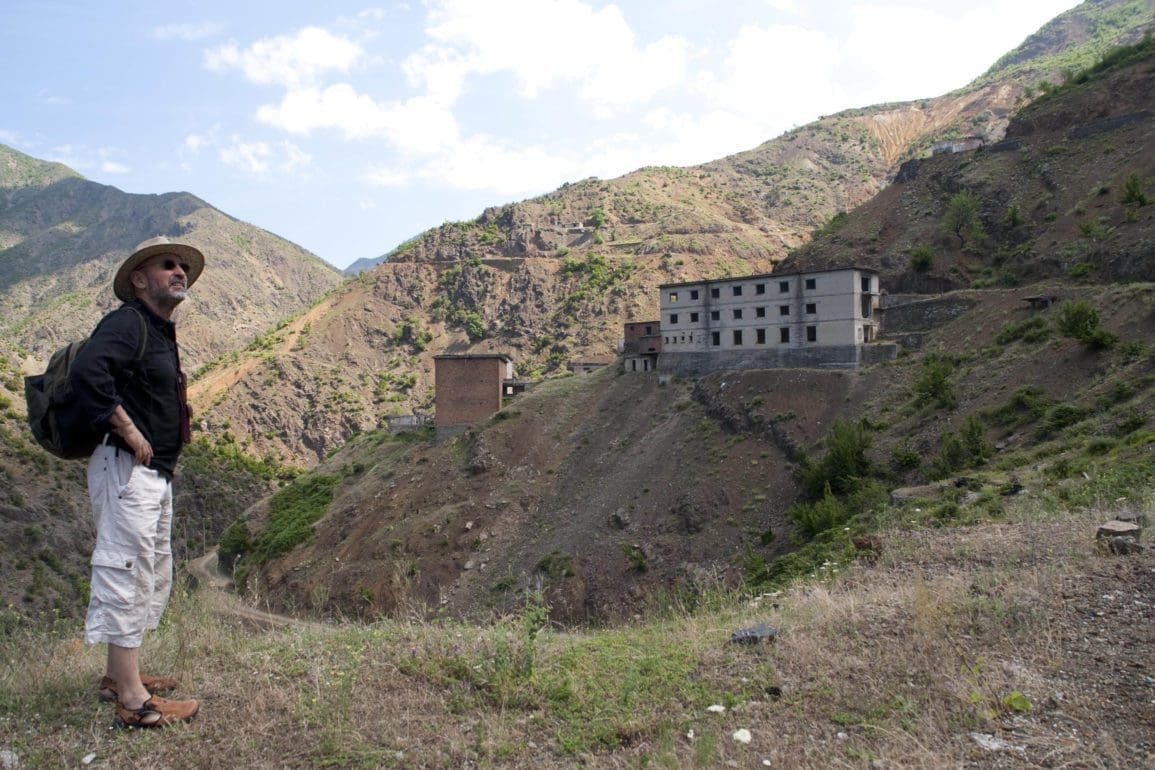
Former political prisoner fights to preserve Albanian cultural heritage

Fatos Lubonja
Interview Subject
Fatos Lubonja is an Albanian writer and dissident. During the communist regime of Enver Hoxha in Albania, Fatos spent a total of 17 years in Spaç prison, considered the worst gulag in the country at that time.

Lubonja has written several books about Hoxha’s Albania and is currently a outspoken critic of the country’s current current political parties and leaders.

He edits and publishes a literary magazine Përpjekja (Endeavour) in Tirana, which he founded in 1994 and received the SEEMO Award for Mutual Cooperation in Southeast Europe in 2004.
Background Information
Enver Hoxha ruled Albania for four decades as a totalitarian, Stalinist-style communist leader until his death in 1985.

Though he revolutionized the country’s industrial capabilities and helped it become almost entirely self-sufficient, he achieved this by brutal tactics of imprisoning, exiling, or killing thousands of citizens seen as dissenting or disloyal.

The country was eventually entirely isolated under his rule, and still showed signs of the regime’s repressive tactics into the 1990s.

Spaç Prison was a notorious Albanian labor camp established in 1968 at the site of a copper and pyrite mine, in a remote and mountainous area in the center of the country. It has been described by a former prisoner as “the most terrible camp in Europe and I think in the world during this period.”

TIRANA, Albania—I spent 17 years in prison for allegedly being an enemy of my country during the totalitarian, Stalinist-style communist rule of Envar Hoxha. I endured the worst years of my life behind those walls. Now, I walk around Tirana and see how the new governments are trying to erase our history. It’s terrible.

Authoritarian Hoxha regime targets enemies of all types

Hoxha clung to the extreme ideologies of the Soviet Union’s Joseph Stalin, long past his successor Nikita Khrushchev condemning them. If Hoxha’s government accused you of a crime, you were classified as an enemy of the working class, which turned you into an enemy of the party and the socialist state in general. It repressed the entire population.

The regime’s campaign against its political enemies began in the 1970s in three different purges. The first was ideological, which resulted in the repression of intellectuals and artists. This is when they imprisoned my father and accused him of being a “liberal,” or person who wanted to open the door to the degenerative influence of the West.

The second purge affected the military, and the third involved those accused of sabotage. The government arrested and sentenced according to various articles of the Penal Code, the most common being “Agitation and Propaganda against the Regime.” Sentences ranged from three to ten years in prison.

However, the worst punishment, death, was for those who tried to flee the country, an action the Penal Code considered “Treason.”

I receive prison sentences, my friends face death

The first time the regime imprisoned me, it was for agitation and propaganda was when they found my diaries and writings with my thoughts against Hoxha. They sent me to the Burrel prison where I was to spend seven years. 

The second sentence came while I was serving the first. A group of imprisoned intellectuals, including two journalist friends of mine, sent a letter speaking out against Hoxha. The government sentenced them to death for “Creation of a Counterrevolutionary Organization.”

They declared me a member of this alleged organization because of my ties to the journalists. After a sham of an investigative process without even the right to appeal, they sentenced me to another 16 years in prison.

For the crime of writing a letter, my friends were executed.

Locked up in the worst gulag in Stalinist Albania

With the second sentence came my transfer to Spaç. They sent me there as my father was in Burrel Prison, and they didn’t want families to be together.

Spaç was not just a prison; it also functioned as a labor camp where prisoners worked in mines in terrible conditions. If we didn’t comply, isolation cells awaited.

At Spaç, I didn’t have a single day off. Every day, they woke us at 5 in the morning, organized us into brigades, and took us to the mines where we worked all day. We did eight hours of work plus an hour and a half of transport each way to get to the mine.

The mine was an unimaginable situation; the hammers and explosions created unbearable amounts of dust, all of which you breathed in. There was no water. When you came out, black dust coated you completely.

My time in Spaç was a time of terror; I couldn’t feel safe even in my cell as we were more than 10 prisoners crammed into each one. They recruited prisoners as spies—they usually accepted as a means of survival and to avoid further punishments.

There came a time when I couldn’t take it anymore. It was clear to me that I was going to die there; I thought it impossible to survive 16 years like this. I refused to work.

And then the worst began—they sent me to the isolation cells.

In these, time did not pass. I could never leave the cell; constantly alone, I was locked in those four walls without being able to contact anyone, without anything to do or occupy my mind. I remember scratching the walls and counting the days I had been in there.

The winter was especially bleak. I only had a sheet to cover myself. I was there for months, assuming every day that I was going to die in that cell.

The beginning of the end of my nightmare

Hoxha died while I was still imprisoned, and finally, the days of his regime were numbered.

They started to release some of the remaining 2,000 prisoners, but even then I was not freed, only taken back to Burel with a very small group of fellow “dangerous enemies.”

Following Albania’s first democratic elections in 1991, the Italian Prime Minister accused the government of continuing to hold political prisoners. As a result, I finally saw freedom again on March 17, 1991 after a total of 17 years in prison.

Fighting to preserve Albania’s past and cultural heritage

It has been more than 30 years since the Hoxha regime fell. Rather than preserving our history to learn from it, the government seems determined to see it obscured instead. This is a consequence of the years after the fall of communism when the elites in power had no interest in maintaining our Albanian cultural heritage.

The Pyramid of Hoxha, formerly a museum of the Hoxha regime, is slated to convert to a kind of IT educational center for youth. The National Theater of Tirana has been destroyed.

Spaç is part of our history as well, and is practically in ruins. A foreign organization is in charge of keeping it standing, but members of the public can no longer see what I believe are the most important things, such as the mine or the view of the entire compound with its fences and control towers surrounded by mountains.

The government sees these places, like Spaç or the National Theater like trees to cut down for a profit. Many of our historical buildings that show our heritage those of the Ottoman Empire, those of Italian aesthetics, and even those of the Hoxha era—are gone in the name of new, large, modern buildings. I consider this a caricature of neoliberalism and globalization; it happens all over the world, but in countries like Albania, it is much more extreme.

The destruction of these buildings continues our collective trauma, the kind experienced when someone dies at the hands of a regime: when one of us is killed, we are all killed. “Whoever forgets their history is doomed to repeat it”, said Primo Levi. In Albania, we cannot afford to forget places like Spaç, which have marked the soul of its people forever.

All photos by Marta Moreno Guerrero, except when otherwise noted

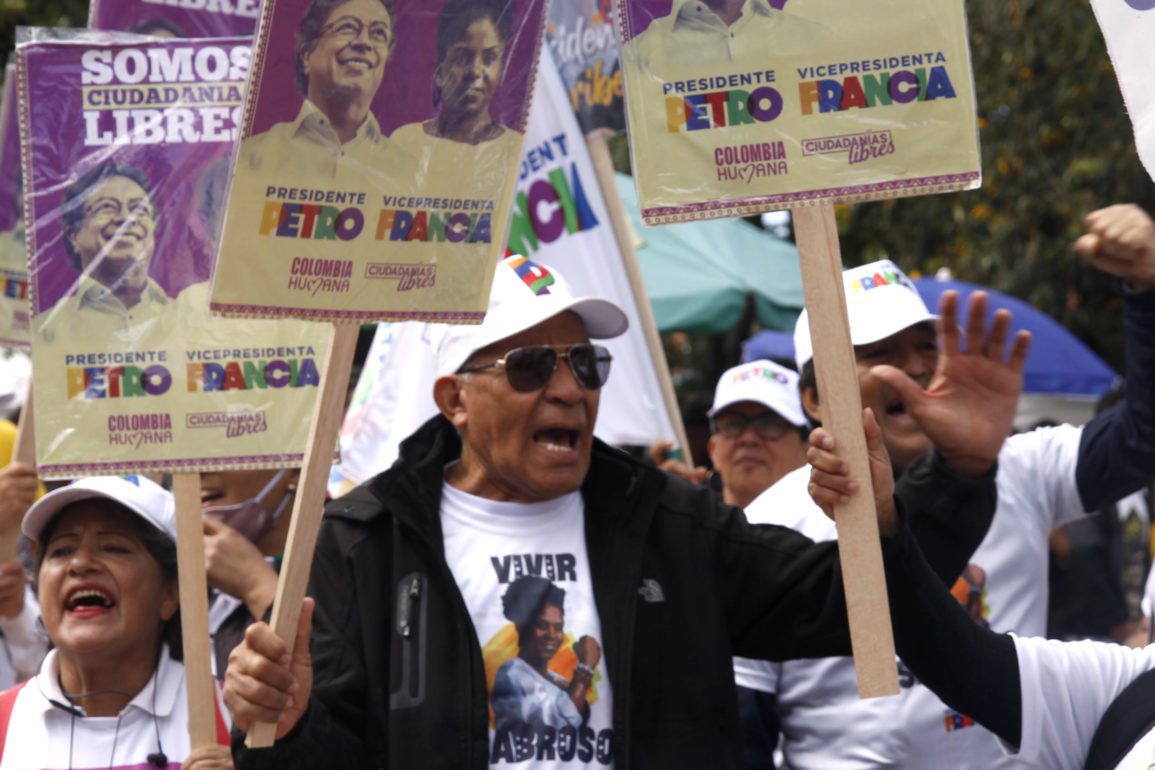
‘Vivir Sabroso’ on Afro-Colombian Day: Francia Márquez closes out campaign

BOGOTÁ, Colombia—Hundreds gathered in Parque de Los Periodistas (Journalists’ Park) in the center of Bogotá on May 21 to support Francia Márquez as she wound down her vice-presidential campaign.

If she wins alongside far-left presidential candidate Gustavo Petro in the presidential election on May 29, she will be the country’s first Black vice president.

Fittingly, the date of Márquez’s last campaign event also marked the commemoration of Afro-Colombian Day.

Márquez has rallied marginalized communities in Colombia, such as Black, indigenous, poor and rural populations, and called for them to unite and make their voices heard for systemic change. She has called out the classism, racism, and poverty present in Colombian society at the center of political discourse. One of her party’s main campaign slogans, ‘Vivir Sabroso,’ translates to “Live Tasty,” essentially calling for everyone to be able to enjoy equal opportunities and a good, fulfilling life.

An environmentalist, lawyer and activist, Márquez was born poor in in the department of Cauca in southern Colombia. 2018 she was awarded the Goldman Prize, sometimes called the Nobel Prize for the environment.

She has faced death threats during her campaign, and her security team had to escort her out of the public rally on May 21 as a safety precaution after someone targeted her with a laser.

All photos by Mariana Delgado Barón

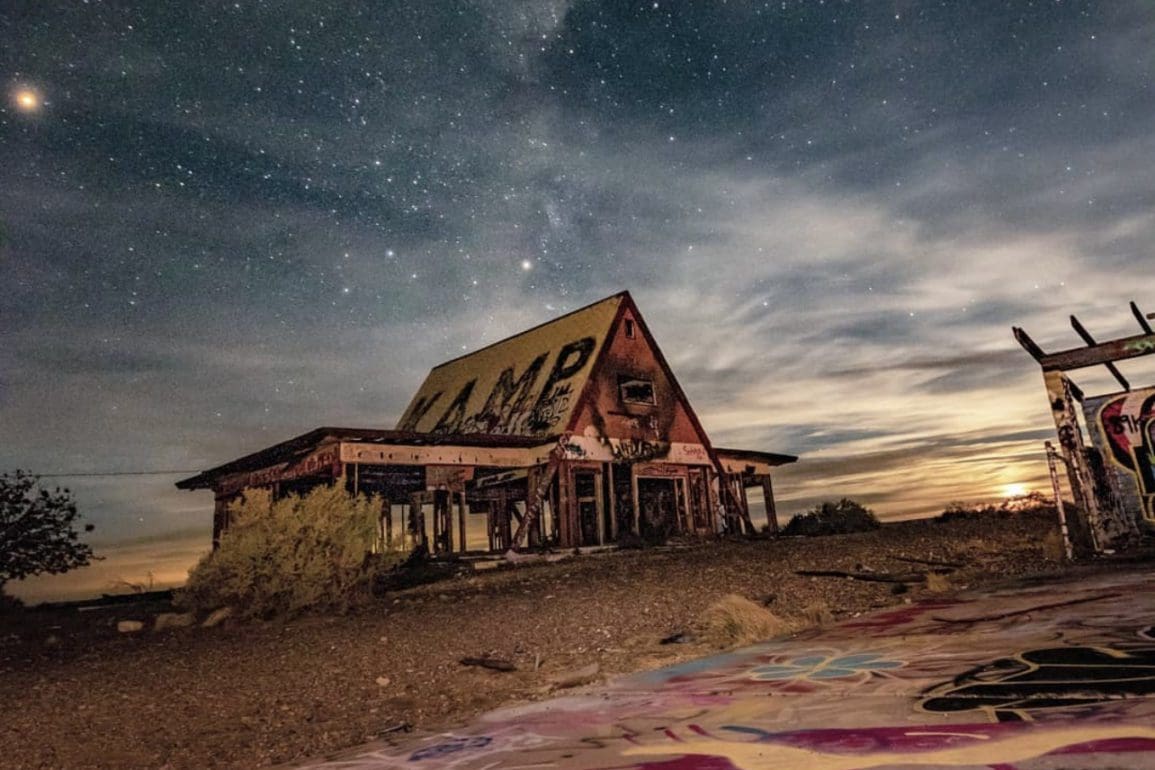
The Supernatural Southwest

A selection of photos featuring interesting people and places in Arizona and other locations in the American Southwest.

Photographer Joan Wood was born and raised on the outskirts of the Tonto National Forest in Mesa, Arizona and later spent seven years in Flagstaff.

She grew up in a family of outdoor enthusiasts, and they encouraged her to follow her passions, which included skateboarding, snowboarding, camping, rock hounding, fishing, and hunting. These experiences became her inspiration for capturing the essence of nature on film.

Explore Joan’s photography on her Instagram page. It is also displayed in a self-titled gallery at the Four Peaks Mining Company in Scottsdale, AZ.

For more on Joan’s story, check out “Arizona photographer chases storms to capture nature and honor her homeland.”

All photos by Joan Wood

Arizona photographer chases storms to capture nature and honor homeland

Joan Wood
Interview Subject
Photographer Joan Wood was born and raised on the outskirts of the Tonto National Forest in Mesa, Arizona and later spent seven years in Flagstaff. She grew up in a family of outdoor enthusiasts, and they encouraged her to follow her passions, which included skateboarding, snowboarding, camping, rock hounding, fishing, and hunting. These experiences became her inspiration for capturing the essence of nature on film. Explore Joan’s photography on her Instagram page and see more of her work in her “Supernatural Southwest” photo gallery. It is also displayed in a self-titled gallery at the Four Peaks Mining Company in Scottsdale, AZ.
Background Information
Monsoon Season: Monsoon season in Arizona is a definitive meteorological event that runs from June through September. Summer air flow and pressure changes bring shifts in humidity causing lightening, hail, flash flooding, extreme heat, and dust storms.
Extreme Arizona Temperatures: Over the last 50 years in Phoenix, the average summer temperature increased 3.6 degrees Fahrenheit, causing nine more days per year with temps over 110. The summer overnight low is up 5.5 degrees.
Experts attribute it in part to climate change and in part to the extremely fast and expansive human development occurring in Arizona. There appears to be a correlation between these trends and both a decrease in water supply and increase in wildfires.
Local residents and experts have expressed concern over this massive urban sprawl, and some like Joan use their talents to honor their surroundings.
Storm Chasing: Defined, storm chasing is the “the activity of following extreme weather events such as violent storms in order to experience, photograph, or study them.”
According to The Weather Station, many storm chasers work for news stations or the National Weather Service and help to provide on-the-ground information, while others chase for art or adventure.

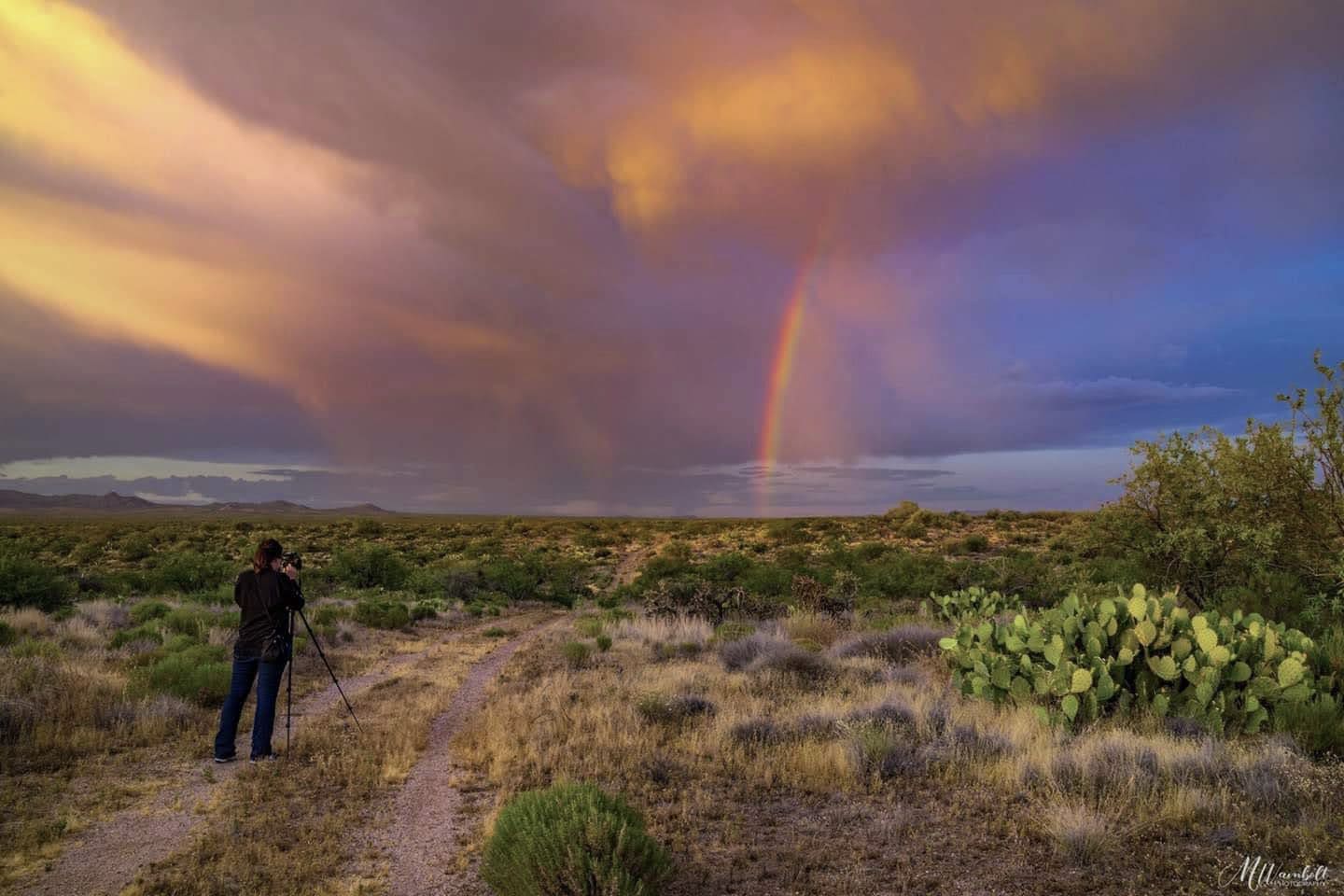
MESA, Arizona—Down in the valley where I live, hot air rises from the desert floor and pushes up the mountain sides. As it elevates, cumulus clouds form. Brilliant, white, and puffy, they stand alone in a vast blue sky. During the summer monsoon season, I wait for them to mature, turning dark and ominous, until they give way and erupt. A downward draft of cool air drives toward the earth, and the desert is blessed with rain.

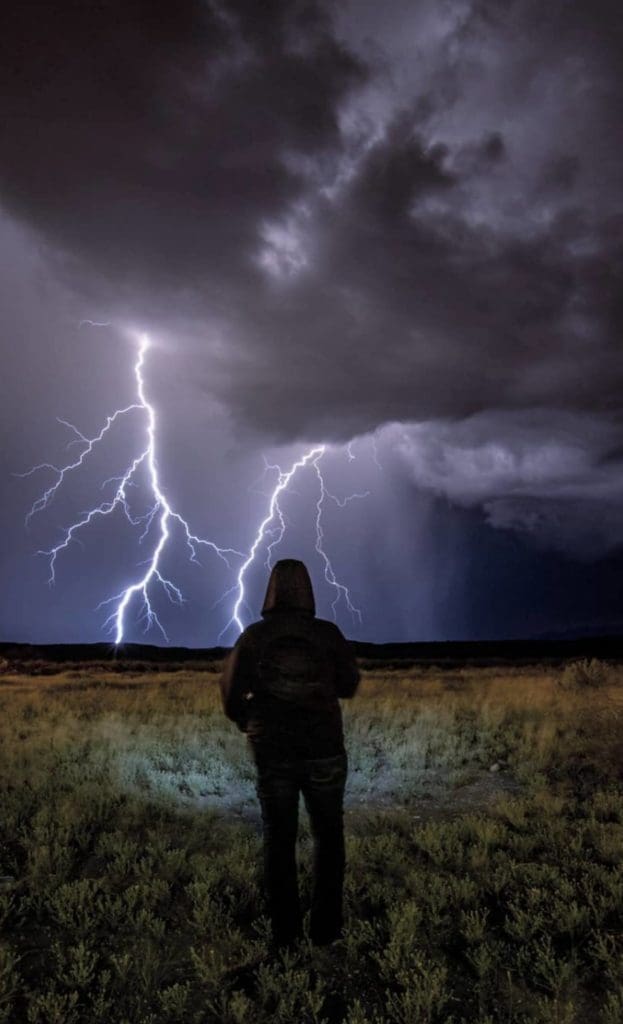
As the hot air rises and the cold air falls, the currents slide past one another. The friction creates electrical charges of lightning. My camera documents their brilliance, but nothing I do is by happenstance. I study the science, and I chase the storm.

History, landscape in Arizona’s East Valley creates photographic wonder

The valley I call home is surrounded by magnificent mountains born of volcanic shifts. I see White Tank Mountains to the west and the Sierra Estrella range to the south. The Superstitions span for miles and in the Tonto wilderness, Four Peaks rises high toward the sun-soaked sky.

I scout landscapes during the winter off season. Hiking remote, untouched locations, I seek spots I can photograph during twilight; places far from the light pollution born of growing cities and massive development projects.

As I traverse the deserts and volcanic hills, I find awesome places of history where few have trailed before, places where you can still find a small, old cross on a single unmarked grave from the 1800s. Being in the right place at the right time to capture a storm requires an understanding of science. I study the behavior of clouds, funnels, tornadoes, lightening, and super cells.

The science of chasing storms in Arizona’s monsoon season

The East Valley heat regularly reaches 110 to 115 degrees Fahrenheit in the summer. Some days, the temperature gauge in my car reads 120 or more. When the hot, dry heat converges with lack of rain converge, wildfires erupt, and my work becomes dangerous.

Experience has taught me to be careful. These Arizona skies are beautiful, powerful, and unpredictable. The science becomes critical to staying safe. When storms move through the Gulf Coast and make their way southwest, I turn on three different radar sources and use maps to determine where the clouds are forming.

They pop up quickly and move, while I plant myself on a mountainside or in front of a squall line. These moments are fleeting. I may have an hour to document the storm before it dissipates and reemerges in the distance. I follow the formations through the night as nature offers my lens wickedly beautiful moments.

The smell of desert rain; a cool reprieve from summer heat

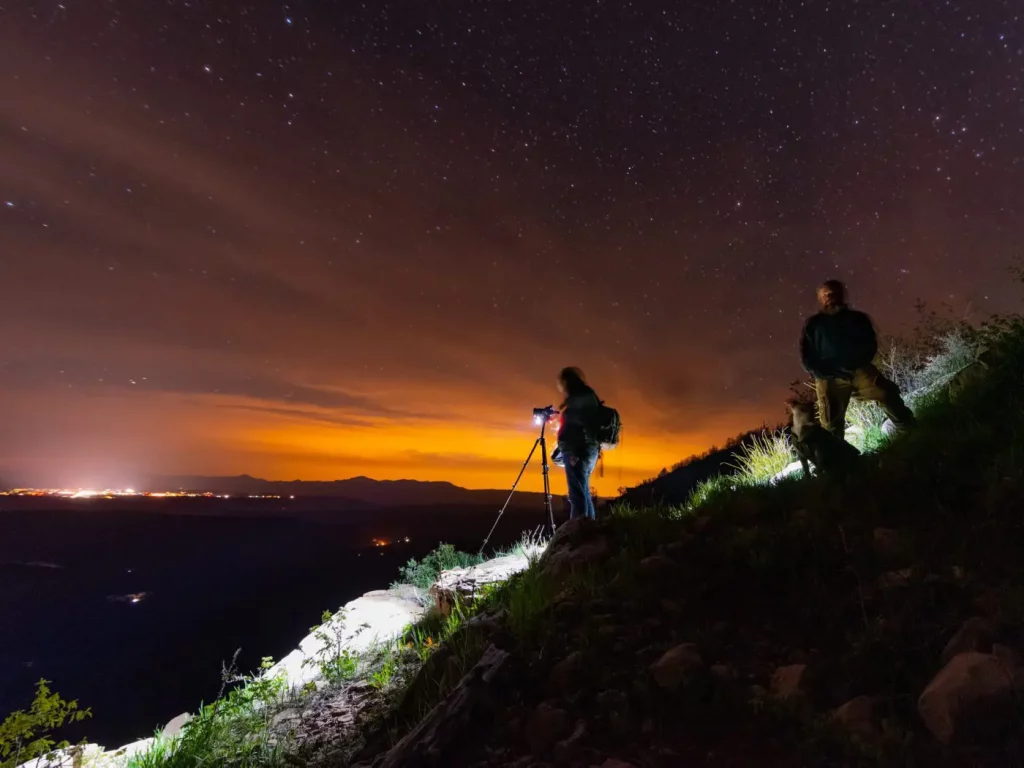
I chase two seasons in the summer – monsoon season and Milky Way season. True magic happens when I capture them simultaneously. Once I find my location, I set up my camera and wait. Surrounded by a starry sky, I photograph wild desert animals as I wait for the powerful storm. With my camera set on timer or long exposure, it detects what the eye cannot see.

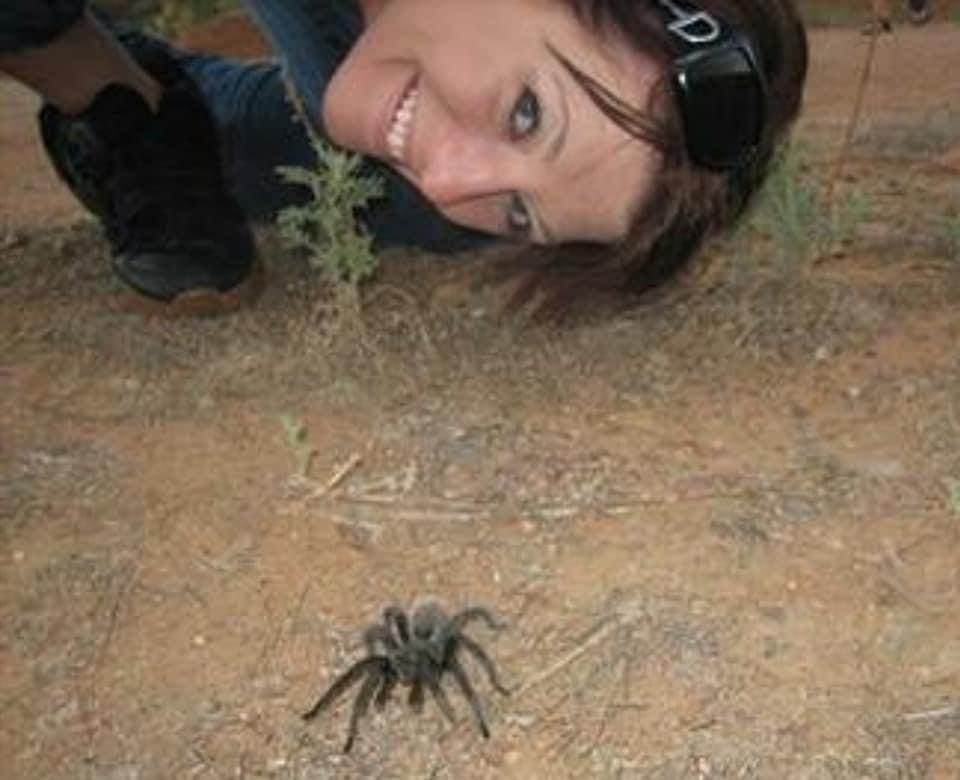
Self-portrait with a local spider in the Superstition Wilderness, AZ | Photo by Joan Wood

The images I captured on screen tempt me to move closer to the storm, but I know I have to choose caution and stay in a safe place. I know that the storm in the distance will disperse and pop up again a couple miles away.

Patience is key; I stay for an hour and then move as the clouds rebuild in a new spot. When the rain finally comes, it falls on the cacti, the chaparral, and the prickly pear. A smell rises through the air as the water mixes with the natural oils on the foliage. Relief from the summer heat arrives on the tail of cool downdrafts, creating breezes that fill the atmosphere with nature’s aromatherapy.

Hurricane Rosa delivers astounding images for storm chaser

The valley is like a bowl in the desert. Flatlands are capable of pulling clouds downward. When a funnel forms and grows a tail, it can turn into a tornado. Other times, the leading edge of a squall line or storm system forms into a shelf cloud. It looks like an alien spaceship spanning the horizon.

Joan at her camera above The Mogollon Rim in northern Arizona | Photo by Jason Blaaw

In 2018, the remnants of Hurricane Rosa blew through Arizona. A huge shelf cloud formed from Quartzsite all the way to Sedona, a distance of more than 200 miles. As I drove, I saw the enormous squall line stretch from city to city, nearly halfway across the state. The hurricane brought us a day so magnificent it felt apocalyptic.

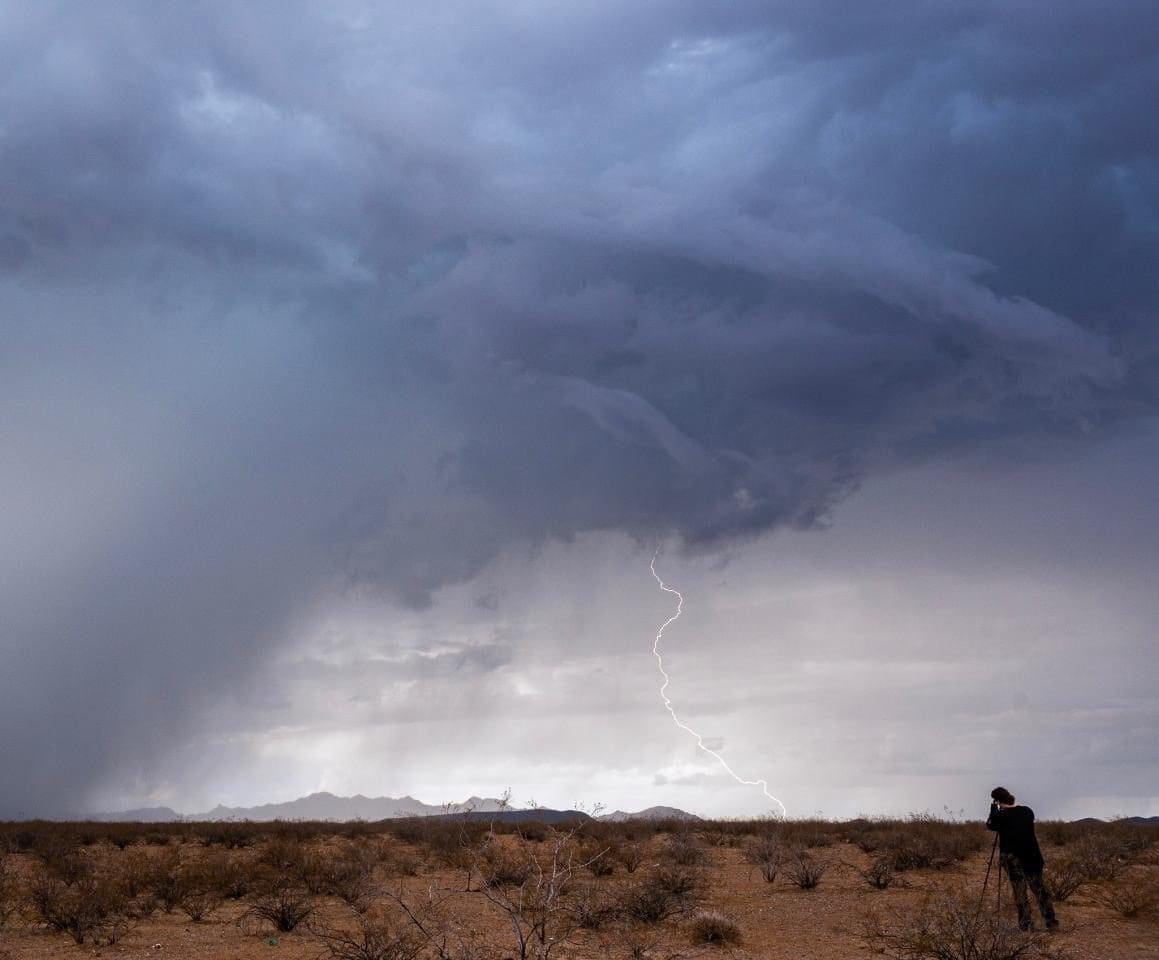
Joan shooting the remnants of Hurricane Rosa in 2018 as it sweeps through Ajo, AZ | Photo by Matt Wilczek

As the huge, ominous storms poured down on the cholla cactus and the mountains, my pictures emerged. I stood on the mountainside with my friends; we saw funnels building and dropping, downbursts of fierce rain, lightning bolts striking, and the pouch-like protrusions of mammatus clouds hanging under the formations. Our cameras never stopped clicking.

Honoring history and nature amidst Arizona’s development boom

Self-portrait in Dragoon, AZ | Photo by Joan Wood

My pictures are more than simple images of nature. The journey I take with my camera has roots and purpose. I have been a desert rat since I was young. As a little girl, my father took me out into the Arizona wilderness and shared its history. We used to drive down an old dirt road to a steak house and cattle drive. Today, that same restaurant is surrounded by skyscrapers.

I chase storms and photograph the desert because I know what it was like when I was a child, and how different it is now. My work is a trip back in time, yet I capture the timelessness of nature. Searching for a storm is more than just looking for lightning. In the desert, we are always hoping for rain and a better spring. For me, the act of photography is like a rain prayer.

It also honors the past. There was a time I could walk out of my backyard and straight into the desert. Now, I must go deeper to get away from the development, the concrete, and the light pollution. Our deserts hold incredible history that must be remembered, from Native American legends to old mining towns. Sadly, many places have been demolished, vandalized, or replaced with construction.

It is a pleasure to chase down the history of my homeland, to capture the forces of nature in the most beautiful and remote places. Back home, clicking through the images on my computer screen, I feel a rush of excitement. My work has meaning.

All gallery photos by Joan Wood

Joan at work in Florence, AZ | Photo by Melissa Wambolt

Potato farming, past and present: Colombian farmer tries to survive despite increasing obstacles

Luís Riveros
Interview Subject
Luís Riveros has lived his entire life in the village of El Rodeo in the municipality of La Calera, a town near Bogotá. He grew up in a peasant family that grew potatoes to survive.

Luis tried to follow in his father’s footsteps, but had to look for other sources of income because he didn’t make enough farming to feed his family. Though he is farming a small piece of land behind his house currently, he also works as a lawnmower at a golf club in La Calera.
Background Information
Luís, like many farmers in the area, has grown potatoes for his own family’s consumption and also for sale. This year the price of potatoes, a staple food of Colombians, increased 140%, affecting not only consumers but also growers.

Behind this exorbitant inflation is not only the increase in the price of supplies necessary for crops to prosper but also the lack of state support for the peasantry, and the absence of an agrarian policy that benefits the Colombian countryside. The COVID-19 pandemic and global supply chain issues have also played a role.

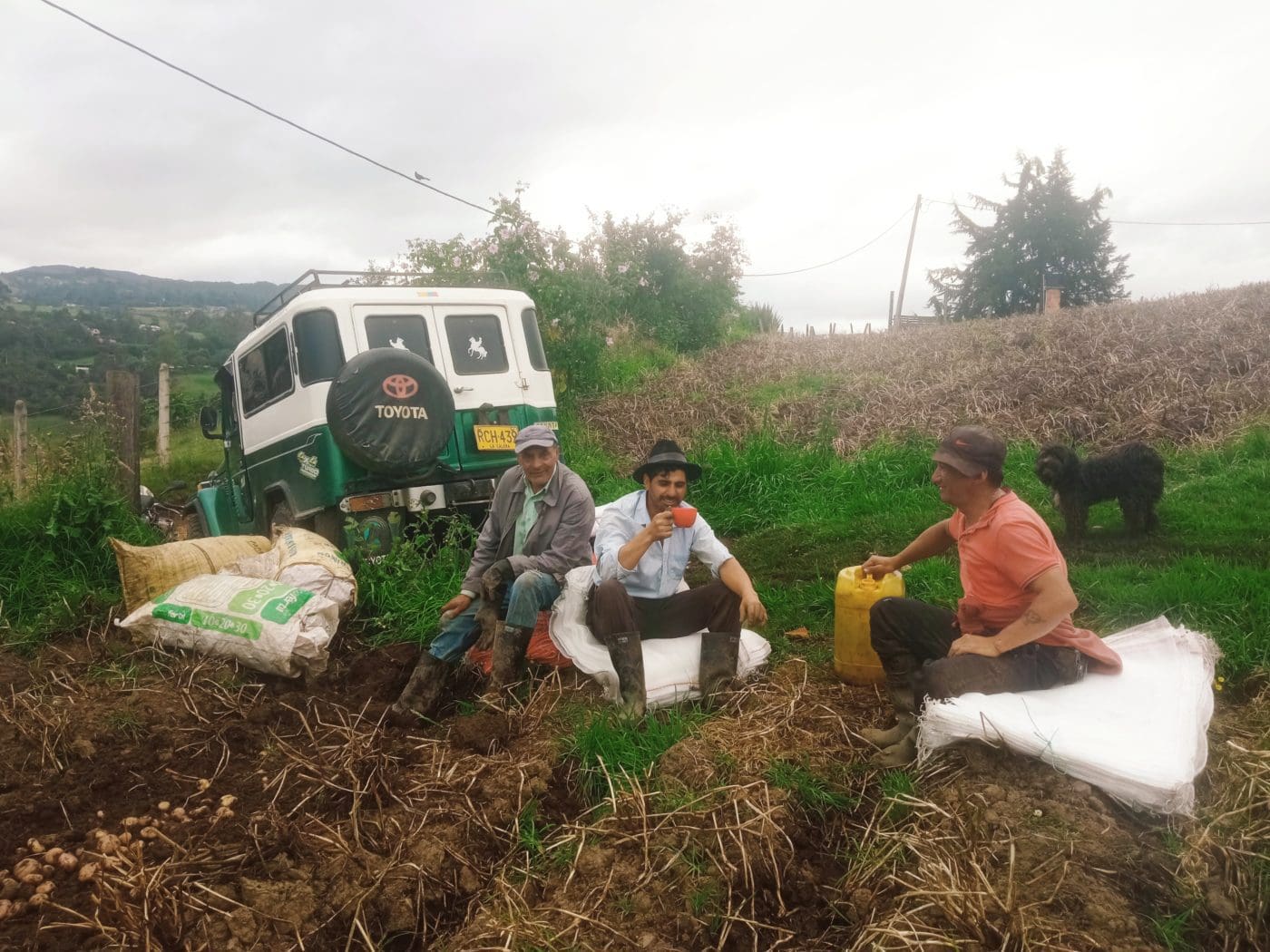
LA CALERA, Colombia—I’ve been growing and harvesting potatoes since I was a young boy. It’s hard and dirty work, but it is how my family survived. I’ve returned to the fields in an attempt to help support my family, but things are no easier.

Potato farming is in my blood

My father came to La Calera, a town near Bogotá, when he was 32 and immediately began to grow potatoes. At that time, all the land belonged to a single hacienda (plantation or estate) called “El Encenillar.” It had four owners, but over the years they began to divide the land out and sell those plots. My dad and the rest of the growers in this part leased those lands to be able to grow crops.

Thanks to hard work, around 1958 or 1959, my father bought 6 fanegadas (equivalent to about 9.5 acres). He told me that this land had cost him 20,000 Colombian pesos (about $5 USD), which he paid little by little. He eventually had to sell half a fanegada to finish paying.

My family consists of 11 siblings: nine men and two women. The older children helped my father in the fields, and my mother used to cook for the farmworkers on a wood stove. As a result, today she suffers from health issues with her lungs.

My father stopped growing potatoes because of his age; it is hard, back-breaking work. None of my brothers continues with farming, only me—however, I cannot dedicate myself exclusively to that either.

Working the fields as a child

When I was a child helping in my father’s fields, we could only take the load out in a yoke of oxen or on the back of beasts; it was a journey of half an hour there and half an hour back. There was no way to get the load out by truck since the only roads were bridle paths the mules themselves forged. Now, those same paths are unpaved roads.

I was 8 when I started helping my dad. Since I was still little, they put me to pick the “riche,” which is the last potato left from the crop. First, the thick potato is collected, then the medium/second highest quality, and then the riche, which is the smallest, and used to feed the pigs. When I was older, I had to herd the mules that carried the loads of potatoes.

I also had to carry out my mother’s home-cooked food to the workers by foot. Loaded with heavy pots of food, I walked those same bridle paths as the mules four or five times a day.

Cultivating the potato could take three weeks to a month, depending on the amount planted. Similarly, the harvesting process depended on the fanegadas or the amount planted. A mule could carry 250 pounds of potatoes in a load, and we typically harvested up to 30 loads.

The growers themselves had to sell their cargo of potatoes directly at Corabastos, the largest wholesale market and central supply center in Bogotá. To sell there, we had to arrive at 3 a.m., which meant leaving the farm with our loads at 1:30 a.m.

The traders were—and are—the ones making the money. They buy from the farmers without any negotiation.

Facing obstacles of plague, poison, and lost crops

As for me, I’ve seen ups and downs while farming for myself. I managed to plant up to 20 loads some years, but because of the cost of maintaining the crop and the dedication it requires, that was the most I could handle. I lost a lot of money, and it went very badly.

In 1994 I had done well with crops that I planted on rented land. So the following year, I rented more and planted six loads of potatoes. Little did I know that would be the year everything changed for the worse thanks to the arrival of the Guatemalan moth.

A plague that abounds in summer, these moths decimate the potato crops, leaving the plants completely black and inedible in 15 days. My crops in 1995 were a total loss.

To prevent the pest from damaging the crop, we have to spray pesticides several times while the plants grow. Back when my father farmed, the potato did not require as many chemicals as it does now. We diluted a chemical in water and used a yoke of oxen to disperse it.

Nowadays, the fungicides are much stronger—it feels like all we eat are chemicals. But if we do not spray them, the harvest will not prosper, and nothing will grow.

Continuing the fight to farm and make a living

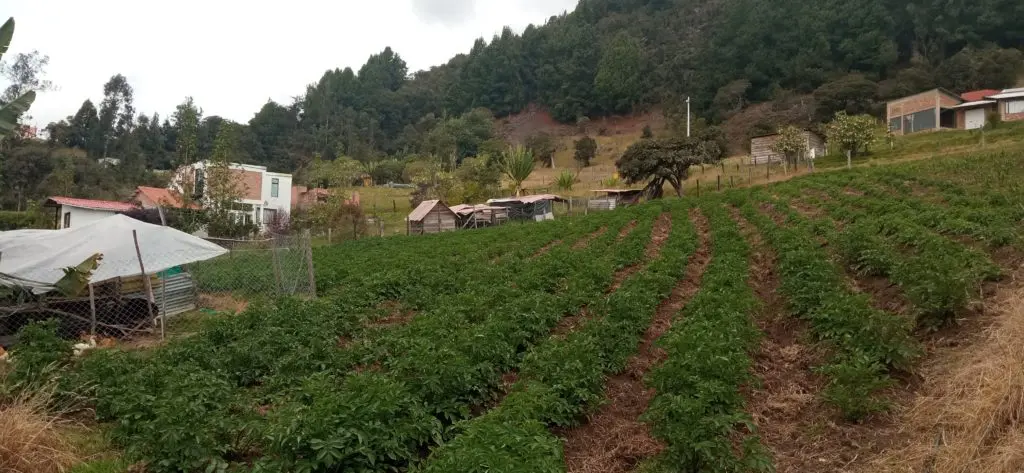
The last big crop I did was in 1998, and I worked another job for stability. After many years of not growing, this year I did it again, but on a small scale. I have a piece of land behind my house, and there was enough space to plant two loads. I also cut grass for a golf club.

The hardest thing about living in the countryside is the dedication required in terms of time and money. It is hard to go into debt in order to be able to buy all the supplies a crop requires, but many small farmers like me have no other alternative.

The farmers who are part of an association receive some support from the government such as tractors, fertilizers, or seeds, but it’s minimal compared to all the expenses. Those of us who are not must take out of our pocket to pay for everything.

In addition, the earth itself has changed. There is less land to farm because the country has become built up; there is more cement than crops. Climate change plays a role too—there used to be several nacederos o nacimientos, (water springs), but now they are scarce. When it is very hot, the rainwater that has fallen is lost. In the past, the water did not dry up. 

Despite the factors weighing against me, I hope that this year things work out and I can earn some money. 

All photos by Mariana Delgado Barón

Luís is taking a gamble that he will be able to turn a profit on his small crop of potatoes this year | Photo by Mariana Delgado Barón

Residents of Buffalo, NY honor victims of mass shooting at community vigil

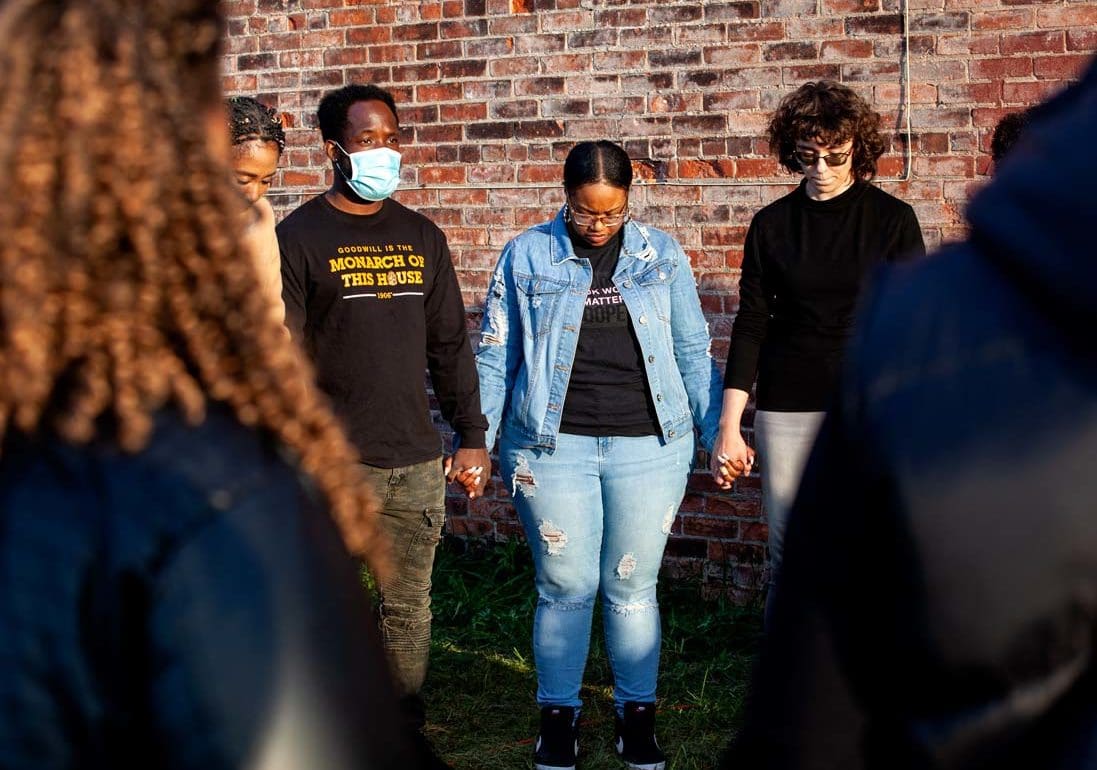
BUFFALO, New York—Community members gathered on Buffalo’s East Side on May 17 to honor the lives lost in the recent mass shooting at the neighborhood’s Tops Friendly Market grocery store.

At the intersection of Jefferson Avenue and Riley Street, adjacent to the site where 10 people were gunned down and three more injured on Saturday, May 14, residents, community organizations, musicians and speakers came together to commemorate the victims and provide words of encouragement, flowers, and donations of food.

The 18-year-old shooter traveled 230 miles from his home in Conklin, NY to carry out the shooting. The FBI confirmed it’s investigating the murders as “both as a hate crime and racially motivated violent extremism.”

All photos by Brandon Watson

El Salvador’s Festival of Flowers and Palms

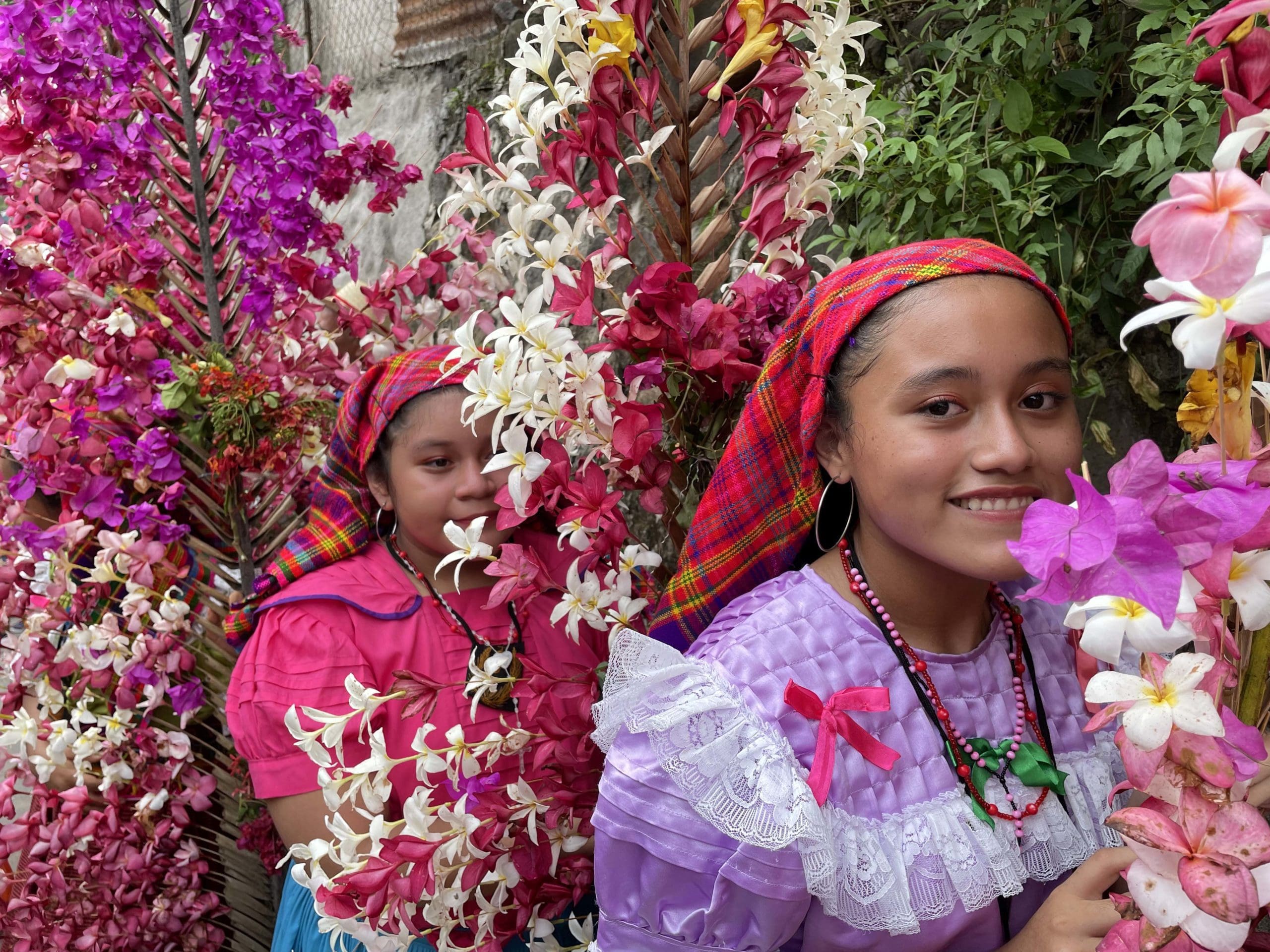
PANCHIMALCO, El Salvador—Hundreds gathered this past weekend to celebrate the annual Festival of Flowers and Palms in the town of Panchimalco, located in the department of San Salvador.

Held annually during the first weekend of May, the festival celebrates the Virgin Mary and ushers in the country’s rainy season. In addition to the religious procession that culminates in a Mass, the event involves all-day celebrations, dancing, music and food.

Thousands of brightly colored palms and flowers and the blending of Catholic and indigenous traditions make the festival one of El Salvador’s most striking.

All photos by Beatriz Rivas

Diverse groups march for adequate working conditions, worker protections in Bogotá

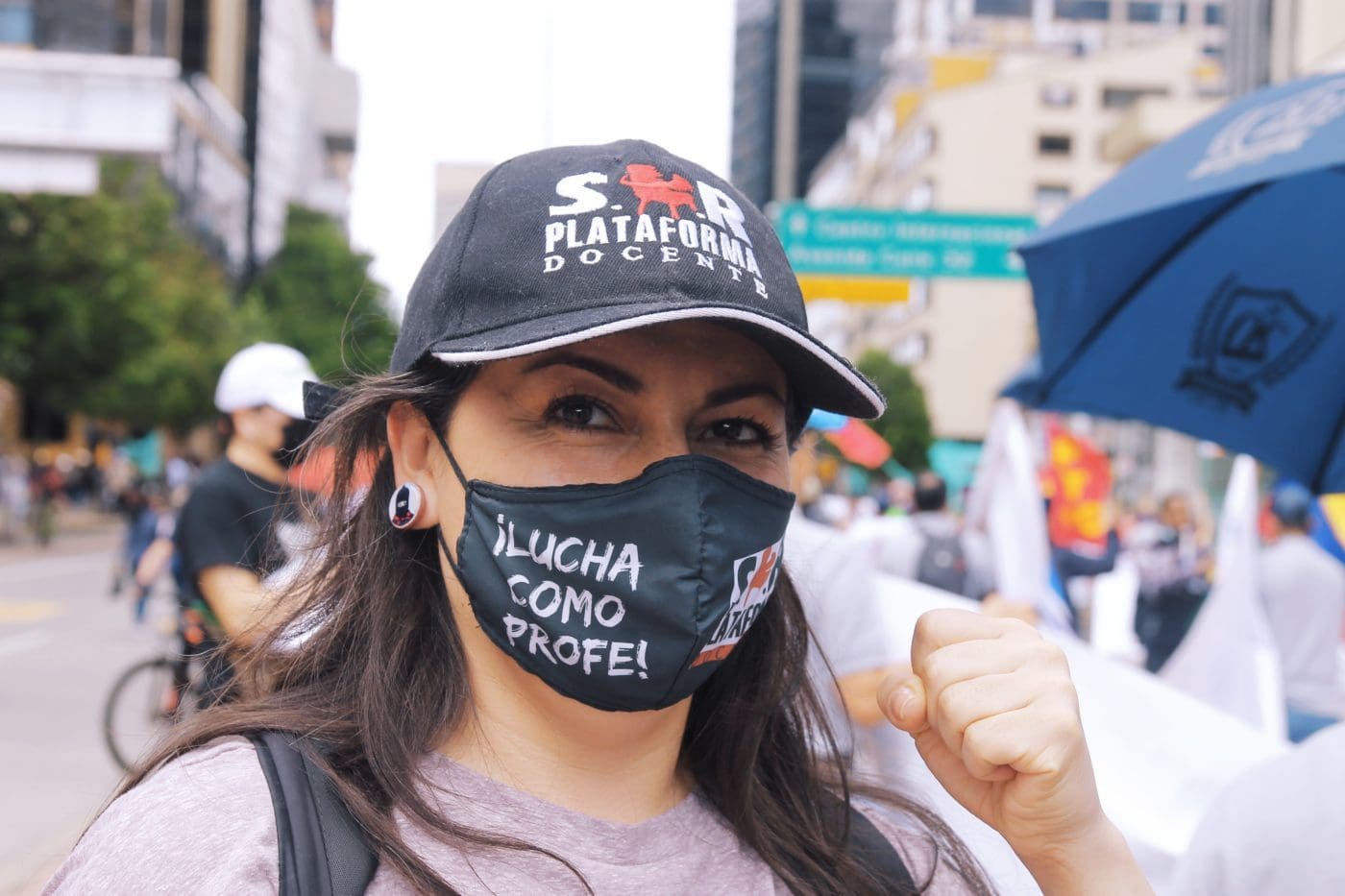
BOGOTÁ, Colombia—On May 1, more than 4,000 people marched through the streets of downtown Bogotá to mark International Labor Day. This national holiday recognizes the work carried out by workers throughout the country as well as the poor conditions, human rights violations, low pay and other injustices many laborers still face.

According to the National Administrative Department of Statistics (DANE), the country’s unemployment rate for March 2022 was 12.1%, compared to 14.7% in March 2021.

Despite that drop, more than 5.65 million Colombians are employed in the informal sector as of November 2021, without guaranteed contributions to their social security. That figure represents 48% of the employed in the country’s 23 main cities.

This year’s march brought together diverse social and political groups, with yellow, white, and red flags filling the air as they marched. Demonstrators included representatives from the Central Union of Workers (CUT); the Colombian Federation of Educators (FECODE); Colombian Communist Youth (JUCO); the District Association of Workers and Education Workers (ADE), the Colombian Labor Party (PTC), and the Partido Comunes, born from the former guerrilla of the Armed Forces Revolutionaries of Colombia (FARC).

Bountiful harvests in El Salvador as country marks International Labor Day

SONSONATE, El Salvador—Every May 1, El Salvador marks International Labor Day. This national holiday recognizes the work carried out by workers throughout the country as well as the poor conditions, human rights violations, low pay and other injustices many laborers still face.

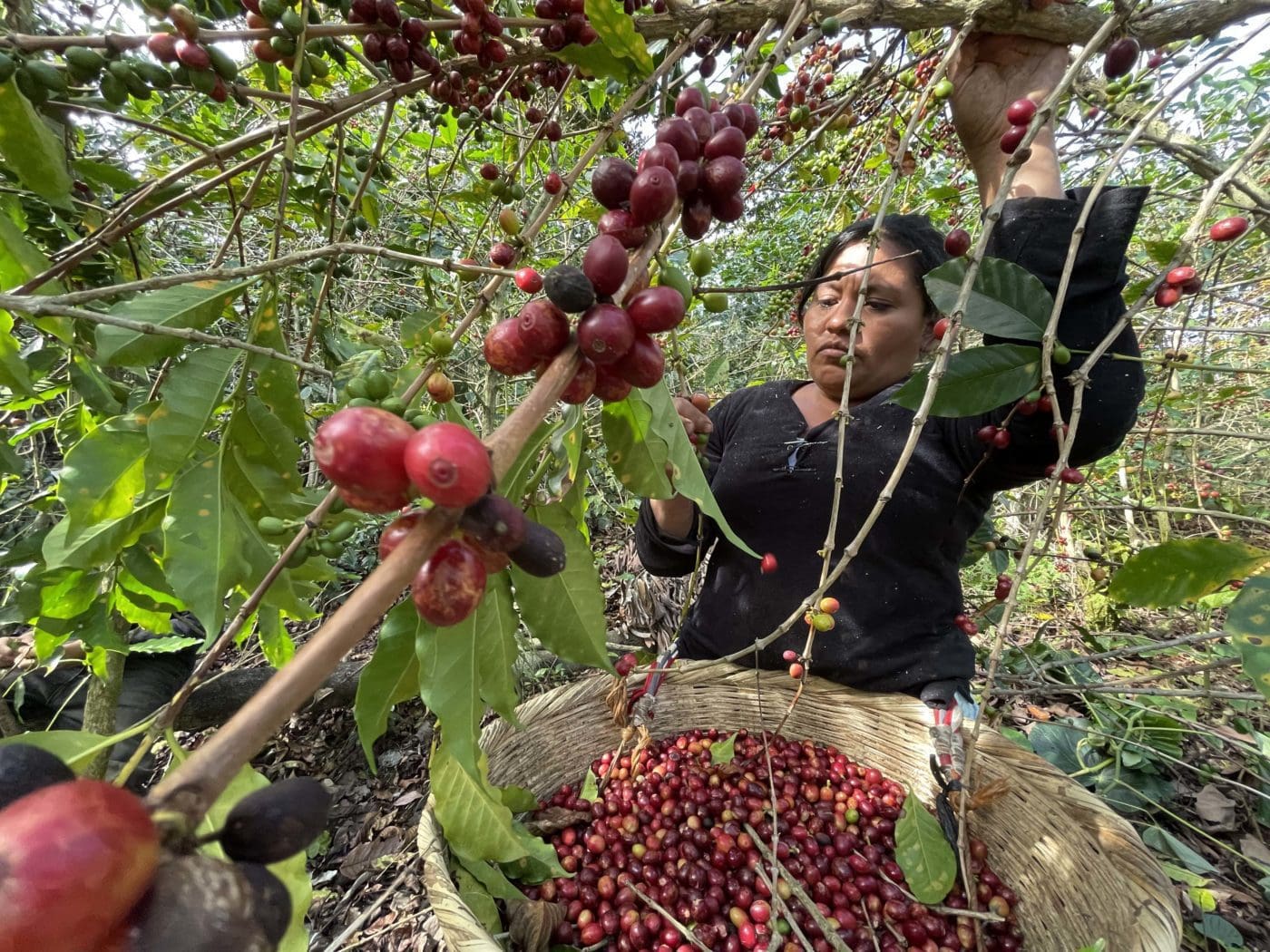
In El Salvador, farming represents a critical function in staple food production, the well-being of rural areas, and the generation of income and jobs. It provides employment to 18.6% of the economically active population. However, worries exist that the farming population is growing increasingly older as younger people flock to urban areas for more opportunities.

The fertile hills of northern and western El Salvador produce most crops. In departments like Chalatenango, Sonsonate and Santa Ana, highways cut through miles of corn, coffee, rice, sugarcane, and vegetable fields. Coffee, “red gold,” is the country’s largest cash crop.

All photos by Beatriz Rivas

Blind men find vocation making mattresses in El Salvador

Pastor Echeverría
Interview Subject
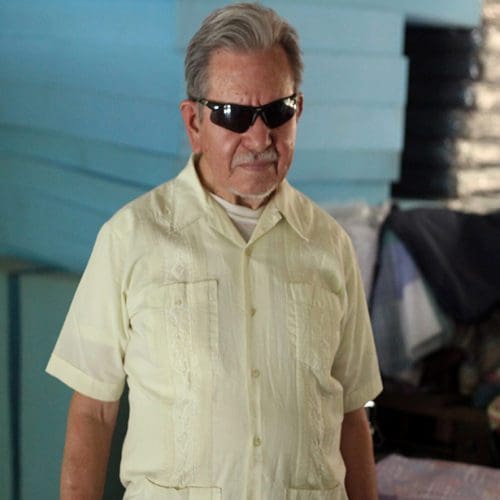
Pastor Echeverría lost his vision at the age of 28. He now makes mattresses by hand along with five other blind/visually impaired people at Colchonería Santa Lucía.
Background Information
As of 2018, there was approximately 118,525 adults in El Salvador with some type of visual disability, which represents 2% of the country’s population.

People with visual impairment faces continued accessibility and lack of public policy in areas such as public infrastructure and transportation, education, and employment.

For more information, visit:
Association of the Blind of El Salvador
National Association of the Salvadoran Blind

SAN SALVADOR, El Salvador— With solely touch at our disposal, my colleagues and I make mattresses and pillows at Colchonería (Mattress) Santa Lucía. My blindness has not prevented me from learning all the things that are done here, but it did scare me at first.

After going blind, I didn’t think I was going to be able to tell the time by touching a clock, much less cut and measure fabric and make a mattress by hand. It was difficult for me to learn, but my desire to learn and in turn be able to teach it to others overcame any fears.

My new skills give me courage and satisfaction with my life. I enjoy my work—my hands are my instrument.

My life changes overnight when I go blind

I’m not ashamed to say it—I have cried my eyes out over my blindness, but I always trust in God’s mercy. It was hard, after having sight, to lose such a critical sense. However, I’ve never reached the point on thinking of taking my own life.

It started with what I thought was a mild problem. The doctor told me at first that it was an infection in the optic nerve, but during a later examination, they found I had cataracts. I had surgery, but I already had retinal detachment and nothing could be done. My financial limitations did not allow seek further treatment with a specialist. I was now a blind man.

Before losing my vision, I worked in the fields: picking coffee, fertilizing the milpa (corn fields), and doing whatever else was needed. With that, I survived. Once I went blind though, I had to spend a lot of time doing nothing. I felt completely boxed in by my new limitations.

Finding a new start in San Salvador

When I was approximately 35, I migrated from the department of Cabañas to San Salvador, and my father helped me get into the School for the Blind. It was difficult to come to the capital and adapt. In the beginning, I sweated from nerves every time I walked through the streets and heard the cars. I have managed to overcome many of those fears with time.

When I got out of the School for the Blind, I spent a lot of time unemployed, sending job applications from place after place, never hearing back. It was a full year without working. After that, I came to the Association of the Blind, and they opened their doors to me in 1984.

I finally started working making materials for bathrooms, and it was there that I met two colleagues who could already make mattresses. They taught me in turn and I decided to join that venture, seeing the lack of opportunities for my current sector.

Here, we made cotton mattresses and mats. I spend much of my time here, but I also try to find balance and dedicate time to my wife, who has been with me since before I went blind. She is my only family, because we do not have children.

How to make a mattress without sight

I started with simple mattresses and small products. At first, they weren’t turning out great, but little by little I learned and have been improving. Now I pride myself on offering quality work strive to offer and make new products.

Currently, my role is supporting the fabric cutting for our products. I am in charge of cutting the covers, then it goes to the sewing stage and finally the sheathing.

Over time, I’ve learned to identify fabrics by touch, carefully placing my hands on top and trying to feel every single part of its surface. Plain fabrics are the hardest to work with—the lack of distinguishing features make it more complicated for me. However, sometimes that’s what you have to use.

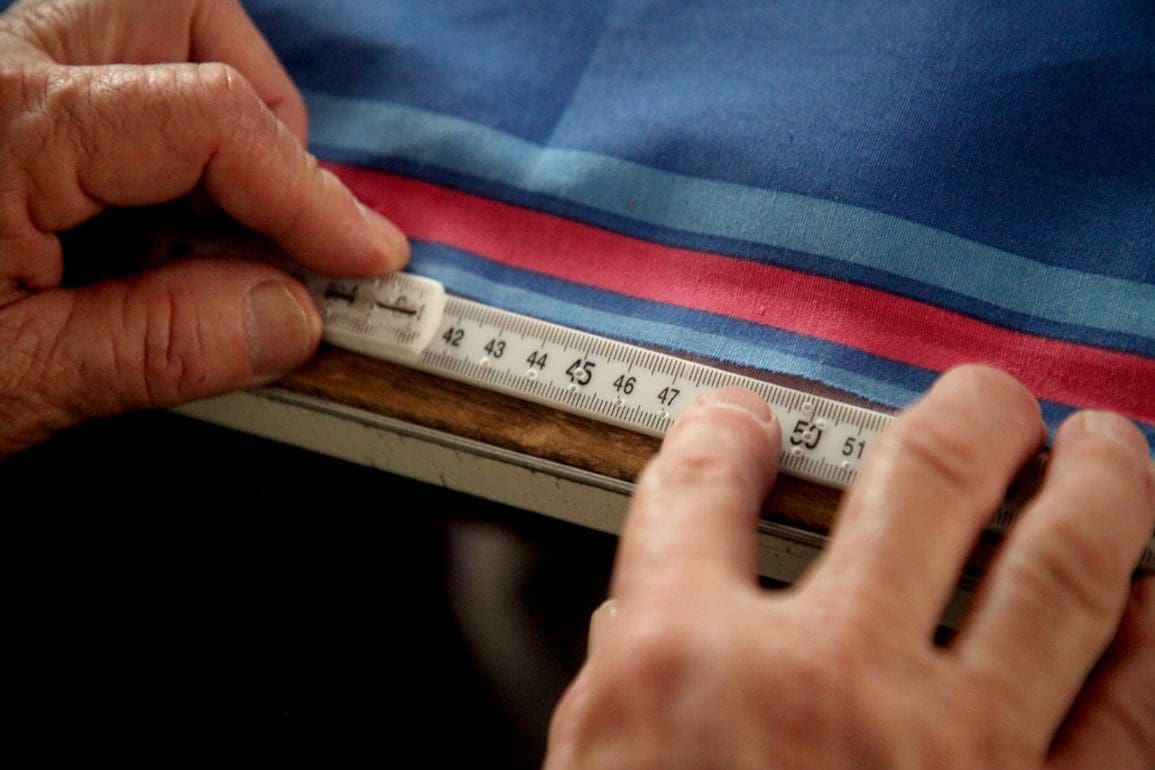
To start, I take the fabric out of the roll and square it on my table (measuring 2.40 by 1 meters, or 7.8 by 3.2 feet) so that the cut is even in length and width. The table is my guide—it shows me where to go. I fold the material in two parts, place my index finger on the tip of the scissors, and slowly begin to cut. Sometimes I also use my thumb mounted on the other finger, so there is less chance of hurting myself.

Using scissors scared me at first, but I learned this to conquer this over time as well. Although I have cut myself several times and it still occasionally happens, my fears have dissipated.

From time to time I also support cutting foam of different sizes; they are measured using the braille method. After cutting the fabric, the other partners sew, and then the products are melted.

Trying to hold our own with an artisanal product

All of us who work here are blind. Though our work is high quality, we struggle because our traditional, artisanal and non-industrial process means it takes us longer to make the products. Our clients sometimes tell us commercial mattresses are cheaper, but we show them our process so that they can appreciate the quality they’re getting.

We also can’t produce large quantities at a time, and what we are able to earn suffers as a result.

The salary is not enough for me; before the pandemic it was a little better, but now I come to work a little just to help, knowing I will not make enough to support my family. However, I feel satisfied with my co-workers. Our team supports each other.

There are good and bad days. I make an effort to advertise our products, and sometimes we get enough projects to keep ourselves busy. When there is a lot of work, we even involve relatives to support us.

Even though we encounter challenges at Colchonería Santa Lucía, I feel good regardless. Before I used to beg for work; since I learned this new trade I feel incredibly proud and satisfied when I finish a new product. This achievement is not only because of my efforts but because of what God has achieved me. It fills me with joy.

All photos by Cecilia Fuentes

Argentinian activists protest to mark Earth Day 2022

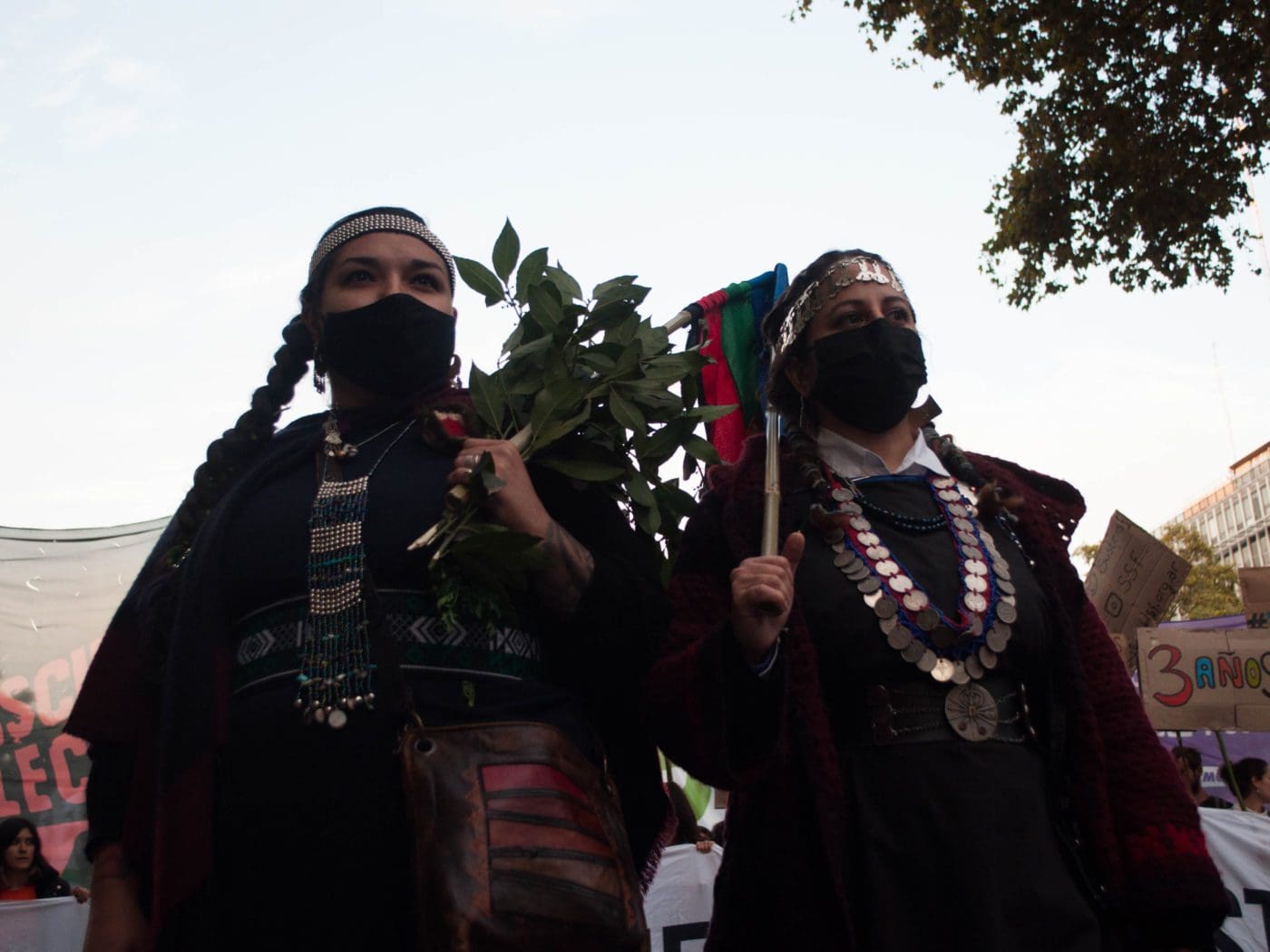
BUENOS AIRES, Argentina—April 22 marked Earth Day 2022, which bore a theme of “Invest in Our Planet.” In Argentina, various social and political groups, advocacy organizations, indigenous communities, and individuals mobilized to protest for better environmental protections and actions from the government.

Recent environmental issues and concerns in the country include extreme weather events, such as increased wildfires and flooding; large-scale mining activities by international companies that are causing pollution and water scarcity for indigenous communities; and long-delayed approval of the Wetlands Law, which would “regulate, protect and conserve” Argentina’s biodiverse wetlands.

All photos by Eva Velazquez