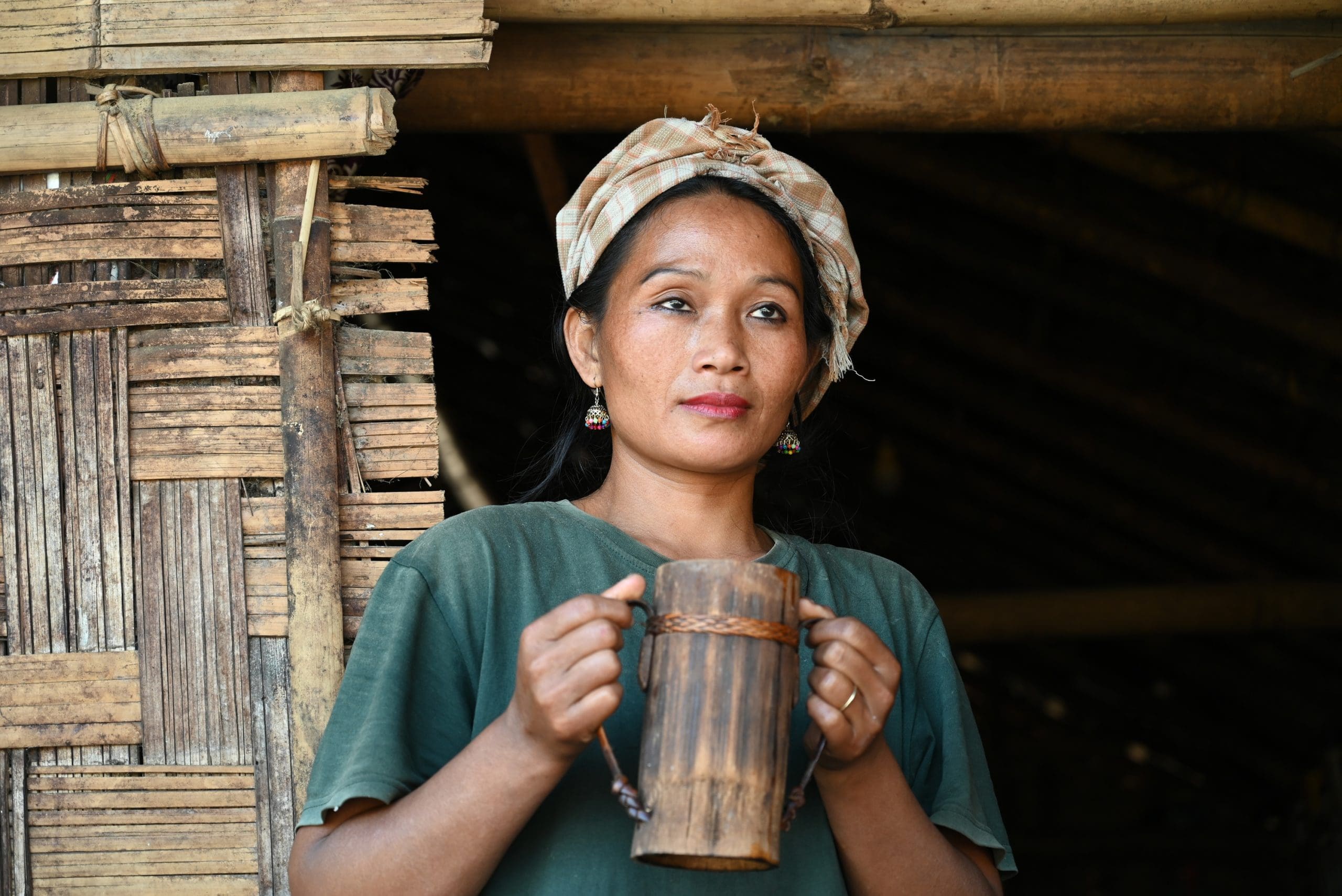
Photojournalist captures magnificence of Arunachal Pradesh, the Land of the Dawn-Lit Mountains

ARUNACHAL PRADESH, India ꟷ They call it the “Land of the Dawn-Lit Mountains.” In the Indian territory of Arunachal Pradesh, each morning, the rising sun lights the little village of Dong Valley. As the furthest state in India’s northeastern region, it remains renowned for its untouched beauty and rare, indigenous floras and faunas.

Arunachal Pradesh shares borders with diverse neighbors – Bhutan to the west, China to the north and northeast, Myanmar to the east, Assam to the south, and Nagaland to the east and southeast.

The people of Arunachal Pradesh

With the lowest population density of the nation, approximately 13 people live per square kilometer in Arunachal Pradesh. They represent about 50 dialects. Only a handful of the communities have written scripture. Most people practice the Donyi-Polo religion, named after the sun and the moon, which they worship as deities.

They divide into 26 major tribes and more than 100 sub-tribes, each with its own traditions and customs. They coexist peacefully. The principal tribes include Adi, Galo, Aka, Apatani, Nyishi, Tagins, Bori, and Bokar. Some tribes, like Monpas and Khamptis, practice Buddhism in the Mahayana and Hinayana traditions. Other tribes share animistic religious traditions, like the Mishmis and Wanchos. They adhere to their own ancient beliefs and customs.

Being a truly tribal state, celebrations remain an important and fundamental element of the people’s social-cultural life, and the bulk of these celebrations maintain agricultural themes. Numerous tribes observe harvest celebrations. Some annual festivities call for the success of the crops or display the creativity and talent people possess in music or dance.

Tourism circuits offer unique experiences

Arunachal Pradesh features 12 tourism circuits. With varying ethnic groups, geography, and vegetation, each tourism circuit boasts a unique character. The foggy hills, glittering rivers, and gushing waterfalls enhance the splendor of this extraordinary landscape.

According to legend, this is the region where the sage Parashuram made atonement for his wrongdoing. Legend has it that he atoned for his misdeeds in the Parashuram Kund in the lower reaches of the Lohit River. The sacred site draws people who want to take the holy plunge in the Kund on the day of Makara Sankranti. Here, King Bhismaka established his kingdom, sage Vyasa pondered, and the wedding of Lord Krishna and Rukmini took place.

The twisty roads of Arunachal Pradesh make it the perfect place for a riding trip. The state’s chief minister, Pema Khandu, recently inaugurated an event in Pasighat dubbed “Explore Beyond” to encourage tourism. The state has a wealth of scenic beauty that promotes rest and renewal. Fishing, culture, festivals, spirituality, river rafting, heritage, and wildlife remain enjoyable pursuits.

History, background, and tourism permits

Arunachal Pradesh became a full-fledged State on February 20, 1987. It boasts 83,743 square kilometers of land, with an evergreen forest covering more than 82 percent. Its previous name, the Northeast Frontier Agency, changed in 1972.

The location sits between latitudes 26°28 and 29°30 N and longitudes 91°30 and 97°30 E. The south includes a subtropical climate, and the north is alpine. Over 3,000 millimeters of rain fall on average each year. The tribes of Arunachal Pradesh depend heavily on their forests for sociocultural, economic, and ecological well-being.

It boasts approximately 500 different varieties of orchids, untamed rivers, indigenous bird and animal species, and thick, impenetrable woods with rich green foliage. Its diversified culture, panoramic terrain, and flavorful cuisine, make it one of the most popular travel destinations for tourists.

Traveling foreigners in groups of two or more are permitted to submit an online PAP (Protected Area Permit) application for a 30-day period. Permits can also be obtained at a checkpoint or tourism office. Foreign visitors must pay $50 USD per person in royalties to the state government, and PAP applications must be submitted through authorized local tour operators.

Indian nationals use the eILP, valid for stays up to 14 days. One can apply for a provisional ILP if staying for more than 14 days. For those under the age of 14, an individual eILP is not necessary.
Oldest Chinatown in the world celebrates the Lunar New Year

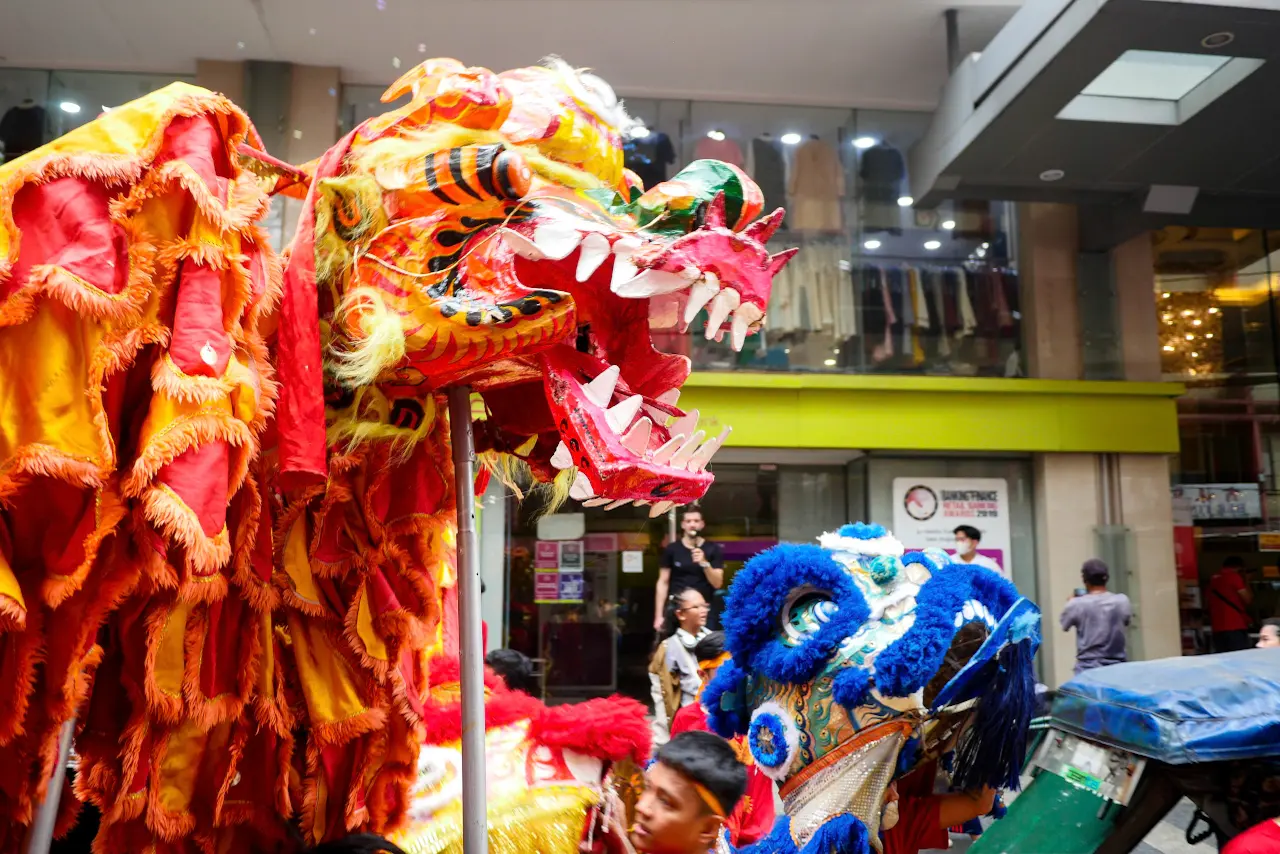
MANILA, Philippines ꟷ Chinese Lunar New Year celebrations remain one of the most important annual events for people in China and of Chinese descent in the 21st Century. The Binondo District in the city of Manila in the Philippines is the oldest known “Chinatown” in the world. Residents there continue to host their annual Lunar New Year or Spring festival, drawing huge crowds.

Read more stories from the Philippines at Orato World Media.

While COVID restrictions no longer apply, health officials urged caution. Still, in 2022, the festival truly came back to life. The unique street experience of the Manila festival stretched from Plaza Santa Cruz all the way to Plaza San Lorenzo. Blocked off from traffic, the historical Jones Bridge became the venue for an impressive fireworks display. People flocked to Ongpin Street where tourists mixed with locals. Together, they experienced unique Chinese culture, businesses, food, and parades.

The crowd grew and grew as the countdown to the Chinese Lunar New Year began. Tourists excitedly witnessed fire-breathers, The Dragon and Lion dance, and other highly anticipated moments.

A city with an incredible history and the oldest Chinatown in the world

Luis Pérez Dasmariñas established the Binondo district, or Manila’s Chinatown, in 1594 just across the Pasig River near Intramuros. Spanish colonial rulers strategically located the world’s oldest Chinatown in its present location to keep watch over the Chinese immigrants.

Yet, even before the Spanish colonization of the area, the location served as the center of Chinese trade and industry. Many successful Filipino-Chinese people thrived in all types of industry from the Binondo district. Today, their influence expands outside the Binondo district to Quiapo, Santa Cruz, San Nicolas, the Tondo district, and the whole of Metro Manila.

Chinese New Year is popularly known as the Lunar New Year and Spring Festival. It is believed to bring prosperity and hope not only in China but also to Chinese communities around the world. This festival follows the lunisolar calendar. That is why it doesn’t have a fixed date on the Gregorian calendar. The sun and the phasing of the moon provide the date of the Chinese New Year that usually falls somewhere between the third week of January and the third week of February.

This 2023 the Chinese New Year fell on January 22 along with the New Moon phase. The Spring Festival continues for 15 days until the full moon occurs. Binondo, the oldest Chinese community in world, continues to bring Filipinos and tourists to experience the Chinese culture that has shaped and contributed to the world.

All photos courtesy of George Buid.

I vogue as a form of resistance, transforming Colombia’s streets into a political stage

Interview Subject
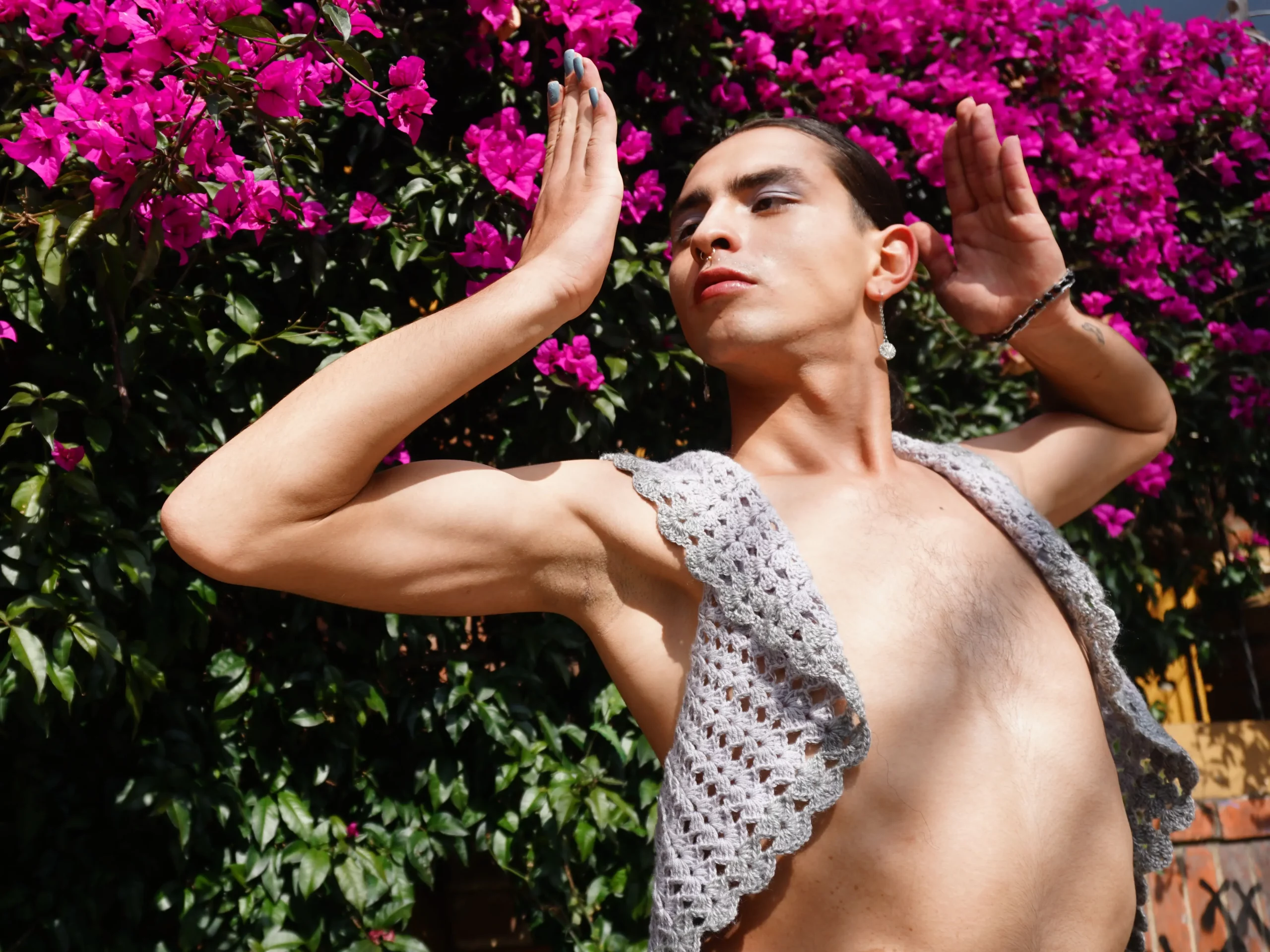
Peche Montaña, 22, is a transgender woman and a Cultural Manager for a dance group in Colombia. She has worked in different dance scenarios and conducts street performances. These performances often encapsulate the social problems in Colombia.
As a vogue dancer, she participated in the “National Strike #21N” which took place from November 2019 to January 2020. Members of the LGBTQ+ community used vogue as a form of protest at that time.
Background Information
According to the Smithsonian’s National Museum of African American History and Culture, the dance known as Vogue originated in Harlem, New York City between the 1960s and 1980s. Vogue served as a “highly stylized form of dance created by black and Latino LGBTQ communities.” NY drag competitions at that time were called balls – elaborate pageants featuring vogue battles. They took the dance title from the famous fashion magazine Vogue. Later, the dance would be known mainstream when Madonna produced a song called Vogue, featuring the dance.

During Colombia’s “National Strike #21N” against the government of Iván Duque in 2019-2020, many marginalized groups and everyday citizens came together to protest. Among them, LGBTQ+ Colombians took to the streets, vogueing as a symbol of resistance.

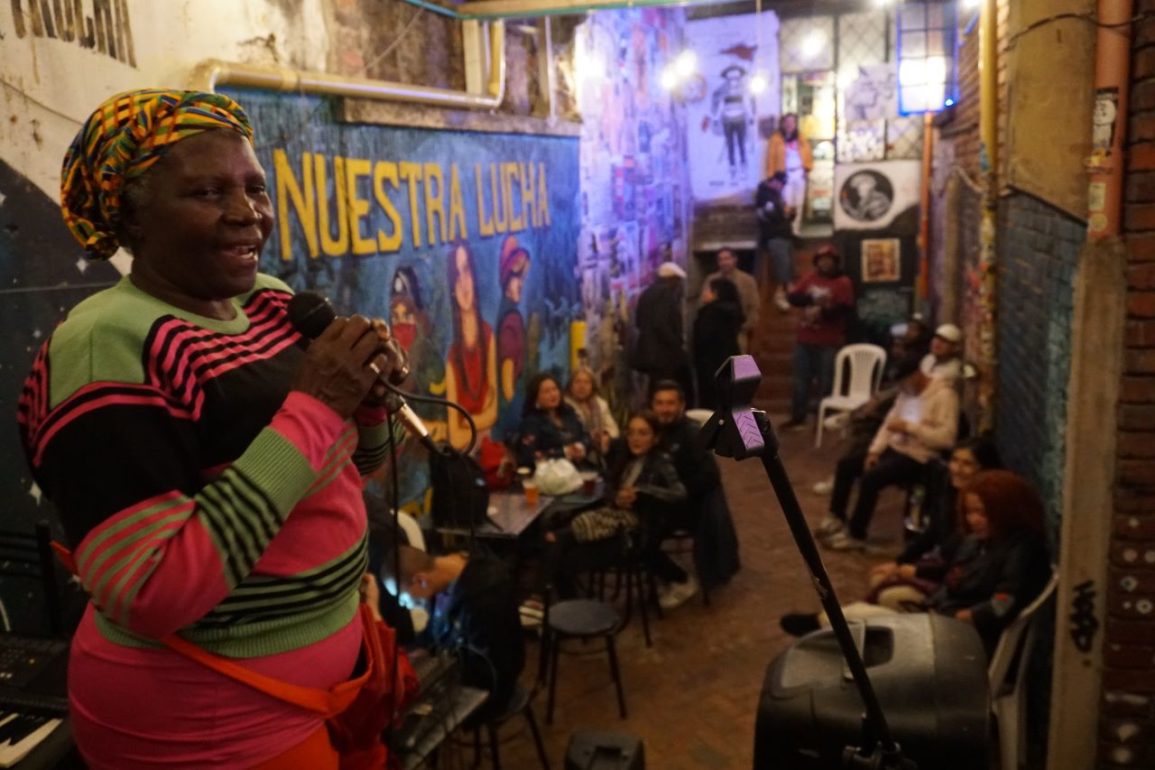
BOGOTÁ, Colombia ꟷ Vogue surged in Colombia during a time of resistance. What started as a celebration transformed the streets into a political stage. Together with the community, I joined the strikes – dancing and protesting.

I stand up to the predominantly Catholic, sexist, patriarchal control in Colombia, and I scare them. When adults my parents age see me dancing, expressions of rejection cover their faces. On the other hand, when children see my dance, they look astonished and happy. It fills me with joy.

Check out more stories from LGBTQ+ communities around the globe at Orato World Media.

I dance vogue in the streets. Through dance, I give voice to the voiceless. As a transgender woman, I express my femininity and my very being for all to see. When I dance in theaters or indoor venues, no one bothers me. When they harass me, it happens in the streets.

[Beginning in November 2019, hundreds of thousands of Colombians took the streets for two months. It became known as the #21N National Strike. Members of the LGBTQ+ community symbolized their protest by dancing vogue in the streets.]

I communicate emotional human stories through bodily movement and gestures

My colleagues and I created a dance group called Docactavi which means, “Where so much life fits.” I serve as the cultural manager. We create space for experimentation and art. We also teach vogue and other forms of expression.

In one of my very first projects, I wanted to honor my father’s friend who is deaf and mute. He once told me about his experience during the 1985 siege of the Palace of Justice of the Republic of Colombia by militant guerrillas. Due to my father’s hearing disability, I became a sign language interpreter. I watched as my mother moved her hands and made gestures to communicate the word of God in church.

This taught me another kind of bodily expression through the hands and I wanted to interpret that through dance. The experience of my father’s friend during siege of the palace proved quite different than that of hearing people. He said he saw people running and did not understand why. Nobody knew sign language. He just followed them, noticing the desperation on their faces.

Through dance, I began to tell his story. I called the performance Inhabiting the Body by Cophosis (which means total deafness). Sign language conveys a message with similarities to dance. I realized I could communicate a story with my body, hands, gestures, and facial expressions. The moment inspired me to extend my work to the transgender community.

Vogue is dance and energy; we create a party characterized by inclusivity

Every dance is unique depending on the audience and the staging. Along with my friends, I select costumes, accessories, and identify the kind of dance to perform. We pick a house or location to get ready in. I put braids in my friends’ hair and apply makeup. They help me do the same. Our efforts include a great deal of cooperation.

During the pre-production as we get ready for our performance, I dance and laugh. It feels like a party. At the sets of our performances – often out in the streets – I greet members of the gay community. These pleasant moments feel so good, seeing people I have not seen in a while.

We dance by category. When a peer from my category goes on stage, my body feels energized by them. I shout her name and offer my support. When my time comes to perform, my entire body feels empowered. I begin to transform, as do the people watching. This process intensifies when we dance in the streets, parks, and public places.

Vogue is both dance and energy. People suddenly start clapping and shouting to the rhythm. They don’t care if it’s hot or cold outside. They come anyway. After the event (called a ball) we all get together and go out, to a park or another place. Together with my friends, we dance, sing, laugh, and talk into the night.

As a diverse people, the transgender community in Colombian have been forced onto the streets and we have made it our home. With my friends and the people who come to see us, as a transgender woman, I find a place of inclusivity. I try to enjoy it and live to the fullest.

The journey of a lifetime, from corporeal punishment to vogue

I had to rebuild myself in a patriarchal society where so many barriers exist; to create shields to protect myself. I come from a Christian, Protestant family. To me, homosexuality and sexuality can be noticed. From a young age, I could feel this difference inside myself, but had no concept of sex.

At 13 years old, I discovered sexuality, wondering why I felt something about the male body. Yet, because of religion, I experienced punishment in the form of a whip because of my family’s beliefs. At 16, I had a charged debate with my angry mother because she viewed my desire to transition as a sin. First, I simply came out as bisexual, but in time I rebuild myself completely. When I was young, I cried my eyes out every single night.

With a childhood coded by the corporeal culture I experienced, I held back. I avoided gestures and actions that felt natural to me. It seemed like I constantly confronted my body, telling me what to do, and replied, “No, don’t tease yourself. It cannot feel like that.”

By 19, I began exploring life as a transgender woman by offering self-love and self-acceptance. I had a strong of foundation of dance. From the age of 11 or 12, I attracted attention in my family through Hebrew dance activities they enrolled me in. I used my body as an instrument of experession. This would carry into my adulthood.

Today, I vogue. I vogue to express, to celebrate, and to protest. Vogue, for me, is a fantasy society has not allowed us to embrace. We embrace it anyway.

All photographs by Adriana Niño.

Married at 15, he collects blood clams for $5 a day to make ends meet

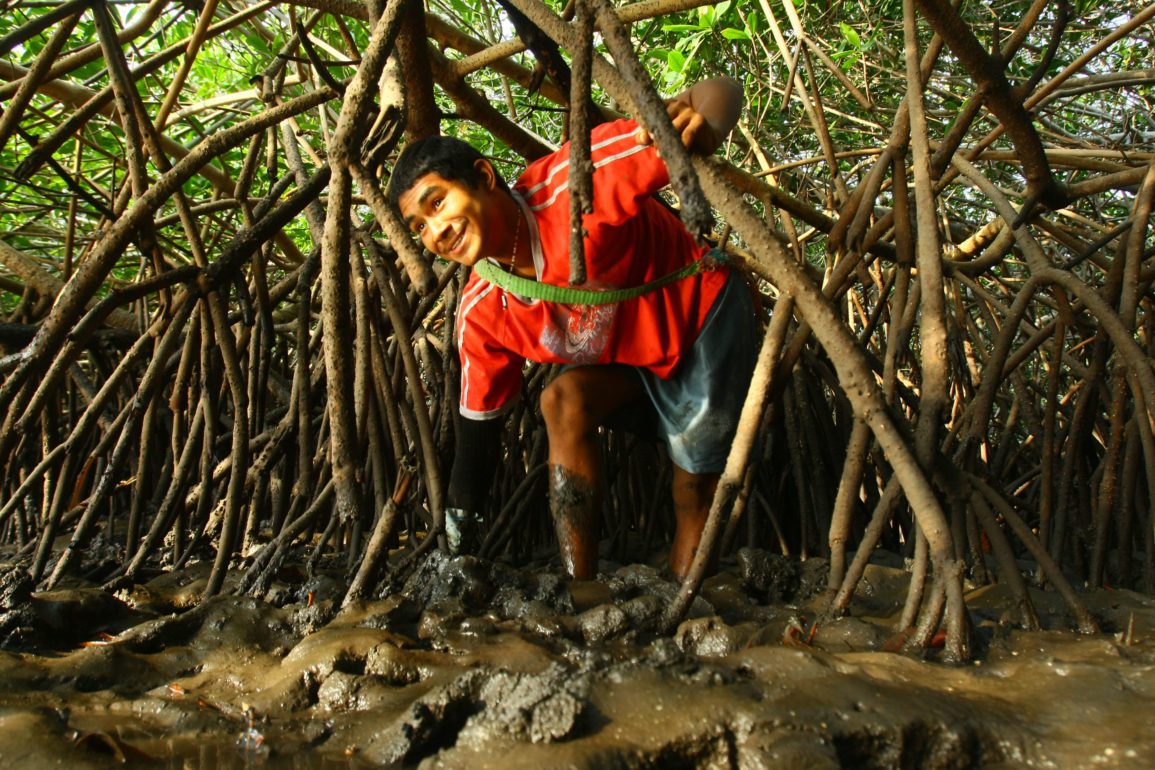
LA PAZ, El Salvador — They are called the curileros – young people who spend hours in El Salvador’s hot, dark, mosquito-filled swamps searching for curiles. Collecting the blood clams, they walk barefoot in the mud, often enduring deep wounds on the soles of their feet.

This tourist spot, recognized for its beautiful beaches 30 meters above sea level, remains home to more than 1,000 inhabitants. José Francisco Ramos, 23, starts his day as a curilero at dawn to avoid the unbearable sun and the mosquitos, which get more aggressive as the day goes on. He works hard in the mangrove, collecting about 100 shells a day worth $5 to $10. The money helps feed his family.

Read more stories from El Salvador at Orato World Media.

José comes from a family dedicated to fishing for their livelihood. He married very young, six years ago at the age of 15. Today, he must earn a living for his own family.

Most of the population in the region lives off the land – fishing or collecting shells in the mangroves. The sea offers their primary source of income. Most young people here do not think about continuing their studies because the need to work is much more important to them.

All photographs by Beatriz Rivas.

If you think Americans like football, you won’t believe these Argentinian soccer fans

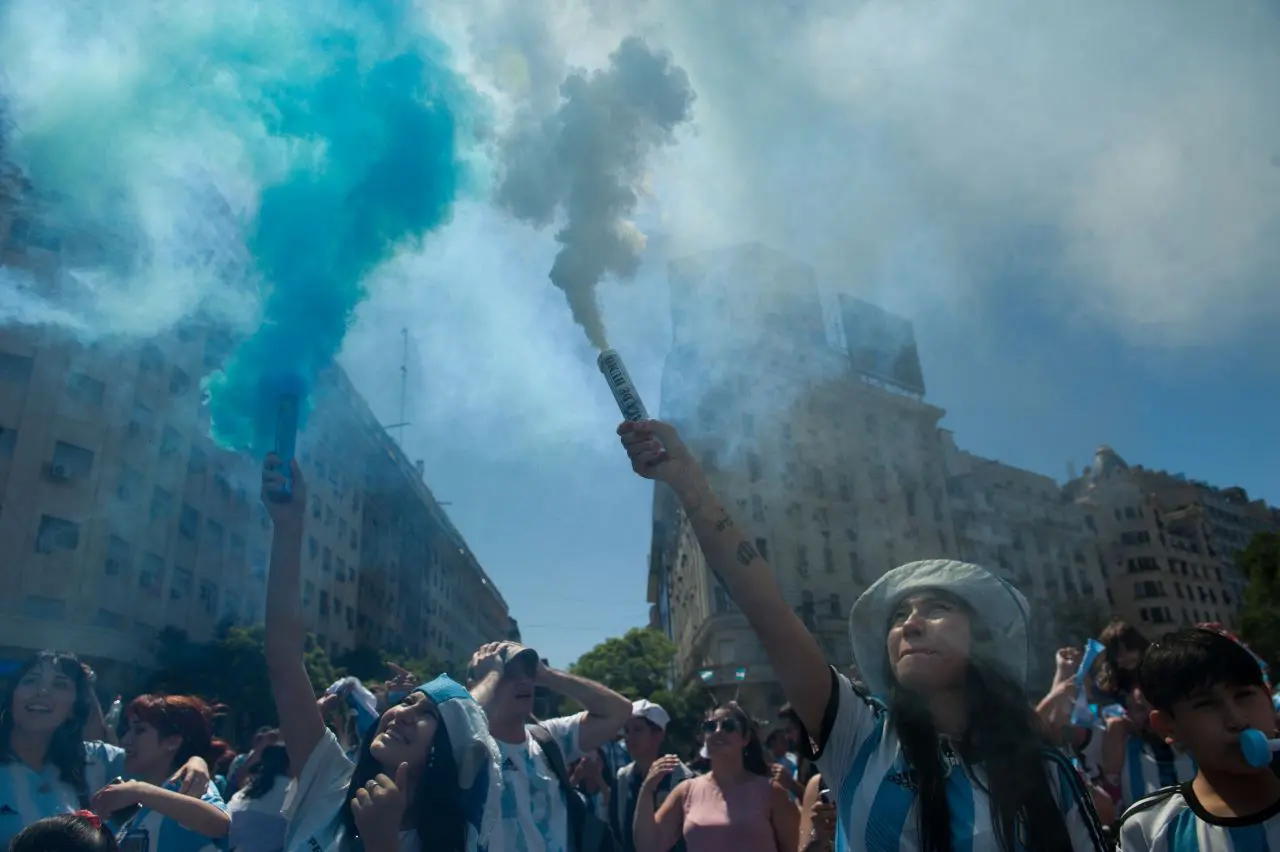
BUENOS AIRES, Argentina ꟷ After their team won the 2022 World Cup championship in Qatar, city streets all over Argentina erupted in wild and joyful celebration. More than a million soccer fans descended on the city center in Buenos Aires.

According to Tom Jenkins, Argentinian soccer fans form a religious-like base. They tattoo themselves, sing, and dance with frenzy. They outnumbered any other fan base at the start of the World Cup in Qatar, and an hour after the tournament ended, they continued drumming and singing in the stadium.

Even before the semi-finals, the embassy was quoted as saying 40,000 people traveled to the match. Some estimates assert about 50,000 attended from Argentina alone. The famed player Lionel Messi – considered a hero in Argentina – brought home the win. Messi has played over 1,000 games in his career and racked up 38 trophies, but this was his first World Cup victory.

The team beat Saudi Arabia 2-1 when the tournament began, soon overtaking Mexico, Poland, Australia, the Netherlands, and Croatia. They faced off against France for the tournament title with a 4-2 win. Orato World Media extensively covered the 2022 FIFA World Cup, bringing forth incredible first-person accounts, photo galleries, and a powerful illustration.

Don’t miss these amazing pieces on the 2022 FIFA World Cup:
The Argentine musician who rallied fans from around the world on the streets of Qatar
The artist who painted murals of Lionel Messi all over Rosario
One of the first women in history to officiate a men’s World Cup tournament
How Qatar used migrant workers to build the stadium, resulting in death and illness
A man who rode his bicycle 6,500 miles to see the World Cup tournament in Qatar

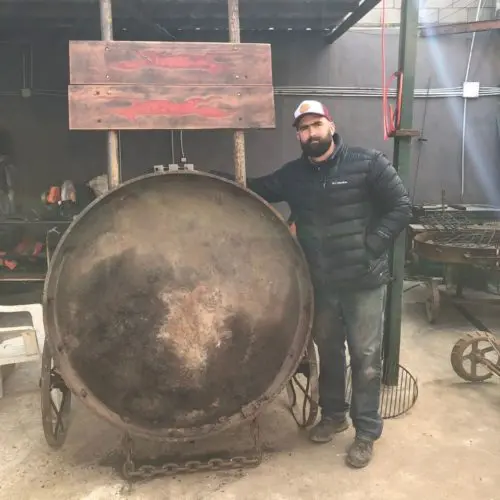
Artisanal grills grace World Cup Qatar, man’s hobby becomes top choice of celebrities

Interview Subject
Julián Lanzilotta grew up in Moreno, Buenos Aires. He worked for his family business for many years and dedicated himself to rugby through the Mariano Moreno club. After building himself an artisanal grill, Julián started receiving requests for orders. By pure chance, he founded his company e, Fuegos JL and fully dedicated himself to this new venture. Today he has a factory in Moreno and a showroom in General Rodriguez, as well as the province of Buenos Aires. Julián’s partner suggested opening offices in Texas, United States. The company now has additional headquarters in Texas and reseller partners in Miami. He plans to expand nationally, solidifying the distribution circuit, and continue to expand abroad. The company has sold grills in 42 countries, mainly to Argentines residing in other parts of the world. The grills are highly sought after by many celebrities and athletes. Julián currently resides in Villa La Angostura, province of Neuquén.
Background Information
Argentina is one of the countries that consumes the most meat in the world. In 2021, 109 kilos were consumed per capita. If the data is filtered only by beef, per capita consumption during that year was 50 kilos, which placed it first worldwide. Barbequing, or the ritual of cooking meat on the grill, is a classic cultural activity in the nation of Argentina. It often brings together family and friends, creating a fraternity space in which bonds are strengthened. That is why the Argentine Soccer Team brought more than 2,600 kilos of meat to the World Cup in Qatar to use during their one-month stay. For that event, Fuegos JL manufactured custom grills, 2 meters long by 60 centimeters wide. Soon the company will adapt smaller versions of the same model used at the Word Cup for the general market.

BUENOS AIRES, Argentina ꟷ The Argentine soccer team brought more than 2,600 kilos or 5,700 pounds of meat to Qatar – meat cooked for them on grills I made. Had someone asked me a few years ago, when I started this enterprise, where I would want my products to be, I would say at the World Cup. There was a different kind of energy around this project.

It all started with a private message I received on Instagram on September 14th while buying meat at the butcher’s shop. The Argentine Football Association wrote to me asking me to provide a budget to take my grills to the World Cup. At first the butcher did not believe me, so I showed him the message.

Read more stories about the 2022 World Cup in Qatar at Orato World Media.

“Boludo, the national team will be eating food made on your grills in Qatar,” he said excitedly. We were both in shock. My company designed the grills to precise specifications and produced them in record time. While I cannot necessarily compare my product to the success or loss a sports team experiences together, I do feel forever bonded as part of Argentina’s national soccer team.

A hobby turns into a thriving artisanal grill business

Some people call others when they need something, but not me. I build things. Once, I made my own furniture for the house. Another time, I made myself a barbeque grill. I plugged away at it slowly when I wasn’t busy with work, family, or rugby. It took me eight months to make my first grill.

People began asking constantly for me to make more grills. I wanted to stop the requests, and I thought if I built a grill (or a steakhouse) for my rugby club Mariano Moreno, it would be something for everyone. I took the grill to the club on a Saturday morning. We played a first division game and I returned to the locker room to shower and change. As I left the locker room, I could see several people surrounding the grill and taking photos of it. I felt shocked to see people so amazed by something I made.

The next day I had fifty messages for orders of steakhouses. I explained that I had a job already, and did not sell the grills, but on the fifth day of inquiries, I began investigating starting a business. From this, Fuegos JL was born.

I began venturing out to junk dealers and looking for wheels from old field carts and bought forty of them. I accumulated the raw materials and launched the project on Instagram. In the first week, I sold 20 grills. Unable to keep up with the demand for specific parts like the field cart wheels, I began manufacturing them myself.

Followers climb and climb on Instagram

The whole thing went viral very quickly. I had my first 50,000 followers in three months. Then I got a call from Locos x el Asado, a well-known YouTube channel. As my visibility grew and I began appearing on television, the followers multiplied. Another leap in recognition took place when former NBA player and member of the Argentine basketball team Nicolás Laprovitola published photos on Instagram cooking on one of my barbeques at his home. In time, more and more well-known athletes began to buy my grills including some players who are now World Cup champions like Nicolás Tagliafico and Rodrigo De Paul.

My whole life, I worked in my family’s industrial hardware store, where we sell gardening machines. I liked my work, but this venture is something completely different. It feels great to create something people love so much. The produce not only gives me pleasure, but affords that same joy to those who buy it. We say that we do not sell happiness, but the closest thing to it. We sell a product that allows people to share moments together. When we need to create content for our social media, we simply get together and barbeque!

From the World Cup to seeing his idol, business delivers iconic moments

This company delivered many amazing moments in my life. On July 20, 2021, as I celebrated Friends Day at a bar in Bariloche, a video call came in on WhatsApp. The video came in from my partner Alejo but when I answered, I saw the face of famous Argentine basketball player Manu Ginobili – my greatest idol. We had sold him a barbeque and because I could not travel to deliver it to him, he wanted to call and thank me.

Manu’s call and AFA‘s request for the World Cup proved the most remarkable moments in my life this year. I never imagined things like this could happen to me. Although Fuegos JL only has four years of brand history, things happen to us that rarely happen to others. I attribute this to the fact that I never meant for it to be a business. Constructing grills and steakhouses was my hobby. It contained a different kind of energy and positivity.

We do it for the pleasure, and nice things happen. People buy our products not just to own a grill, but because they want to be a part of something. It is the only explanation I have. 

Fishermen at Laguna El Jocotal work in a wonder of biodiversity

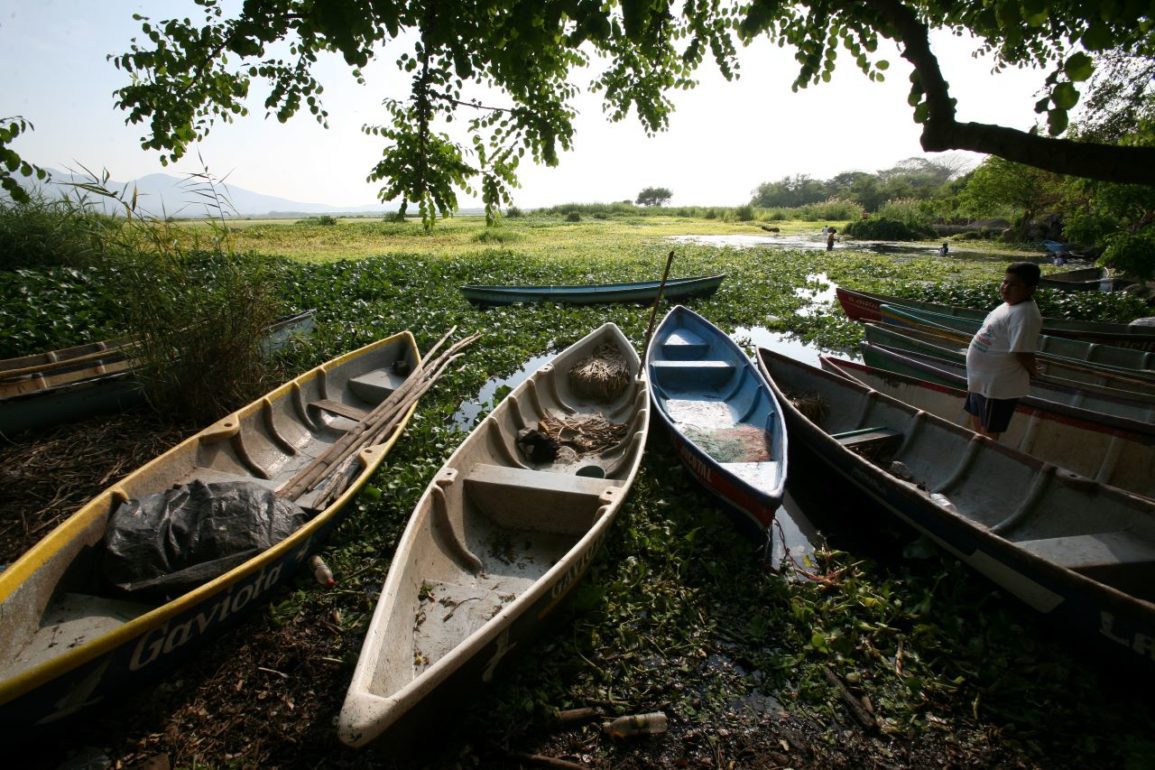
SAN MIGUEL, El Salvador ꟷ Laguna El Jocotal sits in the municipality of El Tránsito in the department of San Miguel. Fed by the waters of the Rio Grande, it remains a protected natural area. Thousands of birds inhabit the region, which represents the greatest biodiversity in the nation. Looming over it, you can se the Chaparrastique volcano

Approximately 260 fishermen work in Laguna EL Jocotal from a variety of communities. On weekends and holidays a large number of tourists come into the area as well. While it remains a protected area, many residents use the lagoon like a public laundry. They rely on the lagoon due to lack of water in the territory. This causes contamination due to the use of soaps, bleaches, and detergents.

Read more stories on the environment or on travel & adventure from around the globe at Orato World Media.

The lagoon maintains a hot tropical climate, with two distinct seasons: rainy and dry. The annual temperature averages 26°C with a maximum of 28.8°C in April and a minimum of 25.1°C in December. The lagoon includes two towers for bird watching, each measuring approximately 15 meters high and made of iron.

The site also supports 151 plant species, 21 species of fish, and 252 bird species. It hosts another 43 mammals, 13 amphibians, and 33 reptiles.

All photographs courtesy of Beatriz Rivas.

Photographer captures last lunar eclipse, blood moon until March 2025

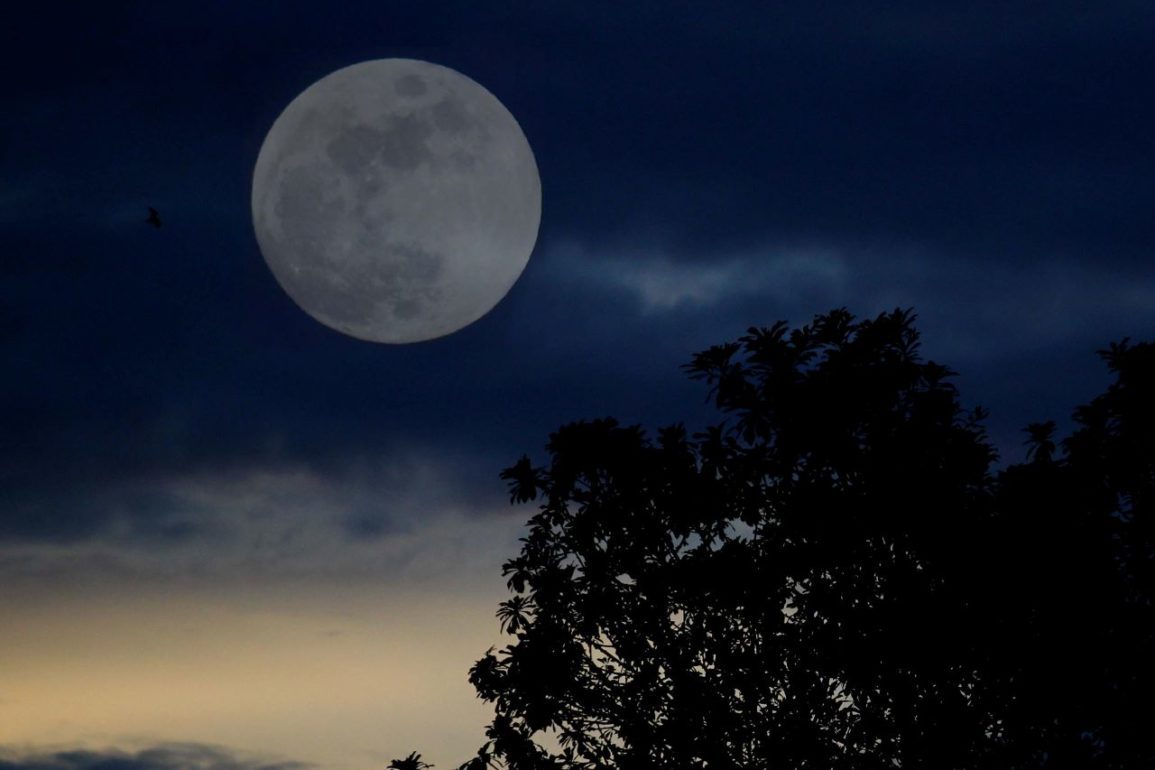
In November 2022, the world experienced the last lunar eclipse for the next two years and four months. According to NASA, the next lunar eclipse will occur in March 2025. Nasa explains there are two types of eclipses: lunar and solar. “During a lunar eclipse, Earth’s shadow obscures the Moon,” unlike a solar eclipse where the moon fully blocks the sun from view.

Lunar eclipses, Nasa continues, happen during the full moon phase. Sometimes the earth’s shadow causes the moon to appear red, known as the blood moon. Individuals all over Earth can see the phases of the moon at the same time. The phases can also be accurately predicted.

Orato World Media contracts photo galleries from around the globe. Click here to view these incredible icons from around the world.

For example, the next new moon will take place on December 23, 2022. Almanac provides a moon calendar and says the new moon represents the start of the new lunar cycle. During the new moon phase, the sun and moon are closest together in the sky and on the same side of earth. During this phase, the moon appears totally dark and may not even be visible.

This particular set of photographs captures the Beaver Blood Moon lunar eclipse. The moon moved into the shadows of Earth, receiving only light filtered by Earth’s atmosphere, causing the red color. This particular blood moon remained visible for over 80 minutes in North America, some areas of South America, Asia, Australia, and New Zealand.

According to History, there are many cultural, spiritual, and superstitious beliefs that exist about the moon. Some of those beliefs include the assertion that the moon’s phases affect moods, mania, fertility and childbirths. More outlandish claims include that the moon is actually the shell of an alien spacecraft. Both Buddhist and Native American folklore speak of a rabbit that lives on the moon.

All photos courtesy of Nubia Beatriz Rivas Alvarenga.

Afro-Colombian activist among 1,000 women nominated for Nobel Peace Prize

Interview Subject
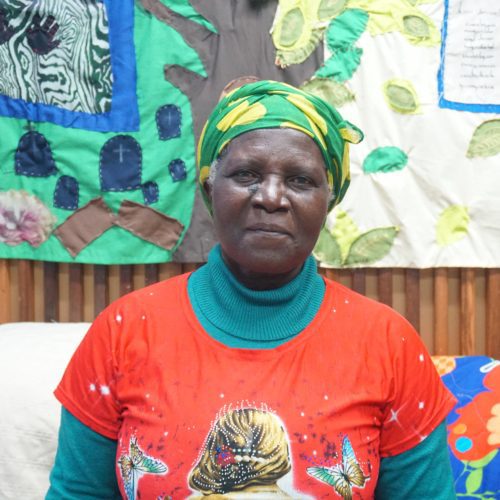
Virgelina Chará is a human rights defender who lived through Colombia’s internal conflict as was displaced from her indigenous lands. In 1994, she created the Association for Integral Development or Fundación Asomujer y Trabajo. Her organization works with women and families who have been victims of the armed conflict, Afro-descendants, indigenous peasants, and those who were forced to work in prostitution.

As a song leader and weaver, she also leads a project called the Unión de Costureros. With thread and needle and ancestral fabric, she recreates memories, recognizes truth, and strengthens peace between different populations.

Virgelina was nominated for the Nobel Peace Prize in 2005.
Background Information
Colombia has an estimated population of 51,265,84 people. Forced displacement is on the rise in recent years, and its main victims are black, indigenous, and peasant communities.

People like Virgelina have been fighting oppression in Colombia for decades, and promoting peace. Her Nobel Peace Prize nomination marked an historical moment for the prize. In 2005, to bring more women into the process, 1,000 women from around the world were nominated in a collective. Today, they continue to collaborate through the the initiative: 1000 PeaceWomen – PeaceWomen Across the Globe.

BOGOTÁ, Colombia ꟷ After being displaced from my ancestral lands in Suárez Valle del Cauca, the M19 guerillas arrived in my community. Two decades later I joined a collective of women nominated for the Nobel Peace Prize.

In the 1980’s, La Salvajina megaproject brought a hydro-electric dam to the lands of my people. The very place we called home ended up underneath the dam and in some of its tunnels. My political, economic, social, and cultural vision of the world broke after being displaced from my family. While I never forget my roots, I feel challenged to reconstruct my history and community in a foreign territory.

Read more stories about inspiration heroes fighting conflict around the globe from Orato World Media.

In 1985, I escaped to Cali due to several threats. I was mistakenly linked to the M19. They introduced themselves as advisors. I had no clue they were guerrillas. They prepared and informed us on the types of paperwork we needed to file to pursue justice. From that moment, I began to lead social processes – to fight for our rights, create unions, and find useful information for my people.

As a displaced person, she fought for a home and to put food on the table

In those early years, I worked as a vendor in Colombia’s informal sector, selling goods in Cali Chontaduro. The authorities made it difficult for us to occupy public spaces in the city, but offered no other solution for us to bring food home to our displaced families. It seemed as though the District Secretary of Mobility had a strategy – taking my merchandise and leaving me barely stocked. I felt attacked.

After nearly a decade, and feeling tired, I began to organize, bringing together colleagues, women, and members of the Cultural Ethnic Foundation of black communities. We soon succeeded in obtaining identifications for 250 women and their husbands. Soon after we formed the Association for the Integral Development of Women, Youth, and Children – known as Asomujer y Trabajo.  We sprung into action, helping women, families, victims of conflict, and people in prostitution. We look at peace treaties, the military, and labor issues.

In time, I joined the House of Peace in Bogotá as part of the Union of Seamstresses. As I listened to the stories of victims, I sewed fabrics as a means to connect with them. As my hands touched the threads, I listened to every experience. Within the cloth, the story becomes part of what we stitch. It unites families, languages, and the country. We sew up the ruptures we have with each other.

Through fabric, they weave the stories of those who have disappeared

One day, at the Center for Memory, Peace, and Reconciliation in Colombia, we delivered a piece of symbolic art through our fabric. More than 1,500 people looked on from the local and international communities as we stood there in that emotional moment.

With the crowd surrounding us, we wrapped our fabric around the monolith [a large upright block of stone]. My heart felt so full as nostalgia overtook me. I thought of every person who participated in weaving that fabric and their stories. I also thought of those who are no longer with us.

We did not only honor our own struggle that day. There, near the Palace of Justice, we joined our story with the struggles of people from throughout Latin America and Europe. We incorporated the fight for environmental protection in Peru and refugees in Canada. It felt like all our stories came to life at once as we joined our histories.

It never rains in September in Colombia, but that year, the rain poured down after we hung the fabrics. Water poured out of the sky. I could hear and smell the rain falling against the ground and on our beloved fabrics. My dear colleague Carmen Julia from Ecuador said, “Don’t worry, the rain represents the tears of disappeared people. Their memory is speaking to us.” Her words moved me, and strengthened our commitment to honor those for whom we do this work.

A Nobel Peace Prize nomination for 1,000 women around the world

In 2005, my work culminated when officials summoned me to a ceremony for the Nobel Peace Prize. A woman in Switzerland proposed a collective nomination of 1,000 women from 150 countries, because men were so often the winners of the prize. Twelve of us from Colombia were among them.

While the collective did not win the prize, it spurred a movement. [The collective became known as PeaceWomen Across the Globe and continues to operate in unity today.] In time, people back home learned about my nomination. Walking through the streets of Bogotá one day, I encountered a teacher with a group of students.

A young girl came running up. “I saw you on television,” she gleamed. She said, “They gave you the Nobel Peace Prize!” I delighted in her smile and glow. “No, my love,” I answered, “They did not give me the prize. I was simply nominated.” She then asked for my autograph. “Why an autograph,” I asked her, “Come here. I’ll give you a hug and kiss on the cheek!”

With greater visibility after the Nobel Peace Prize nomination, I became a public figure, but remained the same person. I continue to fight. Peace in Colombia requires inclusive policies. How is that we still must petition for rights, 170 years after the abolition of slavery. Today, I demand guarantees of peace for all citizens.

As we guide processes for individual human beings to transform, we also understand peace to be a fundamental right many lack. Peace begins in each one of us. We must listen and speak the truth. There are those who will deceive us all our lives, telling us what is convenient for them. The restoration of rights begins only when the truth is spoken.

All photos courtesy of Adriana Niño.

Activists march on International Day to Eliminate Violence Against Women, honor women of Iran

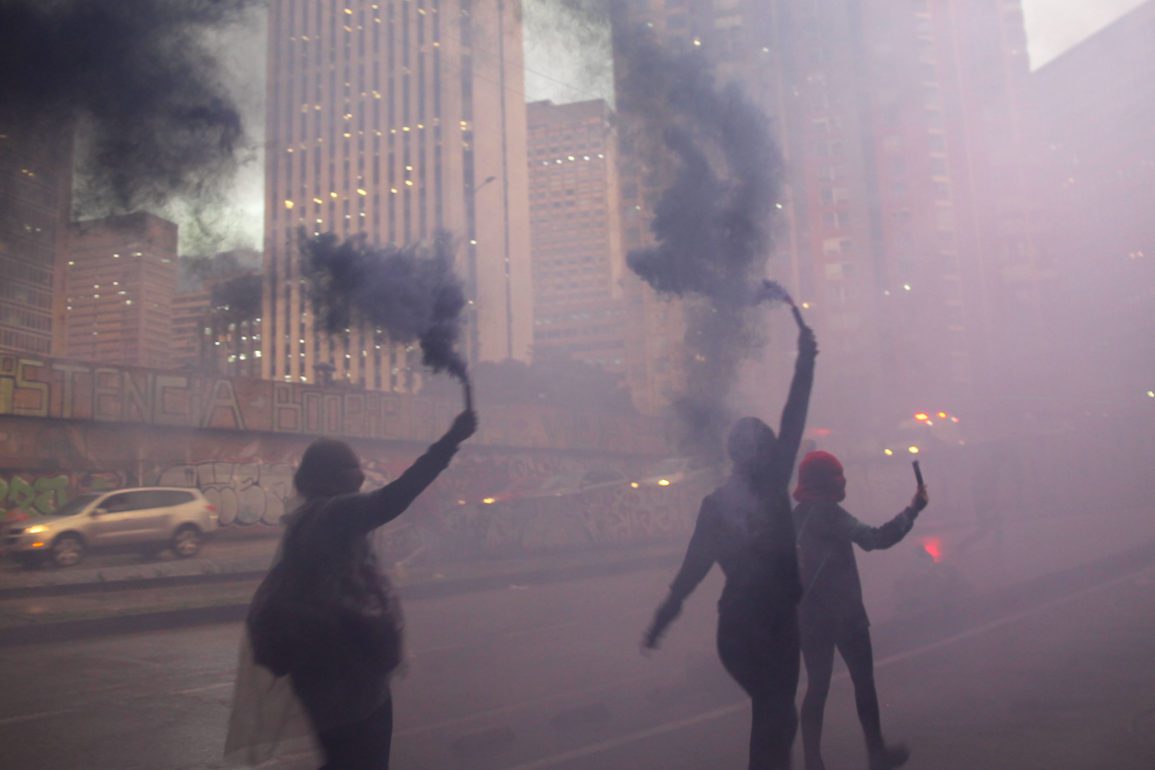
BOGOTÁ, Colombia ꟷ November 25, 2022, marked the international day to eliminate violence against women. According to data from UN WOMEN, one in three women in the world has experienced physical or sexual violence.

In a recent report published by UN WOMEN and the United Nations Office on Drugs and Crime they said the following. “In 2021, an average of more than five women or girls were killed every hour by someone from her own family. Of the 81,000 women and girls intentionally killed last year, 45,000 – around 56 percent – died at the hands of their partners or other relatives.”

Read more stories about activism from around the globe at Orato World Media.

Violence against women and girls also goes beyond the family. Masha Amini brought renewed attention to this issue in 2022. The morality police in Iran arrested the 22-year-old Iranian woman. They alleged dress code violations for wearing her veil or hajib wrong. Masha Amini died three days after her arrest, having received blows all over her body and head. Her death sparked massive protests in Iran by women who challenged the regime and demanded freedom. These Iranian women took to the streets to protest and Time Magazine named them “Heroes of the Year.”

Violence against women and girls is one of the world’s most widespread human rights violations. In capitals and cities around the world, thousands of women took to the streets in November. They collectively protest against gender violence and its different manifestations. Bogota was no exception.

All photos courtesy of Mariana Delgado Baron

The village in India where elephants raid

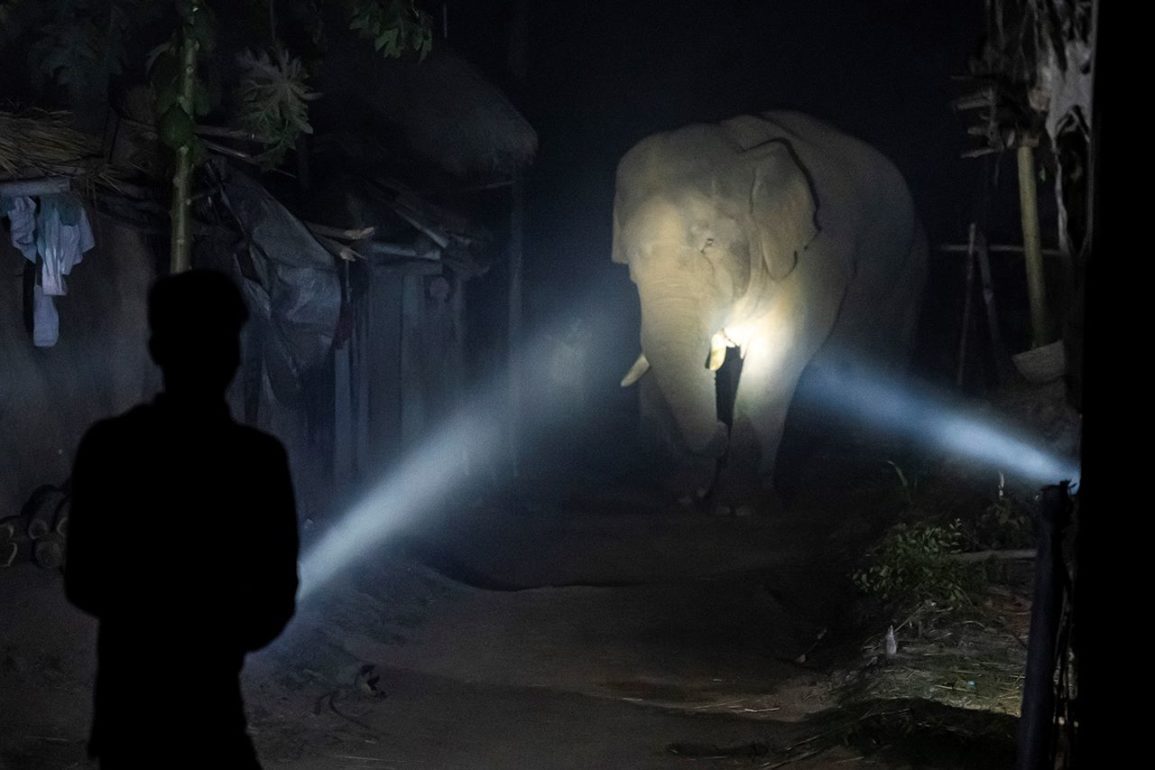
WEST BEGNAL, India ꟷ In West Bengal, human-elephant conflict worsens each year as Asiatic elephants from the Dalma forest roam freely. With the onset of winter, the elephants destroy paddy fields, agricultural produce, and the mud huts of the local villagers.

To protect their livelihoods, the marginal farmers and hut dwellers face off with these giants. They use bows and arrows, firecrackers, kerosene lamps, and stones. Their preventative efforts ususally fail, leading to tragic casualties on both sides. Some say the increase in conflict results from human settlements. Infrastructure like railways, roadways, and canal rights interrupt the natural habitat of the elephants.

Read more environmental stories from around the globe at Orato World Media.

According to one report, between April 2010 and March 2019 in West Bengal, 726 humans died from elephants. Another 1,233 experienced injuries. In addition, 136 elephants died from unnatural causes. Aside from the deaths, villagers lost nearly 35,000 huts and innumerable acres of crops.

These reports also note that West Bengal accounts for only two percent of the total elephant population in India, but an exorbitant number of elephant and human deaths as a result of this conflict.

Late this year the state announced the employment of “Gaja Mitra” or “friends of the elephant.” These elephant watchers earn pay to monitor the elephants’ movements and notify authorities when they stray toward humans. The watchers use a special phone app that tracks the herds. Reports of result have not yet arrived.

All photos courtesy of Sudip Maiti.

India’s Varanasi lit up with thousands of lamps to celebrate Dev Deepawali

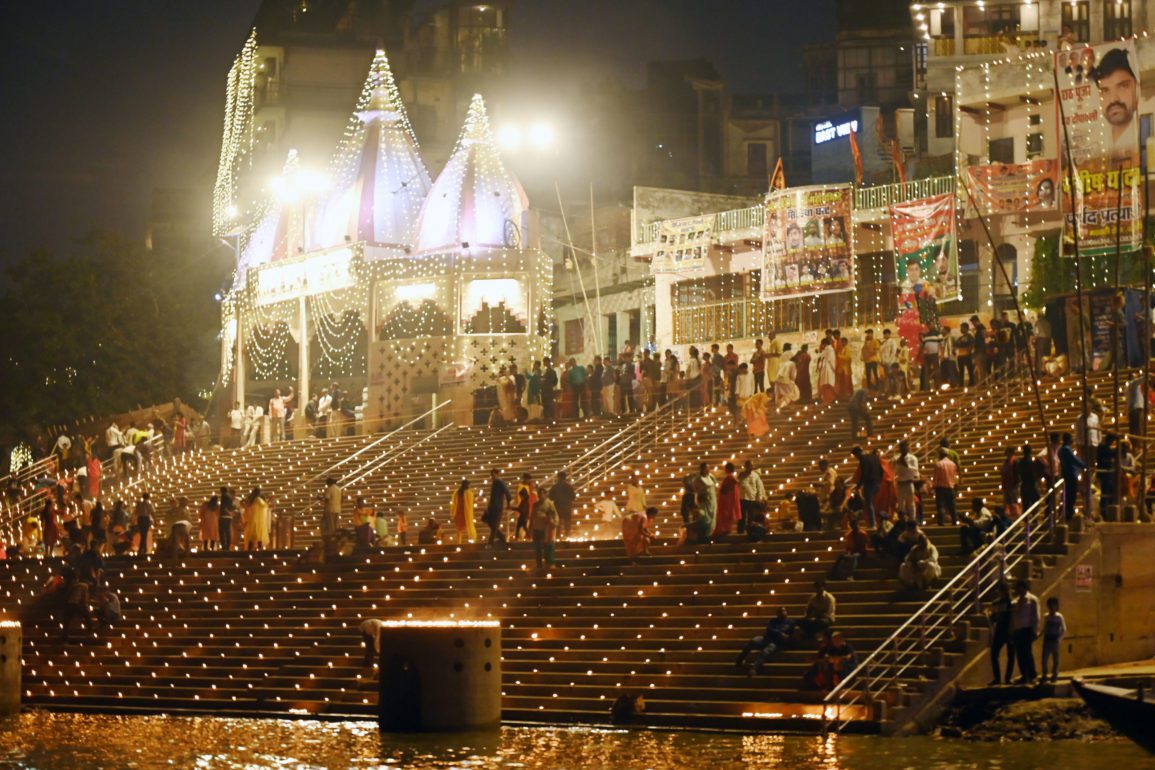
VARANASI, India — The Hindu festival of Dev-Deepawali (Diwali of Gods) is celebrated in India’s historic holy city of Varanasi. It falls on the full moon of the Kartik month, which is 15 days after Diwali. The celebration involves a lot of fanfare and spectacle. On this auspicious occasion, thousands of earthen diyas (lamps) adorn all the Ganga Ghats. Thousands of Hindu worshippers and visitors come to make prayers and take a holy bath in the Ganga River.  

In the evening, people come together to float oil lamps down the river and light firecrackers. As per religious beliefs, Dev Deepawali honours Lord Shiva’s victory over the trio of demons – Vidyunmali, Tarakaksha, and Viryavana – collectively known as Tripurasura. Devotees mark the occasion by adorning their homes with oil lamps and using coloured decorations on their front gateways.

At Dashashwamedh Ghat, one of Varanasi’s holiest Ghats next to the Vishwanath Temple, 41 young females and 21 Brahmins engage in a special ritual with the Vedic mantra recited in the background. Legend has it that Lord Brahma sacrificed 10 Ashwamedhas here. An Aarti (worship-based ritual) is offered here every evening in homage to Shiva, the goddess Ganga, Surya, Agni and the cosmos as a whole.

A sight to behold during Dev Deepawali

As the celebration gets underway, people offer deep daan or lit-up clay lamps. Millions of devotees from Varanasi as well as neighboring villages and across the nation witness the Aarti. The religious event involves lighting lamps and presenting them to the Gods. It takes place every evening on the Ganga Ghats.

Pandit Kishori Raman Dubey (Babu Maharaj) started the custom of burning lamps on the Dev Deepawali festival day. It began at the Dashashwamedh Ghat in 1991. Varanasi permits everyone to take part in Dev Deepawali due to its significance and sociocultural appeal.

The event turns the town into a popular tourist destination. The plethora of lamps floating, lighting up the Ghats and the river in vibrant hues, make for a spectacular sight. On the Ghats, people offer prayers to River Ganga, revered as a mother. Furthermore, devotees believe that taking a bath in the Ganges, as part of the Kartik Snan ceremony, washes away all of the performer’s sins.

All photographs by Partho Burman.