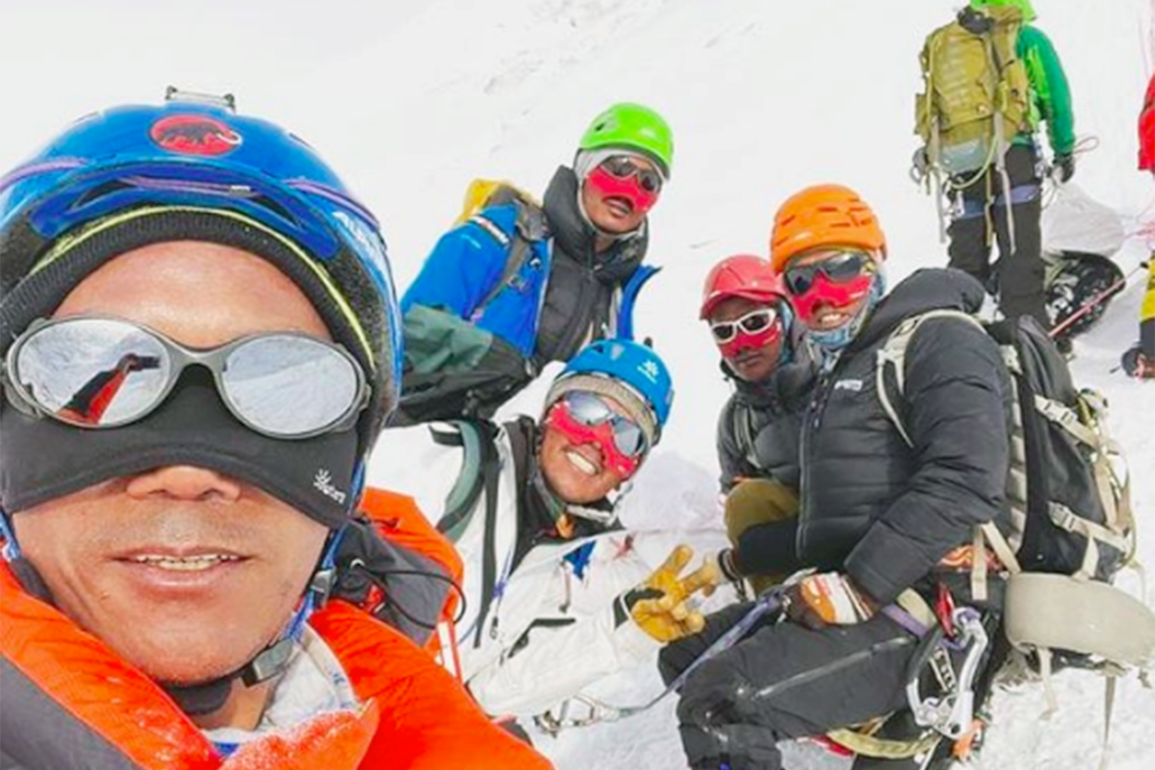
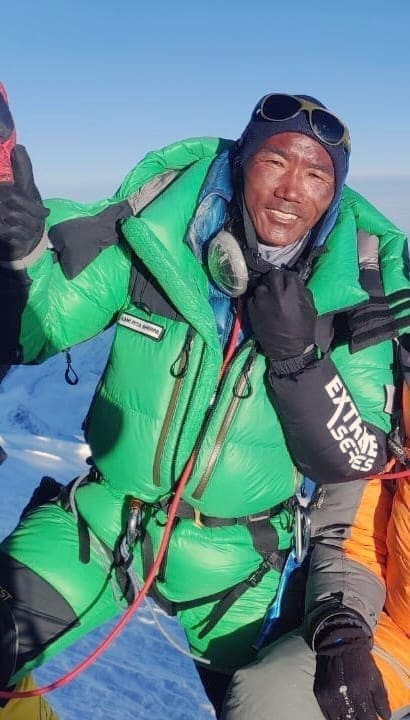
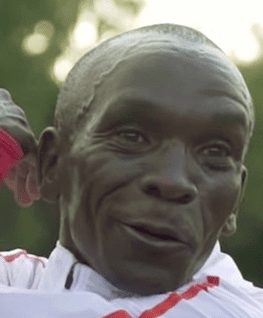
Karmi Rita, 51, was born in Solukhumbu, Nepal, and first reached the summit of Mount Everest when he was 24-years-old in 1994.
His father was one of the first professional Sherpas who guided tourists when the mountain was opened up to internationals in 1950.
Kami Rita has been the record-holder for the most ascents of Mount Everest since 2018 when he reached the summit for the 18th time.
He currently works for the Nepalese company Seven Summit Treks and prior to 2019, he was employed by an American organization called Alpine Ascents International on top of his brand ambassador work.
He has no plans of retiring.
Background
On May 7, 2021, Kami Rita Sherpa reached the summit of Mount Everest for the 25th time, breaking his own record for most ascents of the summit.
A number of media reports detailed Kami Rita abandoning his 26th ascent because of bad weather and a dream that included the mountain goddess warning Kami Rita to turn back.
When asked about this, Kami Rita would only say it was his duty to his family and his country to return to the summit next year.
ARKHALE, Nepal — The first time I ever climbed Mount Everest, I did it out of necessity.
People come to climb the famous mountain for many reasons — a thrill, the trophy of saying they did it, a love for hiking. They celebrate the win and post unique pictures for others to see.
I became a Sherpa, leading climbs on the mountain because we were poor, and I had to provide. Climbing Mount Everest is how I support my family.
I’ve climbed Mount Everest 25 times, and I am the record-holder. Climbing the mountain more than any other person has been very natural for me. I do it for my work; the record was never the destination.
I’ll climb again
Despite the risks and the number of Sherpas who have lost their lives, I’ll return to the summit next year.
Reaching the peak for the 26th time is a matter of duty for me. I do it for my children and to make my country of Nepal proud.
After 25 climbs, I know every rock formation, every danger we face, and every method for climbing the mountain successfully. My experience ensures my clients will celebrate their victory at the summit’s peak, and it is why I return safely every year.
In compensation for my work, tour guide companies pay me to take foreigners to the summit.
Sometimes I earn sponsorships from energy bar companies to post their product on Instagram. These are my only sources of income.
Not everyone makes it
Not everyone makes it up Everest. The climb is treacherous. I used to have a hard time telling clients to turn back and go down the mountain for their safety.
Today that is less of a worry because I train clients so that they never have to turn back.
Sherpas like me are the pride of Nepal, yet the government is neither grateful nor awful in their treatment of us. For the most part, they support us.
An important job
While most people think Sherpas are only guides, we have many essential responsibilities.
We manage the oxygen tank levels and keep our clients alive.
They need regular oxygen intake because our clients aren’t acclimated to the high altitudes the way we Nepalis are.
Without Sherpas, no one could climb any of the mountains in the Himalayas.
While many non-Sherpas can scale the lower levels of mountains, once they reach the higher altitudes, the foreigners need assistance.
Sherpas play a significant role in supporting the communities here because the tourism industry is built around the Himalayas and access to the mountains is dependent on our expertise.
We believe Mount Everest is a holy site and that the goddess of Inexhaustible Giving, called Miyolangsangma, sits atop the mountain.
Part of a Sherpa’s training is to learn reverence for the goddess.
Kami Rita Sherpa
A dangerous ascent
The ascent of the highest peak in the world is perilous and exhausting.
Reaching the summit of a mountain is never easy for anyone.
However, after climbing Mount Everest 25 times and through years of experience, the ascent up the tallest mountain in the world has become less difficult for me.
Still, I am responsible for other people’s lives and their experiences.
Climbers hike through freezing temperatures as low as -40 degrees (Celcius and Fahrenheit). They have to sleep throughout their multi-day ascent up Mount Everest, and many have difficulty going to bed at the high-altitude camps.
If sleeping at 1,000s of meters above sea level at freezing temperatures doesn’t deter you, climbers face an even more frightening challenge.
The most frightening part of climbing Mount Everest is crossing the Hillary Step, just before the summit.
There’s a high chance of avalanche when you’re crossing the infamously steep section.
The effects of Climate Change mean the risk of an avalanche is only increasing.
The fear grips you because you never know when a wave of snow may overtake you.
An American mountaineer died as recently as 2019 in the Hillary Step. However, it has become easier to climb since Nepal’s devastating earthquakes in 2015. The area has flattened out and become easier to traverse.
Just another climb
The first time I climbed Mount Everest, I didn’t feel anything special other than being happy to be back at Base Camp. Perhaps that’s because, for me, climbing the mountain is a job and a weighty responsibility.
I’ve been reaching the summit every year since 1994, except for 2020, due to COVID-19 closures. At times, I have done the climb more than once in a single year.
What makes me successful in this endeavor is my patience in climbing, my physical fitness, and my training.
If you want to climb Mount Everest, please undergo a physical examination from a doctor and hiking training before attempting the climb.
You should try reaching the summit of smaller mountains that are 6,000 or 7,000 meters in height before attempting to climb Mount Everest, which is 8,849 meters tall.
If you take a smaller step first, it will help your larger dream come true. Perhaps someday, I’ll see you at the summit.
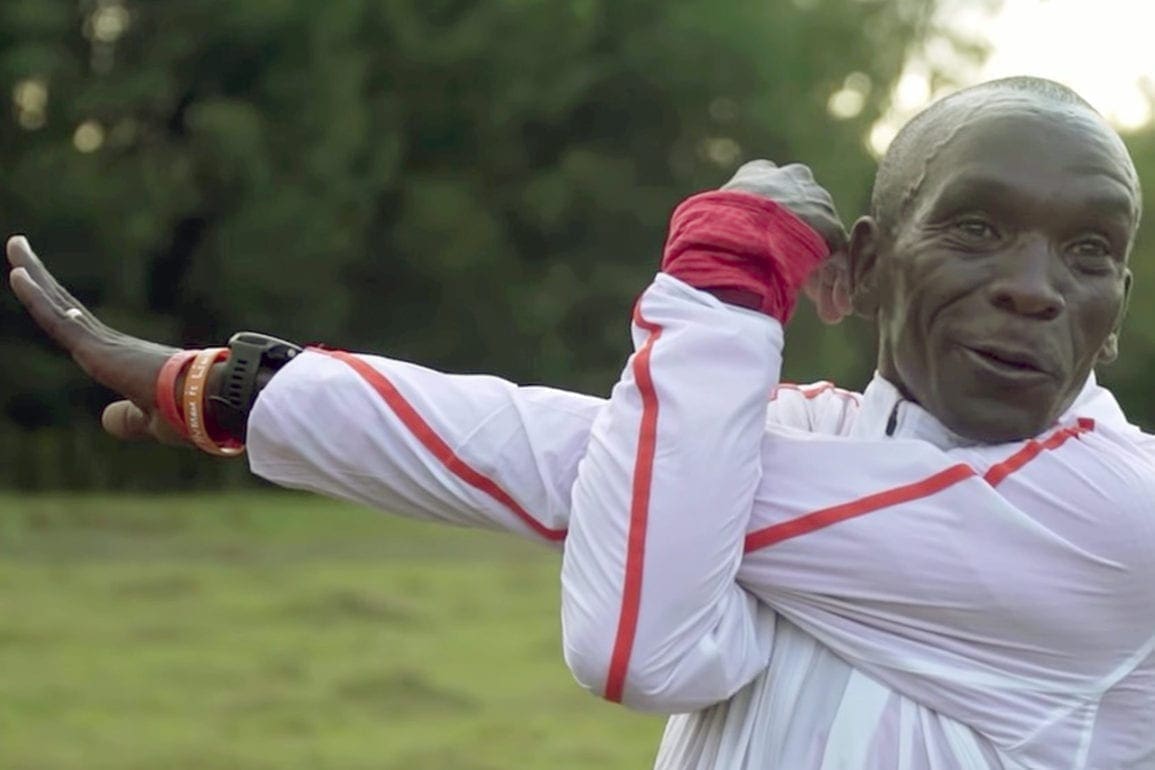
He has been described as “the greatest marathoner of the modern era”.
On 12 October 2019, Kipchoge ran the marathon distance at a special event in Vienna, Austria, achieving a time of 1:59:40.
The run did not count as a new marathon record, as standard competition rules for pacing and fluids were not followed and it was not an open event.
NANDI COUNTY, Kenya — In my community, running is the only way for most people to get to their destination faster.
For me, school was about five to seven kilometers (three to four miles) away with no bus available, so I had to run to be on time.
Unknown to me, running would bring great fortune and put my home village of Kaptagat on the international map.
Today, everyone in my country, including the lofty, knows my name. Yet, this has never changed who I am.
Winning that international title and becoming the world marathon record holder comes with pride, but I continue my everyday life, with no fanfare. I am still that guy in the village, caring for my family and tending to my farm.
In fact, I believe staying in my village is the reason behind our prowess as athletes from this area.
The altitude is 8,000 feet above sea level; perfect weather for training. So this accomplishment, and the honor that comes with it, is not just about me, but also my community and my country.
Further, all I have achieved would not be possible without my coach Patrick Sang, a decorated athlete who, in 2002, started training me for professional competition.
I learned a lot that year. I competed with people I did not know and whom I had never seen. I learned that running was about time and not just running as a lone ranger.
It is about keeping track of who is the fastest in a particular race and how much time they took to match my speed with theirs, so that I can beat them.
The big break
Over the years, I have won and lost many times.
It is fair to say I have won more times than I have lost, but I never count the lost races. Instead, I congratulate the winner and motivate my spirit.
In October 2019, the world witnessed history. I ran a marathon, covering 42 kilometers (26 miles) in less than two hours.
No one had ever run that fast before. It was an exciting and defining moment for me and the entire fraternity of marathon runners.
My conviction is that no human is limited. At one hour, 59 minutes, and 40 seconds, I crossed the finish line in Vienna, Austria.
I made history.
Massive crowds lined the road and my wife was at the finish line to receive me with a hug. Tears of joy flowed freely from among the thousands of spectators.
I shook hundreds of hands and receiving congratulatory hugs as the entire street burst into jubilation.
I heard hundreds of camera clicks from every angle. Everyone wanted a glimpse of this historical moment.
All eyes on me
In my many races, I was used to seeing people celebrating their teams or countries. They applauded first, second, and third place; but now, I was the only winner and all eyes were on me.
The commentators gave an overview of my sporting career and my country and village received numerous mentions throughout the race.
While the race was me, running against time, people from all walks of life were there, cheering me on.
They did not care about my race or my birthplace. I saw the face of humanity and the beauty of sports as a unifying factor.
Even my people were there. Kenya’s deputy president William Ruto led a government delegation to Vienna to witness this moment. They were my cheering squad.
Immediately after I crossed the finish line, he handed me our national flag.
I remain grateful to my pacesetters, who ran with me through the entire course. They motivated me and kept me moving toward my target.
Later that day, the internet was abuzz with my slogan, “no human is limited.”
Knowing how many people I give hope to has always been my inspiration.
Training schedule
Athletics, just like any other sport, is about discipline and punctuality.
Because the track is our office, we as athletes respect it just like an accountant at a bank or a teacher in a school.
Training runs from Monday through Saturday, following the coaches’ strict schedule at the camp.
It starts with breakfast, then a run, followed by a massage for the muscles in the evening.
Giving back to society
I see this blessing of being a champion as a way to reach out to society and help those in need.
In May 2020, I partnered with a local company to donate food to athletes affected by the Covid-19 pandemic.
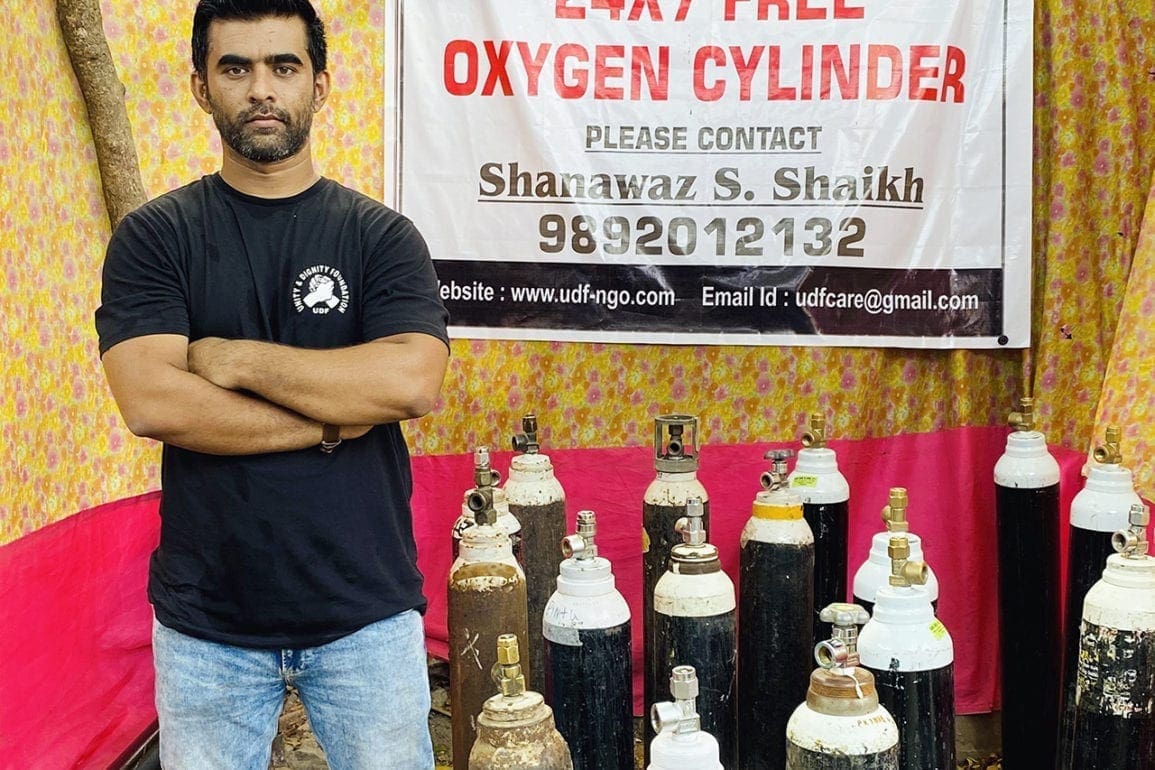
Shahnawaz Sheikh is a 31-year-old Mumbai entrepreneur. His pregnant soul sister passed away in 2020 due to lack of oxygen in an auto gasping for air at the hospital gate. Shaikh sold his expensive SUV to buy oxygen cylinders and is now providing free oxygen to critically ill COVID-19 patients in Mumbai, India’s financial capital.
Background
India is the new epicenter of the COVID-19 pandemic.
The second wave of COVID-19 has overwhelmed the country’s healthcare system, leaving hospitals struggling to cope with the shortage of critical drugs, oxygen, beds, and vaccines.
The University of Washington Institute for Health Metrics and Evaluation estimates that the total number of deaths from COVID-19 in India is almost three times higher than the Ministry of Health’s official figures — at over 650,000.
MUMBAI, India — My friend’s sister was only 26 years old, six months pregnant, and had a six-year-old at home when her life took a terrifying turn.
On a morning last May, she felt uneasy. She complained of abdominal pain, nausea, vomiting, and shortness of breath. Suddenly, her oxygen level dropped to a dangerous low.
My friend arranged a vehicle and took his sister to five hospitals, all of which turned her away.
One hospital rejected her, saying the beds were full. Another said there was no oxygen. Others asked her to get the COVID-19 test and claimed they were treating only COVID-19 patients on their premises.
When they reached the sixth hospital, along with her oxygen level, her pulse dropped.
Unimaginable end
She died in that vehicle, gasping for air at the hospital gate.
Her unborn child died too. From the moment she was pregnant, she dreamed of her baby’s future. She even sewed clothes for the baby. Yet, all the hopes, love, and dreams she had for that child died a painful death.
She did not deserve to die. If she could have received oxygen, she and her unborn baby would have lived.
It was difficult to see her in pain and to let her go was unbearable. I felt powerless and in shock. My friend felt he had failed his sister. Immediately after she died, it took 30 minutes to even believe she was gone.
She did not have COVID-19. We lost a loved one because she failed to get the appropriate treatment on time. If she had received timely oxygen support, she might be alive today.
Oxygen cylinders at that time cost 200 rupees each ($2.76 in U.S. dollars).
COVID hit like a hammer
In 2020, COVID-19 assaulted the country. There was a complete national lockdown. The coronavirus pandemic exposed vulnerabilities and tested our resilience. It forced millions of citizens to be confined inside their houses.
People around me were dropping dead. The country’s healthcare system was stretched beyond limits. There was a shortage of ambulances and public transport was closed. The roads were empty, silent, and still.
We did not know that a virus could have such a devastating impact on our everyday lives. Mumbai, the otherwise hustling city, was completely engulfed in eerie silence as people stayed indoors.
You could hear the birds chirping as the typical sound of shrill, loud horns disappeared. It scared me. It made me uncomfortable. I feared the worst.
Broken heart
My friend’s sister’s death broke my heart, and I felt lifeless seeing her die. I cried all night. My friend was my brother, my business partner, and my family.
I will never be able to hear her voice again. I will never be able to hear how proud she is of me. And I could never tell her how blessed I was to have her.
COVID-19 had caused irreparable loss to many families, but I never expected the catastrophe to strike me. Not just the memory of that painful day, but the “what if’s” haunt me. I wonder if we could have saved my soul sister’s life if we had taken a different course of action.
Losing her in a brutal, helpless manner has been very difficult to accept. As my heart went out to the families affected by COVID-19, I decided to take matters into my hand.
The turning point
I visited many hospitals to see the real issue. The picture I saw first-hand jolted me.
People were moving pillar to post in vain to get their relatives admitted. Oxygen support and ventilators were not available. Beds were not available.
Dead bodies were lying in the corridors.
Elderly patients with mild to moderate symptoms lay unattended at hospital gates, breathing heavily.
Crematoriums and burial grounds were running out of space. The conditions were horrific.
I thought to myself that if not me, who?
I wanted to make a difference, so no one else dies from a lack of oxygen, lack of empathy, or lack of timely care.
I lost my soul sister, and I did not know how to cope. I did not want others to go through the same ordeal.
I spoke to a few of my friends who were doctors. They told me that many lives, including those affected by COVID-19, could be saved if they received oxygen support on time.
On learning that my friend’s sister could be alive if she had received oxygen, I bought 30 oxygen cylinders for 350,000 rupees ($4,825) with my savings.
I got them filled, purchased flow meters, and started distributing them for free to patients in the nearby areas.
I learned how to operate oxygen cylinders. Along with Dr. Sabauddin Shaikh of Care Hospital, I set up a system to provide families with adequate training before the caregivers would start using an oxygen cylinder.
The Oxygen Man
By mid-2020, I launched a helpline number. My friends spread the word, along with my phone number, on social media.
As a result, I started getting over 200 calls a day. With 30 cylinders, it was getting difficult to meet the growing demand. I had to increase the number of cylinders but I had exhausted all my savings.
I looked at my assets and decided to sell my prized SUV, a Ford Endeavour, to buy 160 jumbo and 10 mini oxygen cylinders for 900,000 rupees ($12,408) to provide free oxygen to critically ill COVID-19 patients throughout Mumbai.
It was not hard to give up my car knowing the money would go into saving people’s lives. I could repurchase my SUV but it would scar families forever if a life was lost.
I created a team of 20 young people and assigned different roles to everyone. From getting the cylinders refilled to delivering them to the patients’ homes, we could reach over 5,000 people and save their lives.
In cases where they quarantined the entire family, our volunteers delivered the cylinders themselves, wearing protective gear. My efforts could help 500+ families care for their loved ones with free oxygen.
For me, it was the last gift I could give my soul sister who died so senselessly.
Facing the worst
As we neared the end of 2020, we thought we had won the battle with COVID-19 but the nightmare had just begun.
Since March, India has battled with a catastrophic second wave of the COVID-19 pandemic.
With over 26 million confirmed cases and a death toll of over 3 million, the country is gasping for breath.
Our healthcare system has collapsed. People are dying due to a severe shortage of oxygen, hospital beds, and medicines.
Many countries are sending medical oxygen, oxygen plants, oxygen cylinders, and oxygen concentrators to meet the alarming surge of critical patients.
Amid the crisis, the demand for the supply of oxygen cylinders has increased many times over.
In January, I answered 50 calls for oxygen daily; now, it has shot up to 900-1000 frantic calls every day. Because of black marketing, poor people are the worst affected.
Situation escalates
This time the situation is scary.
People are not only calling us for oxygen cylinders. These are desperate calls for Remdesivir injections.
The FDA-approved drug is used to treat coronavirus infection and is in huge demand across the country.
Ambulances are overbooked.
Not many know the location of COVID-19 vaccination centers.
In this mayhem, I decided to start a control room. We rented an empty grocery store and established a 24/7 war room.
We collected data from private and government hospitals, COVID-19 vaccination centers, ambulances, and pharmacies with life-saving drugs. With the help of the war room, we could support people with the information they needed.
In 2021 alone, the team has helped over 4,000 patients cut the risk of death and save patients seriously ill with coronavirus.
Hoping against hope
It is tough getting the cylinders refilled and the transportation of the cylinders costs a lot of money. I requested that the local politicians help me, but no one came forward.
In the end, I approached an oxygen plant and explained my plan to the owners. I told the manufacturers I am helping the poor and needy who cannot afford primary medical care in the pandemic.
They promised to help me by filling 50 cylinders a day. I contacted four more oxygen plant owners and got the support I needed to distribute 200 cylinders a day for free.
It was turning out to be an uphill task as the oxygen was getting challenging to procure.
Earlier in the journey, I could get the cylinders refilled within 10 minutes and within a four-kilometer (2.5 mile) radius. Now, my team had to drive 80 kilometers (50 miles) to get the oxygen cylinders filled.
Because the new variant of COVID-19 is even more lethal, the oxygen cylinders are getting emptied faster.
Thankfully, my team ensures that whenever we receive an empty cylinder, we get it refilled and send it to a patient as soon as possible.
Good Samaritans aplenty
The government is supported by our work, directly and indirectly.
We are providing oxygen to patients who have mild symptoms. This way, we reduce the need to go to the hospital and pressure doctors and the government machine so critical patients get much-needed beds quickly.
We want to fight this disease together. We expect the government to help us.
While the central government’s ministry of information and broadcasting acknowledged my work on their social media accounts, there is no financial support.
I spend 75,000 rupees a day ($1,034). This money includes gas refilling, transportation, rent, internet, and meals.
Earlier, it was not easy managing so many expenses, but I am lucky to have found people.
TMT Bars manufacturers from Chennai have paid for the refiling of 500 cylinders. A guy the other day offered his truck for free to deliver oxygen. Another offered his hotel for storage.
I am incredibly grateful to nearly 2,000 strangers who contributed generously towards the cause through a fundraiser I started a few days ago.
Though the goal was 10 million rupees, we only managed to collect about 4 million.
The funds will help save the lives of many more critical patients and their families.
Humanity above religion and trolls
Last year, everyone blamed Muslims for the COVID-19 outbreak in India.
The community faced acute physical, verbal, and psychological warfare for no fault of their own. Videos showed Muslims spitting on vegetables, hiding virus-infected pilgrims, and spitting on doctors to push the “corona jihad” Islamophobic conspiracy theory.
Despite all the negativity, Muslims in several parts of the country turned mosques and madrassas (Islamic schools) into COVID-19 care facilities consisting of oxygen-fitted beds and isolation wards.
Prophet Mohammed has said when humanity gets threatened, give your life and save the world. Saving one human being is like saving humanity.
He never talked about saving human beings from any particular religion. I am helping people without discrimination.
People are people
For me, the patients are not Hindus or Muslims; they are humans. I am simply trying to follow his teachings.
Netizens troll me on social media by calling me names but I ignore the negativity as I am focused on helping people.
If I get affected by what fanatics are saying to bring me and my morale down, I will fail to save lives.
I am working 24/7 to save as many lives as possible through my Unity & Dignity Foundation, even as the second COVID-19 wave devastates the country.
We have Muslims as well as non-Muslims on our team. We want to continue our activities even if COVID-19 is gone.
When people ask me if it hurt to sell my SUV, I say if just one grateful family blesses me for saving their loved one’s life, I will be able to buy four such cars one day.
I miss my soul sister. I am sure she is proud of me, wherever she is.
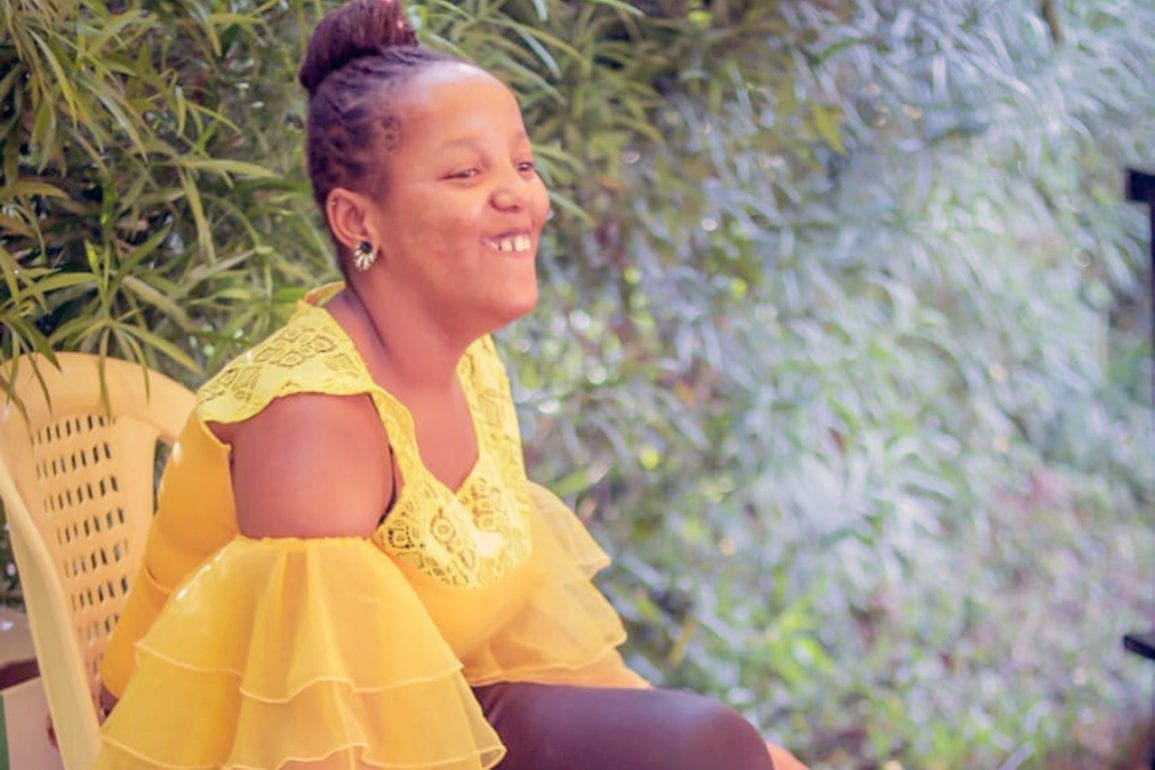
Winnie Wanjiku, known as DJ Wiwa, is a female Dj in Kenya with cerebral palsy. She uses her story and condition to inspire thousands.
Background
According to the Center for Disease Control and Prevention, cerebral palsy is a group of disorders that affect a person’s ability to move and maintain balance and posture. Cerebral palsy is the most common motor disability in childhood.
Cerebral means having to do with the brain. Palsy means weakness or problems with using the muscles.
Cerebral palsy is caused by abnormal brain development or damage to the developing brain that affects a person’s ability to control his or her muscles.
The symptoms of cerebral palsy vary from person to person. A person with severe cerebral palsy might need to use special equipment to walk or might not be able to walk at all and might need lifelong care.
A person with mild cerebral palsy, on the other hand, might walk a little awkwardly but might not need any help.
Cerebral palsy does not worsen over time, though the exact symptoms can change over a person’s lifetime.
NAIROBI, Kenya — My name is Winnie Wanjiku and I am a 27-year-old Kenyan woman living with cerebral palsy.
I am a DJ and my professional name is DJ Wiwa. You may wonder how I came to be a DJ with my condition. People are often shocked when I share my occupation.
My hand movements are slow and jerky, but I DJ using my feet, including everything from selecting songs to mixing and scratching on the decks.
Growing up equal
I was born with cerebral palsy and my mother did not realize I had this condition until I was six months old. She faced challenges raising me with my condition, but I am very thankful she never gave up on me, no matter what situation she faced from society.
My mother resolved to raise me no differently from others. She was always by my side to give me a shoulder to lean on even when I faced discrimination and stigmatization from my community.
At home, there was no difference in how she cared for us. I had the same opportunities as my siblings.
When assigning duties around the house, she gave me some as well. I was tasked with keeping the house neat and tidy, which I always looked forward to doing.
With my condition barring me from doing some chores, my family stayed beside me. They were all there to help and support me. Whatever I needed to do was done.
Belief from support
This support helped me believe in myself and my ability to embrace who I was and the condition I lived with as a young girl.
Life was fun and I enjoyed every moment because I never had to worry about the people who did not care.
I played with my friends with a free spirit and even though I was a bit uncoordinated, the games were livelier to all of us with no boundaries or limitations.
I enrolled at Joytown Primary School in Thika, Kenya, a school that focuses on children with special needs.
At school, life was different because my interactions were with physically challenged children like me. They taught us various skills to suit our different statuses and to help us in life.
I later went to Joytown High School, a sister school of the primary school I attended.
All throughout school, I did not realize how tough it was living with cerebral palsy.
I was treated equally to others, so I never noticed stigmatization against me until I completed my high school studies in 2014 and started looking for jobs.
Rocky road to employment
When I started looking for jobs, things changed. It was a dark time for me.
I was asked indirectly by potential employers about my slurred speech. They would look at my hands. It always broke my heart to face such discrimination in a world that I only pictured as a safe place. I asked myself, what can I do, when they all saw me as someone not capable of doing a job.
I gave up after failing to get a single job after several trials. I prepared for a life without employment, but soon my mind went to being self-employed. I began to sell jewelry with my mother in my hometown and area neighborhoods.
We did deliveries and door-to-door sales. Business was good, and I was content with everything we were earning.
Many people grew fond of me and would call my mother asking when I would make the deliveries for them.
We kept on doing this until one day in 2018 when my mother asked me to go back to school since we had saved enough from the business.
Turning point
My mom recognized my love for music, so she said I should consider enrolling to become a DJ.
I do not remember my exact response, but I did laugh. I would not have expected such a suggestion.
I only knew a few female DJs in Kenya and none with my condition. At that moment, as I sat staring at my mother with disbelief, I allowed myself to imagine life as a DJ.
Since I enjoy and love music so much, I agreed to her proposal. That year, in June, accompanied by someone to help me, I traveled to Kenya’s capital city for the first time to start a DJ course at Talanta Institute.
That was the beginning of my journey as a cerebral palsy DJ in Kenya.
Through the first few weeks of training at the institute, I questioned what I was doing and how I would handle being a DJ with my condition.
I decided to work hard on my career, doing things differently to generate hope for the future.
With support from my family, classmates, and tutors, I graduated in October, after four months of serious training.
I started looking for gigs and marketing myself by mixing music on social media. Slowly, I became known by many people across the nation.
Winnie Wanjiku was diagnosed with cerebral palsy when she was six months old. | Keit Silale
My DJ style
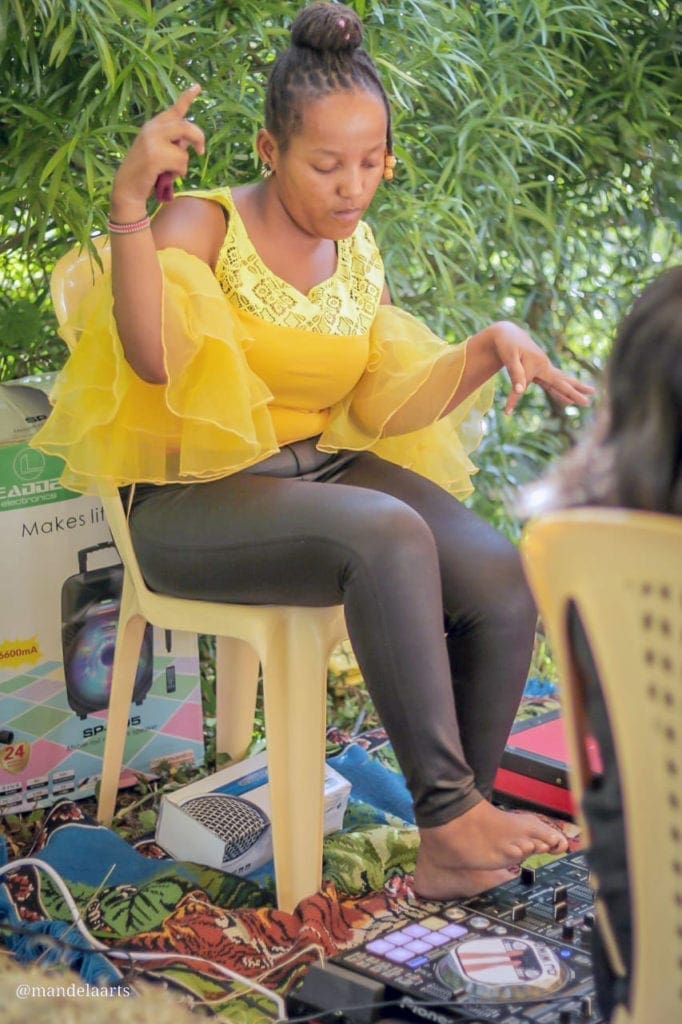
I DJ with my legs, my hands in the air, and my feet on the equipment doing the mixing.
I control my balance on the seat, towering over the DJ equipment on the ground.
I put one foot on my laptop and the other on the decks. With my toe, I press play, and the internet goes on overdrive. It is not hard to do because it is a process I am used to performing.
It is therapy to my soul, so I give it my all.
I believe in and view myself not as just an ordinary DJ. I am an online sensation in Kenya, and my DJ skills impress thousands of people across the globe despite the discrimination I have faced from others.
The DJ community in Kenya has embraced me and supported me in my journey since I started in 2018.
My decks are a gift from them, so I owe them my hard work and success.
As a DJ, I get around three gigs in a good month, each paying about $100. There are months when I do not get even one, but I soldier on because tomorrow will always be brighter. There is always light at the end of the darkness.
Constant challenges
Not every month will be good, and not every month will be poor.
The industry is somewhat tough to maneuver.
Still, I am proactive in seeking out gigs and marketing myself on various social media platforms, including my online platforms like YouTube, Facebook, and Twitter.
I always do videos of me on the decks mixing and share them on my media to market myself and share my potential with the world, in the hopes potential clients will notice my entertainment style.
There are times when I do not get gigs, yet everyone agrees that I am talented and competent, just like other music entertainers in the world.
Some take my condition as a reason not to give me opportunities. The main question I get from people is how can you be a DJ when your upper body is unstable.
I don’t let that affect me because I know thousands of people do believe in me, so I am here to power through and make them proud with doses of my entertainment.
My motivation
Being a DJ is fun. I get to enjoy myself and meet new people at every event I attend. I enjoy every aspect of it, despite the challenges I encounter along the way.
I am inspired to go for big things, and my goal is to DJ for large crowds in concerts to be held in the country after Covid-19.
I always encourage myself by occasionally whispering and reaffirming, “You are the queen of the decks.”
My mom was my number one fan, but she died in 2019 on Christmas Day. That was heartbreaking.
She was my number one cheerleader. I will never forget her support and encouragement.
My biggest fans now are my siblings and my closest friends, who support and encourage me to keep going.
Winnie Wanjiku alias known as DJ Wiwa is a female Dj in Kenya with cerebral palsy.
Post-pandemic plan
I am so hopeful for what is to come when the pandemic ends and things return to normal. I hope to be flying to gigs when that time comes.
I am primarily doing virtual events now, which are eye-opening and have linked me to different people, giving me hope for the future.
I plan to work harder in landing corporate shows to broaden my fan base.
My ultimate goal is to be an international DJ because nothing limits me. I believe all things are possible.
I encourage everyone to pursue their dreams no matter what situation they face. I want to encourage all physically and mentally challenged people to believe in themselves.
Disability is not inability. Do anything that you think is good for you, and don’t allow other people’s opinions or your health status to bring you down.
I am a living testimony that disability is not inability, so use me as your inspiration and keep on soaring.
Kevin Lomenen is a student from Turkana community, one of the perennially food insecure communities in Kenya. He is pursuing his diploma in journalism at Multimedia University of Kenya. Having witnessed and experienced food insecurity, he is passionate to turnaround his fortunes through education.
Background
Perennial food insecurity in Kenya’s arid and semi-arid lands is a significant threat to many residents living in these areas. Drought and short rains worsen the situation and put many lives at risk of severe starvation.
A report by Kenya Food Security Steering Group reports that 1.4 million people from ASAL counties face severe food shortages this year.
TURKANA, Kenya — Growing up, I witnessed families struggle to secure food every time a drought or famine struck our underprivileged community.
Children born to parents in communities living in arid and semi-arid areas of Kenya are at risk of starvation, hunger, and possibly severe food insecurity.
I come from Turkana, one of Kenya’s pastoral communities, and I am a proud member of this community. I owe respect to all pastoralists in Kenya who have been neglected and marginalized for too long.
My parents have been trying their best to fight acute food insecurity year after year.
The arid and semi-arid conditions, in most instances, do not favor us. During drought and famine, we suffer a lot. Access to water, food, and other basic needs are always challenges.
Lack of food and water dehumanizes and makes people feel worthless. The pangs of hunger are terrible and render us hopeless.
Food is a basic need, and lack of it can snuff out a life.
Recognized issue early on
When I was 10 years old, I wondered if the lack of food in my community would ever end.
At that age, I did not understand why we were the only ones struggling to feed ourselves. However, the desperation that I saw shocked me to the core.
People were losing weight, and children were malnourished. They lacked energy but hoped to live.
Adults could put up with hunger for some time, but for children, it was hard. Regrettably, the parents did not have the means to solve the situation. The only hope was for the government to step in and save people from severe starvation and thirst.
However, as years went by, I better understood that famine was permanent. Cattle, the primary source of livelihood in the region, were also losing energy and would die due to a lack of pasture and water.
My community and its animals are always vulnerable to calamities like famine.
During famines, our struggle is to survive. We look for something to sustain us as we try to figure out how to get food and water for ourselves and our domestic animals.
Drought hits livelihoods
My people have suffered losses due to droughts, made worse by climate change. They rear cattle, which provide milk and meat. They can also sell cattle, and that generates income for the nomads.
In the worst-case scenarios, animals die, putting nomads at risk of food insecurity. When the animals die, it means there will be no milk and meat for my community to manage hunger.
Short rains falling below average aggravate food insecurity across arid counties in the country.
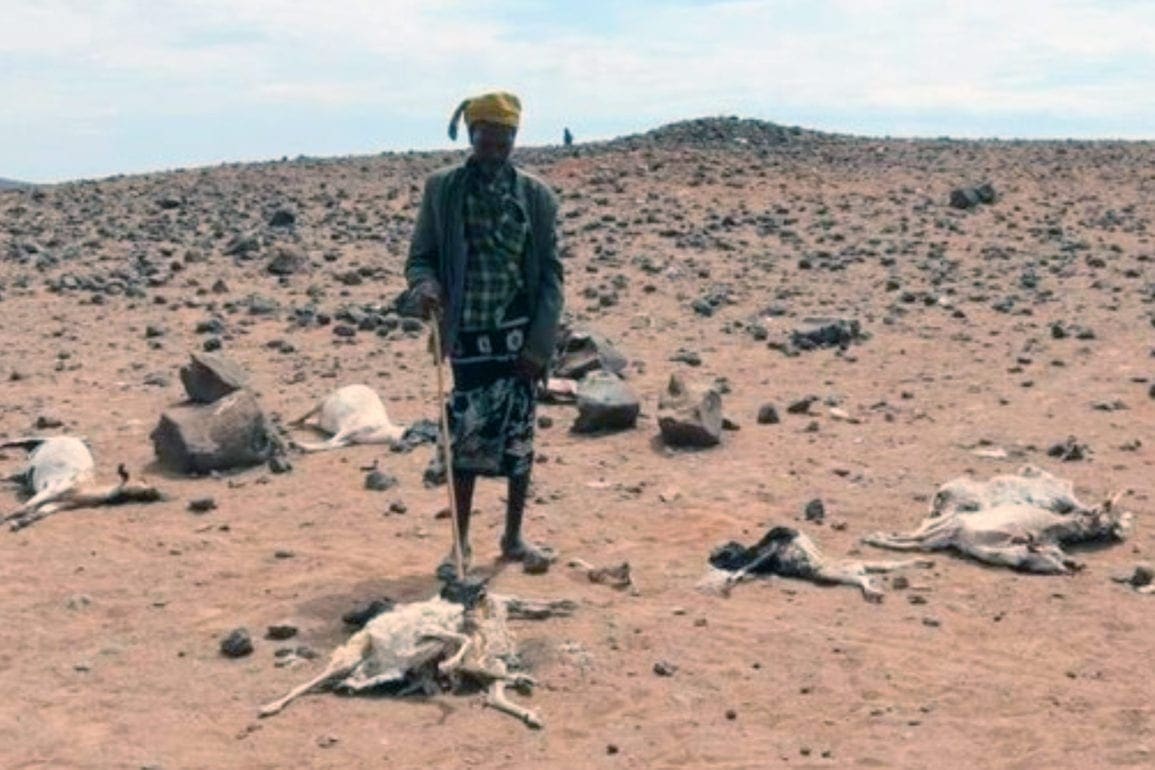
When the dry spell lasts for a long period, the ugly sight of the carcasses of goats, cows, camels, donkeys, and dogs are everywhere.
They are scary images, but I am used to seeing them. These visuals affect the mind, but we try as much as possible to be hopeful amid devastating famine.
Sadly, the carcasses of these animals often become human food. Since there is nothing else to eat, children and adults grab carcasses as their lives depend on them.
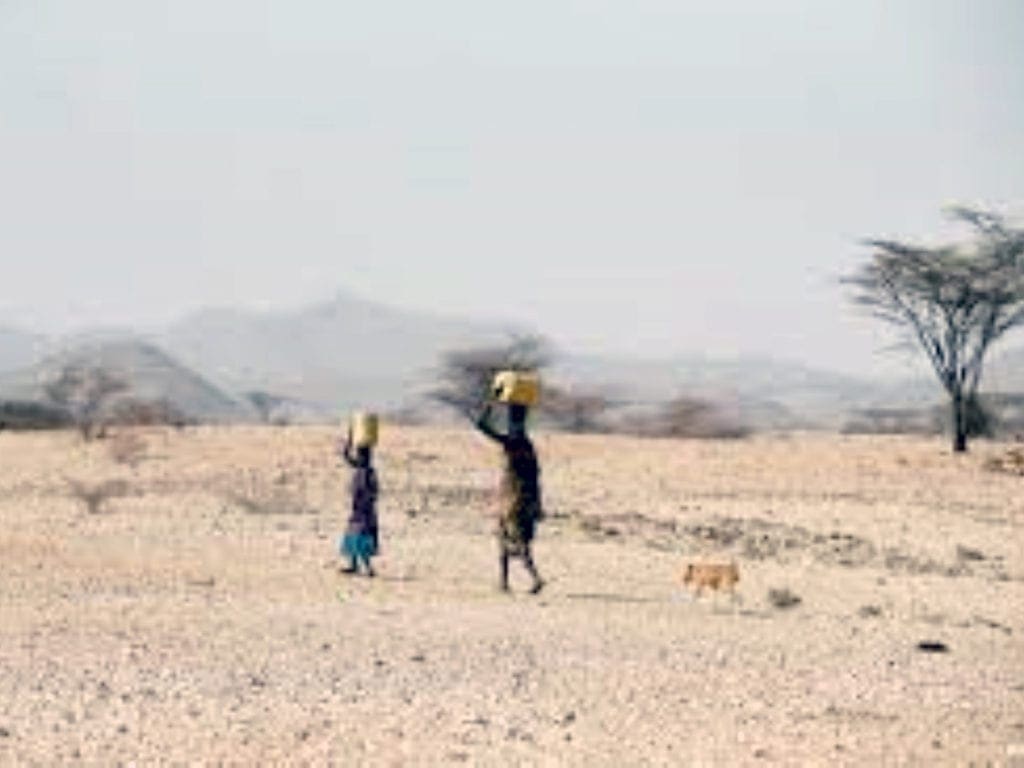
Drought in ASAL Region in Kenya. | Courtesy of Kenya’s Catholic Relief Services and Jacob Walter
Could count their ribs
We faced cruel starvation in 2019, the worst year since I became an adult, with a wave of famine that hit the most vulnerable in the Turkana community.
The victims were emaciated, and I could count their ribs. It was unimaginable seeing people helpless to that extent.
Arid and semi-arid counties such as Wajir, Tana River, Marsabit, Garissa, Mandera, and Isiolo are the most affected every year the food security crisis hits Kenya. A person who hails from these areas and comes from an underprivileged family is unlikely to escape.
In February 2021, the Kenya Food Security Steering Group (KFSSG) announced that about 1.4 million Kenyans in arid and semi-arid regions are at a risk of facing an acute food security crisis this year. This number makes up 10 per cent of Kenya’s population in ASAL counties.
I hope someone can contain the crisis before the situation worsens.
Education a way out
I consider myself lucky because we are pulling through the harshest of conditions in ASAL areas.
My people have begun to realize the need to take their children to school. They are considering education as a means to get out of this perennial problem.
It gives me relief to see children in Kenya’s marginalized pastoral communities pursue education. I have seen children determined to change the situation through education.
During my primary school and secondary school days, I believed that my schoolmates’ situation would change. I was not the most disadvantaged child, but seeing my schoolmates stay in class self-assuredly, sometimes without adequate food, was a sign of hope.
The grit that children in my community show while pursuing their studies amid biting hunger was covetous.
Access to education has allowed us to restructure our lives and find a way of overcoming food insecurity.
Parents take advantage
Parents are becoming enlightened and take their children to school to pursue dreams that would untie them from perennial household food insecurity and other harsh economic conditions.
I am focused on my studies, and I am determined to succeed. Education is the only tool I have to better my life and fight for my community.
My education is enlightening me, and I have realized that the food security problem is not permanent.
When I came to the capital, Nairobi, for my higher education, I realized that it is possible to change my situation and that of my community.
Upon completing my studies, I am hopeful that I will secure a job that will help me meet my basic needs without struggle.
Committed to helping
Once I graduate and secure employment, I will commit my earnings to fight food insecurity at a family level. This promise implies that if many children from disadvantaged communities or families access education, they would be in an excellent position to fight poverty which in most cases contributes to food insecurity to Kenyans living in arid regions.
However, school enrollment is appallingly low in arid and semi-arid lands. A worrisome trend has caught the attention of education officials, and, fortunately, they are moving with speed to demand that parents take their children to school.
Some parents keep their children at home to look after livestock.
The administrators in ASAL regions are urging parents to take children to school; failure to do so would lead to an arrest. This move will ultimately help ASAL communities solve recurrent food insecurity.
Feeding at public schools to boost enrolment
Hunger and malnutrition have affected nomadic communities for many years. Without food in school, no child could see the need to seek education.
School enrollment has been inadequate in arid and semi-arid lands due to hunger. Children felt that it was not necessary to be at school if there was no food.
However, the situation had slowly changed since the 1980s, when the board introduced school feeding programs in nomadic communities to spur enrollment.
I have benefited significantly from the government’s school feeding program. The United Nations World Food Programme (WFP) and the Ministry of Education have worked collaboratively to feed school-going children since the 1980s.
However, in 2018 the Kenyan government took over school meals from WFP.
It is this program that persuaded many children to go to school. As nomadic people, they were not interested in education at all. When food was made available in schools, it became a haven for many who previously could go hungry for many days.
I would admit that a majority of my schoolmates came to school for food. School meals were bait, and if the government dares to do away with this feeding program, many children will drop out.
I appreciate this program because it has helped many of my peers reach higher education levels. They could sometimes collect food from school and take it home for their relatives.
This effort has seen some parents and guardians prefer education over keeping traditional livestock with low yields.
Diversification of economic activities
Apart from taking children to school, we are gradually shifting attention to crop farming. Even though we do not receive adequate rainfall, the little precipitation we get can go to farming.
My people are growing drought-resistant crops like sorghum. They can become food secure if they can make a meaningful harvest every season.
Even though opportunities are limited in our region, we can become engineers, teachers, doctors, journalists, and successful businesspeople. These options are possible if they prioritize education over livestock keeping.
The ASAL areas are not agriculturally productive like other fertile areas in Kenya, but they can create opportunities if the government channels resources.
The Turkana county government and other ASAL counties receive considerably high revenue allocations to address problems such as food insecurity. If they properly utilize these resources, there is a bright future for the hunger-stricken communities.
I will be a change agent in my community.
My focus will be to encourage young people to pursue education and seek opportunities outside the ASAL regions.
Arnold Masake is a web designer and musician who is a reformed sex worker using music to create awareness about the sex trade in coastal Kenya.
Background
Sex workers are women, men, and transgendered people who receive money or goods in exchange for sexual services, and who consciously define those activities as income generating even if they do not consider sex work as their occupation.
According to the survey by the National AIDS and Sexually transmitted infections control program, world Bank and the Canada university of Manitoba, there are an estimated 200,000 commercial sex workers in Kenya, 15,000 of whom are men.
The majority of the male commercial sex workers have sex with men, thus putting them at a greater risk because anal sex as is already known, is a catalyst for the spread of HIV, and because of the stigma involved, many do not seek services like HIV testing.
NKOKOIJU, Kenya — I sit at the shore of the Indian ocean. The sounds of the water and cracking of the waves stir my heart, inspiring my imagination and bringing me joy as I remember how far I have come since I reformed as a sex worker.
I take a deep breath and dive into my past life, which breaks my heart every time I remember.
You may look at me and wonder if what I am saying is true because of my young age.
Yes, it is true that for three years I worked as a male sex worker. I traded myself for money. I cared about nothing but getting money to support myself and my family.
Born into poverty
I grew up in an impoverished family, raised by a single mom focused on our basic needs. It was not easy.
We struggled with everything. Being the first child and big brother to my siblings, I could not stand seeing my mom’s struggles and suffering without doing something.
Every day, I watched her leave us at home to look for manual jobs. I would dream of helping her to support our family – a family living hand-to-mouth.
My dad, who had abandoned us, was not around, leaving my mother as our only breadwinner.
This situation seemed wrong me, and through those moments with my siblings, I started looking for a job. The first thing I discovered was sex work.
My sex work journey
I started as a sex worker in 2018 in the coastal part of Kenya at a very tender age. It was immediately after my high school education.
I was introduced to this job by a friend who had links to sex work.
Through the information he gave me, I joined a group on Facebook that connected sex workers to potential customers.
I used the link to enter a WhatsApp group where many sex workers were looking for clients.
Through the group, I could get clients who would pay me after having sex with them. The clients were older women, some old enough to be my mother or grandmother.
The age of my clients did not bother me as a struggling child looking to support his family.
Knew what I wanted
I focused on the money I would get after every meeting. Because I needed the money, I opted for sex without protection which paid more than sex with protection.
I never cared about getting sexually transmitted diseases like HIV and AIDS. All I cared about was providing for my family, so nothing else mattered.
Every day was a new day to hunt for sex clients. On bad days, I could pay brokers to connect me faster to clients to get money quickly.
I used most of the money to provide for my family and I used the remaining to buy myself clothing and accessories to impress my clients.
I focused on the end product and not on the age of the clients.
Pay depended on the service I offered, and it varied between $10 and $50.
Hiding the trade
As much as I was happy about providing for my family’s basic needs, how I was earning a living became difficult for me.
I feared what my helpless mother would think if she found out what I was doing.
She questioned me day in and day out about the source of my money. I never had the courage to face it and open up to her about trading myself for sex.
Every time she asked, I confidently lied and said I was doing manual jobs.
Living a lie
I never wished to lie to her, but felt shame and fear of being a bad example to my siblings. I never had the courage or nerve to open up to her, and I regret it even today.
I lived a lie in front of them. I presented myself as a respectful, disciplined boy, but in reality, I was a poisonous human rotting with the shame of what I was doing.
As the first child, I wanted to lead by example, and I wasn’t.
I tried everything possible to keep my sex work under wraps. However, they likely had suspicions.
I became ready to reform when my mother found out about my sex trading life.
I still remember the shock on her face when she knew. It was unexplainable.
Turning point
Life as a sex worker for either gender is not an easy one. It requires a lot of patience and thick skin to handle all the troubles you will encounter.
I can not tell you the number of times I was violated by clients because I didn’t satisfy their needs. It was not once or twice, it happened many times.
I vividly remember this one incident very clearly like it was yesterday.
After the job, I met a client, and she refused to pay me, saying I had failed to perform to her expectations. The woman refused to pay even a tiny amount.
That day I went home empty with nothing in my pockets.
Shocking scenarios
That’s not the only time. I remember a day an agent hooked me up with a client, but upon reaching the meeting point, I found out there were four women who wanted my services.
I was shocked with many worries on how to sexually satisfy four older women. It was risky because if I could not, they could attack me and withhold pay, so I surrendered.
These incidents and my growing fear of exposure to high risk STDs and HIV pushed me to reform. After all, I never knew the backgrounds of the women I was meeting.
Some were wives and even mothers, which posed a great risk to my life.
If I got caught with someone’s wife, it could end badly. I might have been killed.
Change my ways
I decided to shun the sex trade to save myself from the threats I was exposing myself to at a young age.
One day I visited an organization named NKOKOIJU AFRICA, which is in coastal Kenya.
The organization advocates for the rights of sex workers and also acts as a rapid response team to combat violence against sex workers, like in cases where a client fails to pay or becomes abusive.
I visited the organization headquarters to collect condoms and get tested for HIV.
Before the test, we had a sit-down with one of the organization’s social workers at the office. She offered me counseling and advice about the sex trade.
Touched by advice
Like never before, I was touched by her advice and decided to open up about my life as a sex worker, which I hid because of shame.
That day we talked and talked for hours, and before the visit ended, I vowed to change my ways.
That was my first time opening up about my life. It became a turning point.
I told my mother everything, and though mad and angry, she understood me. She vowed to forgive and support me in the next steps of my life.
From that day, I started working with the organization as a volunteer, creating awareness about the dangers of the sex trade.
Raise awareness
The organization became my new home giving me hope, ready to face the world and use my story to create awareness about sex trading as a male youth.
Through the organization’s help, I became a voice of hope to others. I started making music, which has always been my passion. I sing alongside a group of other boys who are also former sex workers.
We sing songs of hope, speak about our past lives, and create awareness of the dangers of the sex trade to help youths shun this unethical trade.
We are a group of reformed sex workers using our stories to advise children and change the narrative of sex work. The group is called Watukutu culture.
Made a vow
After reforming, I also vowed to help the friends I was working, so they could get help in Nkokoiju, Africa.
We went through a series of transformations through guidance and counseling. After we all reformed, the organization sponsored and supported us in our musical projects showing us that we do not have to go back to sex work to make it in life.
It’s something I am so grateful for, and I will never take it for granted because it has saved me and many other youths from a dangerous life and related health threats.
Options out there
I want to let the youths know that it’s not okay to do just anything for the sake of money.
I know and understand how poverty can push one to do things that are not right because I have been there.
Be focused, and don’t allow yourself to be a victim of heinous activities for the sake of getting paid.
Work on your talent. It pays clean money. And remember, HIV and AIDS are real, and there is still no cure.
Protect yourself if you have to perform sex with strangers.
Though it takes time, you can eventually win.
Please don’t allow your past life to define who you are, It is not who you were that matters but who you become and where you are heading as a person, so be focused on your goals and inspire others to change.
Evans Ondabu is an illegal charcoal businessman in Lolgorian, Kenya. He has been active for more than 10 years.
Background
Illegal logging activities are still rampant in Kenya despite the government’s efforts to protect forests.
Kenya Forest Service is a corporate body established under the Forest Conservation and Management Act no 34 of 2016 (henceforth referred to as the Act).
The Act which was operationalized on 31st March 2017, gave the Service’s mandate as “to provide for the development and sustainable management, including conservation and rational utilization of all forest resources for the socio-economic development of the country and for connected purposes.”
Kenya loses over 70,000 hectares of forest to illegal logging every year. This has so far brought down the forest cover in the country by half.
It is because of that rate of forest clearance that the Kenya Forest Service has decided to step up patrols in the forests within Kenya. Those patrolling are the ones who know where these trees are going.
There are environmental issues brought about by the illegal business in the forest, including cyclical severe droughts.
A land without enough forest cover is vulnerable to drought. It is also the reason why most parts of the country suffer floods when it pours. With bare ground, rain waters flow all over causing gully erosion in regions without trees. Areas like Turkana, Mandera, and Garissa suffer from this problem. Animals living in the forests are slowly becoming homeless and uncomfortable because of human interference.
This will definitely change their way of life, response to stimuli, and even death.
LOLGORIAN, Kenya — In Kenya, illegal logging can result in a severe penalty, but I do it to put food on the table and educate my children.
I started illegal logging and charcoal burning several years ago when I lost my job, and I have managed to survive.
I thank God that as of now, I am able to make a living. It is risky because I have to be swift and slippery to avoid the law.
I was introduced to this business by a friend when I could not farm because of the scarcity of land in my village.
Quick mentorship
Before I started my own business in the forests, I worked for my friend to learn the things I needed to know. He wanted me to understand how to work with the authorities and avoid them when required.
Logging in these forests calls for networks that can let you off the hook if caught by the police or forest service officers. I learned and perfected this art.
I can now set up as many furnaces as I need in this forest and hide them, even with smoke emanating from the fires.
Illegal activities in the forest
Other loggers are burning charcoal like me and some are cutting down trees solely for timber and fencing posts.
Each one of us has to pay a bribe to continue our activities. Those of us who deal with charcoal pay an amount set by the officers manning the forest.
In this forest, you have to follow the rules of the jungle because the penalties are severe.
We come in with power saws, axes, and blades to cut down trees that are under protection. Sometimes it is hard to believe that the authorities hear power saws grinding in the forest, but turn a deaf ear.
‘Legal’ illegal behavior
This occurs because we paid for our existence in the woods, and our illegal activities are ‘legalized’ by these payments.
I work with police that should be protecting the forest, but become like business people. They are the ones selling trees to loggers like me and many others.
Some police bring in their own workers, and they are the ones cutting down trees and selling timber and posts. You will not see them selling the timbers in timber yards or transporting them.
As for people like me, our only option is to keep logging.
This work has no time for rest. I only rest when my furnace is burning, but I still have to be vigilant to safeguard it from bursting into flames.
No rest for the wicked
I also have to be keen because customers come into the forest at night. I need to hear them when they are approaching in case the cellphones do not work. That means there is little or no sleep in this business.
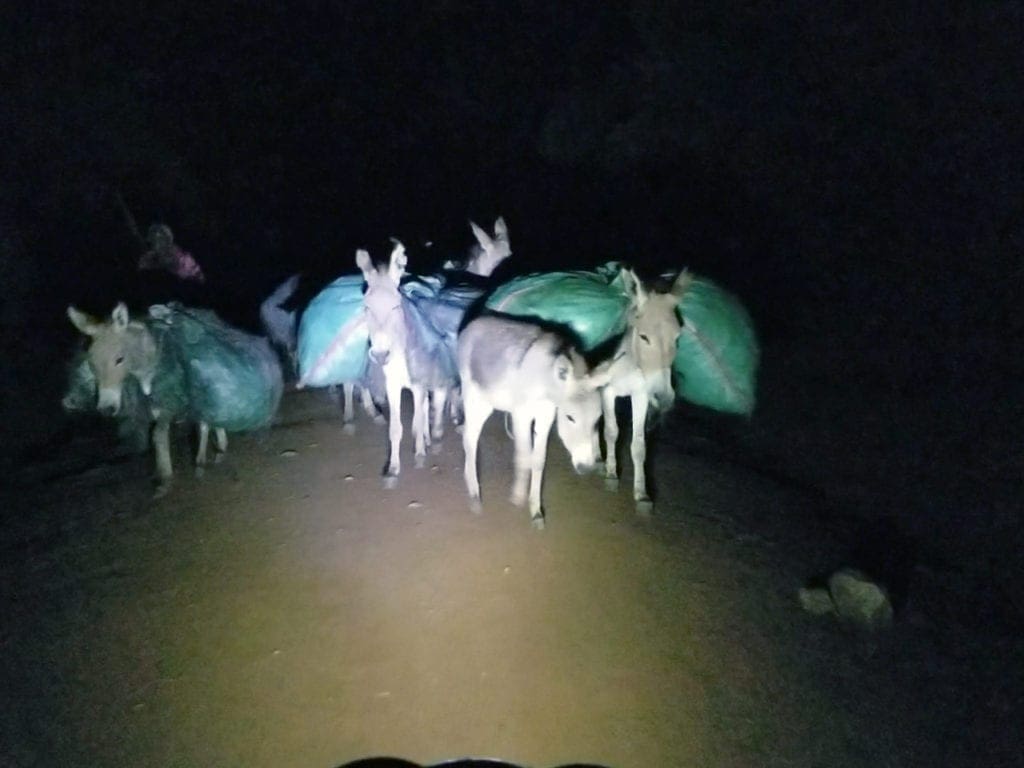
I am lucky that my customers come with hundreds of donkeys or motorbikes, so I can hear them when they are approaching.
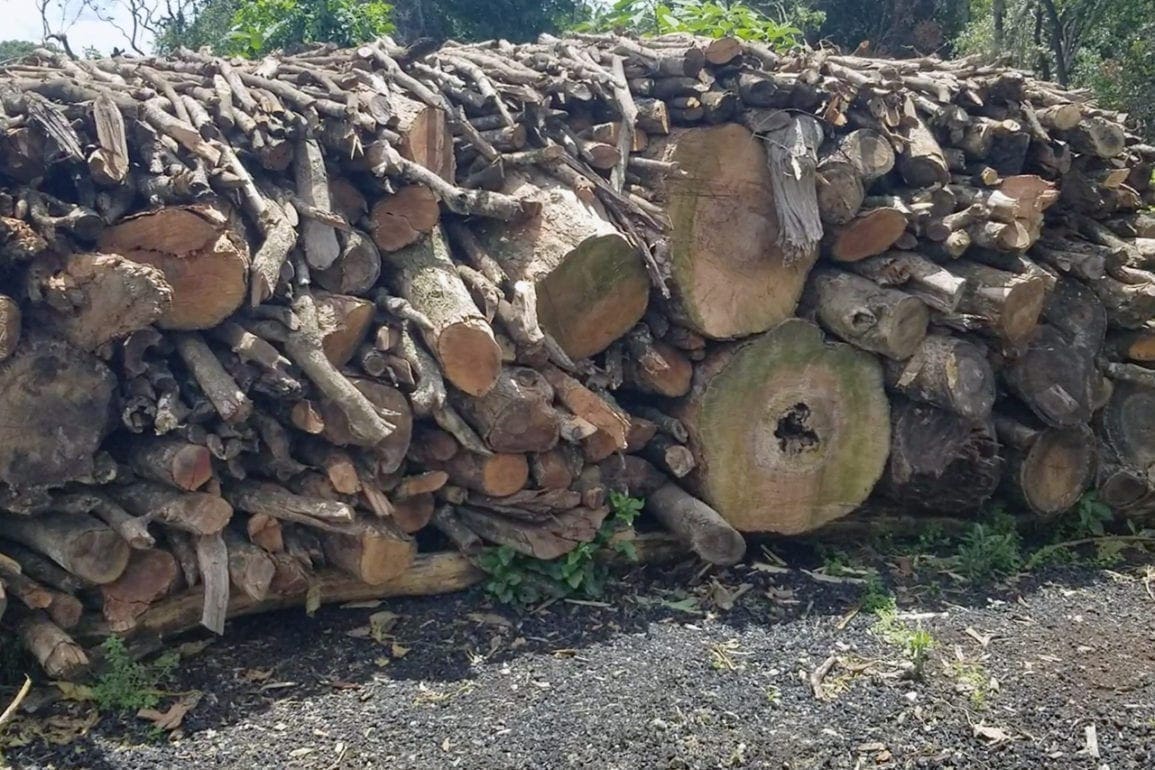
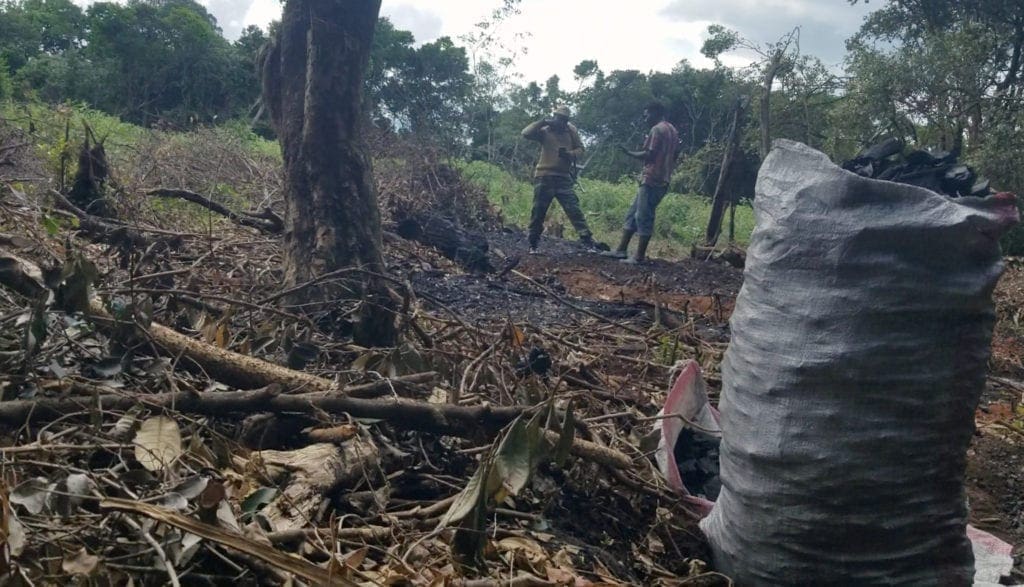
Bags of charcoal ready for transportation. | David Bett
At night, there are officers handling roadblocks along the road. These officers also get their bribe to allow charcoal sellers to proceed to their destination.
Charcoal sellers, who are my customers, have to pay a hundred shillings for every donkey. In fact, you have to pay for each donkey carrying charcoal at every roadblock.
Bribes factor into pricing
These bribes affect the price per sack of charcoal because you must factor in all of the payments.
The whole system works like any other market where taxes are cascaded downwards.
A large percentage of indigenous trees are hardwoods. This type of wood is in high demand and almost every carpenter wants them.
Donkeys transporting charcoal from the forest at night. | David Bett
Indigenous trees produce good quality products compared to other breeds like eucalyptus and cyprus.
High demand means that a logger in the forest can make a killing from their market monopoly.
Indigenous tree sellers are also connected to Kenya’s forest service police. These police officers control the number of businesspeople in the industry because they also sponsor them. They patrol the forest and set the prices for illegal timber and charcoal.
High demand
While I am not saying the government knows we are cutting down trees, it is common knowledge that people here use charcoal or firewood in their kitchens.
No one uses a different source of fuel apart from these two. There is no electricity and no one can afford alternative methods like gas and generators.
Everyone is trying to minimize cost and that means they have to come and buy charcoal. That is how I get to earn a living.
We even sell our charcoal across the border to Tanzania. Charcoal from indigenous trees is top quality. That propels its demand above charcoal from other trees.
A Kenya forest service cop talking to an illegal charcoal businessman in the forest. | David Bett
How I buy immunity
To continue logging in these forests, I have to pay for my stay, so I do. These police officers that guard the forest will not listen to you if you do not have money to bribe them. In my case, I pay them to access the forest where the trees are big enough to meet my financial targets.
An eighth of an acre goes for four thousand shillings, but they can extend that when the area has fewer mature trees. I am at a level now where I bribe based on the number of furnaces that I erect.
I pay one thousand shillings per furnace, and I find it cheaper because I erect oversized furnaces intending to produce as many sacks of charcoal as possible.
For sustainability in this business, I have to lower the cost of a bag of charcoal to allow my customers to get some profit after bribing cops along the roadblocks.
Symbiotic relationships
That sense of symbiosis is the reason I sell a bag of charcoal for as low as three hundred shillings.
By the time my customer gets to the final user, the cost of that same bag escalates to over 1,500 because the last buyer has to carry all the bribes paid along the way.
Sometimes I ask the police to escort my customers out of the forest because they came for goods at night. It is risky to walk for such long distances after dark because of the insecurity in the whole region.
In some instances, one has to dodge wild animals like hyenas that attack donkeys. With a small payment, police can escort you safely to the other end of the forest.
Sometimes I take advantage of the police accompanying their own products out of the woods, and have my customers tag along.
This way you get security and, at the same time, police at roadblocks will not give you a hard time. It is a kingdom that operates like a fiction movie, but it is real life.
What happens when I fail to bribe?
Being in good standing with forest guards is what I must do to continue this work. A slight mix-up can be disastrous to my business.
I have learned to survive in this jungle with its strict rules.
Here, punishments bring you down economically or even kick you out of business. One time I failed to pay my bribe and the police on patrol pricked my furnace, let air in, and poured petrol into it.
The whole furnace burst into flames, and I could not get one bag of charcoal out. As I said, it is a jungle with its rules, and I have to abide by them to survive. I pay the bribes as early as possible to avoid unnecessary losses.
Being an illegal enterprise, nobody cares about the pain you have to endure when you incur losses. Everyone here is rough and somewhat inhuman.
I have seen police kick people out of business because of slight misunderstandings. Failing to raise a bribe due to some financial stretch led to several loggers getting kicked out.
That is what I fear the most because I do not have anywhere else to run to if they kick me out. It is not easy to come back when they kick you out since they are the same people to let you in.
The same police officers that you have been working with can arrest you and send you to court for cutting down trees.
Every time I imagine being in court as a respondent against the government, I pay the bribe and enjoy peace in the rough jungle.
This job has separated me from my family. I only see them briefly each month then rush back to the forest to keep working.
I do not regret doing this work
I do this job to meet my family’s needs. This life is better than being a thug out there. I do not hurt anyone with this job, I only break the law, but I am not alone in this.
Remember, even those that are mandated to protect the forests are here logging, too.
The economy of this country is also a hurdle I cannot just leap over in the name of doing what is right.
Life is hard out here, and as long as I have not killed anyone or stolen from anyone to earn a living, I think illegal logging is better than other crimes.
Doing the crime
I understand that what I do amounts to environmental crime. It is a criminal offense in the sense that we have evicted several wild animals that use these forests as their home.
This work means I am hiding from the Kenya forest service members and the Kenya wildlife service. I hope that I will find another job to avoid having to live in a hideout like a wild dog.
If I ever get caught by the strict police officers, those I work with in the forest will step aside as I get arrested.
Rules are straightforward. You must carry your cross. If you are caught they can lay unimaginable pain on you. You die alone.
Ruth Makena is an advocate of the high court of Kenya. She also is the founder of the Gigantomastia Foundation Kenya, which started nearly five years ago. She raises awareness about Gigantomastia: a rare condition characterized by excessive breast growth, and she helps those afflicted by the condition access affordable healthcare.
Background
There are no clear statistics on the number of people afflicted by gigantomastia in Kenya. The same applies across the globe.
With time because of awareness that’s being created, more cases are being reported even though at a very small.
Gigantomastia is a rare condition characterized by excessive breast growth. It may occur spontaneously, during puberty or pregnancy, or while taking certain medications.[1][2] There is no universally accepted definition of gigantomastia, but the majority of medical articles refer to a particular weight of excess breast tissue.[3]
Symptoms of gigantomastia may include mastalgia (breast pain), ulceration/infection, posture problems, back pain, and chronic traction injury to 4th/5th/6th intercostal nerves with resultant loss of nipple sensation.
It is also associated with decreased fetal growth if it occurs during pregnancy.[1]
NAIROBI, Kenya — My mother once noted that my recurring shoulder dislocations could be due to my enormous breasts.
She suggested we visit a specialist and plan for a breast reduction surgery, but I dismissed her. It turns out her instincts were right.
I came to be diagnosed with gigantomastia 10 years ago. Finally, I put a name to what was ailing me all along.
My doctor had been trying to figure my persistent, recurring shoulder dislocations, which started when I hit puberty.
The first time I went under the knife was in the year 2002, as a teenager.
In 2010, I was back in the hospital due to another dislocation, and that’s where my doctor pointed out that the weight of my enormous breasts was the cause of my constant dilemma.
Condition turns acute
He said the size of my bosom was weighing down my back ligaments. After speaking to my mother, he referred us to a plastic surgeon for a breast reduction procedure.
My cup size was at 44 gg, way beyond what my back and general bodyweight could support. You can imagine the fear and anxiety that sets in pre-surgery.
Ruth Makena before surgery. | Ruth Makena photo
I did not have that. Tentatively I just wanted to be done with it.
In February 2011, I had my surgery done at Nairobi south hospital. It took close to four hours for the doctors to extract the mass of the required tissue.
There was an instance where I was walking to the restroom, and the nurse on duty inquired why I was still slouching.
This thought was fresh after my surgery, and it had yet to click in mind the amount of weight lifted.
The nurse, later on, informed me that they harvested 7.3 kilos from my chest; this did not register at the moment as I was still groggy from the anesthesia.
It all hit me on my second stay at the hospital. The transformation was apparent when I looked at my chest.
At 25 years of age, I finally had my life back. I was discharged from the hospital after five days to continue with my healing at home.
They performed a free nipple graft to reconstruct my breasts down to a 40 c cup size.
The healing process took three and a half weeks.
Growing up
My big personality, in hindsight, was a distraction away from the body image issues I was dealing with privately.
Along the way, I became a bully to deter any untoward advances or name-calling; hence no one was ever courageous enough to say anything to my face.
My bosom used to draw a lot of attention. I would be talking to someone, but their eye level focused on my bust, which was uncomfortable.
The biggest hurdle was when I would go shopping for a bra but never got my size to a point where I would sometimes throw a fit in a shop because I never understood the lack of accommodation.
Even though like most women, I loved trendy fashion, I was reduced to a “T-shirt and jeans girl” because the clothes I desired never fit well.
Ruth after undergoing corrective surgery. | Ruth Makena photo
Post-surgery response
My confidence has since soared.
Along the way, I have dealt with stereotypes from a section of people who feel that I had the surgery for cosmetic purposes and that it was not necessary.
For most victims, it is a personal daily struggle they would rather keep to themselves out of shame or embarrassment.
This stigma is why I started educating the public about the detriments of gigantomastia by establishing a foundation.
Once I furnished myself with enough knowledge about the condition, I decided to give back to society. I can tell tens of women, especially from rural areas, have been helped through my program.
Treatment of gigantomastia is costly in Kenya. Personally, my health insurance company refused to cover the cost of the surgery, terming it as not dire.
My parents stepped in. So you can imagine the number of women or men out there who cannot afford this essential procedure.
So far, the Gigantomastia Foundation has overseen more than 180 surgeries since launching five years ago, a feat I would like to continue.
Constanza Orbaiz suffered two cardiorespiratory arrests in her first twelve hours of life. Doctors said she would only survive two days.
Despite not being able to project her own future, at 37, she overcame many barriers and help others in her same situation.
Background
The National Institute of Statistics and Censuses (INDEC) published the preliminary results of the National Study on the Profile of People with Disabilities, through which it is now possible to know that 10.2 per cent of the population of Argentina has some disability.
In absolute terms, it corresponds to an estimate of 3,571,983 people. Approximately 10 out of every 100 people who live in towns with 5,000 inhabitants and more have some difficulty.
The Cuyo region is the one with the highest proportion of people with difficulty (11.0 per cent), and the Patagonia region is the one with the lowest proportion (9.0 per cent)
According to the International Classification of Functioning, Disability and Health (ICF) published in 2001 by the World Health Organization (WHO, 2001), disability is considered to be any limitation in activity and restriction in participation, originated in the interaction between the person with a health condition and contextual factors (physical, human, attitudinal and sociopolitical environment), to function in their daily life, within their physical and social environment, according to their sex and age.
BUENOS AIRES, Argentina — When I was born, I had a cardiorespiratory arrest and another one 12 hours later.
That led to a brain injury called hypoxic quadriparesis cerebral palsy.
From that moment, my future was clouded, and the condition set me up for a lifetime of doubt and discrimination.
All of us who suffer from a disability experience episodes of discrimination at some point.
Today, I have one goal: giving visibility to people with disabilities.
The incident that marked my life
Doctors said I would likely die as a newborn, yet 37 years have passed since that grim diagnosis.
I live with a disability that does not stop me from being who I want to be.
Although I never knew if I would finish each school year, I managed to graduate in psychopedagogy.
I always say that my determination and desire to live have always governed my life.
That thanks to the love and perseverance of my parents, I always felt accompanied. Without their support, I would not have been able to achieve everything I did.
Every step, every goal I accomplished was thanks to them.
After many years, I dared to live alone, and they helped me a lot, and it was an excellent experience.
Although I have some difficulties and challenges to do daily things, I always try to find a way to overcome them.
Falling and standing again is part of the process.
In those moments, my therapy support team, my friends, and my family help me a lot.
Without them, I don’t know how I would do it.
I can tell you that my determination comes from the love of my support network.
Complex society
As a person with disabilities, I always wanted others to understand our situation and tell them, “here we are.”
It seems that people like me are not here. Others don’t see us, but we exist.
Usually, societies are not designed for integration and we were never able to have a “normal” life as others. Our lives are a little more complicated than anyone else’s.
In recent years, society has advanced in various aspects. Still, it seems that there is a long way to go in terms of disability visibility and acceptance.
There were advances compared to 20 or 30 years ago, especially in school and the workplace.
But from the state, it seems to me that there is still a lot to do.
Without inclusion, disability brings poverty, and this situation has to change as soon as possible.
I hope that society becomes aware of this problem and helps to change the outlook.
A big idea
I have always felt a need to help and explain how people can collaborate to improve everyone’s environment.
I think that it is my purpose in life.
Today, I have one goal: giving visibility to people with disabilities.
That is why I created the “Desde Adentro” foundation, a project to give talks in different areas such as business, education, and therapeutics.
I felt it was imperative to give a voice to the voiceless like me.
I speak to companies about any issues that have to do with disability, including people in the workplace or education. The objective is to help them to integrate people with disabilities into the working environment.
Taking into account the pandemic context, the talks are evolving to a more motivational tone.
I put people like me at the center of the scene and explain our emotions and needs to others.
I like what I do, and the results are enthusiastic.
Go on stage
For a long time, my work was invisible.
But one day, I was invited to give a TED Talk. I could not believe that they invited me to participate.
I did not hesitate and said yes.
It was an incredible opportunity to show the world that we are part of society.
It was the best decision, and it allowed me to take our problems to the mainstream media.
From that moment on, I had months of great exposure.
People stopped me on the street to thank me, greet me, and show their affection. I will never forget that time.
A world of many opportunities, new talks, and projects also opened up for me.
Thanks to that situation, now I have more ambitious programs to help others.
The uncertain future
I can only tell you that I live in the present, I do not have any other option.
It is sad, but those who have a disability like mine know that we cannot have prospects.
I always wonder about what will come next and what I will be able to do. The future, my future it is not clear.
It is tough for me not to make plans; I do not know if my dreams will be fulfilled.
Today, I can only say that I will continue working to help those who suffer my exact pain.
Fernando Gómez Soria changed his way of living to help the environment.
Background
The United Nations Organization stated that each year more than 400 million tons of plastic are produced in the world and only nine per cent of the waste produced is recycled and 12 per cent is incinerated. Most alarmingly, around 13 million of this waste is released into the ocean each year.
In the study entitled “The single-use of plastic,” they warn that if consumption and waste management patterns continue, by 2050 there will be around 12,000 million plastic garbage in landfills and in the environment.
Greenpeace carried out another study that showed that between 21 per cent and 54 per cent of all microplastic particles in the world are suspended in the Mediterranean. Spain is the country with the most waste from plastic objects with 75 per cent.
Every day 30 million cans and plastic bottles continue to be abandoned in Spain, which goes on to contaminate the land, coastal and marine environment.
MADRID, Spain — I accepted the challenge.
For six years, I have lived — together with my partner — without using any single-use plastic.
Climate change is a reality, and the planet needs us.
In 2015, when climate change was not as on the agenda as it is now, Patri, my partner, brought me this concern: living without consuming single-use plastics.
It made me uneasy, but after that talk, our life changed.
Challenge accepted
It seemed inevitable to us to avoid this material that wraps any supermarket product.
We have been trying to minimize our waste for a long time, but now we realize that we were generating much more than we imagined.
We felt very guilty every time we had to throw it away.
That had to change.
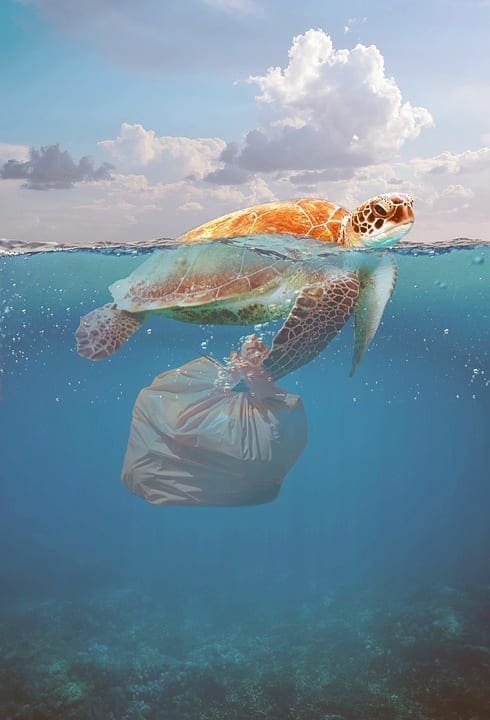
Artist’s rendering of the toll plastic waste takes on sea life. | Submitted photo
Why avoid it
Plastic is a beautiful material.
It introduced significant changes in the modern world in the field of medicine, transportation, or technology.
It is one of the noblest material of all and with it, we can create infinite objects.
But instead of being grateful for all its advantages, we have become addicted and use it without giving it any value.
That is a source of confusion.
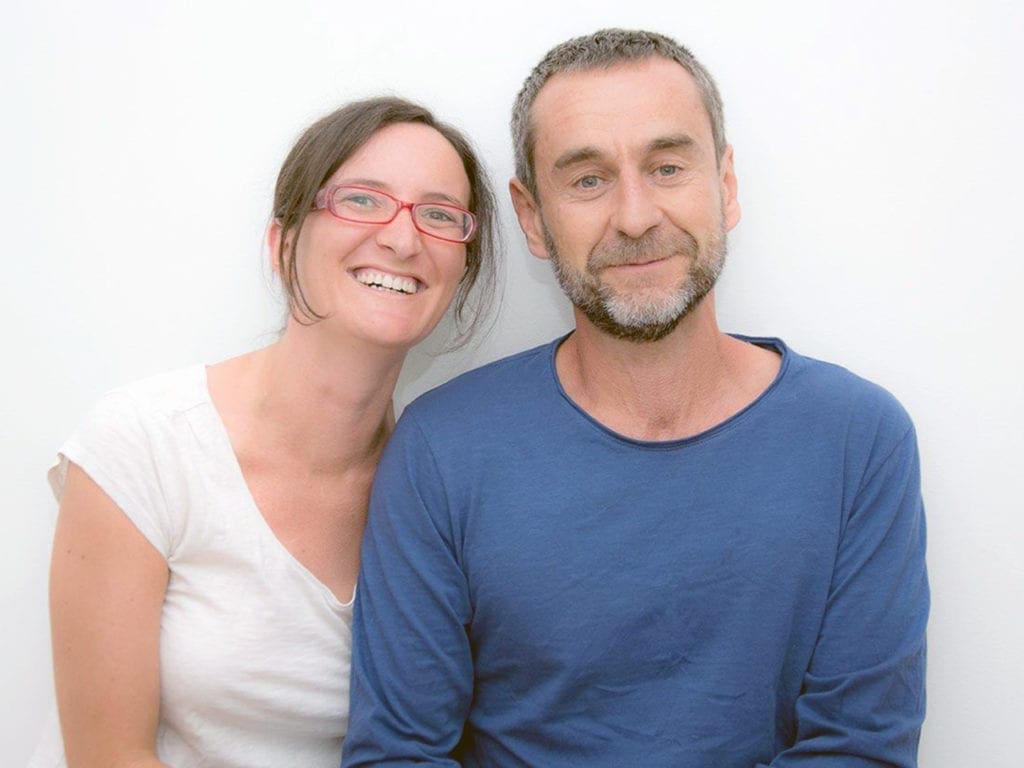
Fernando Gómez Soria with his partner Patricia. | Fernando Gómez Soria
Week zero
Trying to eliminate plastic from our lives made us realize how much we depended on it.
We used it a lot more than we thought.
We were laminated.
My first change was to bring a cloth bag when shopping. When I went to the grocery store, I asked that instead of using plastic bags, they put the vegetables in my cloth bag.
I remember they looked at me like I was an alien. That was the first look of many.
In other businesses, they had to ask for authorization to do so.
The wait was eternal. They made me wait for something that suited them, and I still have a hard time understanding it.
The use of plastic was everywhere: bottles, wrappers, bags, among a thousand other benefits.
All plastic would end up in the trash after fulfilling its primary function.
As the days went by, it became frustrating. To achieve our goal, we had to change the routine.
I started researching smaller businesses that sold individual products. Once I got into a routine, everything was more accessible.
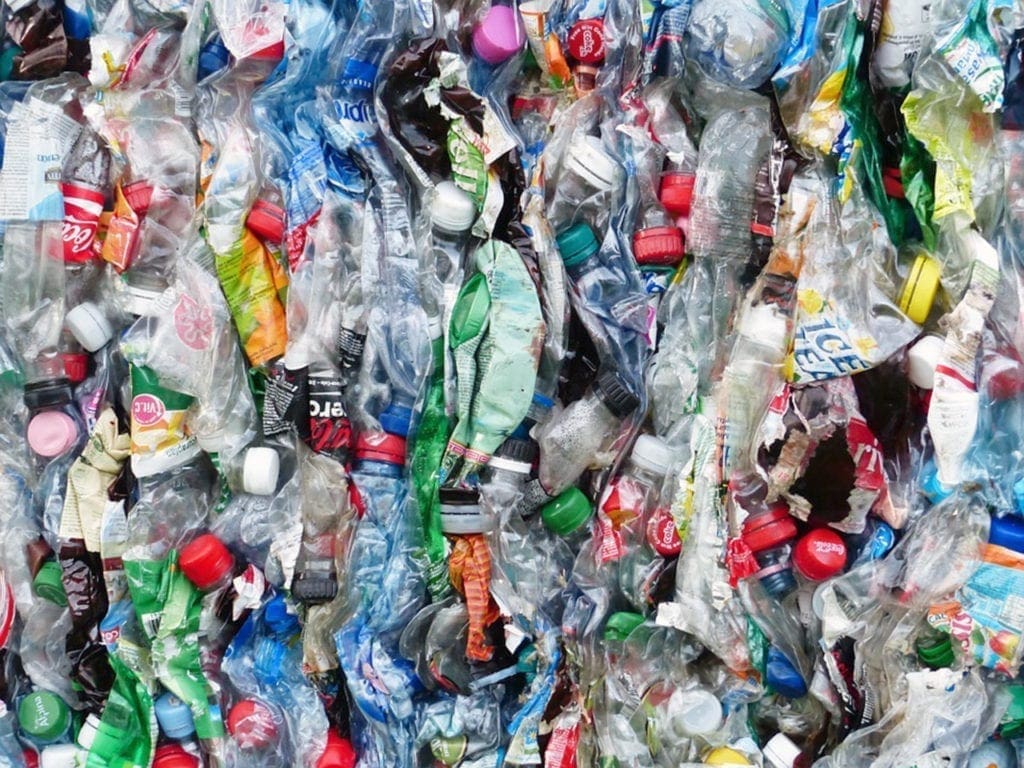
A sea of plastic bottles. | Submitted photo
The transformation
Along with our routine, the house also changed.
We only have the light switches and some toppers that we bought before making our change of life.
The cupboard today is another. We replace plastic bags with glass containers.
Even now, it seems more orderly. It allows us to make food visible and, in this way, we avoid wasting it.
With organic waste, we enter the world of compost that helps us convert it into fertilizer.
Day after day, we see how our waste volume gets lower and lower.
Our community
When we started this challenge, we created a blog to intensify our engagement.
Every day we receive messages from more people who are joining the cause.
Some ask us for advice on how to do it, while others give ideas to us.
Telling our experiences on this blog helps us see ourselves from the outside and commit ourselves to continue sharing our learnings, mistakes, and evolution towards a less plastic life.
At the same time, it is a way to meet other people with the same concerns.
Gabriela Covelli lost her son Nicolás after a misdiagnosis and she became an activist in Argentina.
Background
The Nicolás law is summarized in the following points:
Incorporate the figure of malpractice into the penal code.
Raise the penalties for the crime of malpractice and preventive suspension of the registration of the accused doctors.
Keep a record of the doctors who did malpractice.
Medical records: They must be digitized and encrypted so that no doctor can tamper with them.
Assistance by the State for the relatives of the victims of malpractice.
Argentina leaders the ranking of medical and dental malpractice litigation in Latin America, following a study by the Civil Association of Integrated Medical Activities (ACAMI).
One in five Argentine doctors faces a lawsuit (and the average is four hundred thousand pesos).
In addition, it denounces that, to cover themselves, some professionals prescribe studies that are not necessary and increase the cost of the health system. All pay fixed insurance with their tuition that covers up to 150,000 pesos.
Only one in three lawsuits are against a doctor; the other two are against prepaid and social works, according to the ACAMI report.
After a wrong diagnosis, my son died from bacterial meningitis.
You can imagine how painful it is to lose a child.
He was an exceptional boy.
I created an NGO so that no one else has to suffer from a wrong diagnosis.
When negligence kills
My son, Nicolás Deanna, was 24 years old and an athlete.
One day, he decided to consult with a doctor after suffering several days with a severe headache.
Without giving it much concern, he recommended taking painkillers but the discomfort continued.
Two days later, he returned to visit the doctor.
This time he was a little bit more worried.
He had a fever, severe headaches, and started spewing vomit in the doctor’s office, all apparent symptoms of bacterial meningitis.
What the doctor saw as “contracture at the base of the skull” was nuchal rigidity.
So once at the clinic, they admitted him.
Again, the doctor believed an allergy caused the fever. Thus he sealed his destiny.
For three days, they injected him with Diazepam, Diclofenac, also Keterolac orally, but the pain did not subside.
What came next was irreversible brain damage and coma.
Days later, Nicolás passed away.
In less than a month, I no longer had my son with me.
Shifting from pain to proactive action
For three years, I have been trying to change my pain and absence to a good purpose.
I want my son’s death not to be in vain.
I want to make visible the death of so many children, babies, and young adults so that there are no more invisible victims.
That’s why I created an NGO called “Por la Vida.”
Members of the NGO and self-convened, in favor of the enactment of the Nicolás Law. | Gabriela Covelli
I help people who suffered malpractice and make visible their problems so that public opinion becomes aware.
The doctor who treated Nicolás knew him, and if someone had raised his voice, perhaps my son would be alive today.
Members of the NGO and self-convened, in favor of the enactment of the Nicolás Law. | Gabriela Covelli
The Nicolás Law
Now, I’m fighting to promote the law.
I ask people to raise their voices and help us make the Nicolás law a reality.
Many of us support it, and we can grow if you also sign the request.
The Nicolás Law, named in memory of my son, seeks to criminalize medical malpractice.
Although the law is not well known, we won’t stop until this is made visible.
To date, there are no monitored records. They file these cases along with many others, such as wrongful deaths.
We also want each patient to have their digitized medical record to access from anywhere in the country.
I just wanted to know if the actions of the person who cared for my son had been correct.
Martin Luther King once said: “The ultimate tragedy is not the oppression and cruelty by the bad people but the silence over that by the good people.”
To provide the best experiences, we use technologies like cookies to store and/or access device information. Consenting to these technologies will allow us to process data such as browsing behavior or unique IDs on this site. Not consenting or withdrawing consent, may adversely affect certain features and functions.
Functional
Always active
The technical storage or access is strictly necessary for the legitimate purpose of enabling the use of a specific service explicitly requested by the subscriber or user, or for the sole purpose of carrying out the transmission of a communication over an electronic communications network.
Preferences
The technical storage or access is necessary for the legitimate purpose of storing preferences that are not requested by the subscriber or user.
Statistics
The technical storage or access that is used exclusively for statistical purposes.The technical storage or access that is used exclusively for anonymous statistical purposes. Without a subpoena, voluntary compliance on the part of your Internet Service Provider, or additional records from a third party, information stored or retrieved for this purpose alone cannot usually be used to identify you.
Marketing
The technical storage or access is required to create user profiles to send advertising, or to track the user on a website or across several websites for similar marketing purposes.