India’s Village Weaves turn trash into tapestries

Rupjyoti Saikia Gogoi
First-person source
India’s Rupjyoti Saikia Gogoi, 47, discovered an ingenious and creative way to deal with the plastic waste discarded around Kaziranga National Park, a world heritage site. By weaving the toxic waste into traditional handloom, Gogoi is single-handedly helping over 2,000 poor village women earn their livelihood, find freedom, save wildlife, and address the climate crisis through her venture, Village Weaves, since 2004.
Background
According to the United Nations, one million plastic bottles are purchased every minute, while 5 trillion single-use plastic bags are used worldwide every year. Thousands of tons of non-biodegradable plastic waste pollute the world’s land, water, and air.

In India, the situation is challenging. Euronews reported this month that while India does not produce the most plastics, it does rank number one for dumping the most plastic into the ocean. On land you see tiger cubs chewing on plastic to exotic birds using discarded plastic bags as nesting material. Kaziranga National Park’s diverse wildlife is drowning and dying in human filth.

Plastic pollution is widely documented by scientists and environmentalists worldwide. In addition to animals, sea life and the environment, plastic pollution disproportionately affects the poor, endangers the livelihoods people who rely on marine resources, it causes health issues for those who eat directly out of waterways.

The UN reported that women suffer from plastic-related toxicity risk, due to higher aggregate exposure to plastics at home and even in feminine care products.

NEW DELHI, India — Kaziranga National Park is a world heritage site in India’s northeastern Assam state.

Famous for its rare one-horned rhinoceros, it is also home to many wildlife, including tigers, panthers, elephants, and dolphins. Migratory birds visit its forests all through the year.

Sadly, rampant poaching, annual floods, and plastic pollution have devastated the habitat of Kaziranga National Park.

In 2004, I took matters into my own hands. I could neither stop the flow of water nor stop the vicious poachers, but I could try to transform the plastic waste into something useful.

I decided to make the plastic littering the lanes of my neighborhood and the park into traditional handloom products. That is how Village Weaves was born.

An environmental crisis 

The Kaziranga National Park is visited by millions of tourists each year from India and throughout the world. A major tourist attraction, people, generate a massive amount of plastic waste in and around the park and at tourist lodges, hotels, and restaurants.

Local and international visitors leave behind heaps of garbage. They throw plastic waste everywhere without thinking about how their harmful leftovers create a climate crisis and threaten our diverse flora and fauna.

I live with the environmental problems created by litter, from pop bottles and food wrappers to plastic bags. Despite a ban on littering, plastic waste is a disturbing sight. The disposal is complicated.

Burning these plastics releases black carbon, which contributes to air pollution. Carbon not only hurts people and the environment, but it can also have a lethal effect on animals.
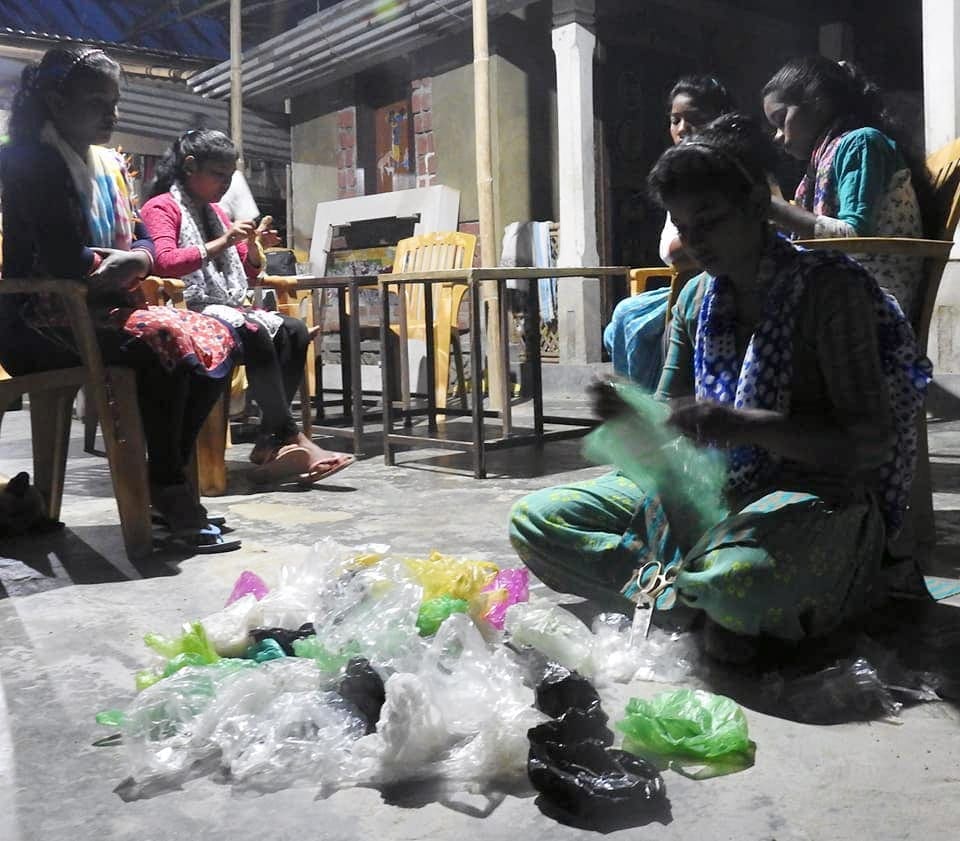
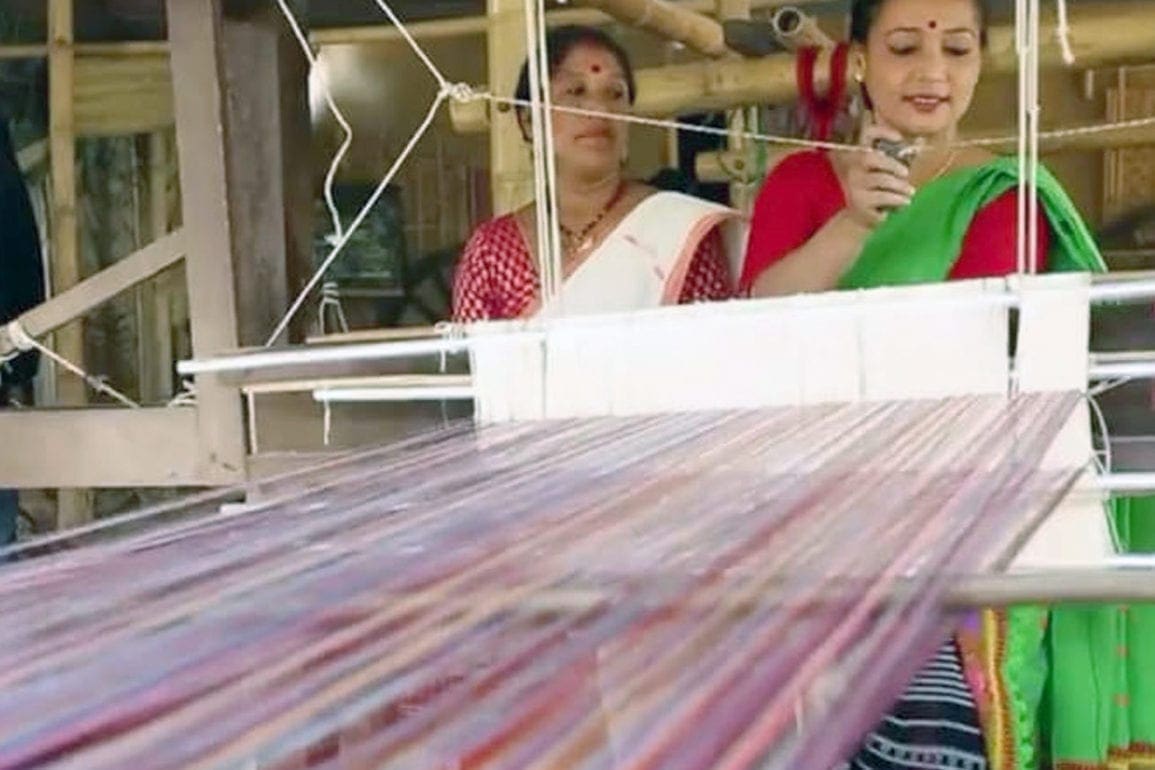
Women cutting plastic bags with scissors.
Women cutting plastic bags with scissors. | Village Weaves

Plastics are killing our wildlife

If a person or company releases plastic waste in a river, pond, or lake, the animals in the park drink polluted water. When microplastics end up in the water, it degrades the water quality with toxic compounds and often damages the internal systems of the rhinoceros, tigers, elephants, and birds.

Sadly, we often see wildlife mistake plastic for food. Wild animals even rummage in the garbage around the park, encountering toxic plastic waste and sharp objects flung into the bins.

Plastic bags suffocate animals, and when they ingest the plastic, they develop internal complications that result in their horrific death.

Every year during the monsoon season, the flood ravages the park. Hundreds of animals die despairingly as massive floods destroy their habitat. While many animals are washed away along with the strong current of the rivers crisscrossing the park, some wild animals come out of the forest to seek refuge in the hilly areas.

They consume the plastic lying around and die a slow and painful death as they cross the village.

Indigenous women use indigenous techniques to transform plastics 

Seeing this crisis first-hand, I decided to help clean up nature, rid the Earth of waste, and reduce the impact of staggering amounts of plastics in the Kaziranga National Park. I planned to integrate the plastic waste with cotton threads to weave different products on a primitive handloom.

I come from a humble background, so I did not have enough resources to procure expensive machines. Due to the lack of equipment, it was not easy to convert plastic bottles into anything useful. So, I decided to use plastic bags instead.

Women in my village do not have a good education and cannot obtain regular jobs in an office or a firm, but they have plenty of unique skills. I made the decision to help them hone their skills and earn a livelihood.

These women are bonded to the patriarchy and serve as unpaid labor. They depend on their husbands or families for almost everything. So, if they earn a living, they could become independent, empowered, and better represent themselves.
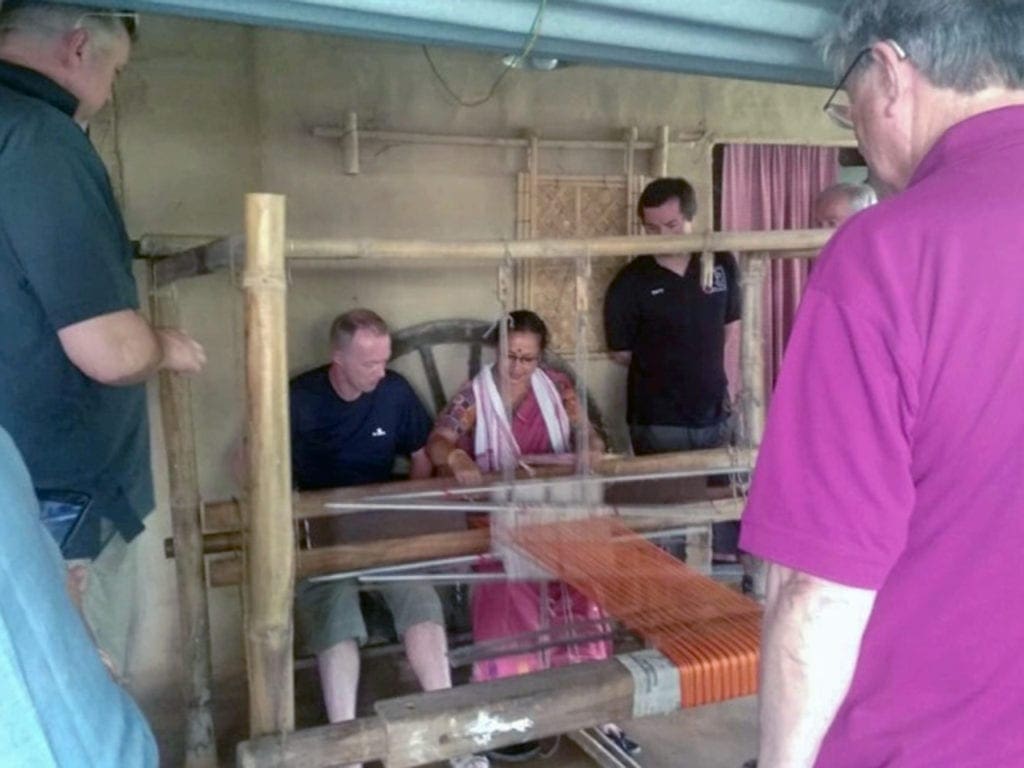
Intrigued visitors at the handloom to see how the products were woven
Intrigued visitors at the handloom to see how the products were woven. | Village Weaves

Village Weaves was born in 2004

From grocery shopping, we get a lot of plastic bags. Many toss the trash outside their compounds, or they burn it in the open. Bags are strewn everywhere.

Along with women from Village Weaves, I gather the plastic bags left behind by the tourists and locals and wash and dry them manually. The bags are cut into strips using a pair of scissors. They are then tied by hand from end to end to make one long thread.

The cotton thread is woven vertically on a traditional handloom, and they make horizontal weaves using plastic thread.

We create a durable and pliant fabric ideal for environment-friendly home decorations and craft products through our indigenous technique, including handbags, doormats, table mats, and wall hangings.

We work on handlooms because almost every woman in Assam knows how to weave clothes. However, since they lack exposure, they need ideas on what type of clothes to weave.

Helping women overcome obstacles to empowerment

The women are expert knitters and stitchers, but they lack communication skills. They have language issues and do not speak Hindi well. English is beyond their comprehension. I try to remove the roadblocks and help them find greater joy in life.

To do this, I impart communication skills so they are confident enough to promote their products themselves. I hold workshops to teach the ladies how to mix plastic with cotton threads and save the environment.

From creating designs to color combinations, I share my expertise to enhance their creative process. I train the women in the technical aspects of production too, and I do the marketing of their end products to sell their products through Kaziranga Haat, a gift shop I established in 2012.

I take care of delivery to foreigners and locals who buy the recycled products for personal use from the outlet at my home to buyers abroad who pre-order online to sell the unique products to their clientele. This way, the women can solely focus on collecting the trash and turning it into marketable goods.
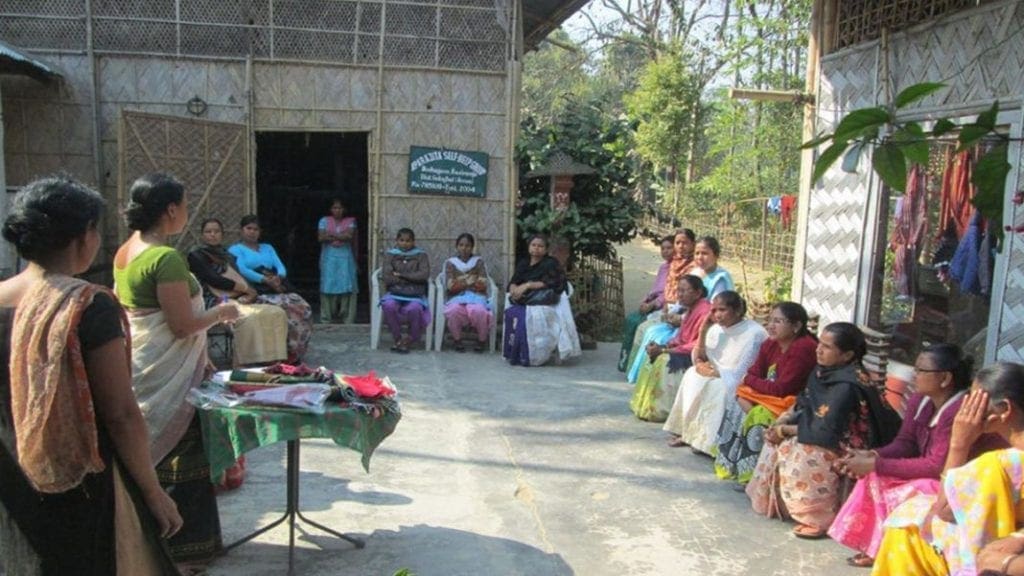
Ms. Gogoi taking a workshop on how to mix plastic with cotton threads. | Village Weaves

Women are earning and making progress

For the past 17 years, Village Weaves has helped empower more than 2,300 women across 35 villages in Assam.

Women in villages have traditionally been homemakers. Married in their childhood, cooking meals four times a day, taking care of the elderly, keeping the house in order, catering to the needs of their men and children, and providing clean clothes to their family members defined their existence.

They lived inside the four walls of their homes, and their movement was restricted. They could not venture out of their homes in the evening, so they could not think about earning money. Financial independence was an alien concept.

Now, women have gathered the courage to break these social confines to find their true identity through Village Weaves.

By earning and supporting their families, they are more confident and aware of their potential. They are uneducated, but they are sending their children to schools. They respectfully earn 200 rupees ($2.70) a day from no income and look enthusiastically toward a brighter future.

Hurdles remain as progress continues

While locals and tourists encourage us, the establishment is cold regarding our efforts.

We are not running a business. The success of a company would prompt industries to produce more plastic. Our motive is to recycle plastic and clean the environment. Village Weaves is a social initiative.

We do not buy plastic from shops. We collect it from our households, our neighborhood, or the vicinity of the Kaziranga National Park. Collecting, cleaning, and producing recycled products takes nearly a week. It is time-consuming and requires a lot of labor.

We cannot shift to modern techniques because of the financial crunch we experience and because women do not know how to operate machines. That is why we can only reuse plastic bags, not plastic bottles or cups.

Despite our best efforts and the ban on plastic wastes, the consumption of plastic is only increasing.

We cannot stop the industries from producing non-biodegradable plastic, nor can we prevent the tourists from creating heaps of garbage, but we can reduce it by reusing it. 
The brush is mightier than the gun

Adailton Osorio
First-person source

The name of the 22-year-old is kept anonymous to protect his physical integrity. He is a student of plastic arts at the Faculty of Fine Arts of the Universidad del Atlántico. Since 2012, he started doing artistic collaborations and drawing graffiti.
Background
The protests in Colombia in 2021, also called the National Strike and named by some media as Colombia’s social outbreak, are a series of multifactorial demonstrations triggered by the announcement of the tax reform project proposed by the government of Iván Duque. 

During the protests, dozens of people have died, and hundreds of others were reported as missing.

The Inter-American Court of Human Rights (IACHR) has condemned severe human rights violations in the context of the protests. President Duque first refused to accept an immediate IACHR working visit to Colombia, which was finally accepted for June 8.

The protest happened in different cities, municipalities, and roads of the country and abroad by Colombians living in Spain, France, Portugal, United Kingdom, Sweden, Russia, Italy, Mexico, Chile, Argentina, Canada, United States, Germany, Poland, Australia, and New Zealand, including in front of the United Nations headquarters in New York and Geneva (Switzerland). Actions on the Internet and artistic expressions during protests are also highlighted.

BARRANQUILLA, Columbia — I participate peacefully in demonstrations in my city as a student and artist. Sometimes, it puts me in danger.

I have been involved in violent situations, where shots grazed my head and more than one colleague was injured.

I express myself through art. My weapons to confront inequality, violence, and unemployment are aerosols, paints, brushes, and rollers.

I go out to the marches and, whenever I can, I leave my artistic mark on a wall in the city but I don’t believe in violence or aggression. I express myself through my art and I participate in protests to be heard.

All of us who protest in Colombia unite for the same reason: to create a better country.

Art key to protests

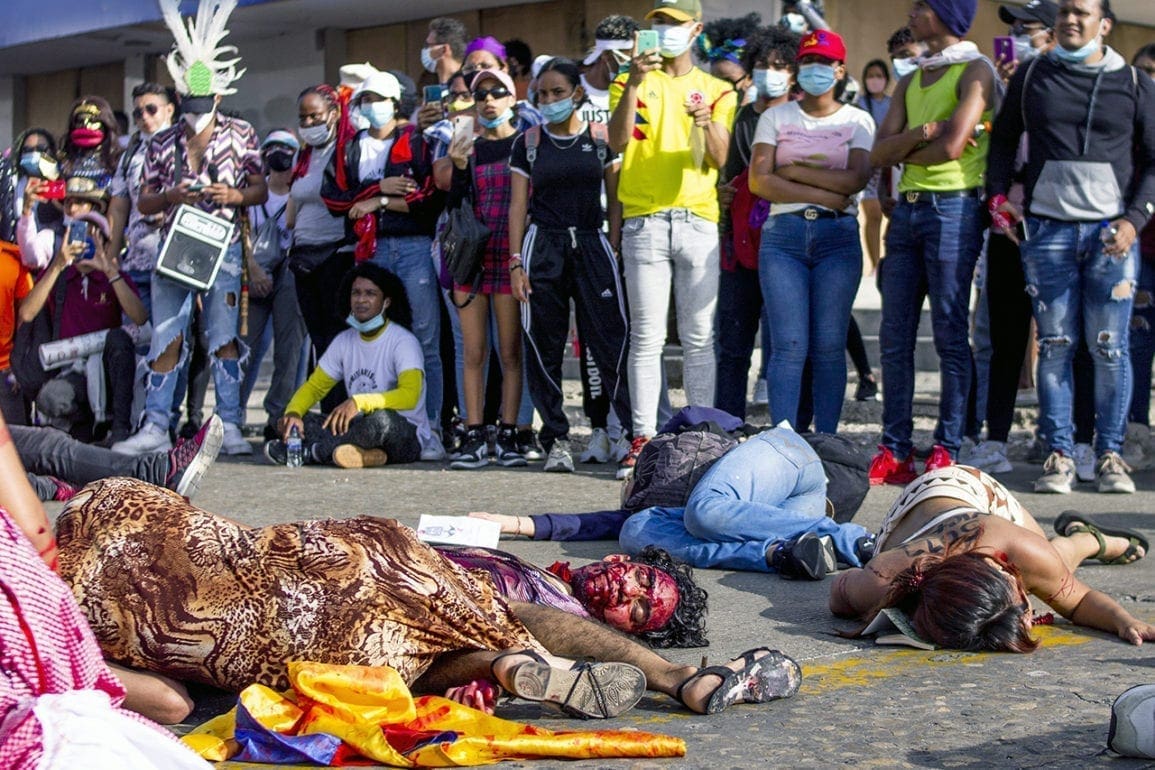
On May 15, students from Fine Arts of the Universidad del Atlántico and cultural groups participating in the Barranquilla Carnival concentrated their energy in the Casa del Carnaval.

We marched to the Sagrado Corazón Park in the north of Barranquilla.

Among us, the LGBTQIA+ community and feminist groups peacefully expressed their dissatisfaction with the government of President Iván Duque.

On tour, the protest manifested through dance and folkloric rhythms from the Colombian Caribbean.

The next day, dozens of people met on the main road north of Barranquilla and painted streets in the sector.

Music, friendship, colors, food, and hope all merged into a union where we tried to explain to the world the situation in Colombia.

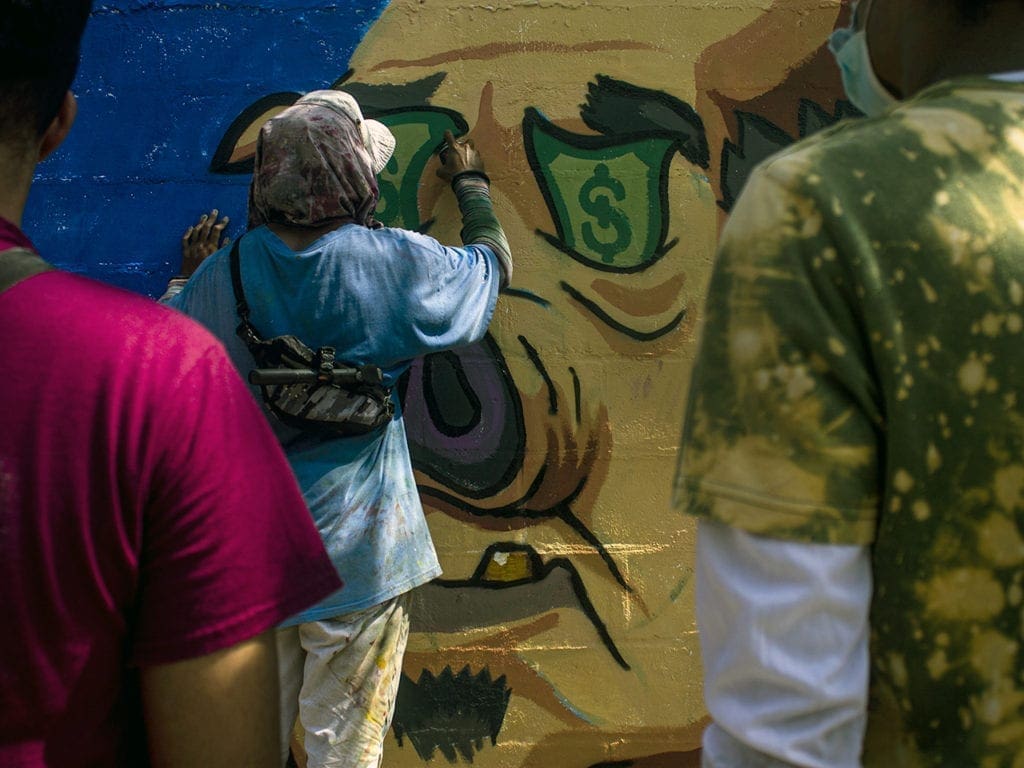
One of the interventions and murals made by artists from the city who want to be heard for their art.
One of the interventions and murals made by artists from the city who want to be heard for their art. | David Moran

Violence too common

Unfortunately, acts of violence are commonplace in these mobilizations in the different cities of the country.

In the marches, I have come across infiltrators: individuals who do not belong to the strike and who come to generate bad publicity for the protest.

I have received death threats and insults from infiltrators, who try to encourage riots so the government will accuse us.

I have seen them break things and hit people when everyone else was protesting peacefully.

We call them infiltrators because nobody within the organized groups knows them.

When the riots begin, the police react, and they disappear, leaving us defenseless.

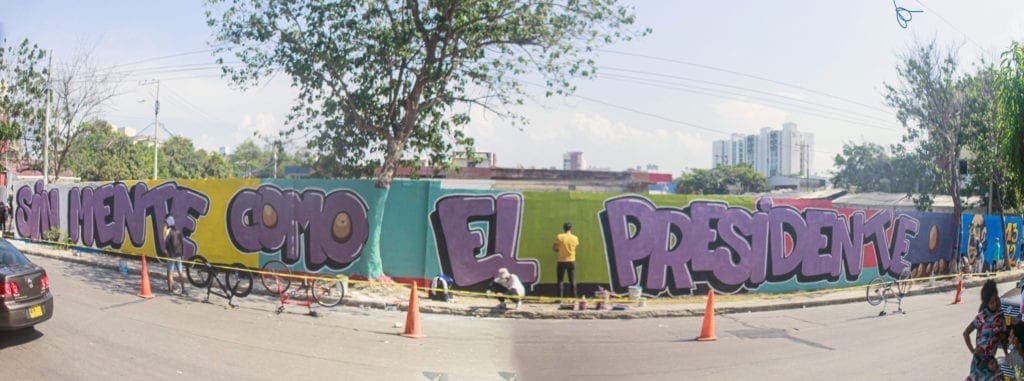
One of the interventions and murals made by artists from the city who want to be heard for their art
One of the interventions and murals made by artists from the city who want to be heard for their art. | David Moran

Not scared

It doesn’t scare me. My goal is to show the world that we march peacefully for a better future for ourselves and the next generations.

I will continue to cover the city with art in each protest to express myself without violence against the attacks we endure.

In the same way, I feel the support of the citizens, and that is gratifying.

The people help the people. 

On days of protest, the oppressive heat can be a major enemy. Temperatures rise rapidly, and the asphalt kicks up a hugging wave in Barranquilla.

Citizens who do not attend the marches due to COVID-19, or for any other reason, provide us with food and water on each of the protest days.

Why do we mobilize?

We express our thoughts against abuses by the authorities and human rights violations in the country.

Thousands of young people raise their voices due to unemployment, lack of education, and lack of opportunities for young people to have a better quality of life.

In my case, I remember when I was studying at the Faculty of Fine Arts at the Universidad del Atlántico, and we had to stand in line where only 30 lunches were available (we were a total of 300 students).

It was painful. Sometimes we didn’t have enough to pay for a plate, and 30 lunches weren’t enough. We could not have a decent meal, and several times, I spent the day on an empty stomach.

In addition to the lack of resources for higher education, Colombia has neglected the state of the neediest populations.

Therefore, I ask for solutions and live with dignity regardless of the social space in which we are.

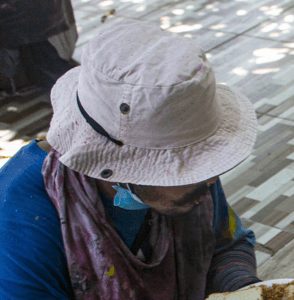
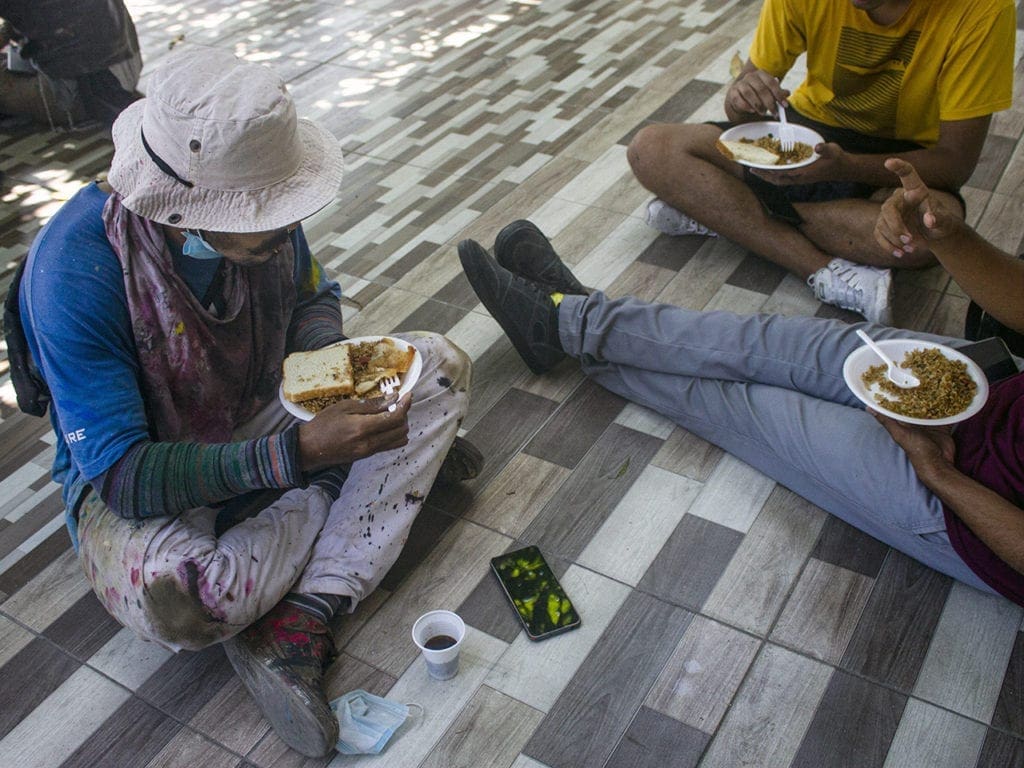
Young people who are part of the mural have lunch together and share conversation to rest a little.
3. young people who are part of the mural have lunch together and share conversation to rest a little. | David Moran

The artistic union also raises its voice

In addition to touring the main streets of Barranquilla, I also take part in artistic demonstrations.

I am part of these spaces with my friends, designers, photographers, illustrators, and graffiti artists. We carry out commemorative events and staging to express ourselves with banners, dance, folk music, and graffiti.

During the activity, which lasts hours, the intervention of murals is also carried out, located in strategic points of the Atlantic capital.

My struggle continues, not only as a citizen but as an urban artist.

From my position, I raise my voice to demand from the local government more support for artists, more spaces for culture, and the necessary investment in the city’s museums.

Trans woman transforms suffering into activism in Mexico

Kenya Cuevas
First-person source
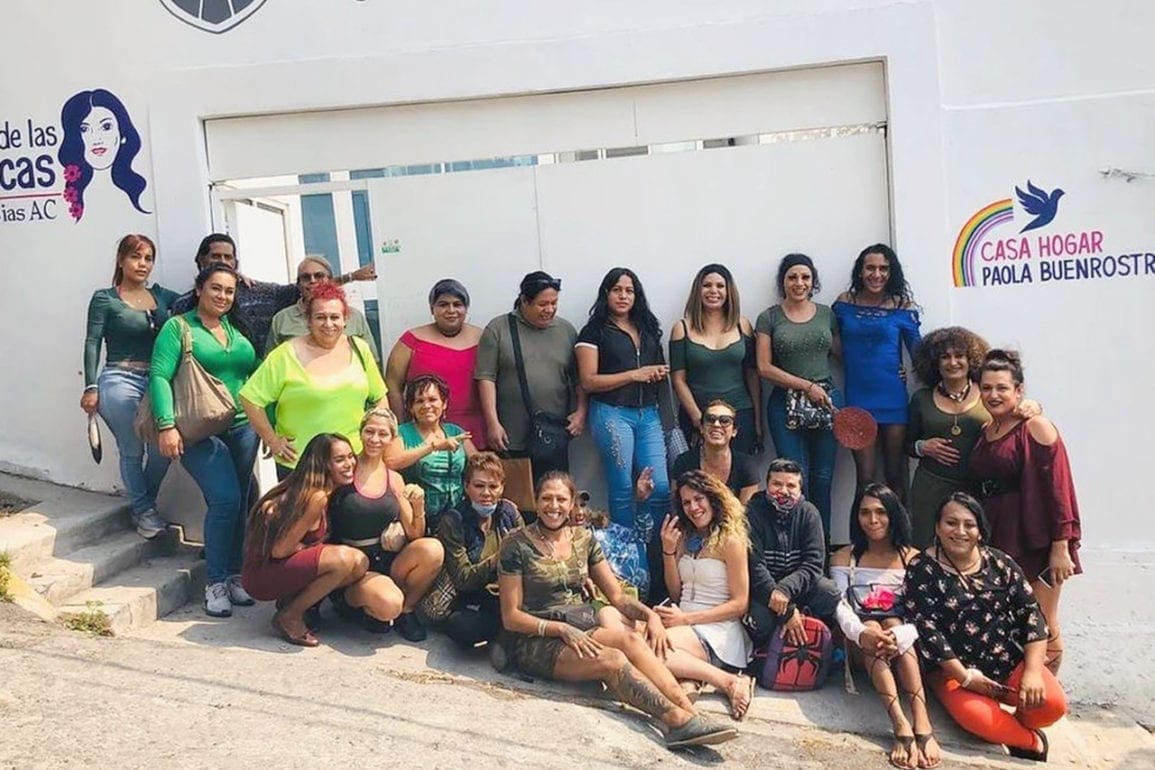
Kenya Cuevas has become a reference in the fight for the rights of the LGBTQ+ community in Mexico.

Her personal history is full of tragic events: she left home at age 9, lived on the streets, was addicted to drugs, and was in prison for more than 10 years. Despite this, her work as an advocate for vulnerable groups is as an emblem of female empowerment.

In 2019 she founded the Asociación Civil Casa de las Muñecas Tiresias, which seeks to provide support to low-income populations, people deprived of liberty, drug users, people living on the streets, people living with HIV, sex workers and all those who are part of the LGBTQ+ community.

A year later, in 2020, she inaugurated the first shelter for transgender women in Mexico, named after Paola Buenrostro, in honor of a sex worker and friend who was murdered in 2016 in Mexico City.

This crime, coupled with the lack of justice to punish the guilty by the authorities, motivated Kenya Cuevas to organize her fellow sex workers so that transgender women can lead a dignified life, free of violence and discrimination, and with the possibility of a full social reintegration.
Background

In 2019 in Mexico, transgender women had the highest victimization rates with 64 transfemicides according to figures from the CNDH.

According to the Trans Murder Observatory – of the organization Transrespeto versus Transphobia (TvT) – In the world, the average life expectancy for a transgender person does not exceed 35 years.

From October 1, 2019, to September 30, 2020, Mexico registered 57 murders of transgender and gender-diverse people, being the second highest country in the world. The first is Brazil, which had 152 reports, according to TvT.

Paola Buenrostro was killed on the night of September 30, 2016 by an alleged client who shot her on the street in the center of Mexico City.

Today, Casa de las Muñecas Tiresias serves 20 transgender women, and 16 of them are studying basic education.

MEXICO CITY, Mexico — Being a transgender woman in Mexico is not easy, and when you decide to be, you lose everything: family, friends, job opportunities, and your dignity.

You are left with nothing.

At the age of nine, I left my home. From that moment, I began working in sexual services and using drugs.

Practically my entire life, I felt a sense of abandonment and loneliness, but the possibility of helping other transgender women gave my existence meaning.

My name is Kenya Cuevas, I am 48 years old, and I have been living with HIV since I was 13.

For most of my life, I was illiterate.

From 11 to 28 I lived on the streets begging to buy drugs. I wanted to die. I felt like nobody cared; nobody looked for me.

Many times I thought about committing suicide but did not dare to do it.

Years later, I ended up in jail. I served a sentence of 10 years, eight months, and seven days. I was charged with drug trafficking, a crime that I did not commit.

Discrimination meant that I had no access to a lawyer or a trial. They sentenced me directly, and that was it.

Inside the prison, I experienced extreme violence due to my gender expression.

Others sexually abused me and forced me to prostitute myself with other inmates.

Helping others saved me

Inside the jail, I began to look for ways to improve the lives of my transgender companions.

I took care of the HIV patients, who until that moment, did not have adequate supervision.

I urged them to get tested and take the appropriate medication.

In 2010, I got out of jail and decided to fight for the well-being of sex workers. I demanded tests for HIV, gave out condoms, and began to spread measures to prevent infections.

This project transformed my life. I stopped drugs and became a social activist who seeks to dignify the lives of transgender women in Mexico.

Tiresias Doll House Foundation

In 2016, someone murdered my friend Paola Buenrostro.

Paola and I worked together in the sex trade. This violent event rocked my life and compelled me to seek justice for her. This would become my new cause in my role as a social leader.

Months later, three subjects wanted to kill me. I decided to leave sex work to dedicate myself fully to creating the Casa de las Muñecas Tiresias Foundation.

It was time to make my dream come true.

Through my organization, transgender girls can have comprehensive support in the areas of education, counseling, finances, work, and healthcare.

I have also made an effort to rescue the bodies of many transgender girls to give them a dignified burial.

They are transgender women who have been killed or have died from HIV. Some are killed in the street and have no family. I claim them and give them a Christian burial.

It is a way to honor transgender women even after death.

We also help the inmates of the Santa Marta prison. We help transgender women with their cases and we teach the people in Bedroom 10, where the HIV-positive inmates are, about the law.

House Home Paola Buenrostro

As the days went by, we realized that we had to offer a space where transgender women could live safely and with the right conditions for their rehabilitation. That is why I founded the Casa Hogar Paola Buenrostro in honor of my murdered friend.

It is the first hostel of its kind in Mexico. The hostel receives the girls who come out of jail, hospitals, or government institutions. In this way, they integrate into primary education, learn personal finance, and enter a job training program.

Entering the hostel means they can no longer do sex work. It is like a boarding school where the only obligation they have is to study and learn trades while caring for their physical and emotional health.

One way to dignify their lives is to understand that they can have endless professions and that selling their bodies and their dignity is not their only option.

There is power in being willing and I am a living example that we can survive one of the most violent jobs, with the most significant exposure to transfeminicide, to lead better lives.

Being happy is our goal

Like anyone else’s, the life of transgender women is full of dreams shattered by a lack of empathy and education.

My biggest dream is to live in a respectful society that does not criminalize transgender people or any sector that is different from the established stereotype.

As long as society continues to behave in this way, our greatest revenge is to be happy.

A miraculous escape from the jaws of terrorists

Kennedy O. Emailuk
First-person source
Kennedy O. Emailuk is a survivor of the terrorist attack at Garissa University College. He was a Bachelor of Business Management student at the time and he barely survived. After the attack, he moved to Moi University, where he graduated.

Today, he lives in Nairobi, but the unfortunate attack still lingers on his mind.
Background
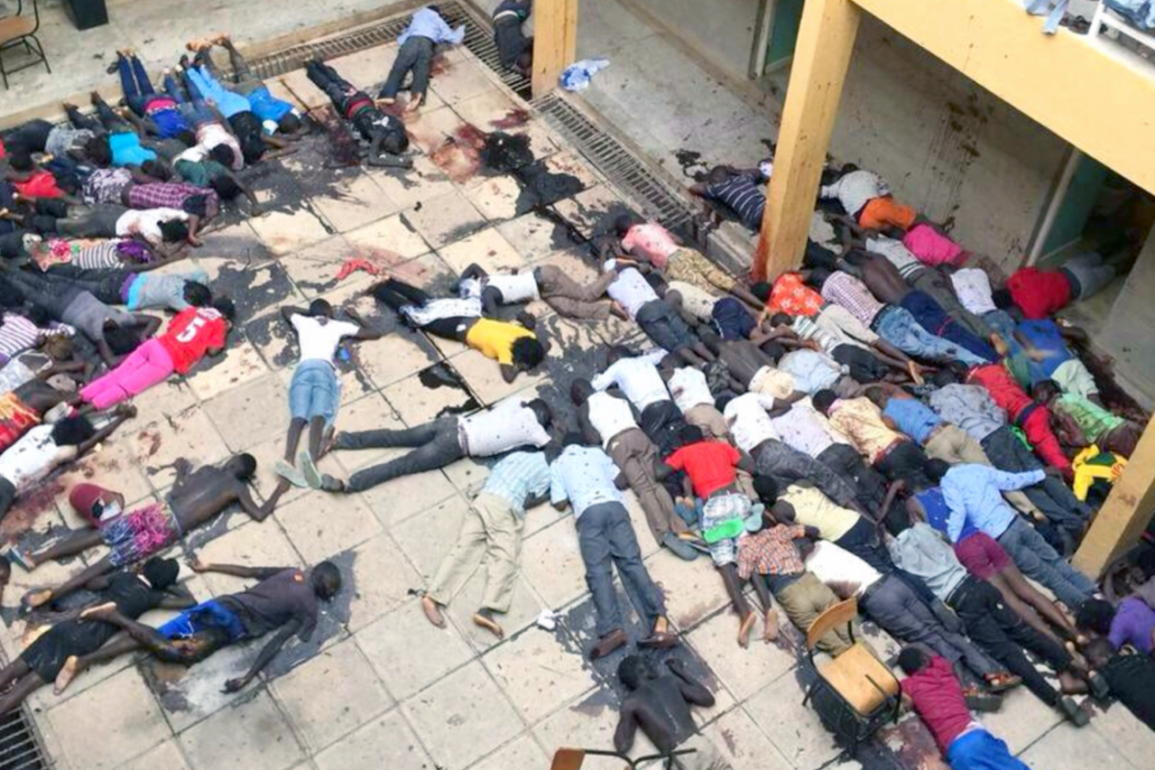
On April 2, 2015, gunmen stormed Garissa University College in Garissa, Kenya killing 148 people and injuring 79 or more. The attack was carried out by the militant group Al-Shabaab, an affiliate of Al-Qaeda. It is reported the gunmen took over 700 hostages and they killed the Christians while they freed the Muslims.
The four attackers were killed that day and others were later arrested.
It was the worst and most deadly terrorist attack in Kenya the deadliest in Kenya in 17 years.

GARISSA, Kenya — On April 2, 2015, I came face-to-face with terrorists.

I brushed with death, and I lived, but I do not say I survived. My life is a miracle, so I live to tell the story. 

I had never been engulfed in an invasion before, and the fear scared me to death.

On that fateful day, I woke up early, but I felt lethargic. I had gone to bed promptly enough the night before but was short on energy. 

It was daybreak, and I just felt the day would be a dull one. I remained confident, thinking I needed something to ginger me up. I stayed in the hostel with my friends as we figured out our next move.

Little did I know, I would live through the Garissa University attack – one of the worst terrorist attacks on Kenyan soil, leaving 148 dead and at least 70 injured.

Raucous movements ignite fear

It was morning and I was holed up in the hostel with my friends. Suddenly we heard these guttural movements and sounds.

It was immediately evident to everyone that something was happening; we were in a life-threatening situation that demanded swiftness. We trembled with fear but instinctively acted.

Students began running to seek safety as gunshots from terrorists rang through the air. We rushed forth out from the hostel, which had immediately become a danger zone.

We followed other students who were escaping the threat without a second thought.

It was necessary to find an escape from the tense environment surrounding us. I did not know if the direction we were taking was a safe one.

The screams and gunshots were deafening, so we kept running for a secure place. 

I ran barefoot because I did not have time to look for shoes. 

Considering the terrain and the climate of northeastern Kenya, where the besieged university was situated, it was excruciating to run barefoot. 

Despite the deep pain cutting through my soles, I dashed to safety. The agony beneath my feet was overwhelming, but the courage and determination to be out of harm’s way kept me in motion. 

Finding a haven at long last

The escape was tedious, but it saved the lives of many students, including mine. We fled from the terrorists through a gate near a construction site on campus. We could not use the main entrance because terrorists had already overrun it. 

The terrorists attacked and killed the security guards operating the main gate and moved through the classrooms shooting any person they came across. From the classrooms, attackers were rushing to the hostels, but luckily some of us were already on the run. 

The small gate made it easy for us to flee terror. We proceeded to the nearby Kenya Defense Forces camp, about 2.8 kilometers (1.7 miles) from the university, without stopping.

When we arrived at the camp, we found some students already there. It was fortunate that we knew where the camp was, and it offered a haven as security beefed up at the university. 

At long last, we felt some safety at the camp. Even though I was still tense, the gallant soldiers protected us.

A sigh of relief to my parents

When the news of the terrorist attack at my university hit the live news, parents, relatives, and friends began calling. Those who escaped with their cellphones made quick calls or received them and reassured their loved ones of their safety.

Unfortunately, I had lost my cellphone, and I was unsettled. I did not contact my parents immediately but instead reached out to them later in the day. It was a sigh of relief to my family, who had already made futile attempts to reach me.

My parents told me that they tried to contact my friends to find out if they had talked to me. Everyone at home was worried and wished to find me alive.

Finally, to the delight of my parents and relatives, I made a call home. I borrowed a cellphone and quickly called my two brothers to assure them I was safe. It was a significant relief to everyone, lifting the somber mood that had swallowed them up. 

Some students were stuck in the hostel.

Due to the fear and unrest that engulfed the university, some students hid in the hostel. It was an unfortunate decision for some of my friends who went into hiding. 

The terrorists injured some and killed others. 

My decision to run away was not predetermined; it happened without a second thought. Thus, you cannot blame those who remained in the hostel. It was not that they were ignorant. They did not know what to do in a situation like that.

Our hearts were pounding, and it was challenging to make a rational decision. Instincts guided us. Even those who hid in the hostel must have hoped it would be safe. This incident was a life-and-death situation, and nobody knew the right thing to do. The only hope we had was our creator.

The security personnel could not save my friends right away. They came after lives were lost, but their response was quick given the speed of the attack.

We had not conducted any drills on how to respond to such an attack. Any adversity that struck my friends in the hostels was something unavoidable. We were vulnerable.

Lost friends and classmates

When I remember the close friends I lost who were cornered in the crossfire, it hurts. 

Losing my buddies, who I considered brothers, is unbearable. They were people who stood with me through any challenge I faced. It is deeply sorrowful to recall this horrible event.

Days later, after the attack, I also learned that they killed some of my classmates and left others struggling to live with permanent scars and wounds.

Even though I survived, the burden of losing my friends and classmates sits on my shoulders. I try as much as possible to forget, but every time I sit pensively, the memories become fresh.

The pain I still face is not mine alone. Some of my friends suffer a similar agony. I hope that at long last, we will heal and become stronger. 

Security breach

Terrorism is a global problem, and no country or community is safe from it. It requires concerted efforts in intelligence sharing. 

My university did not have tight security, which would have neutralized the attackers before they launched a relentless assault on innocent students and staff employed at the institution. 

I can remember that we had four administration police manning the university at night. During the day, there were only two security guards without any sophisticated weapons to thwart any probable attack. 

I am not a security expert, but looking at the security of my university, it was not tight, and it was vulnerable.

The security guards were not trained in a proper way to protect us from armed terrorists. The police officers deployed to the university could not defend us sufficiently in an adequately coordinated terrorist attack.

Security lax

When I look at the attack, if they had beefed up security, knowing the place was a flashpoint, we would not have lost so many lives.

Although some students had to find a way out of danger quickly, I feel that many of my friends would not have lost their lives if we prepared for such an eventuality.

Also, some students did not know what to do to secure themselves. That is perhaps why some felt taking cover in the hostel was safer than running away.

However, those who understood our campus environment suitably knew the possible paths they could use to evade danger.

Some students hid behind the hostel as they sought a way out of harm’s way. Terrorists targeted the front of the hostel and shot some students who used the main doors to evade them. 

However, my friends in the backyard could find a slightly safer way to escape from campus unhurt.

It was education that took me to the volatile region

Education took me to this part of Kenya. My country was already recording a spate of attacks in the area, but I had to go.

Northeastern Kenya is a distressed area due to its proximity to the Republic of Somalia. Terrorists wreaking havoc in Somalia sneak into Kenya through the porous borders to destabilize the region.

I used to encounter news of terrorists roaming around the region. However, as a student, I was helpless, and there was no way I could take action to keep the university secure at an individual level. 

As an innocent young man from western Kenya, my only desire was to acquire an education. Besides, I was a government-sponsored student without the discretion to make a final choice for my university.

When I received an admission letter to enroll at Garissa, which by then was a constituent college of Moi University, I was terrified. 

I had not visited the region, but my desire for campus life and education inculcated a spirit of grit and perseverance. This spirit convinced me to go with the hope that everything would be okay. 

I believed I would go to the university and come back home successfully. My parents felt differently. They wanted me to join a university far away from places considered susceptible to terrorists.

Our financial status would not allow us that, so I joined the university to realize my dreams. 

I convinced myself I would always be safe. Unfortunately, this horrendous invasion shattered the dreams of Kenyans who came from every part of the country.

Move to Moi University

After some counseling and healing, we were allowed to join Moi University while the government sped up efforts to resume operations at Garissa University. 

I was happy about the decision to move us. It would have been traumatic and devastating if the government ordered us to go back to the very place that had put us in such danger. 

We received a heroic reception at Moi University. Students were understanding and ready to help us acclimate. The embrace from fellow students was incredible and gave me hope I was secure. 

Even though memories of the attack come back, the support I received helped me heal. I focused on my studies at Moi University until I graduated. 

Beefing up security at learning institutions

While I am no longer a university student, I will always advocate for better security at learning institutions. Students can only concentrate if they are free from the fear of being attacked.

I encourage university administrations and the government to secure these institutions. 

The attack on Garissa University was unfortunate, and I hope there will be no such adverse attacks in any other learning institution. 

Students are defenseless, and authorities must take the necessary action to beef up security and protect learners.

My life was at stake, and how I lived through that terrorist attack will permanently remain a miracle to me.

West Bank child killings investigator battles horror

Ayed Abu Eqtaish
First-person source
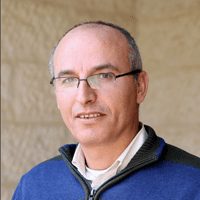
Ayed Abu Eqtaish is the Accountability Program Director for Defence for Children International – Palestine and has worked for the organization since 1999. 

Ayed lives and works in Ramallah, West Bank. 

Ayed’s family is from a village called Imwas, between Tel Aviv and Jerusalem, which was destroyed in 1967. His family was expelled that year. 

Ayed was born in a nearby village called Bayt Liqya, West Bank where his family settled for one year while they hoped to return to Imwas. 

His brother was a child fatality as a result of the Israeli occupation. 

Israel converted the town of Imwas and the surrounding area into a recreational park called Ayalon Canada Park, sponsored by the Jewish National Fund of Canada. 

Ayed graduated with a BA in  Social Work in 1993 and holds a master’s degree in Advanced Studies in Children’s Rights from the Fribourg University in Switzerland.

Defense for Children International – Palestine operates mostly in the West Bank, but also in Gaza, where they have two field workers. They also operate in East Jerusalem.
Background
Civilians in Israel/Palestine have been killed, injured, and displaced over territorial control in the world’s longest period of state violence.

The latest flare-up in Israel/Palestine began when Palestinian families were evicted from their homes in the East Jerusalem neighbourhood of Sheikh Jarrah on May 2. 

The United Nations estimates that between May 2 and May 21, 242 Palestinians, including 66 children and 38 women were killed. 

The UN estimates over 1,900 Palestinians were injured. 

During the same time period, the UN believes there were at least 12 Israeli fatalities, including two children. Hundreds of injuries have been reported to the UN from Israel.

Damascus Gate, referenced in the story, was built in 1537 and now sits on the border with the West Bank, since Israel captured East Jerusalem in 1968.

Over 70 Palestinians face eviction from their homes in the Jerusalem neighbourhood of Sheik Jarrah. 

Their case has been before the Israeli Supreme Court since early May and faces a decision in June.

The plan to evict Palestinians and replace them with Israel sympathizers from around the world is emblematic of the Palestinian displacement that’s violently occurred over the past 70 years.

RAMALLAH, West Bank – On May 13, 2021, Rashid Mohammad Rashid Abu Arra, a 16-year-old boy in Aqaba, West Bank, was shot to death by an Israeli soldier.

The shots rang out from the soldier’s rifle, and the first bullet entered Rashid’s upper back. The second shot tore through his midsection. The bullets exited through the front of his body, indicating he’d been shot in the back.

Bleeding from gunshot wounds, Rashid ran to his father’s vegetable shop and collapsed.

He was driven to Tubas hospital with his parents where doctors tried to resuscitate him for 20 minutes.

Rashid was pronounced dead at the hospital shortly after.

When a child dies in Palestine, it is my job to investigate what happened. The Defence for Children International field team brought me in, as eyewitness accounts contradicted each other.

A child unloading produce

The victim’s father said he was with his child unloading produce from their vegetable shop to sell in town when his son was killed.

Another eyewitness report from the boy’s friend indicated the two boys were throwing rocks at four Israeli military jeeps when a soldier in the vehicle fired at them, killing Rashid.

When we presented the information from the second report to the father, he told us he left Rashid outside the shop with his friend at the time of his boy’s death.

My investigation concluded that the story of the boys throwing stones was the most logical.

In the past, we would file complaints in an Israeli court when Palestinian children were killed by the police or by settlers. Those complaints too often fell on deaf ears.

Public advocacy

Now, our documentation of child fatalities is only for public advocacy.

The maximum sentence for throwing rocks at soldiers is 20 years in the Israeli military judicial system.

However, in this case, Rashid got an immediate death penalty.

I have to ensure all the facts of child fatalities in Palestine are verified and scrutinized before publicly disclosing how many or in what way children are killed.

If we feel the eyewitness sources are overreacting or exaggerating, we mark the information as unreliable.

Objectivity is our capital, and we never sacrifice our credibility for information.

We compare our data with the Israeli humanitarian organization B’Tselem to see if there’s any disparity and why that might be.

The emotional toll

This job takes an emotional toll on me.

It crushes my heart when I’m investigating the deaths of an entire family, discovering what they were doing in the moments before, during an Israeli military strike.

Eyewitness accounts reveal who these people were, what they liked, and how they lived their lives.

It’s like I knew them, but only after they died.

After processing the eyewitness accounts — the questionnaire and final report of a child being killed, attacked, or imprisoned — I erase all the details from my mind.

I couldn’t tell you what report I finished processing yesterday.

This selective memory technique is how I cope with my work.

It’s the only way I know how to keep working, counting the dead, without being severely affected.

Processing paperwork

This month alone, I processed reports on the deaths of 74 child fatalities.

Now that I’m the Accountability Program Director, I don’t do as much fieldwork as I used to.

On my most recent assignment, I met families of imprisoned children.

Defence for Children International represents kids in Israeli military court, and I communicate between the lawyer, the families, and the children.

Almost all the cases were for throwing stones, though a few included Molotov cocktails.

The families ask me how long a sentence their children will serve.

Most of the children get four to six months in jail for throwing stones.

Help to defend children

When a Palestinian child gets arrested, their families get ahold of us to help defend them.

The lawyer and I inform the child of their rights and help coach them to not self-incriminate if they’re not guilty and not contradict evidence if they are guilty.

We tell the accused child that the Israeli interrogator will try to befriend them and say they will be released if they answer the interrogator’s line of questioning, which is always a false promise.

Our lawyers always ask to have the child released from prison during the court proceedings, but those requests are almost always denied.

Most people from outside of the West Bank could never imagine what daily life is like here.

If I told someone from the Netherlands that I live in Ramallah, just a few kilometers from Jerusalem, but I’m not allowed to visit Jerusalem, it would be beyond their understanding.

They can travel freely throughout all of Europe.

Palestinians are discriminated against

I want people worldwide to know Palestinians are discriminated against in the occupied territories, even when they’re Israeli citizens living in Israel.

I believe that the death and destruction we saw from May 10 to May 20, 2021 in Israel/Palestine is like chickens coming home to roost.

Kenyan loses wife, fingers, house to post-election violence

Kainda Rodgers
First-person source
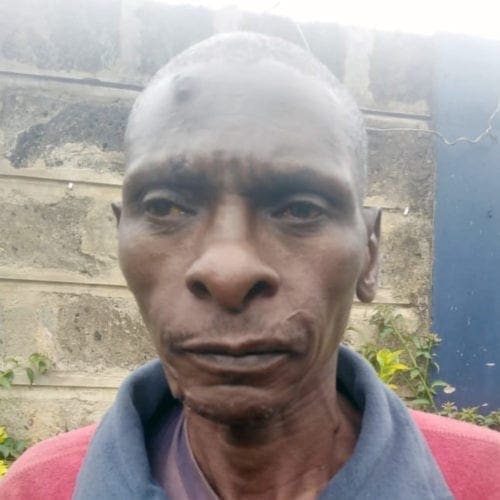
Kainda Rodgers is a postelection violence victim from the Kisii community in Kenya.

He was a resident of Eldoret town, one of the flashpoints when the post-poll skirmishes engulfed his country.

He had relocated from Kisii area to live in Eldoret, hoping for a better life in the town.
Background
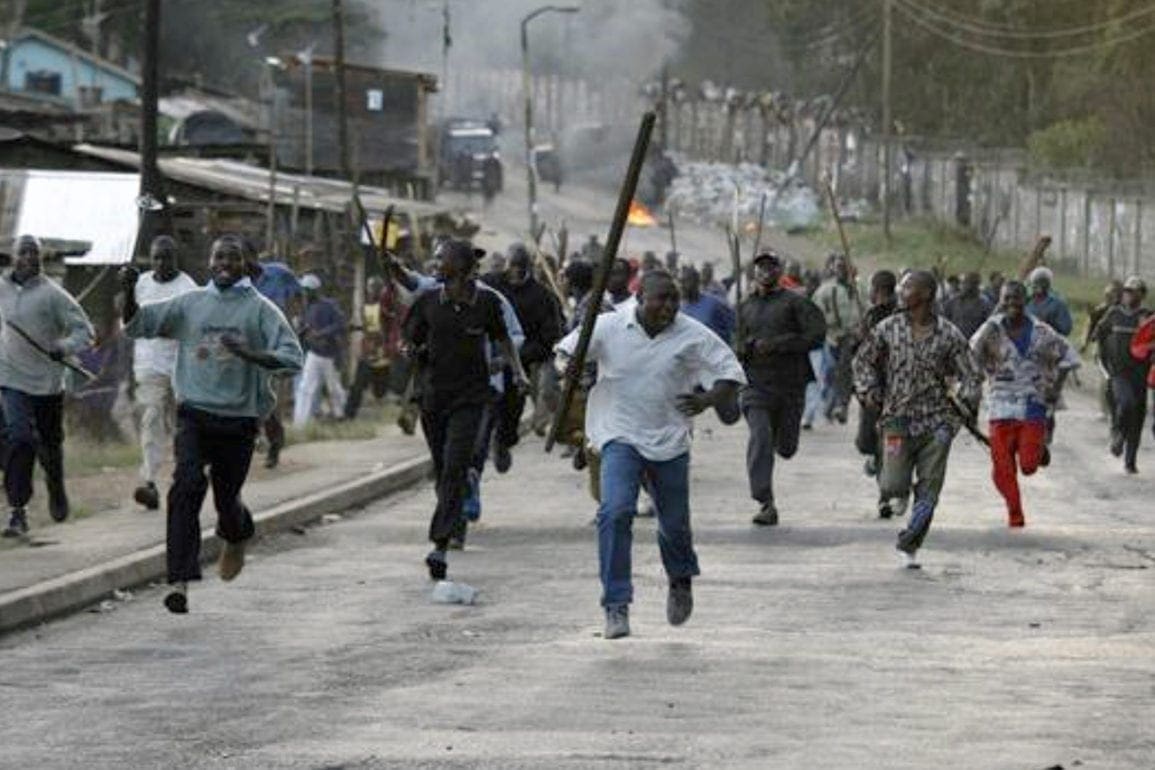
Kenya plunged into political bloodshed after allegations of rigging in the 2007 generation election.

Over 1,000 were killed and 250, 000 people were internally displaced.

The Kenyan government has been stepping up efforts to resettle the internally displaced people, but some victims are still stuck in trauma.

NAIROBI, Kenya — I fell into depression after losing my wife, my fingers, and my property during post-election violence in Kenya.  

The night my family was attacked, I suffered deep cuts throughout my body. Without proper medical care, I would have died.

People like us who were living in areas where they were considered non-natives suffered similar losses.  

Today, I live without my wife because of that chaos. After I became a victim of violence, I have felt sad, lonely, forsaken, and hated.

It was a tragic situation that exposed the dark side of humanity over an election.

Although I survived the conflict, I still suffer from post-traumatic stress disorder. 

It has not been easy to overcome these events. At my age, I cry when I remember what happened to my family.

My children and I live in horror. We have been worried every time general elections are close because we fear the events will repeat.  

Voting day

As a law-abiding citizen, on December 27, 2007, my wife and I woke up early in the morning and headed to the polling station to cast our votes.

We voted peacefully and went back home to wait for the results.

The primary focus was on the presidential election, which was highly competitive.

However, I believed that democracy would prevail, and life would move on.

I stayed close to my radio, waiting anxiously for the outcome of an election which I believed would give us good leaders.  

Nonetheless, the events turned negative when everyone, including my neighbors, became jittery over alleged rigging.

The allegations of rigging spread like wildfire. As a result, the situation escalated and we became afraid.

Tension crept in as everyone began looking at each other suspiciously. The dark clouds hovered in the sky while I stayed on my compound, panic-stricken.  

Finally, the presidential winner was announced, setting a stage for tribal clashes that put non-indigenous people like me in danger.

Fear in the air

It was already January 2008, and tribal clashes were escalating. I was gripped in fear, but I hoped the ongoing violence would not affect me directly.  

I was living in Eldoret, located in the northwest of Kenya’s capital, Nairobi. By road, the town is over 300 kilometers (186 miles) from Nairobi City. Eldoret was a flashpoint.

I lived in the outskirts of Eldoret town, but I feared for my life. I could not freely interact with the people I had known for so long. Everyone was suspicious, and people had lost kindness.

I was shocked that people were willing to commit atrocities against their compatriots over an election.

I regretted that I moved from an area dominated by my tribesmen to a place where people quickly turned against me after years of embracing me.

Fateful night

The disorder escalated to an unimaginable level. Innocent people were being butchered, maimed, and threatened.

I did not leave home but instead opted to stay with my family. We harvested cereal and were hoping the situation would normalize so we could take our produce to market.

However, one evening around midnight, my home was raided. Even before the attack, I was a worried man.

That fateful evening, we were going to prepare a meal, but we lacked appetite. One of my children opted to prepare tea instead of a heavy supper.

I could not enjoy my tea because my mind was utterly disturbed. I felt something was wrong, but I wanted to be strong.

There was a voice in my head trying to persuade me to tell my family to go into hiding, but I ignored it. I urged myself to remain courageous because I was living on land I owned, rightfully.

After ignoring the voice that advised me to seek a haven elsewhere, we prepared for bed. Before retiring to sleep, we heard unusual movements on the compound. I knew we were in danger and could not prevent it.

In an adrenaline rush, my children scampered for safety. I was already cornered.

As the attackers held me in captivity, some of them molested my wife. I did not see what they did to her, but it is evident in my mind they were horrendous people set on killing us.

Kainda Rodgers showing the pain of Kenya’s post-election violence
Kainda Rodgers showing the pain of Kenya’s postelection violence in 2007/08. | Obwin Owen Benjamin

How I lost my two fingers

One of the aggressors wrathfully charged at me and raised his machete with the intent to land it on my head.

Before he could deliver a blow by the evil weapon, I took guard. As helpless as I was, I raised my right hand and quickly pushed away from the machete. It chopped off my two right-hand fingers and severed my jaw.

The assailants did not stop there. After failing to split my head open, they hammered me with blunt objects. No part of my body was left unhurt.

They discarded me, lifeless, but miraculously help came, and they rushed me to the hospital.

My body today is not the one I had before the invasion. I have permanent scars that always remind me about this darkest day in my life.

I cannot do challenging tasks because I cannot strain as I used to. I sometimes feel I have no life. I feel like I am already dead.

These bodily injuries remind me of how I was reduced to a beggar, pleading for my life.

My wife’s demise

As I was battling to survive, my wife was already dead. She was attacked, butchered, and killed.

I do not have the complete account of how they molested her to death, but the point is that I lost a lovely wife. I lost the love of my life. 

As a family, it was a considerable loss. Nobody would wish to lose a life in such horrendous circumstances, but it happened.

I did not attend her burial because I was at the hospital struggling to survive. She was buried at the local cemetery, and that pains me to this day. Culturally, she should have been buried at home.

 However, it was impossible because the country was in chaos.

Unfortunately, my children were rendered motherless. Equally, I was rendered wifeless.

This result is how devastating the post-poll chaos was to my family. It was an unfortunate event that brought permanent damage to us.

Post-traumatic stress disorder

The events of the post-poll conflict still haunt me. I am no longer at peace like I was before, and I feel I have lost my mind in most instances. I have not had any peace of mind, even though the violence happened over a decade ago.

My family is still hurting and trying to figure out how to live.

Today, I do not live with my children, but I live a lonely life that is extremely difficult. Whenever I am in my house, the ugly memories of what happened to my family become fresh.

I cry silently in my tiny room, wondering if I was born to suffer over the violence I did not cause.

In most cases, I am in a reflective mood. My mind is troubled, and I feel that I do not have a reason to live again.

However, amid the challenges and trauma I am going through, I still hope my life will become better.

Property loss

I lost all that I had, and they set fire to my houses. They burned all the cereal I had harvested. I lost my dairy cattle as well.

Essentially, they destroyed my livelihood in a matter of minutes in the raid.

I know I was not the only one who lost property. Many victims lost their land. It is a loss that has reduced me to a beggar. I was a dynamic person, and the little property I had was enough to sustain my family.

However, they razed everything we had. Even though I still have ownership of the land, the fact is I lost my livelihood. I have not gone to live there because it haunts me.

Staying away from that place, to some degree, helps me forget the atrocious experience. The suffering I am going through today is due to the loss of my property. It has not been easy to reconstruct my life.

I would not be living this desperate life if not for the post-poll conflict. Truthfully, it threw me into abject poverty.

Picking up from scratch

After suffering such a huge blow, I am determined to rebuild my life. Over time I have learned that even in the worst scenarios losing hope is self-destructive. My guiding philosophy has been “pushing forward and staying focused.”

This ideal is the only principle that gives me hope; otherwise, I would have committed suicide a long time ago.

I moved to Nairobi city about 14 years ago after recuperating with the optimism of securing a job. This shift was the only viable option I had after being discharged from the hospital.

Moving to Nairobi appeared to offer a new lease of life.

However, it turned out that the odd jobs I get cannot sustain me. It is hard to generate enough income to provide for my children, even if I do not live with them.  

I am committed to reconstructing my life amid PTSD, joblessness, and alcoholism.

Today, I drink alcohol if I get money because it is the only way I manage my stress. I understand that alcohol is not healthy, but I try to be cautious.

I have been a security guard, but sometimes I quit when frustration sets in. The salary they offer is meager and cannot fully support my life. However, I am hopeful that something will open up.

Post-election violence victims

In 2007/2008, post-election violence in Kenya led to a loss of 1,000 lives. Over 200,000 people were displaced, while some sustained bodily injuries and other traumas that continue to haunt them.

Since this political bloodshed, the government has tried to offer some reparations and resettle some internally displaced people. However, some of the victims still live in squalor.

Every time the general elections near, the victims demand compensation, suggesting that they have not received any significant help.

I wish my compatriots and politicians learn that we cannot relocate to another country. I hope that people will maintain peace even in the coming elections. I cannot afford to witness or experience another bout of political violence.

It is the worst experience that could happen to people and to a country. Innocent people lose their lives, livelihoods, and property due to chaos we can prevent by living in unity, peace, and civility.

Call for peaceful coexistence

Every time the general elections approach, I shrink back. There is no such commitment from Kenyans to be nonviolent during elections even after we suffered in 2007/2008.

People like me who were directly affected wish elections were peaceful.

I am tired of being unsettled every time elections near. Next year, Kenya will conduct a general election, and I hope it will not disrupt peace.

It is my appeal that the government and politicians do not polarize us along ethnic lines. Sowing seeds of disunity can trigger violence.

I call upon everyone to be loving and remember that political violence is something that we should strive to prevent.

I believe that we can conduct peaceful elections. I do not want to see a friend, relative, or compatriot go through what I am facing today as a victim of political cruelty. 

Even though the 2013 and 2017 general elections were still not void of violence, I hope that in 2022 the situation will be calm.

Next year’s succession politics may be polarizing, but the government should ensure that we peacefully pull through the general election.

I want peace and unity in the country in every election. It has been many years of trauma, and the only way I feel pacified is when elections are nonviolent.

Second kick at soccer glory for amputee star

Dalmas Otieno
First-person source
Dalmas Otieno is an athlete, dancer, and motivational speaker from Kenya. Otieno is part of the countries first professional amputee footballers.
Background
According to a report by the Kenya National Commission on Human Rights people with disability have the right to personal mobility, freedom of movement, accessibility, inclusion, amongst other rights which benefit affected persons. The same report, however, acknowledges that the country does not auger well for persons with disabilities. 

For a long time, physically disabled people in Kenya have been excluded from many opportunities, including sporting activities. According to boxscorenews.com, amputees were rarely seen engaging in the sport until the introduction of amputee football in Kenya in 2010. 

The Keyan amputee football team went on to make their first appearance in the 2014s Mexico World Cup, which was historic as before that, no football team ever represented the country in a football world tournament. This achievement highlighted the need to award disabled people the same opportunity as all of Kenya.

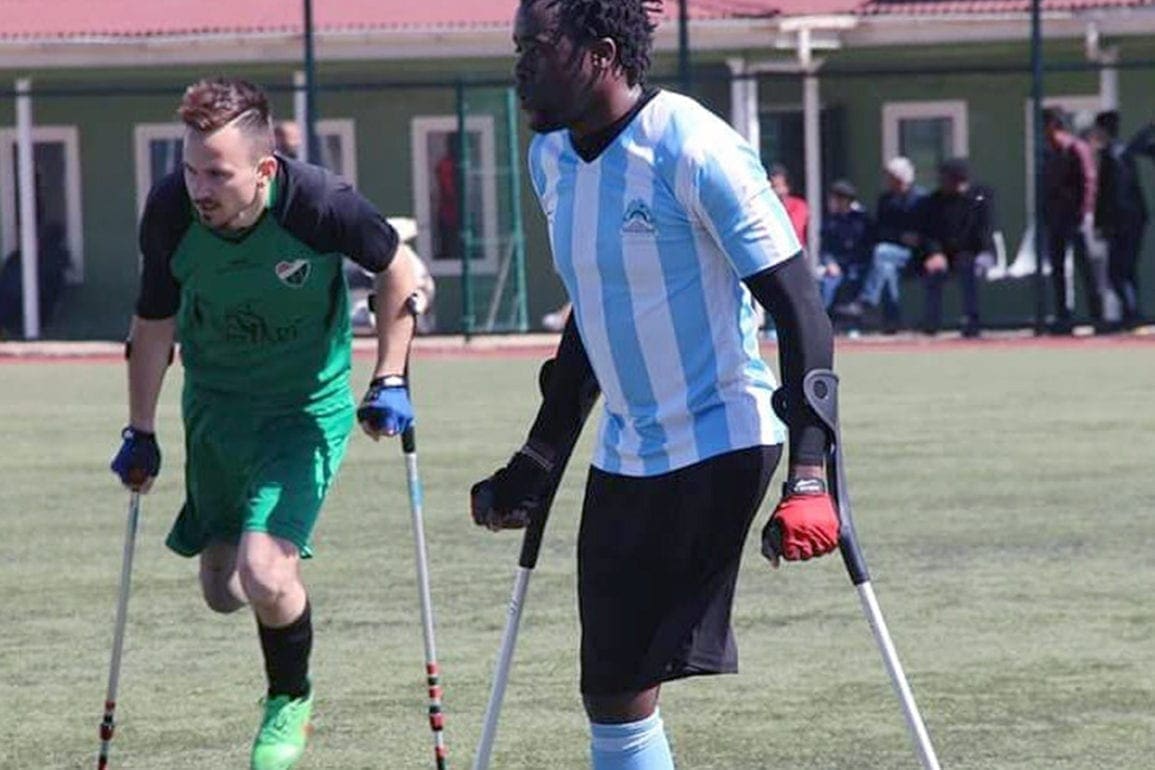
In 2016, Dalmas Otieno was one of three international professional amputee footballers to come out of Kenya and offer their football skills in the Turkish division. 

Today the sport has attracted hundreds of physically disabled people across Kenya with Amputee football clubs having been formed in Nairobi, Mombasa, Kakamega, Bomet, Kiambu, and Trans Nzoia County.

NAIROBI, Kenya — Like most healthy children, I was born with two legs. Four years later, everything changed.

I woke up one morning expecting to have a typical, fun-filled day. While playing outside, a bus hit me. 

I can’t remember much of the accident, especially after the impact, but I recall I had gone with my cousins and friends out to play games. 

We had to cross Thika-Garissa highway, the main road that connects my hometown with the capital city, Nairobi.

All the other kids had crossed the road and I was left behind on the other side. 

Suddenly, a college bus lost control, veered to where I was standing, and knocked me down.

People who saw the accident told me that the bus screeched across my legs. I lost skin from my hip area down. 

The damage was so severe, and doctors suggested that the best option was to amputate the leg instead of attempting to patch it. 

After impact, I only remember being in the ambulance heading to the hospital. I must have passed out and awoke the following day, having no leg. 

My parents were present in the hospital. Doctors informed them of the predicament, and they consented to the amputation. 

I spent two weeks in the hospital. They discharged me to recover at home, and my wound had healed by then.

Being so young, I don’t remember exactly how this affected me. 

My life had just started, so I comfortably adapted to living with one leg. I knew I was living with a complex condition and that I was different from other kids. 

However, for me, every experience in life as a child was new. Living with one leg just prompted another learning curve. 

Something that defined my experience was my parents’ decision to send me to a boarding school for the disabled. 

My parents focused on my recovery.

Life in a boarding school for the disabled

My parents believed sending me to a boarding school that catered to disabled children was the best decision. For me, it was bitter-sweet. 

I developed a habit of withdrawing from social engagement, especially social interactions with girls, but the school was also where my love for sports began. 

I loved to play football and swim, and I excelled at both. The challenges of my unique disability were evident when I played sports. Although my high school catered to physically disadvantaged children, some of my teammates had both legs. I couldn’t accurately measure my ability as an amputee playing football against them.

On the other hand, the time spent away from my support system made me courageous and independent. It helped me become the man I am today.

Not enough accommodation for people with disabilities

In Kenya, society excludes physically challenged people from many activities, including sports. When they get a chance to be involved, there is a distortion of the dynamics, where physically challenged people must compete with non-disabled individuals.

There is a lack of proper infrastructure to accommodate people living with a disability in Kenya comfortably. In the earlier stages of my life, it wasn’t easy to maneuver around the city. More recently, I see some improvements.

With the introduction of a formal amputee football team in the country, I have been fortunate to channel my disability into something meaningful. I became one of Kenya’s professional amputee football players.

I finally joined amputee football

I had just graduated from high school and decided to move out of my parent’s house. I knew I could look after myself and gain independence.

I ventured into a small business selling bread, and with the money I earned, I was able to fend for myself. I needed to work because my parents could not afford to pay my college tuition and fees. 

While I sold bread for a living, I did not relinquish my love for sports. In 2005, an opportunity came to participate in wheelchair basketball and swimming. 

I saw it as a way to fuel my passion rather than a source of income. I continued to sell bread until 2008 when I took a job at RaMoMA, the museum of modern art.

The new job afforded me a better lifestyle and lasted for two years when another opportunity arose. I had the chance to explore my passion for football. 

Turkish Coach makes amputee football a possibility in Kenya

Mr. Mehmet Turkes was assigned a post in Kenya. After engaging with the Turkish Disabled Sports Federation’s national amputee football team and several other amputee clubs in Turkey, he set his sights on Kenya. In 2010, they introduced amputee football here.

I was fortunate to meet the coach through a mutual friend. Mr. Mehmet was fairly new in the country. He did not know how to make his way around Kenya or scout for a team. My friend recommended me.

I became one of the inaugural members of my country’s first amputee football team. This measure has been one of my most significant accomplishments.

The sky was the limit

I was ecstatic when the Kenyan team qualified for the Amputee Football World Cup in 2014. 

It was a massive achievement to earn our first entry just four years after amputee football came to Kenya. The games would take place in Culiacan, Mexico, and traveling there was an incredible experience. 

During our month-long stay at the competition, we were the underdogs. Other teams thought little of us, and justifiably so. Out of the seven matches we played, we only won against Columbia. 

Yet, I never felt a greater sense of pride. Compared to countries like Russia, Turkey, England, and Uzbekistan, which played for years, we had only just begun. One win was a massive achievement for our entire team.

Although all these experiences hold a special place in my heart, when I got to play football abroad in Turkey, it was a fantastic experience. 

For seven years, I played division two for the Eyyubiye FC amputee football club in Turkey. After that, I transitioned between three other Turkish teams: Aybesk FC, Adana FC, and Şanliurfa FC. 

Playing professional football in Turkey – a country that garnered an excellent reputation – was so rewarding. 

I almost lost it all with a foot injury

I experienced my fair share of challenges in Turkey. I did not speak the language, and no one else on the team could speak English. It created difficulties, but the biggest challenge was when my career almost came to an end. 

In 2017, I broke my ankle during a training session while on a mid-season break. I relied on my healthy leg as the only way to play the game. The injury was devastating.

The doctor said I needed to undergo surgery, where he inserted a metal plate in my ankle. I worried my career and my passions would be cut short. 

In addition to amputee football, I was a swimmer. There was a lot at stake. These activities gave me purpose in society and provided a source of income. 

The Eyyubiye Amputee football team supported me throughout my injury and continued to pay my dues even though I was not playing. 

Fortunately, I recovered in six months and got back to playing football. Despite that scary moment, my career would see even more wins.

Second victory before hanging them up

Our second competition in the 2018 Amputee World Cup in Mexico proved a colossal achievement. 

The team was facing financial challenges at the time, but we pushed through and made it to the tournament, more determined than ever. 

Unlike our previous World Cup, this time we beat big teams like the USA and Ireland. We even gave Turkey a run for their money during the group stages. They were a powerful force. 

By the end of the tournament, team Kenya ranked 12th. We were happy to achieve such an improvement in comparison to our performance in the first World Cup.  

After many months of playing football, my ankle injury caught up with me and prompted my retirement from amputee football.

I use my experience to motivate young children.

While in Turkey, I visited schools and gave motivational speeches. 

I know my story is unique and it inspires people, because I was able to accomplish what I did with one leg. It helps others believe they can achieve the goals they are afraid of.

Often when I would speak, people would walk up to me and say they read about me or heard one of my talks. These experiences gave me the drive to seriously embark on a career in motivational speaking, especially in primary and high schools in Kenya. 

Thrilling comeback ahead

Although I retired from amputee football, I do consider making a come-back to the sport. I do not have a wild card that would allow me to rejoin the team.

Rather, like any hungry player, I would have to work hard to fight for a place on the team. If I do so, I could represent Kenya in this year’s African Cup of Nations in October and next year’s Amputee Football World Cup. 

My drive to continue this journey before I hang my boots resides in a desire to improve Kenya’s overall performance.

I know I have what it takes and would be thrilled to showcase my skills once again.

Transgender nurse smashes glass ceiling

celina esteban
First-person source
Celina Esteban is a 34-year-old transgender woman. She performs her nursing duties at the Santojanni Hospital Nursing Center No. 7. She was elected by vote as head of residents.
Background
Law 26.743 – On Gender Identity

The Diversity Coexistence Directorate encourages equal treatment of the different groups that make up Buenos Aires society.

It was sanctioned on May 9, 2012, in Argentina and allows transgender people to be registered in their personal documents with the name and gender of choice. It also orders inclusion of gender expression for all appropriate medical treatments in the Compulsory Medical Program, which guarantees coverage of practices throughout the health system, both public and private.

According to trends in the matter, it is the only gender identity law that does not pathologize a person being transgender.

According to the United Nations Development Program, almost all transgender people live in poverty and destitution in Argentina. Many of them were expelled from their homes during their youth because their families reject their gender identity.

A report prepared by the Association of Transvestites, Transsexuals and Transgender of Argentina (ATTTA) and the Fundación Hupedes reveals data from 452 transgender women and 46 transgender men in seven regions of Argentina, accounting for the high incidence of suicidal ideations in people of this group during their adolescence, which shows the absence of socio-family support and access to mental health services that this group suffers.

The transgender population is structurally poor because it is systematically excluded from formal education systems, excluding formal and informal labor markets. As a direct consequence of this fact, 90% of transgender women subsist practicing sex work. As sex workers, these women are predominantly exposed to male violence, which often takes the form of police violence. Subjected to three dimensions of oppression due to their status as women, sex workers, and transgender people, this group has a life expectancy of between 35 and 41 years.

BUENOS AIRES, Argentina — I faced discrimination and fought to become the country’s first transgender head of nursing residency in Buenos Aires, Argentina.

To reach this goal, I faced my superiors, who called me a transvestite and said I lowered the status of the hospital’s hierarchy by occupying the position. 

My suffering, however, did not begin on the job.

Tough childhood

My childhood was impossible. It hurt in school for my classmates to call me by my birth name, which did not match how I perceived myself. It made me blush and become embarrassed.

As I grew older, it became harder to handle those uncomfortable situations. When I would hand someone my official documents, they often looked at me contemptuously because the way I dressed didn’t match my name. 

Eventually, I stopped going to medical appointments and doing paperwork. I dropped out of school several times until I finally finished high school at an adult college.

I immediately entered the infirmary, following in the footsteps of my sister Paula, with whom I share this vocation. 

There, I competed with 200 nurses and finished among the top ten positions. This result allowed me to choose primary care as my specialty.

Despite meeting all the requirements, my superiors tried to stop my candidacy. The discrimination I seemed to escape returned once more to halt my dreams.

I pushed forward anyway and, finally, achieved my goal.

The law, my shield

Speaking about the difficulties in my life, I use the past tense. I had a tough life. 

One of the steps I took towards inclusion in society was to change my gender on my official documents.

In 2012, in Argentina, the Gender Identity Law was enacted, and my life changed.

Thanks to the Law, I was able to get my new identification and finish high school – the place I had left because of discrimination.

Once my documents coincided with how I perceived myself, the teachers respected me, and there was a legal framework. They did test the limits. My teachers would, at times, use my last name, Esteban, to annoy me.

A changing world

What happened to me is news, but it should not be. Inclusivity should be a regular part of life.

Little by little, people like me are gaining more space, although the segregation of different groups still forces some people to the sidelines.

In the transgender community, we have been marginalized in all areas of our lives, including our work. For many of us, that means the only option left is to earn money through things like prostitution.

Part of the lower life expectancy for the people in my community is the lack of healthcare due to discrimination.  

My role, help the community

One of my goals is to help the transgender community by creating campaigns to return to the clinics.

Today, there are no transgender patients who come to the health center. That is why I want to create guides for each of the spaces to know where they have to go.

In addition, I would like to motivate them to check-in for their vaccines, receive advice on contraceptive methods and sexually transmitted diseases, and obtain routine check-ups.

Currently, we have incorporated rapid testing of sexually transmitted diseases into follow-up appointments. This achievement gives me great happiness and pride because it reaffirms my vocation as a nurse every day.

I hope that my story is the first of many and that it is increasingly common for transgender people to occupy different vital positions in society.

I hope that more and more of us enter the public health system.

Kenya’s first electric handcart creates potential for green transformation

Kenneth Guantai
First-person source
Kenneth Guantai was born in the mountainous slopes of Meru County Kiraa Village.

Today he is the owner and CEO of Auto Track East Africa responsible for making electric carts and tuk-tuks and other electric machinery. 
Background
In Kenya, handcart pushers, commonly known as Mkokoteni pushers are operators who ferry goods across the city using manual handcarts. They are common in the streets of Nairobi with a concentration in the Central Business District, where goods are mainly bought and redistributed. 
Although recognized for the potential earnings it brings to informal workers, the Mkokoteni business sector has a reputation for destroying Kenya’s capital Nairobi.

Dysfunctionality in traffic flow in the city of Nairobi is blamed on handcart pushers who occupy most of the open spaces, alleys, and streets. Under former Governor Dr. Evans Kidero’s leadership, Nairobi was congested, ill-managed, and ruled by hawkers, matatu crew, taxi operators, Boda Boda riders, Jua kali artisans, and handcart pushers, claims The Standard

According to the 2014 Transport and Urban Decongestion Committee (TUDC), traffic jams cost the city approximately Sh50 million ( approximately $463 382) daily in fuel consumption, lost productivity, and pollution. Air pollution has been a serious environmental concern, linked to having contributed to some respiratory diseases and illnesses in Kenya. 

Dr. Evans Kidero responded to the complaints regarding the state of Nairobi but was later removed from office, for allegedly harassing informal sector workers and using a lethargic approach to manage the city. 

Since then many suggestions have been made to control handcart pushers including that handcart operators should only be allowed to operate during off-peak hours, made by the then, Chairman of the Matutu (Tuk Tuk) Welfare Association, Dickson Mbugua. 

Kenneth Guantai’s business is some of the private forces that have sought to deal with the traffic jams and chaos exacerbated by hand cart operators while tackling climate change.

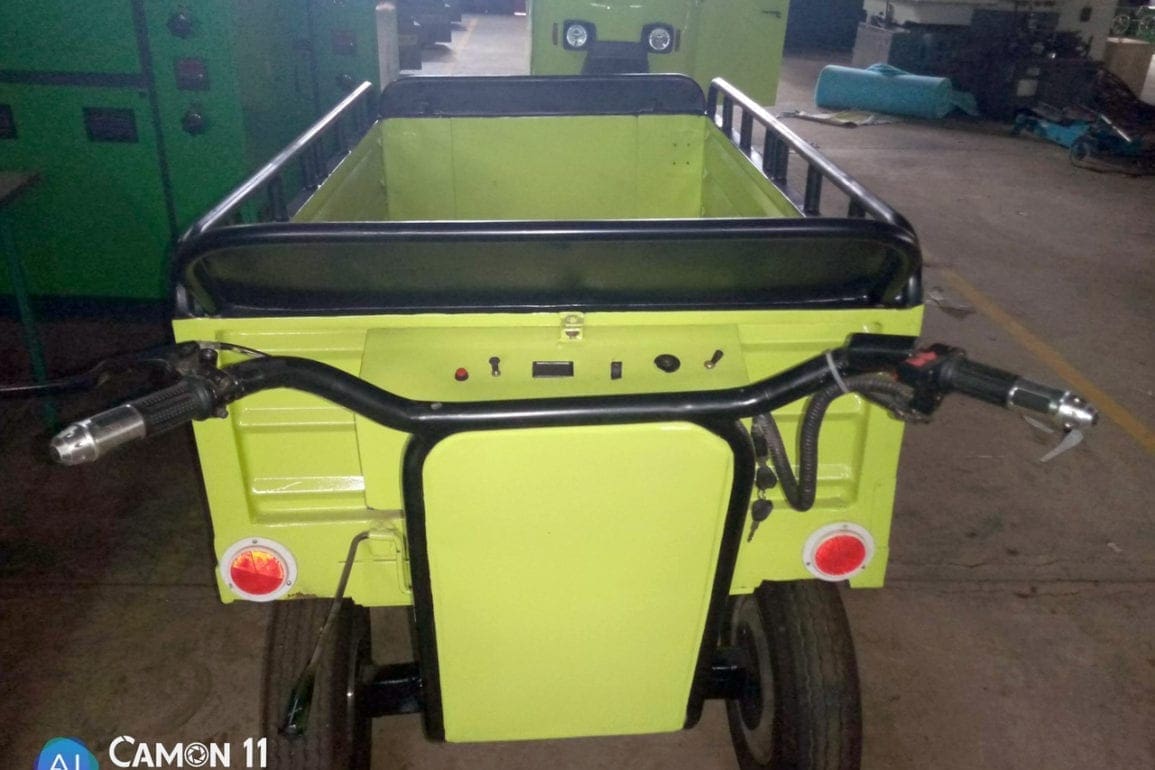
Guantai developed the first motorized handcart in Kenya and Africa. The 2016 patented electric handcart is built with a trans-axle DC motor and controller system. His handcarts aim to reduce carbon emissions through induced traffic gridlocks. Kenneth Guantai asserts that the innovation will help improve the health status of hand cart pushers who will no longer have to use immense energy to manually push the hand carts.
 
Through the project, the adoption of green electric mobility technology will help in promoting the growth in the living standards of the most vulnerable in society.

NAIROBI, Kenya — It was around May 2015 when I had purchased some items for my shop in Nairobi. I was looking for a handcart pusher to ferry the items across town to my shop. 

Unfortunately, there were no handcart pushers to transport my goods. All of the operators were busy demonstrating at city hall. 

The demonstrations took place because then Nairobi County Governor Dr. Evans Kidero had called for restrictions. He alleged that the trolleys were causing an obstruction on the road and impacting traffic congestion.

Immediately, I wondered how these young men who push handcarts for survival would cope in Nairobi without their businesses. I was also aware that they were potentially losing business due to inefficiency.

I was disturbed. 

Innovation ignited

An idea came to mind to develop motorized handcarts that would be faster, reduce noise, and were green. 

I decided to create Kenya’s first electric handcart to promote growth in the business while offering efficiency in load carriage, movement, and tackling climate change.

I commenced rigorous research to find out how I could conceptualize the idea into a viable product.

A few things stood in my way. 

Professors ridiculed me and the idea, and I had no money and no support system. 

I knew this invention would positively change Kenya, and I had to follow through on my idea.

Sourcing first step

First, I took trips around different engineering firms in Kenya to inquire if the technology I needed to assemble my electric handcarts were locally available. 

However, none of these professionals seemed to have any idea regarding sourcing technology.

Although I knew I was committed to making the handcarts, I had no money to finance this project. I faced the dilemma of where to get capital to import the components. 

Due to a lack of financing, my concept remained stagnant for about six months.

Then, while boarding a matatu (minibus) to work, I saw a man perusing a Daily Nation paper. 

Grants available

On one page was an advertisement from the Tony Elumelu Entrepreneurship Program (TEEP) seeking idea’s from individuals that could transform Africa in exchange for a grant. 

When I got to my destination, I bought that newspaper and went through it to get more information. 

Armed with my concept, I applied. More than 20,000 participants from Africa applied for this grant, but I was confident in my idea. 

Results came in February 2016, and I was among the winners selected across Africa. 

I later traveled to Nigeria for a boot camp and was awarded $5,000 (USD), which I used to conceptualize the idea into a prototype.

Stumbling blocks

When I thought I had overcome all the stumbling blocks that would come my way, I landed back home from my boot camp, and I encountered more problems. 

I had the money I needed, but I had no experts to help me create the product. 

I went to the Kenya Vehicle Manufacturers (KVM) in Thika to request help through their engineers — but the MD said they tried it before and could not help. 

He told me to create it myself and bring them the business to mass-produce the product.

I resorted to outsourcing their engineers, and I rented a space next to their factory to begin work on the prototype. 

Functioning prototype

We did our best, working tirelessly, and we finally produced a functional prototype.

Coming up with a working prototype was a significant breakthrough and a dream come true. 

This model was a validation of my many days of research work. 

Everyone who was working on it was proud that we had decided to proceed with the dream.

The electric handcart got the green light for a launch after all the necessary control checks.

When the launch day finally came, it was all joy everywhere, not only for myself but the whole technical team. 

Launch day a thrill

The carts were publicly launched at the National Youth Service by the Government. Our product was the buzz of the entire week in media houses as well as social media. 

The fact that two Cabinet Secretaries, Joe Mucheru and Margarate Kobia, participated in launching them was all we needed to have a great head start. 

I noticed many other government officials present, including the Principal Secretary, CEOs, UN senior staff, and other dignitaries. The mood was ecstatic. 

The launch gave them enough hope and strength to continue holding my hand as we pressed on.

Tons of feedback

Since then, many inquiries have been trickling in. I have received feedback from Kenyans lauding the invention as the better option to their conventional manual handcarts. 

They have stated that it will be a relief to not only the Mkokoteni (handcart) operators but across all sectors of the economy, where light transportation of goods from one point to another is involved.

When I first had the idea to invent Kenya’s first electric cart, my research drove me to local universities. 

Upon sharing my concept with Engineering Professors, some called me out to be a mentally challenged man who needed to stop thinking beyond practical. 

Today, the so-called impractical idea came to fruition. 

Success to inspire

I share this story with younger people and future inventors. 

Despite the condemnation, they should never give up on their ideas. In addition to motivational speaking, I have also been linking up various inventors with relevant Government offices to access any support they need in their particular areas. 

I have been fortunate enough to see my idea through to a functioning product. 

I intend to help make that a reality for other inventors, creating ideas that instigate positive change.

Makonde citizenship move cements status in Kenya

Thomas Nguli
First-person source
Thomas Nguli is the Chairman of the 3,764-strong Makonde community in Kenya.

He was born in Kenya in 1956. His parents came from Mozambique during the colonial times to work on the sisal farms at the Kenyan coast. 
Background
The Makonde people mostly from Mozambique and have spread throughout Kenya and Tanzania.
Their forefathers arrived at the Kenyan Coast to work in Sisal farms in the 1960s.

After years of struggle and lobbying finally, the Kenyan government granted them citizenship in 2016.

MAPUTO, Mozambique — On Oct. 13, 2016, the Kenya Human Rights Commission led more than 600 Makonde people to the statehouse in the Capital of Nairobi to present a petition for our citizenship.

Nearly 1,200 miles away from our homeland of Mozambique, the president issued a decree: by year’s end, the Makonde people would be the 43rd tribe in Kenya.

The announcement changed our lives.

Shedding the refugee and immigrant labels afforded us new freedom and eradicated our fear.

Today I have a bank account. I have purchased a piece of land, and I can roam freely in my country.

Our children receive an education at the university and compete in the job market like any other Kenyan.

We have one of our own at the Kenya defense forces, eight serving in Kenyan prisons as wardens, one at the general service unit, and another in the Kenya Police. 

The local communities have embraced us.

The journey from our homeland

Two generations ago, our grandfathers left Mozambique to the east African coast in search of work.

Instead, they took jobs with sisal farms owned by white settlers.

They mainly grew sisal fiber, traditionally used to make rope or twine.

In 1963 Kenya declared its independence from Britain, but our people continued as laborers at the plantations until the 1980s, when President Daniel Arap Moi took power.

Moi ordered all foreigners working in Kenya without legal documents and work permits to be deported or arrested and jailed.

Our grandfathers stopped working and scattered to various areas of the Kenyan coast. They knew if they stayed on the farms, they would be arrested.

Their ability to work and pay for their immigrant identity cards was stripped away. 

The Digo people — who live between Mombasa and Tanga — secretly gave land to some of the Makonde people.

As a result, the Makonde were occasionally arrested but released upon paying a small bribe. The Digo also gave us sites to bury our dead.

More recently, I often encountered the police for doing business as a foreigner without papers.

Over time, the police became familiar with us, suggesting that we could bribe our way out of arrests if we had at least one dollar.

Four decades after Moi’s order, we finally have our citizenship.

It has meant so much to us that the president expressed his sorrow and apologized for taking so long to consider us their brothers and sisters.

Maintaining our history

Over the years, our children and grandchildren have intermarried with other Kenyan tribes, so it becomes difficult to tell who is from Mozambique.

I have never been to my homeland, and I don’t even know how to get there. I am Kenyan by definition, and my children are married by locals.

Yet, even after the second Makonde generation has settled in Kenya as immigrants, we have continued our ancestral culture.

The Makonde people are known for the art of wood carving.

Today we carve and sell our work on the beaches of Mombasa.

A few older community members continue to speak the Makonde language, and we practice our cultural rites of passage, such as circumcision.

They give our girls special lessons from their aunts about caring for the family and children.

Looking ahead

Today, I serve as the Chairman of the 3,764 Makonde people in Kenya.

My priority as a leader is to ensure the young generation is educated to position themselves well in the job market.

I am also educating my community on the basics of government processes such as birth registrations so that children can get into the systems and receive national identity cards.

I have continually told my community not to harbor the idea they are in a foreign country. Instead, the people must stand firm in their citizenship.

We have started a community-based group called The Makonde Development Organization, which serves as a vehicle for mobilization and voicing our concerns.

Today, the Makonde people can join the police service, vote, and freely participate in Kenya.

We are Kenyans, not Mozambicans, but that status did not come on a silver platter. We lived a life of agony and suffering for many years on the Kenyan coast.

Pandemic threatens world-record triathlon attempt

Jonas Deichmann
First-person source
Jonas Deichmann is 34 years old, and he was born in Stuttgart, Germany.

He is a high-performance athlete who specializes in ultra-cycling. He seeks to impose his style of human strength to help the environment and raise awareness in society.
Background
An ultramarathon (also called ultra distance) is any sporting event that includes a running run of distances greater than the length of a traditional marathon of 42,195 kilometers (26,2188 miles).

There are two types of ultramarathon events: those covering a certain distance and the events that occur during a specific time (the one that covers the greatest distance in that period of time wins). The most common distances are 50 km, 50 miles (80 km), 100 km, and 100 miles (160 km).

Other distances and/or times include 24-hour races and multi-day races, a specialty known as Multiday. Multiday races can cover a distance of 1,000 kilometers or more, such as the world’s longest 3,100-mile race held each year in New York City (Self-Transcendence 3100-mile race).

Many ultramarathons, especially those focused on challenges, present severe obstacles, such as inclement weather, change in elevation, or rough terrain.

The International Ultra Runners Association (IAU) organizes the world championships of various distances of an ultra marathon, including 50 km (31 mi), 100 km (62 mi), 24 hours, and ultra trail races, which the Association also recognizes. International Athletics Federations (IAAF).

Many countries have their own ultramarathon running organizations, sometimes recognized by the national athletics federation or endorsed by such national athletic bodies.

The IUA recognizes world records of different distances, terms, and categories.

https://jonasdeichmann.com/
https://www.planetatriatlon.com/jonas-deichmann-triatlon-mas-largo-del-mundo/

VLADIVOSTOK, Russia — My faithful partner is my bicycle.

Together, we have traversed the globe, celebrated victories, and breathed in the air atop wondrous mountains. I never feel alone in the company of my bike. 

Chasing our fourth triathlon word record, we became stranded by the COVID-19 Pandemic in Vladivostok, Russia. 

Though my dream is in danger, nothing will stop me from my goal to swim, run, and pedal 17,000 kilometers (10,563 miles). 

I call this “Triathlon 360 Degrees,” and it is more than a competition against myself. I am using it to raise awareness about the importance of reducing the carbon footprint. Proceeds will support an NGO protecting the tropical jungle. 

Breaking a new record

My journey started by pedaling and swimming from Europe to Asia. I will face 5,040 kilometers (3,131 miles) through North America until I reach New York for my next challenge. The final phase of my journey will cross the Atlantic Ocean, stopping over in Lisbon, Portugal, and ultimately reaching my destination in Munich, Germany. 

My effort equates to 120 Ironman competitions. 

Sportsman’s life

Before this triathlon, my life was empty, and I needed to take a resounding turn. 

I had broken other records. I traveled from Alaska to Argentina by bicycle in 97 days and from Norway to South Africa in 75 days. With each accomplished goal, happiness was followed by heartbreak and uncertainty. 

I would think, a thousand times, about this project – about Triathlon 360. The challenges are incredibly significant, but my passion surpasses all my limits. 

While the performance is 17,000 kilometers (10,563 miles), I must travel a total distance of 40,000 kilometers (24,854 miles) to complete this goal. I expect exhaustion, but I continue anyway.

The crossing

On a cold morning in September 2020, I got on my bike in Munich, Germany, and headed out for Croatia.

Full of hope and bursting with emotion, I started pedaling in what, to this day, is the biggest challenge of my life.

The road to Croatia was easy. The routes were in good condition, and the people’s cheers as I passed through towns and cities were energizing.

The next step was to swim 456 kilometers (283 miles) along the coast towards Montenegro, the longest swim ever in the world. 

I made it and, a few meters from the arrival, an incredible reception awaited. Players of the local water polo team hovered in the water to accompany me on the last stretch.

When I looked up, a crowd was watching; even the press was there with cameras flashing. 

When I stepped onto solid ground, they poured champagne on me, marking the start of the festivities. 

These are moments I will never forget.

When the time came to get back on the road, I was clear about my goal, and I knew nothing could distract me from my dream.

Back on the bike, I crossed Europe and Asia until I reached the Chinese coast.

I could feel the fresh air of the mountains with every pedal.

As I moved forward, passing from town to town, people stopped to say hi and brought me water and food.

Throughout the triathlon, countless people came to help me and encourage me. Without that support, it would have been much more difficult.

I know that wherever I go, I will always have people cheering me on. My family and friends are fundamental pillars of support. Despite the distance, technology allows them to be with me. Still, I miss them every day.

A stone on the road

The pandemic paused my journey. Had it not, I would have continued on a sailboat that would take me across the Pacific Ocean to San Francisco in the United States.

When the last leg of my triathlon brought me to Russia, my future became clouded. 

I am currently going through my 34th week of crossing, and I am stranded in Vladivostok.

Winter freezes the country, and they relocated all the sailboats to Korea. With the added challenge of the pandemic, my stay is getting longer than expected.

My alternative option was to take a boat in the South, but now, it is impossible since Russia requires prior authorization to navigate.

When it seemed that the picture could not be worse, I realized that my visa was about to expire. For a moment, I thought, “I hope my dream is not shattered!”

I am not giving up. I spend my days looking for a way to cross the Ocean and fulfill my goal.

I am a person who believes in hopes and dreams. They are like the engine that powers me.

Against all odds, I maintain a firm conviction I will pass through the world on my triathlon without leaving a trace of carbon. 

Boy with cystic fibrosis pleads for Pfizer vaccine

Carlos Merlo
First-person source
Carlos Merlo fights for the vaccine for his son with cystic fibrosis. This terminal disease makes him a risk patient. Due to his age, he cannot be inoculated with another vaccine from the Pfizer laboratory since it is the only one approved worldwide for young minors.
Background
Argentina is one of the countries that did not close the agreement with the Pfizer laboratory. Negotiations have been established since the announcement of the vaccine.

The Latin American country so far is vaccinating with Sputnik V, Sinopharm, and AstraZeneca. In the last hours, signed an agreement with the Chinese CanSino laboratory.

Argentina is the country with the longest strict quarantine in the world. This did not prevent the increase in COVID-19 cases, which led the country to lead the ranking of countries with the most deaths per million inhabitants.

According to the Argentine Association of Respiratory Medicine, Cystic Fibrosis (CF) is a serious autosomal recessive hereditary disease caused by mutations in the gene located on the long arm of chromosome 7. It was only in the 1980s that it was discovered that the fundamental defect is due to the altered exchange of chlorine ions in the exocrine secretion glands. In 1989, the isolation and characterization of the responsible gene that encodes the transmembrane conductance regulator protein (CFTR) were achieved, which acts as the main chlorine channel in the membrane and influences other ions (calcium, sodium, etc.).

This gene causes an alteration in the production or normal functioning of the CFTR protein that is found in the apical membrane of the secretory epithelium of the mucous glands of the air, digestive, reproductive, and sweat tracts.

In Argentina, the incidence of the disease is approximately 1/6,700 newborns, and of these, around 60.4 per cent have a diagnosis before the first year of life, where neonatal screening plays an important role (National Law 26279).

The establishment of adequate treatment in an early form, the knowledge of pathophysiology, and the attention of a specialized team make it possible to reduce the progression of the disease and increase survival, calculated in around 40 years in developed countries. The prevalence of healthy carriers of the mutation is approximately 1/40.

BUENOS AIRES, Argentina — I am a desperate father, fighting for my son’s life because my government and Pfizer could not reach an agreement.

My son Ramiro is 15-years-old and has cystic fibrosis, which is a terminal illness. Because of his age, he can only receive the Pfizer vaccine, but Argentian officials could not come to terms with the company.

As a result, we lost out on 13 million doses. We wonder if we will get any of the vaccines set to be donated by the United States and other countries.

Meanwhile, we are a society in isolation.

I don’t care about the disagreement between the government and Pfizer. I want my son to receive his vaccine. 

Ramiro Merlo
Ramiro Merlo, a 15-year-old boy, suffers from cystic fibrosis, with his dad. | Carlos Merlo

Ramiro’s disease and the pandemic

When Ramiro was in his first month of life, doctors discovered he had cystic fibrosis.

It is a genetic disease and causes poor circulation of chlorine that makes all the fluids in Ramiro’s body thicker. As a result, it causes severe complications with breathing and the pancreas, among other things.

Since he was born, we began a routine to ease his pain. Fifteen years later, we are still fighting. There are no weekends or holidays from the disease.

Every day, religiously, he undergoes four nebulizations and two kinesiology sessions totaling four hours of therapy.

Still, before the pandemic, at least he was surrounded by nature and friends. 

Now his daily kinesiology sessions are suspended, and he is trapped in eternal isolation. In addition, restrictions have prohibited contact with physiotherapists, although they remotely monitor his treatment.

To replace his suspended treatments, he wears a vibrating vest that, while not the same, somewhat alleviates his pain.

Isolation 

The most challenging part of the pandemic, without a doubt, is the isolation.

We have been confined at home since March 2020. Ramiro has not been out on the streets. We, and the government, strictly prohibit it.

We are terrified of possible contagion since the damage to his body would be irreversible.

He stopped going to school. Although he continues to study virtually, it is not the same. He misses his routine and the contact with his friends.

Until he gets the vaccine, this situation seems to have no end until he is vaccinated with the only one he can receive: Pfizer.

As a father, I see his mood changing as he becomes more and more listless. At times, he is outraged at the country and tells me that he no longer wants to live here.

Too scared to leave Argentina

I have American Visa, but I do not dare to put my son on a plane.

What happens if, by wanting to save him, he catches the virus while traveling?

Because of his terminal illness, if he caught the virus, undeniably, his fate would be death.

Fear paralyzes me.

Every day that passes is torture to see him locked in my house. I wish he could enjoy nature as he did before.

We try to maintain hope.

Our desperate request

As I have watched my son grow, I am amazed by his resilience. He has a different view of life from most people; he is strong, and I admire him.

That fighting spirit led him to make a video in which he pleads with the country’s authorities for the only vaccine that gives him hope to change his life.

His fight goes beyond the vaccine, though. He struggles to leave a legacy. He wants to show everybody that they must treat people with diseases like his.

In Argentina, political fights between one party and the other are commonplace, but this one is causing my family and so many others to suffer.