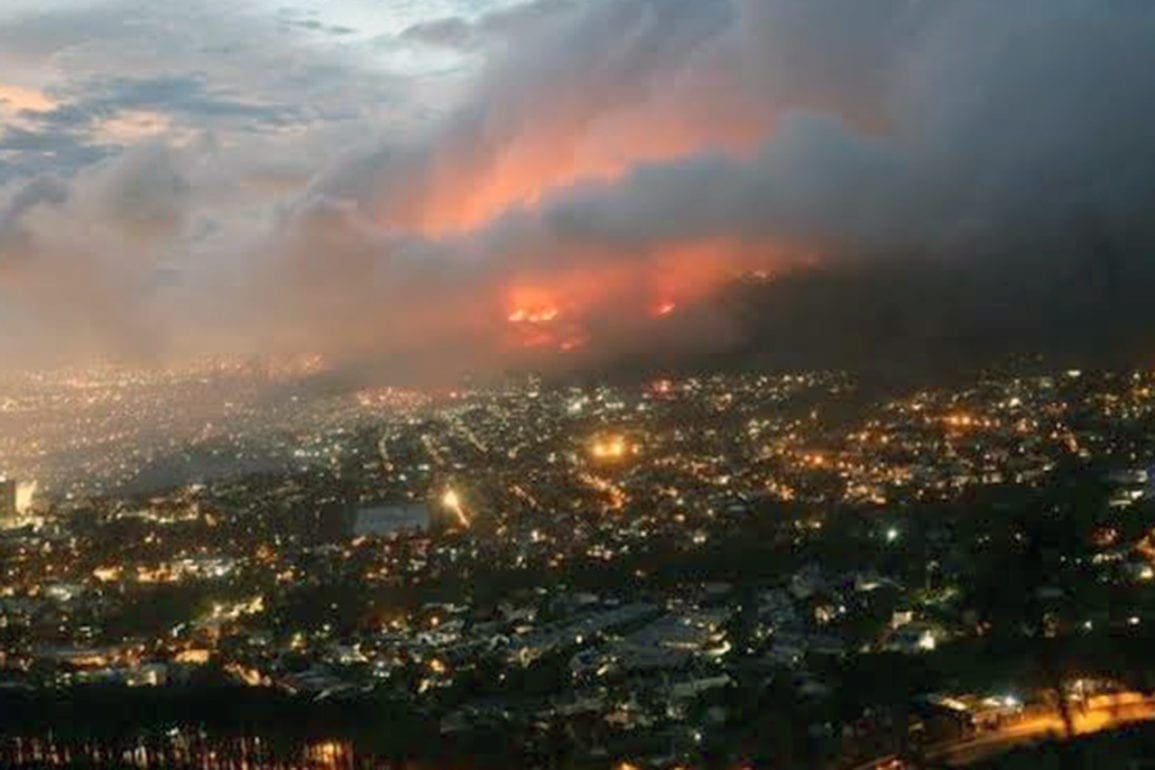
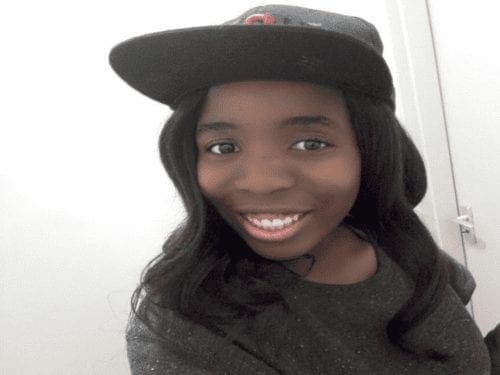
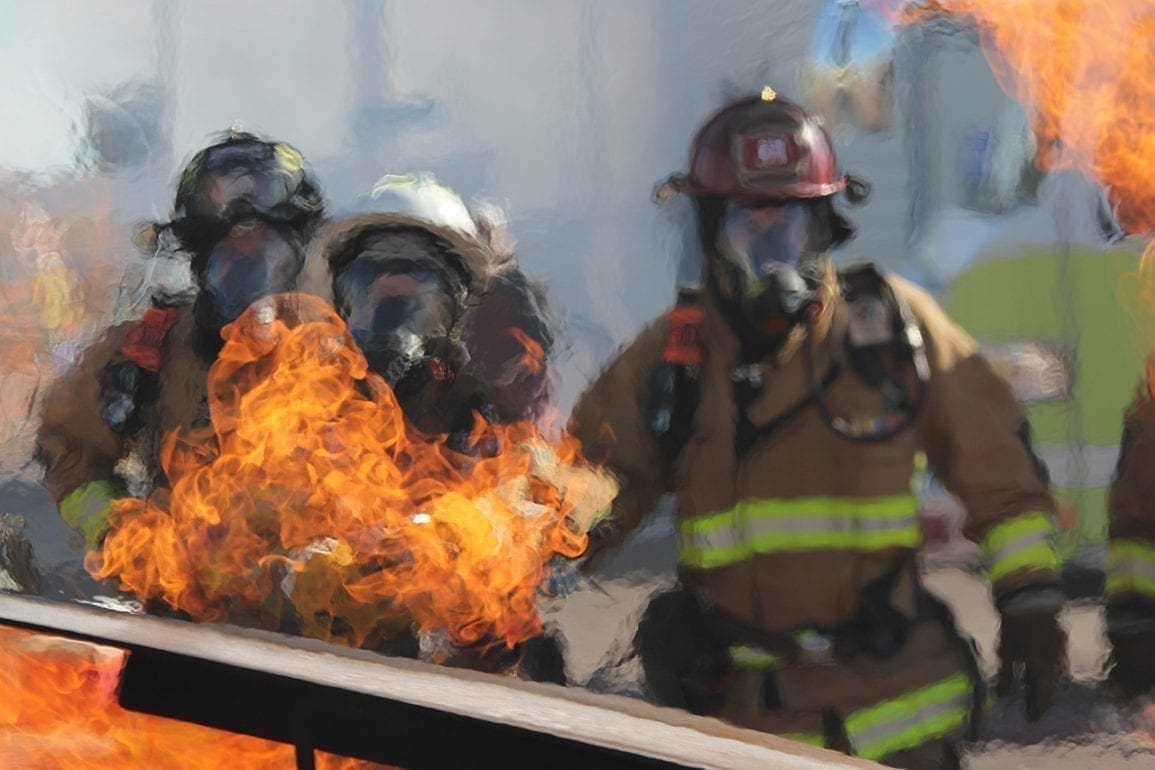
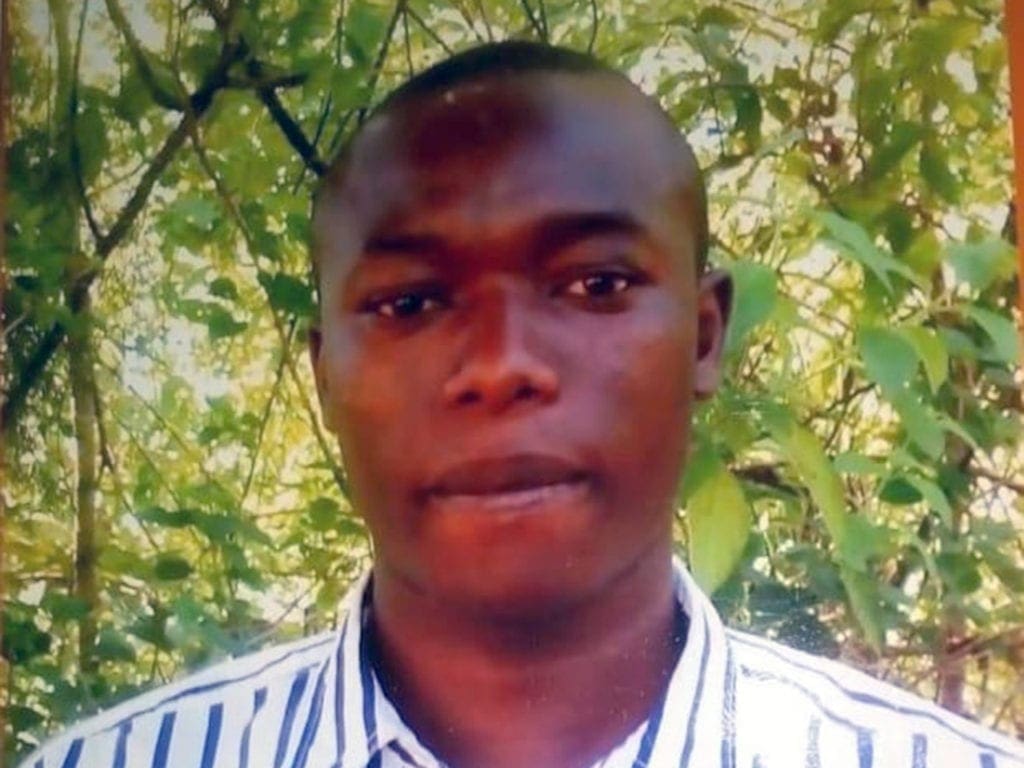
Student Thabile Mofokeng feared her apartment would burn down as flames intensified.
Background
On Sunday, April 18, wildfires enveloped Cape Town’s Table Mountain and spread to the nearby University of Cape Town.
The fires destroyed a structure behind the University created in memorial of Cecil Rhodes and a restaurant. The University’s upper campus and Library were also severely damaged.
According to Business Insider, satellite footage of the event shows a fast progression of the fires and a chard landscape. The fires reportedly destroyed 650 acres of land.
Hundreds of firefighters and volunteers worked to keep the fire from spreading further, and on Tuesday, April 20, the fires were brought to control. Fortunately, no fatalities were recorded.
The management of the mountainous region, which is home to a diverse range of alien vegetation has been put on blast for its effectiveness in risk management.
EWN reported that a man had been put in custody for allegedly starting one of the fires.
The fires that hit the University of Cape Town were not the last of fires experienced by Cape Town residents in a short period. On May 3, another blaze broke out in Simon’s Town Admirals Kloof — just two weeks after fire-fighters fought the blaze at the University of Cape Town
CAPE TOWN, South Africa — It was a Sunday morning when I was stunned when a fire that caught my attention with its colors wavering across the mountain.
As it escalated, my awe turned into fear.
As the fires spread towards the University of Cape Town on April 18, students and staff fled the historic building to escape the inferno.
Although I live off-campus, the danger from the fires crept into the inner city so rapidly, I braced to evacuate my residence.
Fire on the slopes of Table Mountain
I woke up and got on with making breakfast.
Table Mountain overlooks the University of Cape Town and is visible from my kitchen window.
As I glanced out, I saw the mountain engulfed with patches of fire. Because I had not seen a wildfire before, I was captivated by its colors on the backdrop of the mountain.
At no point did I imagine fleeing as the wind seemed to be steering it away.
Things escalate quickly
Then calm turned into chaos. The fire situation had escalated.
Helicopters veered to the area and dumped water while on the ground. Fire brigades made their way to the scene.
For a moment, between 12 and 1 p.m, the fire seemed to be under control, but I quickly realized that was a false assumption. It was sort of like the fire paused to re-blaze.
The fire surged onto Rhodes Memorial, a structure built above the University campus, and then toward the university’s upper campus.
I was shocked that the situation quickly turned life-threatening. I remember thinking that the flames that had begun to destroy my university would do the same to my apartment.
At the same time, my friend who lives in the university’s residence rushed to my apartment for shelter. She was evacuated from her residence and was distressed.
Rational thought out the window
The firefighters contained the fires before they could reach my apartment.
I was the only option of immediate safety for my friend. I started to think of how my food supply was low when she arrived, and I did not know how I would sustain the both of us.
I became stressed thinking about how we might survive with a limited supply of food, toiletries, and clothes. It could be days or weeks before she returns to her residence.
I reached out to organizations that came out to help stranded students.
The days following the fire were some of the most challenging days that I had experienced, but I was thankful we were not injured.
On Sunday, April 18, wildfires enveloped Cape Town’s Table Mountain and spread to the nearby University of Cape Town.
The fires destroyed a structure behind the University created in memorial of Cecil Rhodes and a restaurant. The University’s upper campus and Library were also severely damaged.
According to Business Insider, satellite footage of the event shows a fast progression of the fires and a chard landscape. The fires reportedly destroyed 650 acres of land.
Hundreds of firefighters and volunteers worked to keep the fire from spreading further, and on Tuesday, April 20, the fires were brought to control. Fortunately, no fatalities were recorded.
The management of the mountainous region, which is home to a diverse range of alien vegetation has been put on blast for its effectiveness in risk management. On the other hand, EWN reported that a man had been put in custody for allegedly starting one of the fires.
The fires that hit the University of Cape Town were not the last of fires experienced by Cape Town residents in a short period. On May 3, another blaze broke out in Simon’s Town Admirals Kloof — just two weeks after fire-fighters fought the blaze at the University of Cape Town
Santiago Maratea is a native of San Isidro, province of Buenos Aires. He is 28 years old and has a capacity to reach people through social networks to promote causes of public good.
Background
The population of Argentina is 45,195,777 people, 37.61 per cent of this total are Instagram users and 2.51 per cent influencers.
In Argentina there are 17,000,000 users on Instagram and 1,133,686 influencers, that is, 6.67 per cent.
SAN ISIDRO, Buenos Aires — I start all my days checking the cell phone.
My phone and social networks are the tools I use to try to help others.
Thanks to social media platforms, me and my followers managed to save the life of an 11-month-old baby and deliver two ambulances to a Wichi indigenous people.
I’m not a hero, just a messenger.
The people who support my initiatives are the real protagonists.
Saving a baby girl
One day, I received a desperate message on my Instagram.
I heard that Emma, an 11-month-old baby, needed a $2-million vaccine to continue living.
Emma suffers from spinal muscular atrophy, a disease of genetic origin that prevents muscle development.
She needed a drug called Zolgensma, a costly medicine, to stay alive.
I did not hesitate and tried to put all my efforts into helping her, but I knew that I wouldn’t do anything by myself.
The real power resided with the people.
So I started a vigorous campaign on social media. I asked for help through my social media accounts to my followers.
I knew that they were the faithful helpers.
Clock was ticking
Time was running out, and we were determined to help the baby girl. We created a community around this situation.
In the firsts days, nothing happened and I felt disappointment.
Then, thanks to the work of my followers, other influencers responded to our call. Within a week, the amount of money started growing fast and the press began talking about our campaign.
I think that their dissemination helped us achieve our goal.
I could not believe it.
I called Emma’s parents to give them the good news, and they were bursting with happiness, and I was shaking from the other side of the phone.
I wanted to hug them.
It was moving to realize that our actions could change the life of an entire family.
Helping the victims
With time, our actions had more and more repercussions.
Thanks to my followers, I learned about the story of women who wanted to buy property to create a shelter for victims of gender violence.
The women who led the initiative had been fighting for a long time to change a very violent reality for women and children.
For me, it was unacceptable that they would not have space to organize and carry out their fight.
Again, our community answered really fast.
We quickly got down to business and managed to raise $8,500.
We gave the money to the people and I realized that we had some leftover cash.
With that amount, we also helped Agustin, a boy who suffered severe burns in a house fire.
Although it seems like a feat reported in the media, I clarify these actions are collective.
Without the participation of the thousands of followers who, with conscience and solidarity, contribute their help, it would not have been possible.
Health for the neediest
In Buenos Aires, I got in touch with Omar, a young Wichi who had come to study law.
He told me that his people were having difficulties and no health back up.
I started a campaign on social networks, asking each of my followers for just $1 each.
The objective was to buy an ambulance for them.
The Wichi are a very humble people, where food and water are scarce.
During the quarantine period, their health was significantly affected.
I wanted to give the Wichi a much-needed hand for the health issues of that community.
In less than 24 hours, we raised so much money that we could buy two instead of one.
Until recently, the people who live there were often unable to access medical care or be transferred to the hospital.
After an internal political conflict, I was able to deliver the trucks.
Today, I know that this effort has changed the course for many.
I feel that if all of us who have the possibility contributed our grain of sand, we could live in a more just and egalitarian society.
Childhood dreams
One of my dreams was always to become a famous person.
One day, Vorterix, a radio station, called me to work with them.
There, I took my first steps as a communicator and learned how to reach a larger audience.
At that moment, I realized that I should use my skills to help others.
After a while, I decided to leave the radio program because I needed to communicate my ideas without restrictions.
Although I dedicated myself to studying advertising, the production of content on social networks always seemed a shorter way.
For this reason, I dedicated myself to working on producing content for my channels, adding followers, and growing on the web.
Undoubtedly, no media recognition is as satisfying as knowing that we can help improve a person’s life.
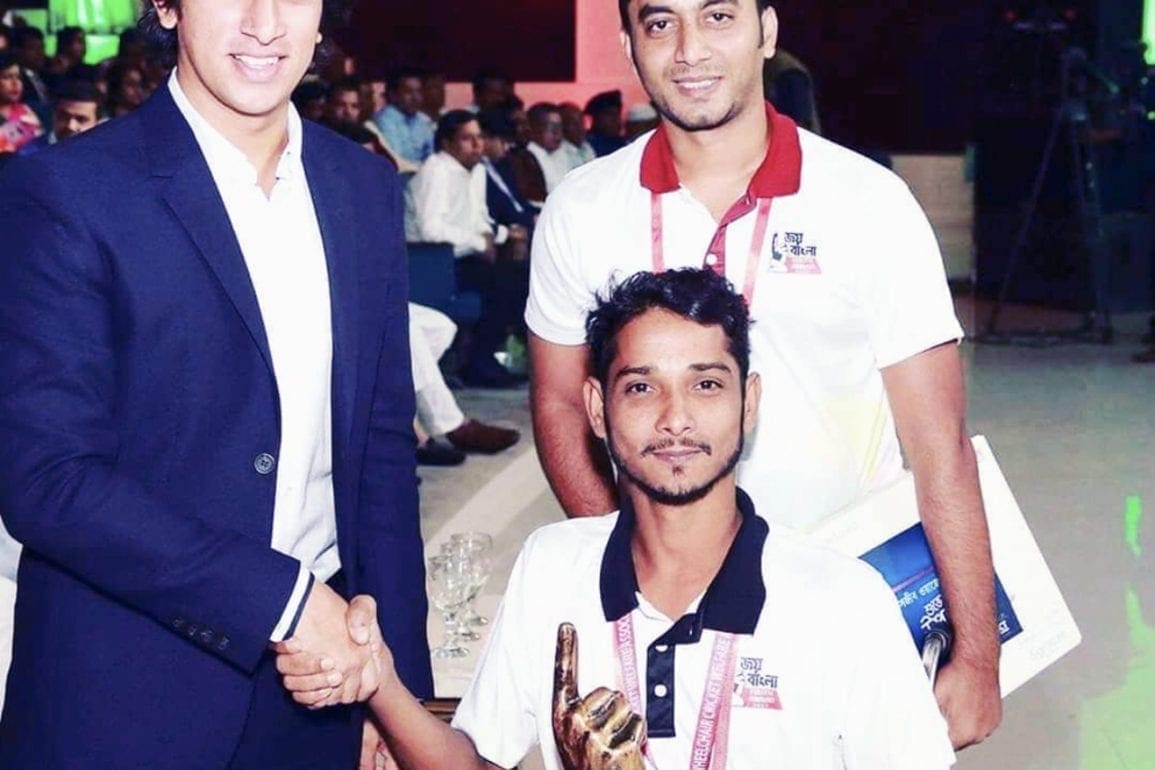
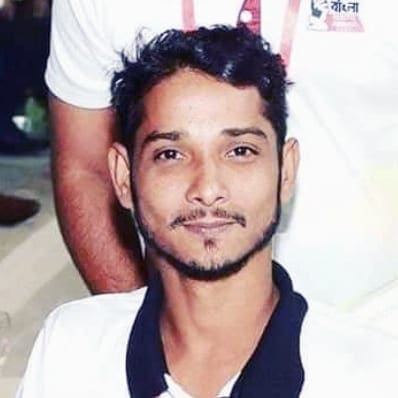
Mohammad Mohasin is 33 years old and is from Morkun east Para, Dhaka in Bangladesh. He is the physically challenged captain of wheelchair cricket in Bangladesh. He is currently married to Liza Akter and father to two baby girls Safa & Rian.
Background
According to the World Health Organization, polio does still exist, although polio cases have decreased by over 99 per cent since 1988, from an estimated more than 350 000 cases to 22 reported cases in 2017. This reduction is the result of the global effort to eradicate the disease.
Today, only two countries in the world have never stopped transmission of polio (Pakistan and Afghanistan).
Despite the progress achieved since 1988, as long as a single child remains infected with poliovirus, children in all countries are at risk of contracting the disease.
The polio virus can easily be imported into a polio-free country and can spread rapidly amongst unimmunized populations.
Failure to eradicate polio could result in as many as 200,000 new cases every year, within 10 years, all over the world.
is no cure for polio, it can only be prevented. The polio vaccine, given multiple times, can protect a child for life.
DHAKA, Bangladesh — When I was six months old, polio attacked me.
They tried all treatments available in my country. However, the doctor left me with no hope to recover.
My family was very supportive and caring. My parents tried their best to get me the treatments I needed. However, my father was not financially stable, and I was unable to continue my treatments.
My world was mostly dark until the emergence of cricket, a sport that gave me social value and a sense of identity as a part of society.
Growing up
My academic institutions were not so supportive as they were not wheelchair accessible. Students started mocking me, and the bullying became unbearable, so I decided to drop out of school very early in my scholastic career.
As I got older, I wanted to do something for my family and livelihood, so I set up a telecom shop.
The shop became the center of a gathering for my friends and classmates since I could not go anywhere, so they all came and met me in the evening and spent some quality time.
These meetings were my only source of joy at the time until I began playing cricket.
Discovering cricket as my passion
Cricket gave me social value and a sense of identity as a part of society.
I started posting my cricket-playing pictures on Facebook from my telecom shop computer.
One day an interested person from India named Mr. Haroonur Rashid started asking me about disability cricket in Bangladesh.
Haroon was interested in hosting a cricket match for the disabled and asked me to form a team in Bangladesh.
I started seeking the persons with disabilities who were willing to play cricket, with much difficulty.
I finally managed to find some players with the help of CRP and some well-wishers of mine.
Cricket series was born
We invited Mr. Haroon to bring his team to Bangladesh and play the first physically challenged India vs. Bangladesh T20 Cricket series, where Bangladesh lost the series.
I then went on to join the Taj Mahal Trophy championship tournament at Agra, India, in 2014 by selling my telecom shop, which was my only source of income.
This decision was the most challenging I ever had to make. However, I have no regrets as my team performed well and they won the series.
Winning the Taj Mahal Trophy was the turning point for me.
Our team received a reception from Prime Minister Sheikh Hasina, which was the most inspiring moment for us all. After the event, so many newspapers covered the story.
Association established
After the event, my passion for cricket was undying, so I managed to establish Wheelchair Cricket Welfare Association Bangladesh (WCWAB) in 2016 with the help of my co-founders Polash and Nahian.
We provide training in wheelchair sports and essential life skill training to the players only in our cricket training camps.
Our objectives are to empower differently-abled people through sports and life skill training to bring them into the mainstream of society and transform accessible discrimination-free Bangladesh.
During the pandemic, I came across several posts on social media, where I read about people from our community who were denied financial assistance from elected representatives because they were recipients of a meager monthly disability allowance of Tk 750.
Moved by their distress, I approached individuals/organizations who have previously sponsored us on various occasions for donations and financial aid, which can use to support our community members.
I compiled a list of different categories of physically challenged people in my area and nearby wards.
During Ramadan, with the help of a well-known NGO, we provided cash support to around 300 disabled persons across the country.
I sent assistance to approximately 500 families with disabled members located in Chattogram, Rajshahi, Rangpur, and Barisal with donations from a youth-driven fundraising initiative.
Also, to raise community awareness about social distancing and other sanitary/hygienic precautions, I distributed pamphlets and flyers in my area.
With the help of many reputed private/non-profit organizations and NGOs, we could distribute food-based assistance to more than 5,000 physically challenged/disabled people in my ward and nearby localities.
Assistance mismanagement infuriating
But what bothered me was repeated incidents of gross mismanagement on the part of the authorities which led to misallocation of assistance specifically dedicated to people in need.
There was one time during distribution when I met a man who had been starving for three consecutive days. When I handed him the packet, the man started to cry.
In a world where people’s hearts are full of prejudices against people like us, through my cause, I continue to strive for equality and inclusion.
I want to see disabled-friendly public spaces and infrastructures everywhere, and above all, a society which is accepting and empathetic.”
I work with our International council of Wheelchairs Cricket (ICWC) as General Secretary.
I am also involved in Junior Chamber International as a JCI Dhaka East member and a member of the world economic forum global shapers Dhaka Hub.
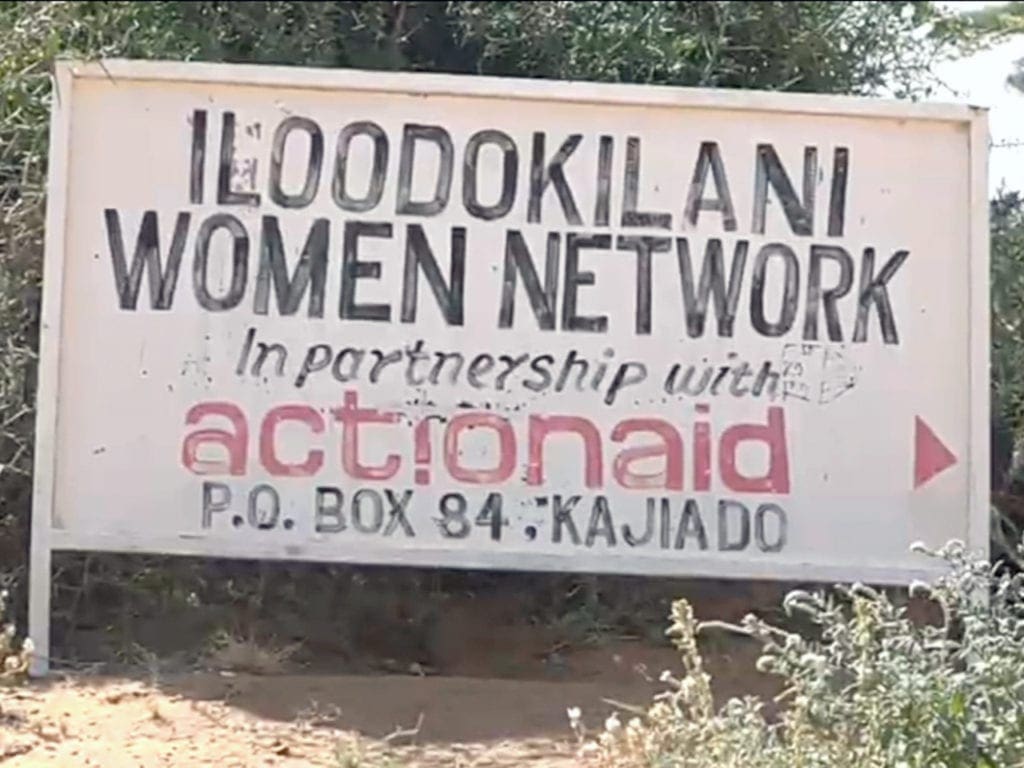
ILOODOKILANI, Kenya — Female genital mutilation (FGM) in the world is causing an uproar despite many government authorities banning the practice.
I am a victim of female genital mutilation. I know and understand all the pain of not having rights to your own body as a woman growing up in communities chained on culture.
The cut left me bleeding for days, and as young as I was, the pain was intense and unbearable. Until today, every time I remember my cut experience, my body feels the pain again as my heart beats a little faster than usual.
They circumcised us against our wish. No one gave us the right to choose whether to be cut or not; they just did it to us.
Rite of passage
Some communities still practice it as a mandatory rite of passage in Kenya, even though government authorities outlawed the procedure.
I have been on the front line in my community, fighting for young girls’ rights and protecting thousands of them from female genital mutilation and underage marriages for 30 years.
The fighting journey has been nothing but one with ups and downs. I come from a community rooted deeply in traditional cultural practices, thus making it a challenge for them to accept female genital mutilation as a harmful practice.
I have been criticized and ousted by my community, terming me as a cultural traitor and radical. They don’t want to listen or let go of the practice despite its being clear on their faces how female genital mutilation can harm and affect young girls.
They have seen with their eyes young girls dying and others left with serious health issues after undergoing the cut but still don’t want to let go of the cut. The young, innocent girls are the ones left to carry the painful burden.
Pain of the cut
FGM is something that the community embraced as a sign of womanhood. If you did not have the procedure done, you did not belong.
When they cut me, it left me with extreme pain, excessive bleeding, shock, and genital tissue swelling due to inflammatory response.
For several months I could not perform some duties due to the pain of the cut. I could feel my body was on the verge of being paralyzed on one side.
I tried to ignore the pain, but it was too intense for me to forget. My parents and especially my father, didn’t care about how I was feeling.
All they wanted was for me to be cut and get married as a young girl and protect the culture at the expense of my life.
I have carried all those painful memories all through to my 70s because it hurts so bad.
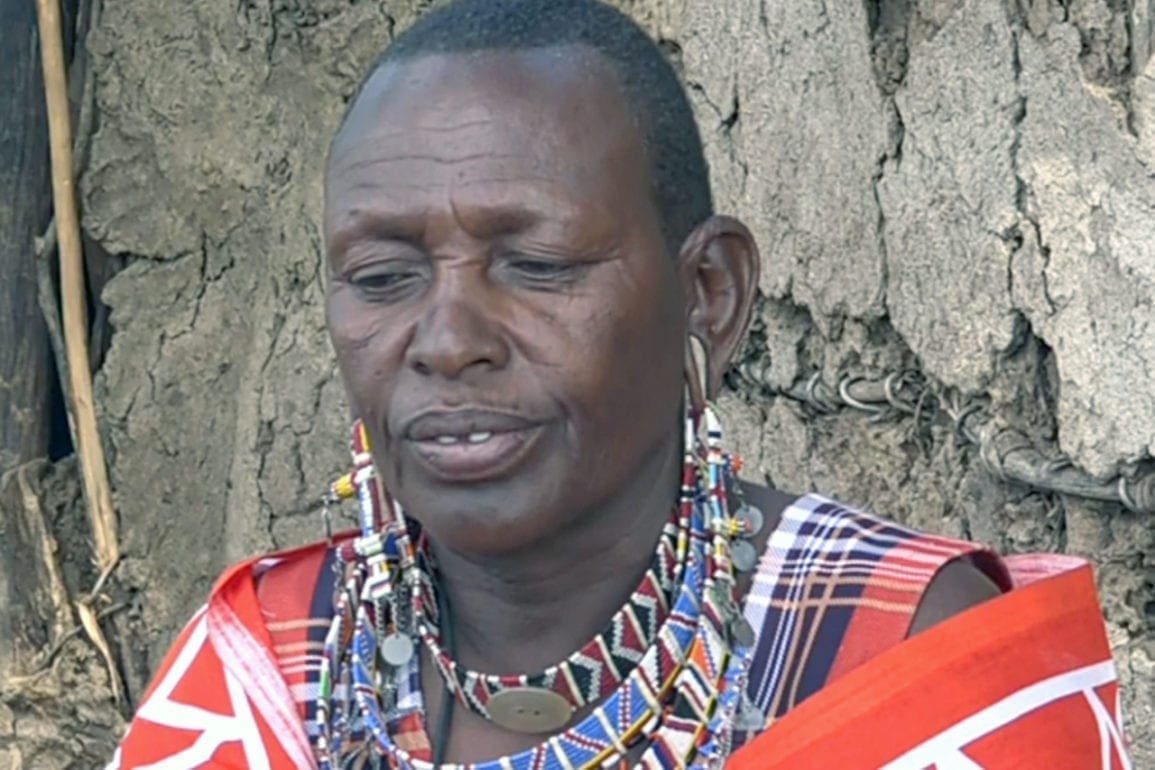
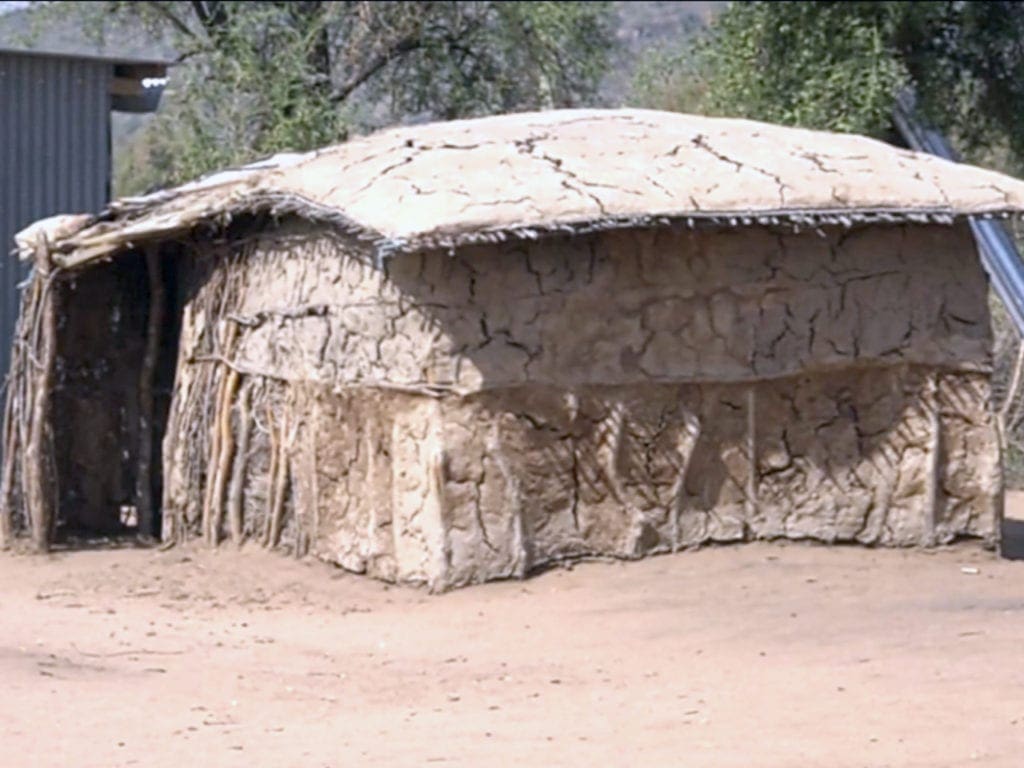
Koni sitting at the entrance to her mud house. | Keit Silale
Fighting against FGM
My fight against female genital mutilation in Kenya started nearly three decades ago when I was 30 years old.
I was so disturbed by the practice, especially when I saw young girls suffering the brunt of the cut.
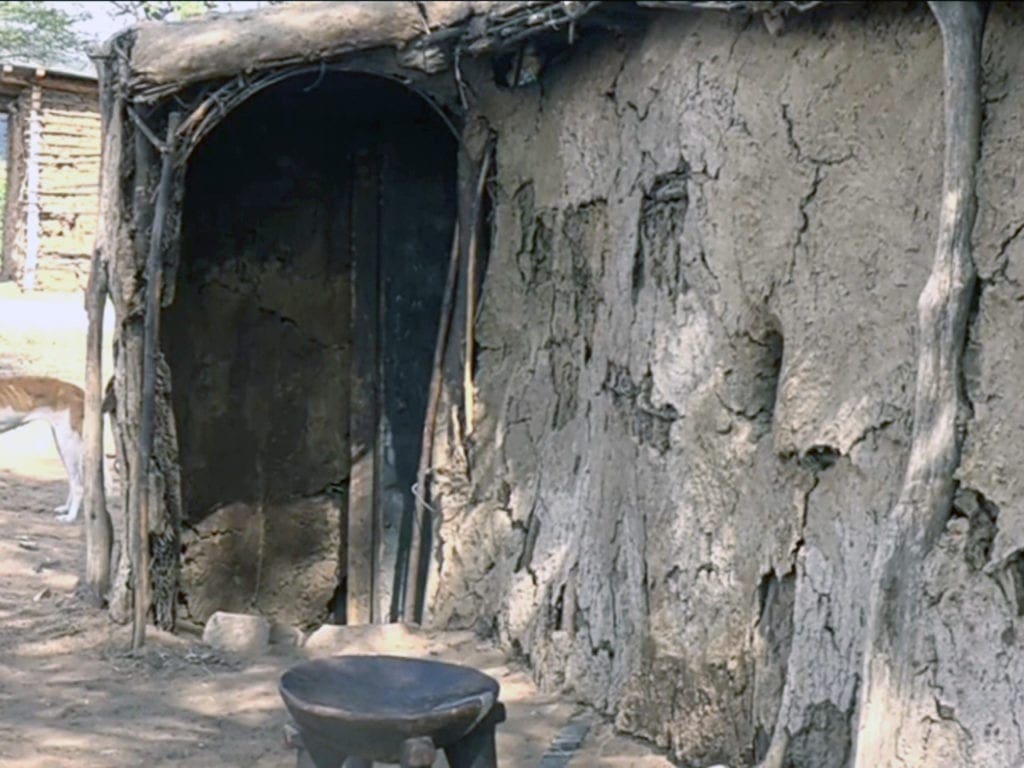
One evening at my tiny house made of mud, I heard women screaming. The screaming caught my attention, making me rush to where the screams were coming from, not far from my homestead.
Upon arriving, I found out a 12-year-old young girl had died after bleeding for almost one hour after undergoing the cut.
Heartbreaking sight
It was so painful and heartbreaking to see a young girl’s body full of hope and future lying down dead in a cold room, never to wake up again.
I could feel the pain in my heart as the young girl’s mother cried helplessly, not knowing what to do to bring her daughter back to life or go back to the days before her daughter underwent the cut.
As I stood there, my voice to fight the stubborn taboo was born.
My mind quickly went back to the pain I felt when they cut me, and at that moment, without fear of favor or contradiction, I wanted to know the people behind that cut that left the young, innocent girl bleeding to death.
I finally found out they cut the young girl to be married off to a wealthy Maasai man as a third wife in my search for answers.
The father was behind all that had happened. I decided to report the father and the women who practiced the cut to the authorities in the area.
The officers handled the case and gave a limp “warning” to those practicing female genital mutilation to underage girls who are still innocent, like the dead 12-year-old girl.
With my community rooted deeply in cultural practices, the “warning” was just a step towards justice for thousands of girls in my community, who underwent cuts without being given the power to choose.
That was the beginning of my journey as a female genital mutilation activist in my community.
The community turned against me, blaming me for breaking the cultural norms and going against the elders to fight a practice that has been there for ages.
But with no fear of what I will face through the journey as an anti-FGM activist, I moved on and started a journey of creating awareness of the dangers of female genital mutilation and how it affects the lives of young girls and women in the world.
My cut experience became my testimony of educating the community on how the cut can ruin lives in many untold ways. It was not an easy task because the community was so hard on letting go of the stubborn cultural practice.
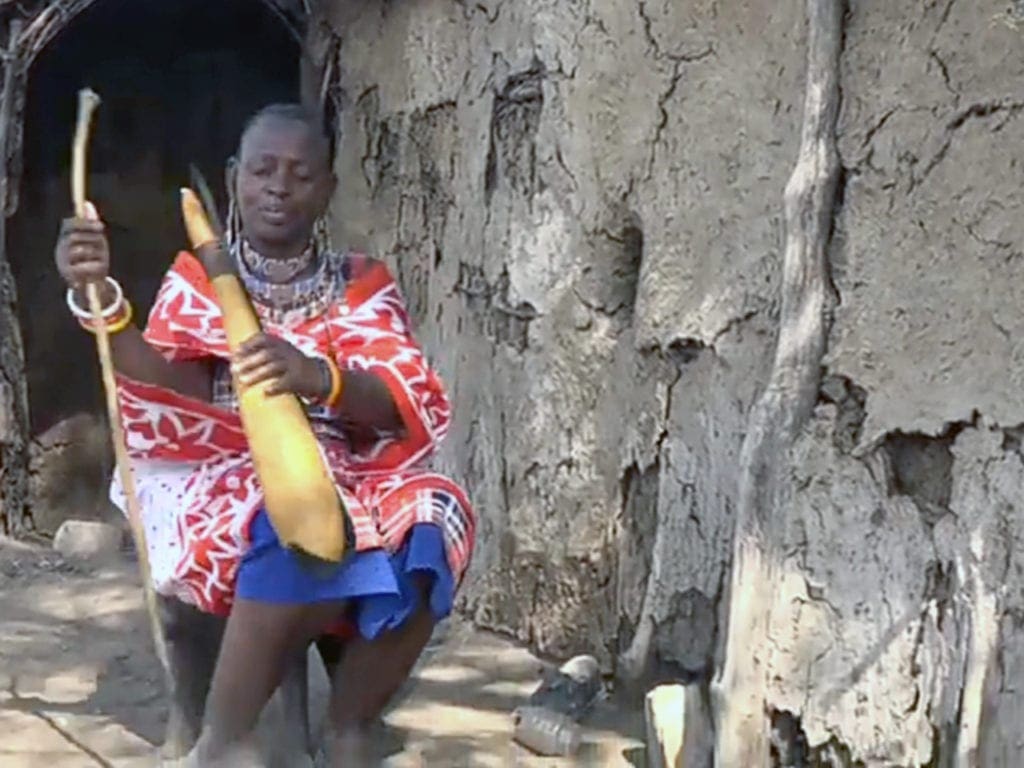
The entrance to Koni’s mud house. | Keit Silale
Ray of hope
Time passed, and a ray of hope started shining.
Several women in the community started gaining voices to fight against the stubborn practice which had become a thorn in the flesh. Together we become powerful, and our voices become our weapon in protecting our rights as women.
We rescued young girls from being cut and married off at a young age. Those found guilty of practicing the cut to underage girls were arrested and summoned for going against the rights of young girls.
With our voice, the young girls become more aggressive of their rights despite being forced into underage marriages and female genital mutilation, practiced under darkness.
So far, the fight has been that of mixed-status, both failure and success, but I hope soon even those practicing behind the scenes will be brought to light and face the consequences of practicing the cut to young girls.
Covid-19 impacts
The Covid-19 pandemic has taken a toll on many things, including the country’s economy, which is far worse affected. Many families are struggling to survive with the virus hitting many. It has also caused a devastating impact on females.
Domestic violence is on the upsurge. Teenage pregnancy rates are rising, with early child marriage increasing in every part of the country.
This downward trend has also revived cultural practices like female genital mutilation, which has been on an upswing since the first lockdown in march last year in Kenya.
The lockdown and school closures left many girls at home, making many vulnerable to genital cutting in communities that see the practice as a prerequisite for marriage and as a rite of passage.
The entrance to Koni’s mud house. | Keit Silale
Schools as sanctuaries
Many girls are typically protected and shielded by being in school, which is an alternative to marriage.
Many are at boarding schools where it’s hard for them to undergo the cut. But at home, these girls are not only being cut but are being forcibly married off at a young age.
People still see female genital mutilation as an investment in the girl and her ability to be married off, and that’s why many families are doing the practice.
The virus has affected our efforts to fight against the cut badly, but we haven’t stopped trying to create awareness and take action against those practicing the cut to young girls.
I work closely with the community on educating people about the dangers of the practice and fostering dialogue on changing societal norms and behaviors that perpetuate harmful practices like this and child marriage.
I ensure that they bring all of the culprits of female genital mutilation to justice, and they face the consequences of forcing young girls to undergo this practice that continue to harm our young girls.
Kenya’s fight against FGM
The government supports my effort in the fight against female genital mutilation in Kenya. In Kenya, doctors circumcise at least one in five females aged 15 and 50 despite a ban on the practice enacted in 2011.
Any girl who refuses to undergo the procedure is declared an outcast by the community. This pressure creates fear in young girls forcing them to choose the path of circumcision for fear of being outcasts. But the government of Kenya’s effort in being serious about the matter has been a boost.
In 2019, Kenya’s President Uhuru Kenyatta vowed to end the stubborn practice by 2022. Many at the time saw it as an unrealistic goal for it being something held dearly by communities with retrogressive culture.
Much-needed boost
On March 17 this year, Kenya’s High Court upheld a ban on female genital mutilation, giving us a much-needed boost on fighting to end the widely condemned practice.
The landmark declaration is a win in the fight against the practice, which has for years caused severe health consequences to women and girls in our nation.
With the ruling upheld, I am confident we will eradicate the stubborn practice, and women and girls will be free from the chains of traditional methods that have been holding them.
This action is also a good sign that as a nation. We are closer to the goal of protecting girls and women from harmful traditional practices.
Just a pipe dream?
The United Nations Children’s Fund (Unicef) estimates that at least four million girls and women are at the risk of female genital mutilation every year, making the Global Goals of ending traditional harmful practices like FGM a pipe dream.
With different agencies joining the global fight against female genital mutilation, I am optimistic it will soon be behind us.
When that happens, all girls and women will be free from the chains of this archaic procedure that has harmed thousands of women like me in the world.
For fighters like me, may we never get tired of fighting and advocating for our rights as women. Let’s fight for ourselves and the next generation of young girls in the world.
Female genital mutilation (FGM) is the practice that involves cutting part or all of the female genitalia for non-medical reasons and is predominantly performed on women or young girls.
According to the United Nations, 21 percent of Kenyan women between the age of 15 and 49 have been cut and at least 200 million girls and women across 30 countries are also affected by the practice.
I don’t know what it feels like to walk, so I don’t miss it.
I’ve spent my life in a wheelchair.
Many times I have wondered why I couldn’t walk or what I would have done to deserve it, but I chose to pursue my dreams regardless of my physical limitation.
Today I’m a model, and I’m training to represent my country in the Paralympics of Tokyo 2021.
Living the life
I was born with myelomeningocele.
I chose not to blame myself, and I prefer to live freely and without burdens.
My spine did not form the way it should, so I was never able to walk.
Doctors recognized the abnormality within a few days of my coming into the world.
Maybe that’s why it doesn’t hurt so much not to move with my legs.
How can I regret something that I can’t describe?
The beginnings
I chose to pursue my dreams regardless of my physical limitation.
Perhaps that sets me apart from the rest.
From a very young age, my parents put me in a pool. That was my refuge among so many surgeries.
After each intervention, I suffered acute physical pain that became unbearable.
I couldn’t sleep.
The pain was followed by helpless crying. I couldn’t understand what was happening.
Escape to the water
When I was eight years old, I noticed that swimming gave meaning to my days.
It was my escape from so much pain and worry. Water was where I wanted to be.
Many think that disability is the end of everything when in reality, it is the other way around: it is the beginning of something better.
Both my family and my coaches encouraged me to compete.
It went so well for me that at age 16, I began to travel the world representing Argentina.
My adolescence was the same as any other boy’s: wonderful.
When I returned from travel, I balanced training with high school.
Lucas in a photo shoot. | Foto Instagram @lucaspoggi7
Water, my best therapy
While contesting the qualification for the Paralympics in Rio, my mother was battling cancer.
Though she was suffering she urged me to go.
I was a second from first place qualifying, in a solid position, which allowed me to spend more time with her.
Months later, she passed away, and I promised to do the best I could.
From that moment, the water became my saviour.
I trained even harder every day, and I am preparing to embrace my dream of qualifying for Tokyo 2021.
Lucas parading on the catwalk. | Clarin Journal
Debunking myths
My other passion is fashion.
Who would predict that someone in a wheelchair would be on a magazine cover?
Years ago, it was unthinkable.
During my adolescence, I sent several photos to modeling agencies, and I was very patient, waiting for answers.
In 2017, I had my first fashion show, and now I am about to launch my clothing collection.
The catwalk is like being in the water. There I also feel full, where I belong, where I flow.
I know firsthand the difficulties people in wheelchairs face when it comes to dressing. It is difficult to get clothes that we like and identify us.
Not many have the independence over their bodies to dress.
Function over form
In general, many end up wearing clothes that are functional to them but not that represent them.
The idea is to adapt these garments to make them easier to wear.
Some say that I am an example to follow but I do not consider it that way. I’m just one of the bunch.
The difference is that I have clear objectives and that I do everything with love.
When I propose something, no one can convince me that I will not achieve it.
The only “no” that I accept is not being able to walk by myself, but that I cannot change.
The rest is in my hands and up to me, so no one will convince me otherwise.
I will continue working to create awareness and visibility for those of us who have limited physical conditions.
The Argentine Olympic Committee is the confederative entity that organizes and promotes adapted sport. The rules have been modified to be practiced by people who have a physical, intellectual, motor, or sensory disability.
It represents and coordinates the participation of Argentine athletes in events related to the Paralympic Movement in Argentina and the world. These events include, among others, the Paralympic Summer Games and Paralympic Winter Games, which have been held since 1988, immediately after the Olympic Games.
Argentina has participated in all the Summer Paralympic Games since its first edition in Rome in 1960. It was the only Spanish-speaking country and the only Latin American country present in the first two editions. Concerning the Paralympic Winter Games, his first participation was in Vancouver 2010, appearing since then in all editions.
The Argentine delegations obtained 156 medals in the games, of which 31 are gold, 61 silver, and 64 bronze. All were won in summer editions. Argentina is ranked number 30 in the historic medal table of the Paralympic Games.
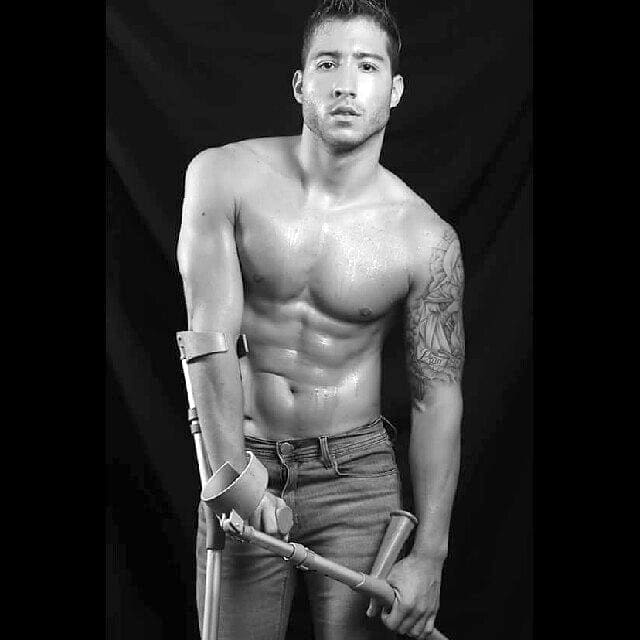
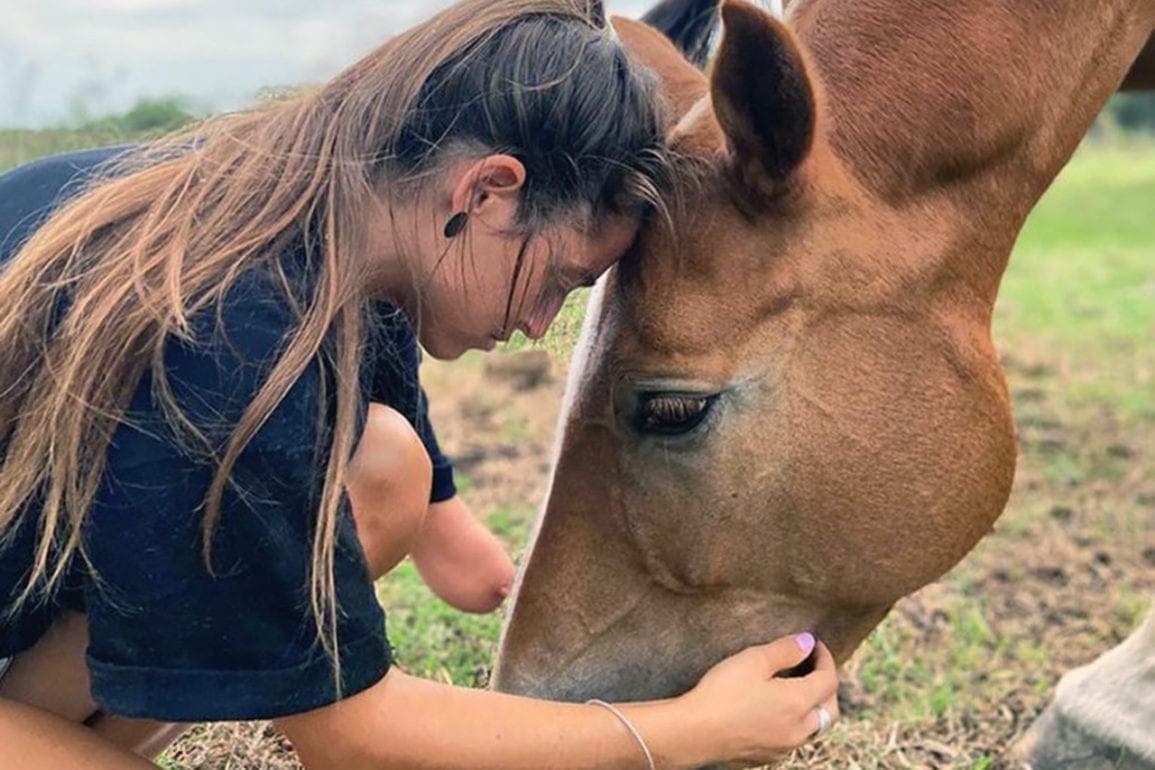
Many times I was rejected by men. They didn’t want to go out with me because I was missing an arm.
I started thinking I was ugly. My self-esteem was not strong. I felt destined to be alone for the rest of my life.
By that time, I had very negative thoughts about myself and my future. It is a time that I don’t want to revisit.
Besides, buying clothes was always difficult. I couldn’t find anything that suited me, causing embarrassment.
I wanted to do something for people like me and help others to feel more accepted in society.
Clothes as the answer
That’s when I decided to start studying clothing design. I felt that I could help people through integration. From that moment on, everything changed.
It was difficult for me to make the garments due to a lack of mobility. However, I managed to deliver them.
It might take me a little longer than the rest, but nothing would stop me from moving on.
During those five years, I never felt different from the rest of my classmates.
In 2018, I started working as a costume designer. I enjoyed doing it, but it was intermittent. I was always a very active person, and my dream was to help others like me.
With the arrival of Covid-19, this situation worsened. My income had plummeted. I didn’t have enough to eat.
I saw how my only dream in life was dying little by little, and I started to feel anxious.
According to official statistics, in recent decades, infant mortality due to malformations has decreased in a large part of the world’s countries.
The component of infant mortality that has decreased the most is corresponding to the postneonatal period (from 28 to 365 days of life), thanks to the control of malformation diseases and malnutrition.
Although there is heterogeneity between countries, the neonatal component of infant mortality has been more difficult to reduce. In addition to prematurity and low weight, congenital anomalies have gained a greater relative weight.
Argentina reported 7,093 deaths of children under 1 year of age, with an infant mortality rate of 9.7 per 1,000 live births. Due to congenital anomalies in that period, infant deaths were 1919 and accounted for more than 27% of total infant deaths.
Congenit problems may lead in some cases to long-term disability. They can result from one or more genetic, infectious, nutritional, or environmental factors, or their causes may be unknown. Most congenital anomalies can be prevented with anti-rubella vaccination, adequate folic acid intake through fortification of staple foods, and adequate pre-conception care are just three examples of prevention interventions.
The clock is ticking, days are passing, and the fear of what is ahead of me intensifies.
I have had sleepless nights thinking of what will happen to thousands of us, ever since the day I saw Kenya’s 14-day ultimatum to close down Kakuma and Dadaab camps.
It was March 24 that Kenya’s government gave the United Nations High Commissioner for Refugees two weeks to come up with a plan of closing down the two camps.
They cited terror threats and neglect by other countries as the main reasons for closing the camp, which has been my haven for years.
Two weeks have passed, and UNHCR says they are still having a dialogue with the Kenyan government on the camps’ closure.
Last week Kenya’s high court temporarily stopped the government’s ultimatum of closing the camps, giving UNHCR about a month to respond. It provided a moment of relief, but I can’t help but wonder what will happen to thousands of us if the dialogue fails.
The deportation news reopened past scars of all of the pain I went through with my own family.
All the agony I encountered before finding solace in the Kakuma refugee camp slapped me back to the past worst experience of my life.
Life before being a refugee
I am from Uganda and I was born and raised there until 2017, when things turned, forcing me to run for my life.
I am gay, which is a criminal offense in my country of origin. In Uganda, LGBTQ People are convicted and sentenced to many years for “sexual crime”. Being gay in such a country was a challenging situation.
For 20 years as a gay person, I survived under the radar, living an overcast half-life, presenting a straight face to the world but underground expressing my sexual desires hoping no one will find out my little secret.
But one day, everything broke loose. My secret was out.
The beginning of my darkness had fallen. I remember it very clearly. I was in my house with my partner, and we were having a good time. I heard the sound of people coming towards my house spitting fire as they shouted my name.
I knew it was the day my secret was out and everyone was going to be on my case.
Family attacked me
The noises were from my family and neighbors. They broke the door to my house with anger, entered, and started beating and stoning us before we could figure how to escape the attack.
Without thinking, we passed through the open window naked and spend days running through my father’s plantation, trying to find our way out.
With the injuries and pain we had from the attack, the plantation journey was painful and teary, but we managed to come out.
I decided to seek refuge at a place where they accept me for who I am without judging my sexuality. With all that I had learned and heard about Kenya, I decided to seek refuge in the East African country.
This country, over the years, has been recognized as a haven for persons seeking refuge from conflict and environmental disasters in Africa.
My partner wasn’t sure about coming to Kenya, So I left him and started my journey of searching for peace in another nation, hoping the universe will act in my favor.
Walked for days
I walked for more than seven days before entering Kenya and another few days to reach Kakuma refugee camp in Northern Kenya, a rescue home for asylum seekers since 1992. The journey was one of the tough ones.
Walking day and night in search of peace is not a joke. I encountered several challenges throughout my trip but trusted God to lead me to where I was going.
Kakuma refugee camp was the only hope I had in my life, and so I trusted God to open the hearts of those I will meet at the camp to understand and help me find solace at this place.
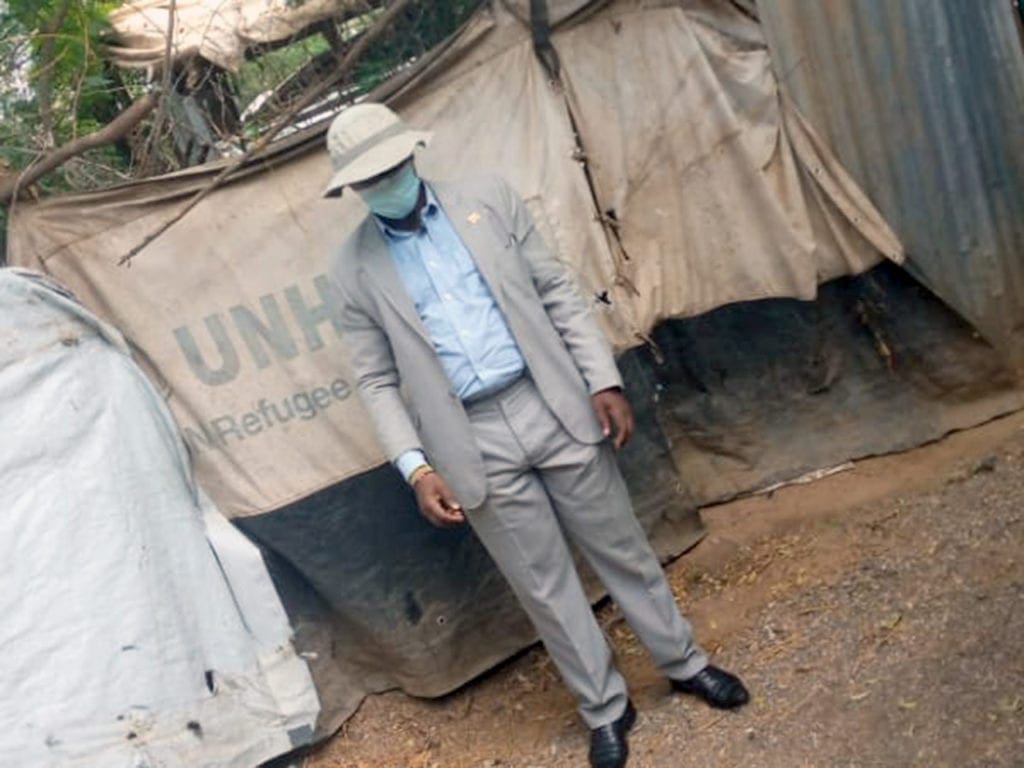
My fate remain unknown. I have nowhere to go if they will close the camps. | Keit Silale
Admission to Kakuma Camp
Through the help of the people I met along the way who helped me trace the direction to Kakuma refugee camp, I managed to reach the base, occupying a dry, desolate land with only a few trees.
Everything was different. It was like I had stepped into another planet.
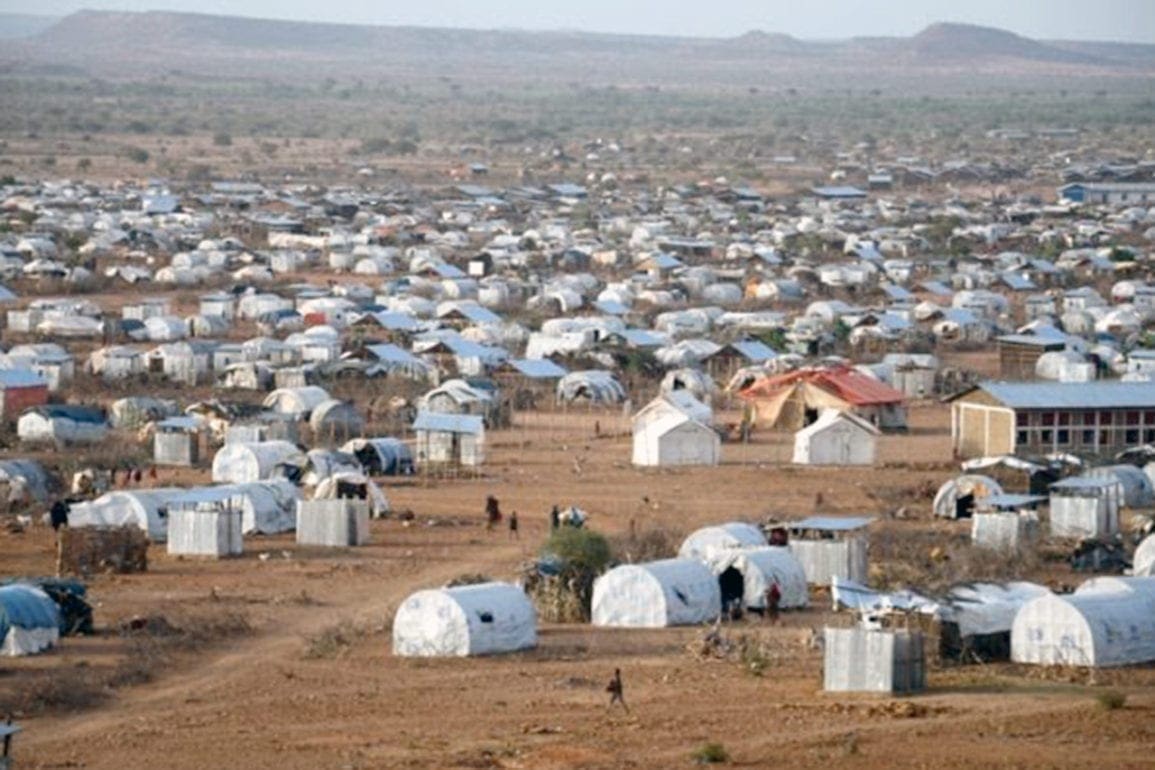
The environment was unusual from what I was used to in my life, from the scorching sun to thousands of sprawling refugee settlements divided into several separately numbered camps.
I could also see thousands of people moving around the area with faces reflecting hope and signs that I had arrived at a haven of peace. It was a different world!
Protocols govern the camp, policies that, as a new person, you have to go through them before you are accepted.
Entering the camp premises, you have to acquire permission from the management. That was another hard sell. No one knew me or believed my story, and that was a challenge.
I tried and tried convincing the officials of my account until the only option for them was to have mercy on me and accept me at the camp.
Finally, authorization
After getting permission, they authorized me to enter the base’s reception area, where they took a lot of information about me and my origins. It took me a week of staying at the reception before I was entirely accepted and enrolled at the camp as a refugee.
Life at the camp is different. I left all my dilemmas and traumas of the past behind and started building a new life for myself, hoping that I would change everything I went through to a story of hope one day. But even though things are different at the camp, I still face some challenges as a gay person.
Violence against LGBTQ people in Kakuma camp happens from time to time. Homophobia is here too. Some of the other refugees and community members are looking for an excuse to come after LGBTQ members and attack us.
In March, they attacked us, and the attack left two gay men with second-degree burns.
Arson left one dead
On Monday, another arson attack happened that left one LGBTQ refugee dead, and they admitted another to Kenyatta National Hospital.
All this tells why we need to draw attention to LGBTQ refugees and asylum seekers who live in Kakuma refugee camps. UNHCR has been trying the best way possible to protect us, and I am so grateful. But now, I fear for my future as the host nation threatens to close the camp.
Through this camp, I have built myself in ways I can’t explain. I am engaging myself in small businesses and a community LGBTQ outreach that focuses on looking for safe protecting LGBTQ members at the camp.
With the government of Kenya’s ultimatum to close the camp, all our efforts will go down, leaving many of us helpless with nowhere to go and no one to help.
Closure of camps
UNHCR, whose core mandate is to provide international protection and assistance to asylum seekers, urged Kenya’s government to ensure that those who need protection continue to get it and pledged to keep engaging in a dialogue.
But our lives are at stake.
I am anxious and frightened about what will happen If the conversation doesn’t go well. Thousands of us will be rendered homeless, and even though they gave us the option to go back to our countries of origin, the same challenges that made us flee are still there. Nothing has changed.
So to me, that will be worse than murder, and that’s why I will commit suicide rather than go back to Uganda where I survived several murder plots from my own family and neighbors.
Through the news online, I can still see how multiple LGBTQ people are still struggling to survive in a country that is now using the Covid-19 pandemic as an excuse to clamp down on LGBTQ members.
This makes it clear how Uganda is the worst country for LGBTQ people to survive. They do not consider a gay person ‘a person’ here.
Where will I go?
The plan of closing Kenya refugee camps gives me headaches because I wonder, where will I go? I have nowhere else.
The deportation is happening amid the pandemic and this will hurt and expose many of us, especially young children, to Covid-19, which is a challenge at the camps. People might die due to exposure to the virus during the deportation process, which makes me worry.
Many things are at stake here, and it makes it difficult to sleep as we wonder which option we can take to move out of this dilemma.
If they take me to any other place in Kenya, I will leave peacefully, but if the only option is to go back to Uganda, I will rather die.
If they implement the closing of the camps, that will be the end of my life.
I am fasting and praying, fingers crossed, for Kenya’s government to reconsider us because thousands of us have nowhere to go.
The two camps has been housing more than 500,000 people seeking refuge from countries in East Africa such as Somalia, Tanzania, Uganda, Burundi, Ethiopia, and South Sudan since 1990 when it was started.
We, the children, have many ideas to contribute to this world, and they must hear us.
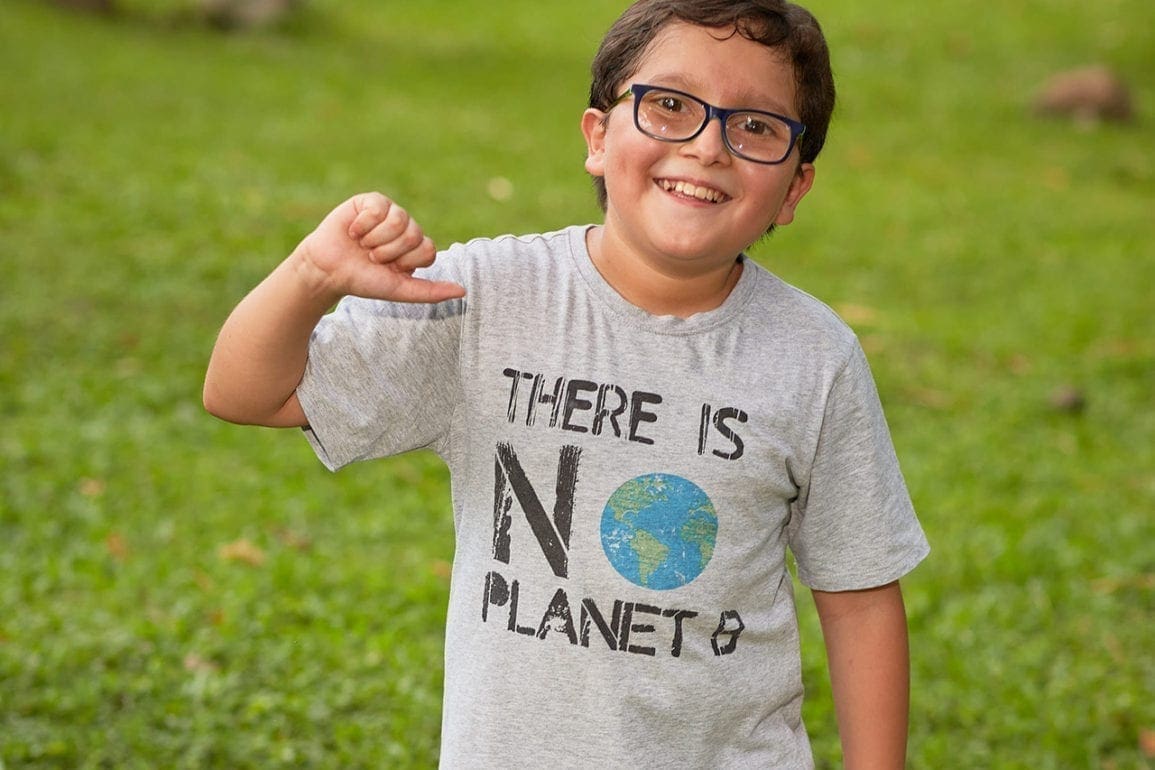
I am the founder of the environmental movement Guardianes de la Vida and recently Goodwill Ambassador for the European Union.
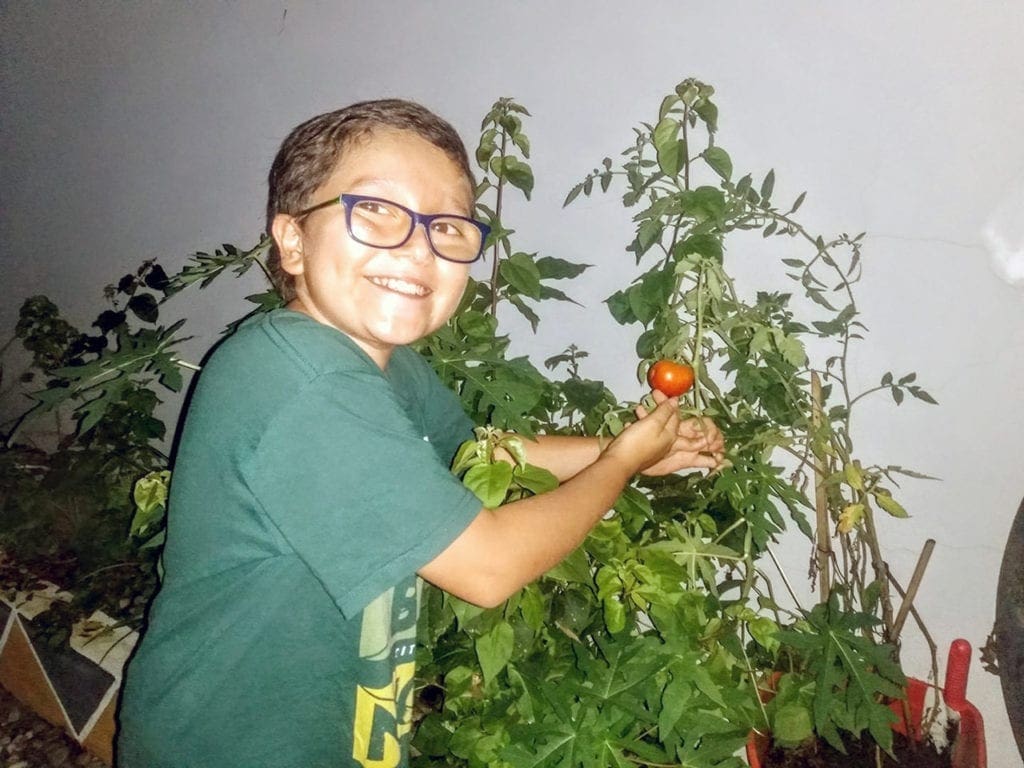
I have been an environmentalist for as long as I can remember, and no menace will stop me from protecting the earth.
My beginnings
Thanks to the influence of my mother and my aunt, the animal kingdom first sparked my attention. Seeing them defend the animals as they did motivated me to take action.
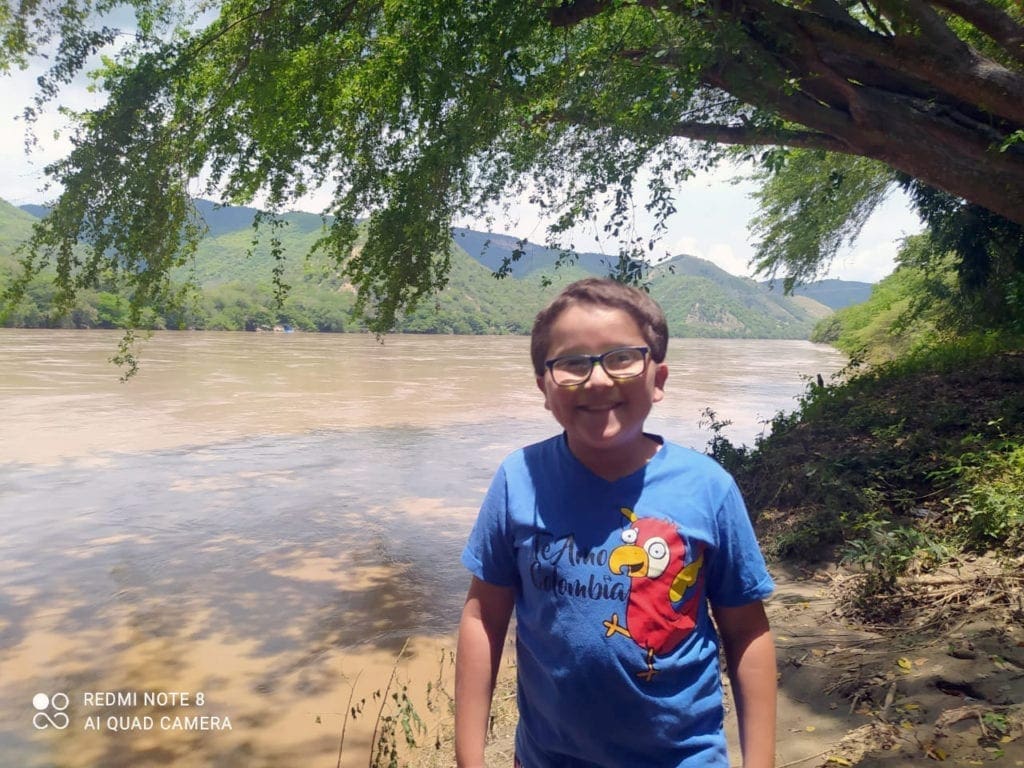
The green environment in Villeta, Colombia, was also a key factor.
I remember that the first protest I organized was against bullfighting.
I was a little child facing a business that made many influential people uncomfortable.
Then, I did a viral video to defend the life of a duck.
Tough life as a defender
Over the years, my interest led to environmental issues, and in 2019, I founded Guardianes, de la Vida.
In a short time, we grew to more than 200 children and young people, between three and 20 years old, spread throughout the country to demand action from the Colombian government in the fight against climate change.
We organize activities with experts, and we talk about the issues on our climate and environmental agenda to raise awareness.
We do strikes, meetings, podcasts: we use the most effective communication channels to reach more audiences.
Every Sunday, I have an environmental news space where a thousand people worldwide connect. There, we discuss earth pollution and how to take action towards a greener future.
I am so passionate that I want this project to grow.
As I learn about environmental issues, I am increasingly disappointed. The environmentalists do not have to be motivated by sadness but by hope.
People need to know that change is possible despite the bleak outlook.
Seeking respect
The unconditional support I receive from social media has been a considerable boost.
It is nice to feel accompanied. But there are also harmful people.
Some time ago, I published a video where I urged the government to improve the internet connection for online studying all over the country.
Some people insulted me and said ugly things to me. I even received a death threat.
Iván Duque, president of Colombia, intervened in the matter and publicly promised to find those responsible. After that, the UN hand-delivered me a letter congratulating my pioneering work.
I never felt afraid or hesitant to move on. These things do not make me doubt. This menace does not stop me.
Unfortunately, I had another violent episode during a broadcasting conference.
About 20 adults tried to sabotage it, insulting me during the talk. Those people should be ashamed and embarrassed.
Immediately afterward, Patricia Llombart, ambassador of the European Union in Colombia, appointed me Goodwill Ambassador of the European Union for my leadership in favor of the environment, the defense for life, and the fight against the climate crisis.
This type of recognition makes me proud. It gave me a lot of strength and commitment.
Listen to the children
Greta Thunberg is the best known young environmentalist, but there are more, such as Licypriya Kangujam in India, who I also admire.
With our voices, we make our message louder.
People are not so open to receiving comments or opinions from a child. I don’t understand why, but I think society is very backward from that perspective.
Adults still do not listen to the children; instead, they insult them. For me, it is deplorable to see how some adults behave. This society will not progress until we pay attention to young people and children.
The phrase that says that children are the future is real, but they have to take us into account.
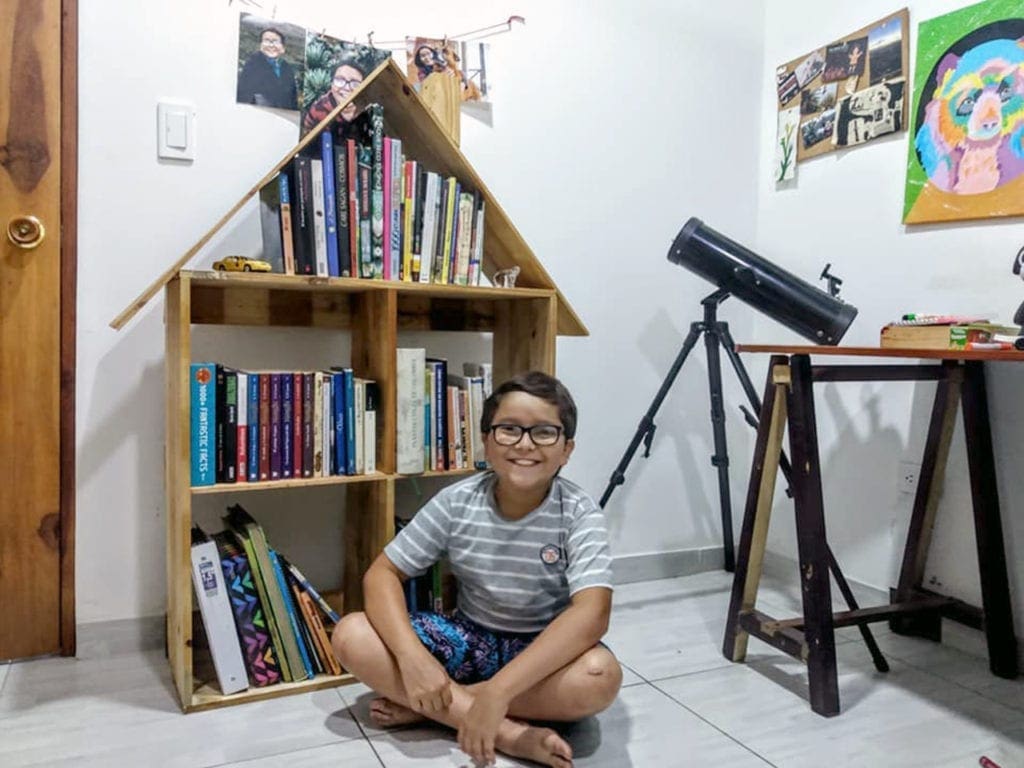
I started reading at the age of five, and I spoke well only at six. Many say that I am a genius, but I feel like an average child.
I am a lucky boy.
My parents allowed me to be who I am, as an activist and an environmentalist.
In my free time, I play a lot of Minecraft or Fortnite. There are days that I spend glued to the computer. I also like to swim.
But what I’m most passionate about is broadcasting stories on Saturdays.
I want not only to learn but also to transmit and share what I read with my followers.
I believe that the only way to build society is through difference, respect, and dialogue.
When I grow up, I want to be an astrophysicist.
Regardless of what I studied, I would also like to be a politician and become president of Colombia.
On Jan. 15, Francisco Vera Manzanares received a death threat from an anonymous Twitter account after posting a video urging the government to improve the internet connection of children studying online.
The boy is the founder of Guardianes de la Vida, which has more than 200 members and fights against climate change.
The UN hand-delivered a letter to Francisco congratulating him on his pioneering work in the South American country. It is not unusual for assassins to target environmental activists.
According to the environmental program Somos Defensores, in the first semester of 2020, 95 murders were registered, which increased 61% compared to 2019. Besides, 48% of those homicides occurred during the period of a strict confinement.
The Institute of Studies for Development and Peace (Indepaz) announced that until Dec. 5, there were 79 murders of environmentalists in the country, where assassins killed 340 people.
I fought for justice for my son Rocco and so that others do not have to experience the neglect that ruined his life.
During a medical exam, the nurse hit his head against a medical device. He fainted, and doctors immediately took him to intensive care. He remained there for more than a week, with the risk of death.
When they discharged him, he only had a clot on his head.
Months later, we saw that he did not communicate and had motor difficulties.
I decided to carry out a study that showed that my son suffered a 100 per cent mental disability due to a brain injury.
Tragedy traversed our family.
Relive a moment
Every day, I look at my son and think that everything could have been different.
Rocco is the third of four siblings.
I took him to a doctor when he was a month and a half. A few spots on the skin made me nervous.
Doctors drew his blood. During the routine maneuver, a nurse hit him on the head with one of the medical devices. They took him out of my arms and brought him to intensive care.
Inexplicably, life changed completely.
After a week, his condition seemed to improve, and doctors decided to discharge him.
He looked in good health, but we still couldn’t see if he would have any lasting impacts since he was a baby. We only knew that he had a clot that would last for about six months.
Bad results
After a year and a half, I realized something was wrong. He didn’t do what other boys of his age did.
We started an early stimulation process that helped some, but extensive improvement was not in the cards.
He didn’t communicate with others and babbled during attempts at speech. He couldn’t pull down diapers or hold back the saliva from his mouth. Everything indicated that there was something more going on.
At that point, I decided to take him to the hospital for a series of tests. They found out that he suffered from irreversible severe mental retardation due to a critical brain injury.
My world felt apart.
I decided not to give up and took strength for the well-being of my son.
The eternal judgment
In 2009, I began a trial against the Unión del Personal Civil de la Nación, one of the most powerful unions in the country, and the hospital owners where the episode occurred.
I knew the process would not be easy.
At first, they did not want to take over the benefits they should give to a person with a disability, even when I was still paying his medical membership.
To get his basic needs covered, we had to demand legal protection.
Argentine justice has very long timelines. After 12 years, a lack of action can no longer be called ‘justice.’
Another fight
The court finally ruled in our favor.
The union appealed the decision saying the disease could be genetic. They said that my son could be suffering from PDD (generalized developmental disorder) even when the medical history included the hematoma that occurred after the nurse’s blow.
I couldn’t believe they weren’t giving up.
I had to expose Rocco to tests once again to disprove their theory,
The forensic tests proved us correct: his cognitive disability was the product of a blow to the head.
We hoped this time the union accept the ruling and take responsibility for the financial damage they caused. Just a month’s worth of diapers costs more than $400.
The financial compensation we claim for Rocco was to guarantee his medications and treatments for life.
As a result of the injury, he will never work and he will always depend on third parties’ help.
Finally, after a long battle, we managed to get justice.
The invisible damage
Our family’s routine now focuses 100 per cent on Rocco and his needs.
The love and patience of his brothers make everything a little simpler.
We often have to cancel plans because Rocco is not having a good day and must return home.
I should have quit my job to dedicate myself to it. It’s my only priority.
His life quality depends on me and how I help him control his basic needs because he can’t communicate.
I took a boy to a routine exam, and they gave me back a different person.
According to the World Bank, about 1 billion people, 15 per cent of the world’s population, experience some form of disability, and the prevalence of disability is higher in developing countries. Between 110 million and 190 million people, or one-fifth of the world’s total population, experience considerable disability.
As a group, people with disabilities are more likely than people without disabilities to experience adverse socioeconomic outcomes, such as lower education, poorer health, lower levels of employment, and higher rates of poverty.
Obstacles to the whole social and economic inclusion of persons with disabilities are the inaccessibility of physical environments and transportation, the lack of availability of assistive devices and technologies, the lack of adaptation of the media, the deficiencies in the provision of services, and discriminatory prejudice and stigma in society.
On the other hand, UNICEF highlights that Argentina assumed the responsibility of guaranteeing that all children and adolescents, regardless of their condition, enjoy their rights without discrimination of any kind.
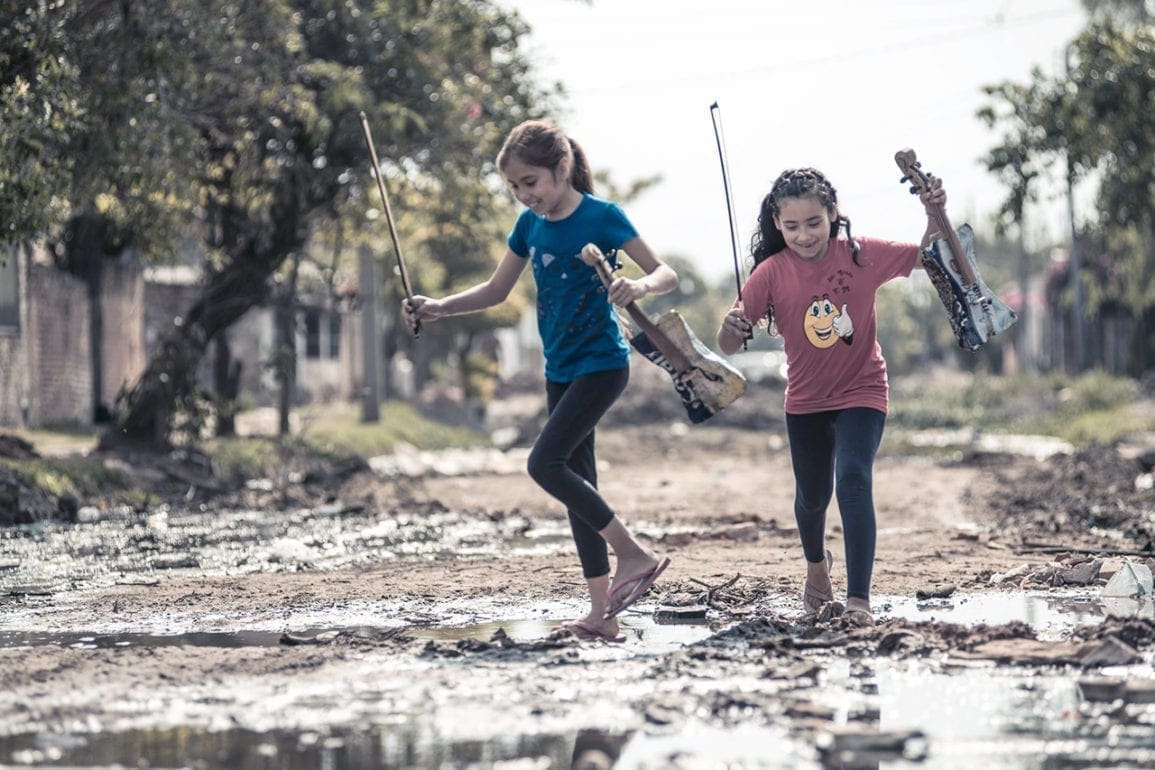
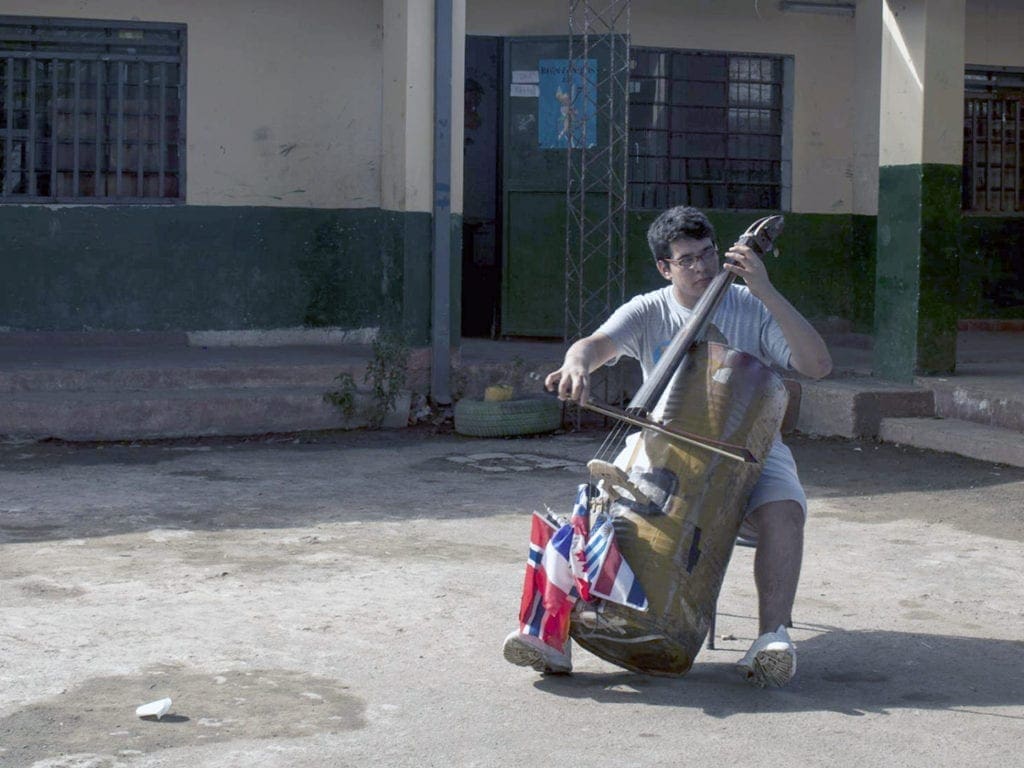
I created an orchestra with recycling instruments for children who were exposed to child labor or abandonment by their parents.
The effort reduced waste accumulation in the area surrounding Asunción in the Cateura landfill in Paraguay.
Thanks to the initiative, low-income kids performed in the main stages worldwide and even played for Pope Francis.
I never thought it would take on the dimension it has today. I am proud of each and every one of them. I get excited every time I see the passion and commitment that they put into each rehearsal.
For them, music represents a way out, an escape from their reality.
For me, music is my way of helping others.
Orchestra of Recycled Instruments Cateura with its director Fabio Cahvez. | CATEURA ORQUESTA DE INSTRUMENTOS RECICLADOS
Music with trash
With a handful of students and a great desire to teach, I started instructing them at the Cateura landfill.
In my case, I guided this process through music.
Little by little, I was dedicating more extra time to the workshop.
I taught them music in any space we had within the waste collection center, right in the middle of the garbage.
With the lack of instruments and the growing reception of new students, we realized that we could use that same garbage to make instruments.
In that first moment, the process began.
It was essential, especially for younger children, to have something built with their own hands.
In the last registration we had 400 children from five years old to young adults.
As a result of the number who signed up, we decided to form an orchestra that finances itself with the sale of tickets and contributions from different countries.
A musician playing a recycled instrument.
My students
The community is a group of children who live in a marginal neighborhood where many of the basic needs are unsatisfied.
The people live in total precariousness, and any social assistance project is indispensable and well received.
They usually don’t have places to play or do activities outside of school (considering that not everyone attends classes).
I wanted to give them training through music, providing values, skills, knowledge, and abilities to contribute to their training.
Worldwide concerts and pandemic
Within the context of Covid-19, we ruled out mass gatherings.
We decided to set up small groups by skill level to continue practising.
We participated in many virtual events especially after mid-2020 and we rotated the groups.
We have planned several virtual concerts in different countries for 2021. Fortunately, many people from all over the world write to invite us.
We have 50 events per year and have already played in more than 40 countries.
Thirty children traveled to Canada, Japan, Palestine, Israel, and even Norway from South America’s heart.
The orchestra received Pope Francis in Paraguay and opened Metallica’s concerts throughout the region.
We were invited to Europe by Spanish and Dutch royalty and starred in a documentary film produced from the United States: Landfill Harmonic by Anglo-Canadian director Graham Townsley.
The kids also played with groups like Megadeth, and their videos add up to millions of views on social media.
A drop in the sea
We adapt to the reality of each child and see music from its social aspect. We try to introduce each student to music and if they like it, our program gives them new and better opportunities to perfect their learning.
Here, many excluded people do not even have a primary education, live in poverty, do not have the minimum budget to take care of themselves, and lack the minimum conditions to feed themselves.
Many times I ask myself, and more at this time: “What are we doing with education?”
Today, the system seems to be against education, and education does not dare to confront it.
Everything that causes climate change lowers the quality of life, contributing to debt and social alienation.
Collective music learning
Ours is collective musical learning.
We do not have teachers who sit and tend to a particular child.
For this reason, the workshops start at ages where they already have a specific capacity for socialization.
Incredibly, the more humble the community, the more easily children learn to function.
The activity is daily. We have music classes once a week, and then each type of instrument has an additional course.
Groups that are more developed or more on track have an additional rehearsal day. The more advanced have private classes of musical improvement.
We have 14 classrooms, and we are waiting for four more classrooms that are under construction.
Music changes lives
Many people are curious to hear the sound of recycled orchestra instruments. They are shocked by the idea.
Others follow us for our social project to improve the community’s infrastructure, build houses, and grant scholarships.
Thinking ahead, we would like to finish the process that we started with the boys.
Some of the larger ones continue on the path of teaching and replicate what they have learned elsewhere.
We start to share this when they are very young.
We teach them music, with hopes of granting scholarships to study for a university degree.
My wish is to conclude the process, even though it is sometimes challenging, by rowing against the current.
It makes me very happy that our story is wanted to be heard even in the world’s most inhospitable places.
We will continue playing, teaching, and learning together until the indicators for change: access to health, education, and housing conditions, are modified.
I feel that music can change people’s lives here and wherever they are on the planet.
According to the FAO, there are 1.7 million poor people in Paraguay and 335 thousand living in extreme poverty conditions (Permanent Household Survey, 2018).
This situation is even more serious in rural areas, where extreme poverty reaches 10% against 1.6% in areas.
Women, children, youth, the elderly, and people with disabilities are social groups with greater development gaps than others.
These levels represent a barrier to the country’s sustainable development, which makes overcoming poverty a priority agenda.
However, Paraguay committed to ending poverty when it ratified its commitment to the 2030 Agenda and the Sustainable Development Goals (SDGs). Its National Development Plan also points to this commitment and the achievement of equal opportunities for all.
Within this framework, the National Government is developing some important initiatives, such as creating the Ministry of Social Development (MDS), the implementation of a Social Protection System that guarantees minimum social floors, and a National Plan for the Reduction of poverty.
FAO accompanies these processes, catalyzing national efforts to create the institutional structure necessary to reduce poverty and achieve social and economic development goals.
BADALONA, Spain — It was quiet in the three-story building of abandoned brick and makeshift rooms.
The moon sat high above the Mediterranean as I sat in bed thinking of home. Here, I’m surrounded by migrants who, like me, fled Africa for a chance at a better life in Spain. But, we’re undocumented and forced to live on the outskirts of society.
Suddenly, a desperate scream pierced the air.
Something is wrong.
Smoke filled the three-story building home to roughly 140 African immigrants. I ran downstairs. The horror enveloped in a cloud of thick black smoke that choked the oxygen from the air.
But their screams tore through the smoke.
When I escaped, I saw a trickle of people flee the building behind me. The shattered roof leaked smoke into the night sky.
Some people, desperate to escape, leaped from the terrace and out of the windows onto the concrete below.
I called the fire department and helped people flee until the smoke grew too thick.
Firefighters arrived on the scene and sprayed the building with water. But the blaze would not stop.
Meanwhile, people were inside the building. I heard their screams from the street.
At dawn, my body and soul ached under the weight of what I saw.
The first night after the fire, I slept at a shelter arranged by Barcelona City Council.
I was lucky. Some of my friends ended up on the street while their documents and money burned.
I couldn’t sleep that night.
Life in an abandoned factory
My name is Seydou Camara. I’m 27-years-old, and I live in Badalona on the border of Barcelona.
I left Africa looking for a better future, but I encountered racism and segregation.
Without papers or the ability or means to find rental accommodation, I lived in an abandoned factory in Badalona’s industrial neighborhood.
People have lived there since 2010. Like us, the factory was abandoned.
Most of us made a living on the streets looking for scrap metal.
What little money we earned was sent back to our families in Africa.
A history in flames
Before the fire that claimed the lives of at least four people and injured more than 20 others, two smaller fires acted as warning signs.
I knew, at any moment, tragedy could strike. But I had little choice. The factory was my home.
Squeezed by the system
From the beginning of my tenancy, my relationship with law enforcement has been tenuous.
They want to evict me and those who live in my building.
That fear of police and of people who view African immigrants as lesser penetrated my life. On the street, I live in fear.
But some treat us well. As the fire ravaged our home, neighbors brought us food and coats.
Desperation
After the fire, my life is full of desperation.
Without work, papers, or a place to call home.
My family is at home in Africa. And while I would like to see them one day, I wouldn’t be able to return to Spain without documentation.
The fire and smoke still flood my mind and fill me with anguish.
A deadly fire engulfed an abandoned warehouse in Badalona on Dec. 10, 2020.
The fire began at about 9 p.m.
“David Borrell, a senior firefighter in the Spanish port city, said there was a risk the warehouse could cave in, so his teams were proceeding very cautiously in the debris,” a BBC report reads.
Badalona Mayor Xavier Albiol said, after the fire, that survivors would be granted temporary accommodation.
The Spanish Ministry of the Interior announced that 40,106 immigrants arrived in the Spanish State by sea in 2020.
That number represents 53.6 percent more than the previous year when some 26,103 arrived.
2,170 migrants perished in attempts to cross into Spain by boat in 2020, compared with 893 in 2019, according to a report released last week by Caminando Fronteras, a non-governmental entity that monitors migration flows.
I have moments when grief overwhelms me, and I find myself sobbing uncontrollably as my mind flashes back to how my life was before this incident.
It’s a new path for me. But it’s a path I choose to walk not as a victim but as a survivor blessed to be here and able to tell my story.
Falling in love
I met my ex-wife in 2009. She had come into the Itabwa police station where I worked to record a statement on a case on which I was to follow-up as lead investigator.
I was 21-years-old, vibrant, and loved my job as a police officer.
My first impression of her was how beautiful she was.
Along the way, we built a friendship. I came to love her other qualities: the way she spoke so softly and her polite demeanor. It drew me to her even more.
Finally, after years of dating, we decided to settle down as husband and wife.
For the length of our marriage, we never had any serious arguments. Our fights were merely everyday squabbles that we resolved quickly.
My job as a police officer necessitated impromptu moves from location to location across the country. We lived apart during those periods and visited each other occasionally. This living situation lasted for the better part of our marriage.
Our lives changed forever
We were blessed with a baby boy who, unfortunately, died after a brief illness.
Our son’s death took a toll on our relationship, but we supported each other through grief the best way we knew how.
During this period, I was based at Kisii station and living in the police quarters. My abode was a cylindrical tin house. It was small but large enough to accommodate us.
It was Sept. 21, 2013. Two days before the incident, my ex-wife had visited. We had a small disagreement on how best to dispose of our late son’s clothes.
I quickly moved past the misunderstanding.
It was Friday evening, and I left for work to clock-in for my night shift as usual. On Saturday at 5 a.m., I returned home and casually slid into bed beside her to catch a few minutes of sleep before beginning my day.
I was startled awake by a burning sensation on my face. I reached my right hand up to touch my face to identify the cause of the unbearable, searing pain.
My immediate thought was to get out of bed and look for some water to pour on my face.
But, upon my feet touching the floor, a sharp pain traveled up my legs. I let out a cry that brought my colleagues to my rescue.
The journey to recovery
At Hema Hospital in Kisii, medics performed first aid to stabilize me.
I was instantly put on an IV that I presume contained painkillers and sedatives because I immediately dozed off.
When I came to, my concern was that I could not open my eyes. But, because bandages covered my face, I didn’t think much of it.
A few days later, I moved to a higher level of care at Kakamega Hospital. It was closer home for further check-ups. But, because the medics could not do much for my condition, I was again airlifted to Kenyatta National Hospital in Nairobi for specialized treatment.
My situation was declared critical. In the burns unit, the lead surgeon ascertained that I was 18 per cent covered in third-degree burns.
No one had yet determined the corrosive substance used in the attack.
My face and right side of my chest bore the brunt of the attack.
At Kenyatta, the medical team immediately embarked on a treatment plan. From September 2013 to January 2014, I had undergone more than fifteen surgeries focusing on skin grafting, reconstruction, and plastic surgery.
Mentally, I became accustomed to the routine of being wheeled to the medical theatre.
The burns unit had become my home.
Even though I was still in bandages that covered most of my face, I interacted with patients in similar situations. Some, I learned, were victims of Gender-based violence as well. One way or another, our respective spouses had resorted to these barbaric ways as a way of expressing their emotions.
My hospital stay became an eye-opener for me. But, I never grew accustomed to the constant groans and cries of men in pain in the ward. It was a pain that some could not live through and opted to give up on life by refusing to take medication or forego any form of treatment.
Gurneys wheeled someone out daily.
Dan Matakaya before the incident.
The remark that thwarted my suicidal thoughts
Still, I held on to hope.
After some time, I moved to the private wing. I was still in darkness. I did not yet know the fate of my eyes.
My everyday prayer to God had become like a song that, despite everything, my eyesight could be restored. It was not long before the specialist informed me that my eyes could not be saved.
In the same breath, they informed me that a government chemist had ascertained that the corrosive substance poured on me was concentrated sulphuric acid.
Rubbing my face while trying to ease the pain caused more injury to my face and my eyes.
The news was a blow to my recovery process. I lost my fighting spirit. I lost my will to live.
Being blind meant losing my independence, privacy, and becoming a liability to those around me. I sunk into a dark place. Contemplating different ways to commit suicide became my obsession.
My hospital bed was next to the window. Without the benefit of sight, I understood that the window had no protective bars.
Jumping out the window to my death became my plan.
Then other thoughts began to sprout. What if it is not an instant death? What if something slows my fall and I am left to nurse other severe injuries and a broken spirit?
These thoughts dissuaded me, and I put the plan on hold.
Having lived an active life, the hospital environment became depressing. Insomnia became my friend and my nights grew longer.
My roommate and I picked up a habit of having conversations long into the night about life.
In one of those conversations, he retorted, “Dan, I wish I was in your condition. Yes, you are blind, still nursing life-long scars and even regrets. But I am sure you are going to leave this hospital alive, which is unlike my situation.”
That statement, coming from a stranger, took me aback and made me rethink my life.
Sure to his words, he passed on days later from leukemia.
He gave me a fighting chance.
In life, you think you have it rough until you meet someone who is going through worse.
From here onwards, I looked forward to my discharge date.
Relearning life’s basics
I was discharged from the hospital in February 2013 and assigned a day nurse who, for six months, dressed my wounds at home.
Despite healing well according to the regular check-ups, I was re-admitted to the hospital for surgery to “release” contractures that had developed because of my newly-acquired sedentary lifestyle.
The skin on my neck, shoulders, and arms had fused during the healing process making it impossible for me to stretch my ligaments. One of my nostrils had also become blocked, but two procedures to unblock it had proven unsuccessful. Future surgeries sought to remedy these issues.
Overall my progress was encouraging.
Re-learning the basics of life was my next step.
I was referred for rehabilitation at the Kenya Society for the Blind in 2016. Reading in Braille, palm sign language, and daily living skills that would make me navigate life as an independent individual were part of my life lessons.
Due to my blindness, I had a morbid fear of walking without a guide. But, because mobility was a critical step for me to regain my independence, I gave it my all.
Slowly but surely, I learned to walk with a white cane. That cane would soon become my companion.
Armed with the knowledge to help me navigate life, I went back to work and embraced what had become my new normal.
I am scheduled for several surgeries in the future. In 2019, a California-based organization named Face Forward International covered my expenses to fly to the United States to have a series of reconstructive surgeries that included unblocking my nostrils.
I was ready to return for follow-up procedures in March 2020, but because of the travel restrictions that resulted from the pandemic, the trip was postponed.
Choosing to forgive
I decided to forgive my ex-wife.
I called my sister-in-law and requested to talk to her. That’s when I told her I forgive her.
She didn’t say a word before she broke down.
Despite not getting closure when I attended the case in court, I have moved on to let the law take its course.
Forgiveness allowed me to let go of the anger I had been carrying. I cannot recount the number of times I broke down and thought of revenge to seek relief from the pain in which I was drowning.
Now, my energy is funneled into rebuilding my life, writing a book, and running my foundation.
In the course of my journey, I have lost friends and gained new ones.
I cannot mention the immense suffering and deep hurt that my family has been through, all while supporting my restorative journey in any way they could.
The Kenya Police Service stood with me through it all. They assisted with my immense hospital bills and ensured that I still had a job to come back to after recovery.
My experience led me to start the Dan Shie Shie foundation. It’s an outfit that supports male victims of gender-based violence through various programs.
It was part of my promise to God that, once discharged from the hospital, I would give back to society.
I am also now a certified counseling psychologist after I embarked on a psychology course that helped me acquire the skills to handle my situation. That training has lent itself to helping others through the foundation.
In the process, I demystify therapy when interacting with survivors of gender-based violence. Most of them overlook this critical tool to help in self-healing traumatic situations.
Part of my job is to remind them that I would not be where I am if not for therapy.
Still, I feel that there is a lot that governments need to do to regulate access to acids and other corrosive chemicals that have become readily available.
As a police officer and survivor myself, I can say that incidences related to acid attacks have spiked. And, unless addressed soon, these attacks could spill out of control.
What has changed?
Eight years have passed since the incident.
My strong faith and therapy sessions have allowed me to rise up from an ordeal in life that would have otherwise drowned me.
I have a new purpose in life, and new opportunities have cropped up.
Traveling, playing football and dancing are my hobbies, but it’s different now. I can only go on long-distance travels in the company of a caregiver, and I listen to football on the radio. Occasionally, I go out dancing. All of these hobbies help me live a normal life as much as possible.
I try to live a healthy lifestyle by monitoring my diet and exercising—two things that have contributed to my healing.
I also believe that my police training equipped me with skills that have helped me endure this adversity. And for that, I will always remain grateful to the service.
I swore never to get into another relationship, but that too has changed. I am now slowly opening up to the idea.
It would be wrong of me to generalize women and unfair to myself to lock out any possibility of finding love again.
To provide the best experiences, we use technologies like cookies to store and/or access device information. Consenting to these technologies will allow us to process data such as browsing behavior or unique IDs on this site. Not consenting or withdrawing consent, may adversely affect certain features and functions.
Functional
Always active
The technical storage or access is strictly necessary for the legitimate purpose of enabling the use of a specific service explicitly requested by the subscriber or user, or for the sole purpose of carrying out the transmission of a communication over an electronic communications network.
Preferences
The technical storage or access is necessary for the legitimate purpose of storing preferences that are not requested by the subscriber or user.
Statistics
The technical storage or access that is used exclusively for statistical purposes.The technical storage or access that is used exclusively for anonymous statistical purposes. Without a subpoena, voluntary compliance on the part of your Internet Service Provider, or additional records from a third party, information stored or retrieved for this purpose alone cannot usually be used to identify you.
Marketing
The technical storage or access is required to create user profiles to send advertising, or to track the user on a website or across several websites for similar marketing purposes.