
‘I just wanted to prove that my sister died,’ says man who carried her remains into a bank
After carrying his late sister’s remains to a bank to prove she had died, Jitu Munda became the face of a story that shocked India. Now, the tribal villager from Odisha reflects on poverty, bureaucracy, and the unexpected consequences of going viral.

- 5 months ago
 June 1, 2026


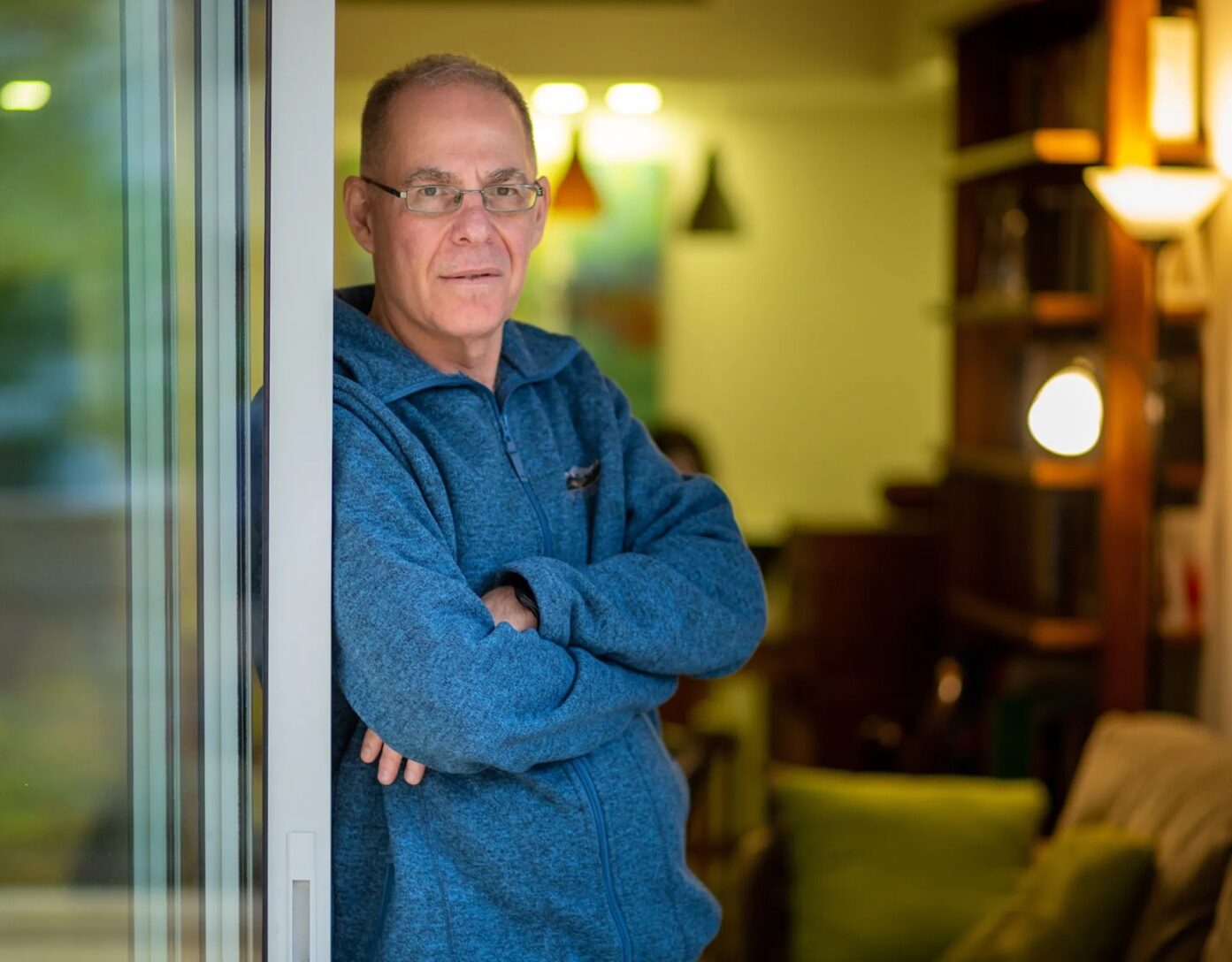
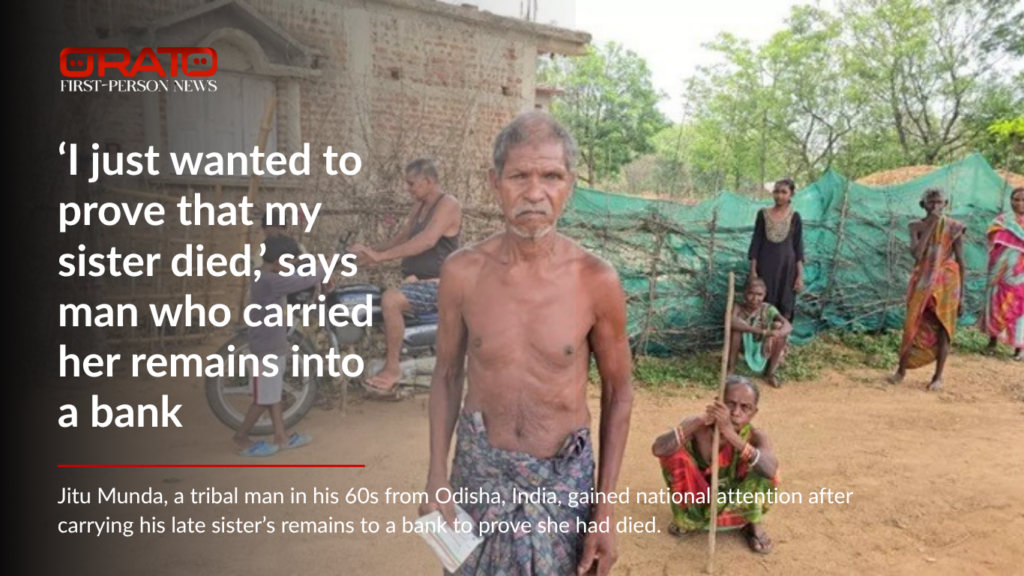 Jitu Munda stands outside his home in Dianali village, Odisha. His story gained national attention after he carried his late sister's remains to a bank to prove she had died and that he was her legal heir. Credit: The Incredible Human, used with permission.
Every morning, people come to my house. Many ask vendors for my address, some come directly. They stand near the doorway of my small one-room house in Dianali village and ask the same question again and again, “Why did you carry your sister’s skeleton to a bank?”
I do not know how to answer them anymore. Sometimes I sit quietly and look toward the patch of earth a few meters away from my house. That is where my sister Kalara is buried — again. Every time I speak about what happened, I fold my hands toward her grave and whisper an apology.
Because I never wanted to disturb her rest. But I felt I had no choice.
I am over 60 years old now. I cannot read or write. All my life, I have lived in this tribal village deep inside Odisha’s Keonjhar district, surrounded by red mud roads, scattered homes and forests. Poverty is not something new here. We survive day to day, doing whatever labor we can find.
My sister knew even more suffering than I did. Years ago, her husband died in Jajpur district. Later, her son also died. After losing everyone, she came to live with me nearly 30 years ago. Since then, we shared this tiny house, our hunger, our struggles and whatever little food we could arrange each day. We were poor, but at least we had each other.
A few months before she died, Kalara sold an ox and deposited around Rs 19,300 (approximately $225) in her bank account at the Malliposi branch of Odisha Gramin Bank. For people like us, that money was huge. It was not wealth. It was survival. It meant food during difficult months and medicine during illness.
Then on Jan. 26, after enduring kidney disease for a long time, my sister died. I buried her according to our tribal customs near the house. I thought her suffering had ended. Because of the money, I thought maybe mine had too.
But soon another struggle began. When I went to the bank to withdraw her money, officials refused to give it to me. They said there was no nominee, or beneficiary, in the account. They asked for a death certificate and legal heir documents to prove I was her brother.
I kept telling them, “She has died. I buried her myself.” But they wanted proof.
I did not even fully understand what documents they needed. In villages like ours, getting paperwork is not simple. I did not know where to make a death certificate, whom to approach, or how government offices even worked. Nobody explained it properly to me. Nobody helped me.
Still, I kept trying. Again and again, I walked barefoot for kilometers under the burning sun to reach the bank. Every visit ended the same way: They refused to give me my money.
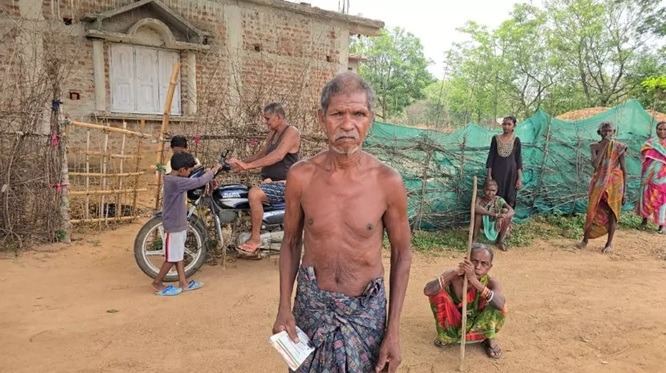
Jitu Munda is a tribal man from Dianali village in Odisha who gained notoriety throughout India in April when someone captured him bringing his sister’s remains to a bank where the officials were demanding that she had died and that Munda is the legal heir.
Credit: The Incredible Human, used with permission.
After some time, I stopped feeling angry. I only felt helpless. On April 27, something inside me finally broke. I walked to the burial ground near my house and dug into the earth where my sister had been buried months earlier. I was alone. There was no one beside me when I lifted her skeletal remains and wrapped them inside a sack.
I placed the sack on my shoulder and started walking. I walked nearly 3.5 kilometers barefoot to the bank, carrying what remained of the woman who had spent her life beside me.
People stared at me on the road. Some followed silently. Some looked frightened. I did not care anymore.
When I reached the bank, I placed the sack outside the entrance and told them, “If you want proof that my sister is dead, this is the proof.” Someone recorded a video. By evening, people across the country had seen it. Only then did officials begin listening.
Police and local authorities came to my village. They asked me to bury my sister again and promised to help. Within days, documents that had seemed impossible for months were suddenly prepared. The bank released the money. Officials also gave me financial assistance of Rs 30,000 (approximately $350) from the Red Cross fund. Everything happened quickly after the video spread.
I live in a 6-by-8-foot home and sleep on the floor. During winter, I spread a sheet of polythene on the floor and slept on it to protect myself from the cold. In summer, I sleep outside my home in the veranda to get some natural breeze.
I used to walk many kilometers to get to work. On my way back, I would buy just enough ration to last for one day.
Watch: The video that brought national attention to Jitu Munda’s story.
After the video went viral, a young man visited my home. He was from a nongovernmental agency, an NGO. He brought me an iron bed, a mattress, a blanket, a bedsheet and a table fan. I could have never dreamed of owning these. He also gave me a bicycle. I didn’t know how to ride it, so he taught me. Now I practice riding it every day, and I plan to use it to travel to work. He also gave me enough ration to last at least a month, along with some sweets.
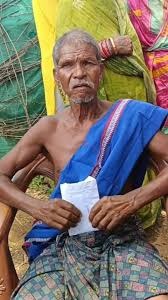
Today, strangers still visit my house to hear my story and help me with one or another essential.
But I do not feel like a man who became famous. I feel like a brother who failed to protect his sister’s dignity after death.
People say I protested against the system. I did not. I was only tired. Tired of begging people to believe me. Tired of being poor. Tired of proving our lives mattered.
Now, when people ask if I am angry, I tell them the truth. “I have forgiven them. What is left anyways?”
The Red Cross, a nongovernmental agency and others have reached out to help Jitu Munda after hearing his story of his inability to comply with a bank and local government’s bureaucracy, a frustration that culminated in his exhuming his sister to prove that she had died.
Credit: The New Indian Express, used with permission