
I have to do whatever I can to help Nepal recover from catastrophe
After deadly flash floods tore through his homeland, Sargam Pariar is searching for bodies, helping families identify missing loved ones, and pleading for the dead to be treated with dignity.

- 2 months ago
 August 31, 2026


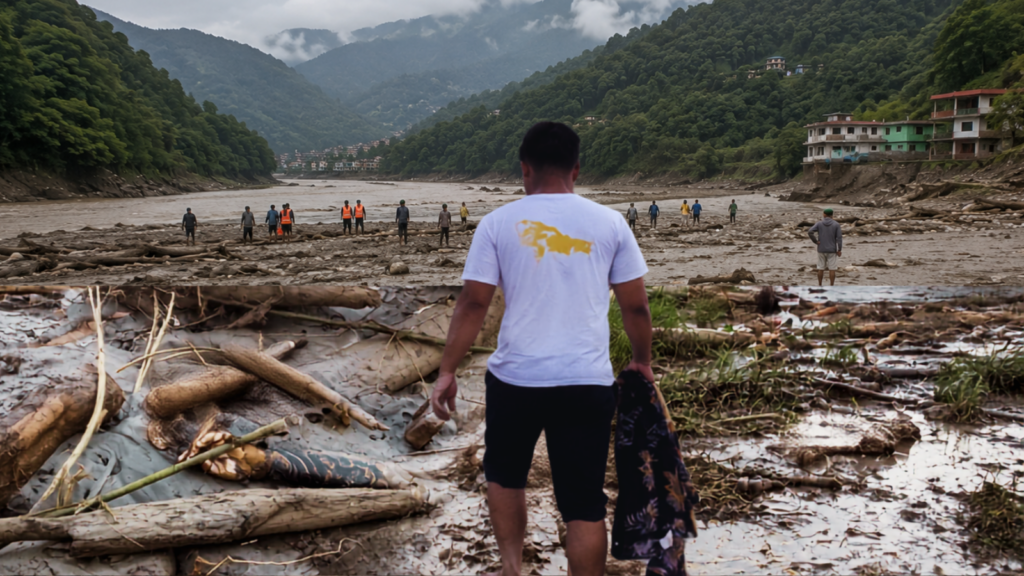 Sargam Pariyar walks through mud, fallen trees and flood debris as people search the devastated riverbank following the August 2026 Nepal floods.
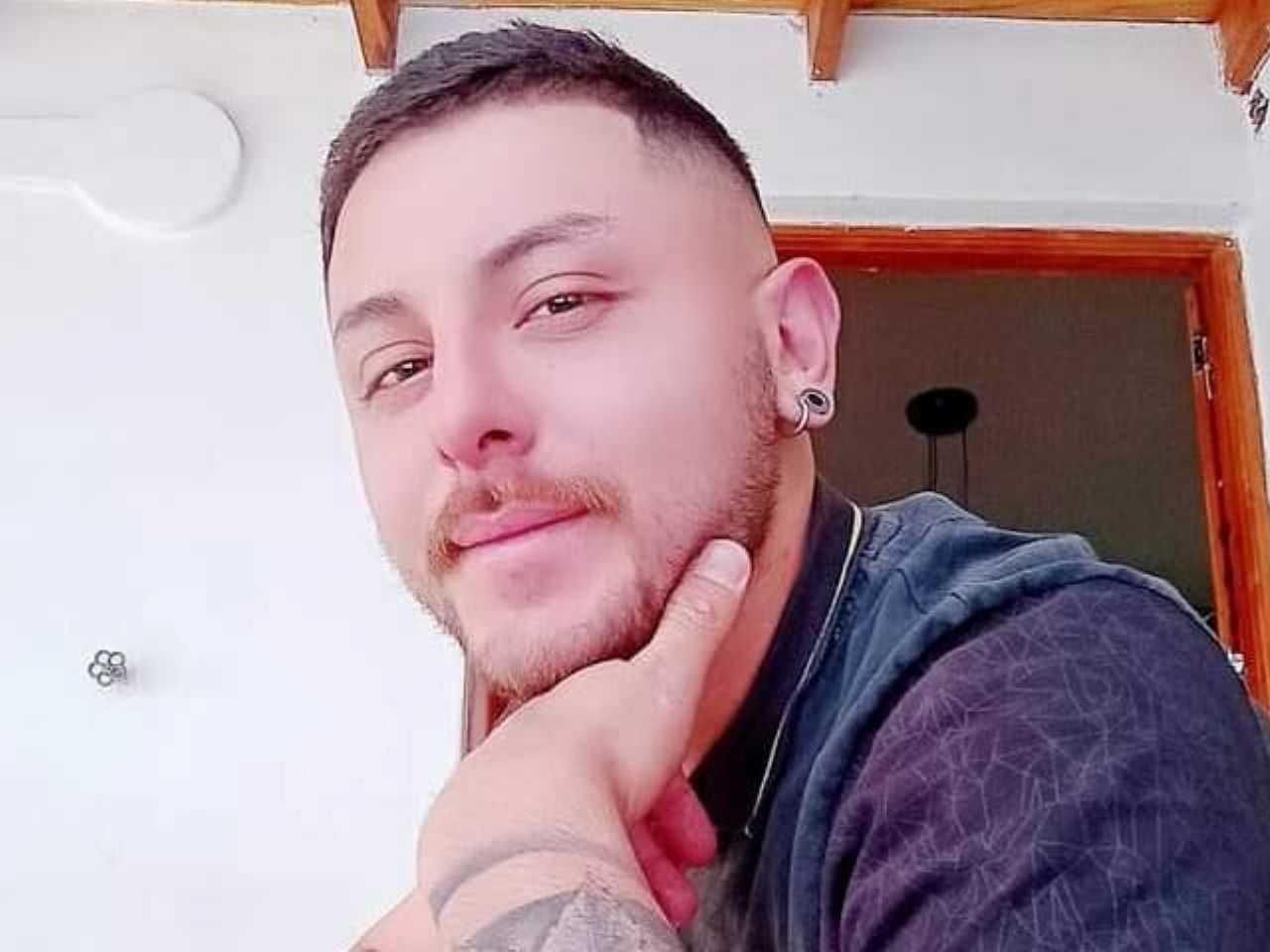
My name is Sargam Pariyar, and I never imagined that at the age of 18 I would be searching for the victims of the devastating flash flood that ripped through Nepal on August 26.
But there she was. The body of a young woman lay exposed on the riverbank. People stood around her taking photographs and videos. Nobody seemed to care that she was naked. I did. I kept thinking about her family, that someone must be waiting desperately for her to return home.
She was no longer alive, but she was still a human being and deserved to be treated with respect. I covered her body with a cloth and came to a decision – I would do whatever I could to help recover the dead and preserve their dignity.
The numbers are difficult to comprehend
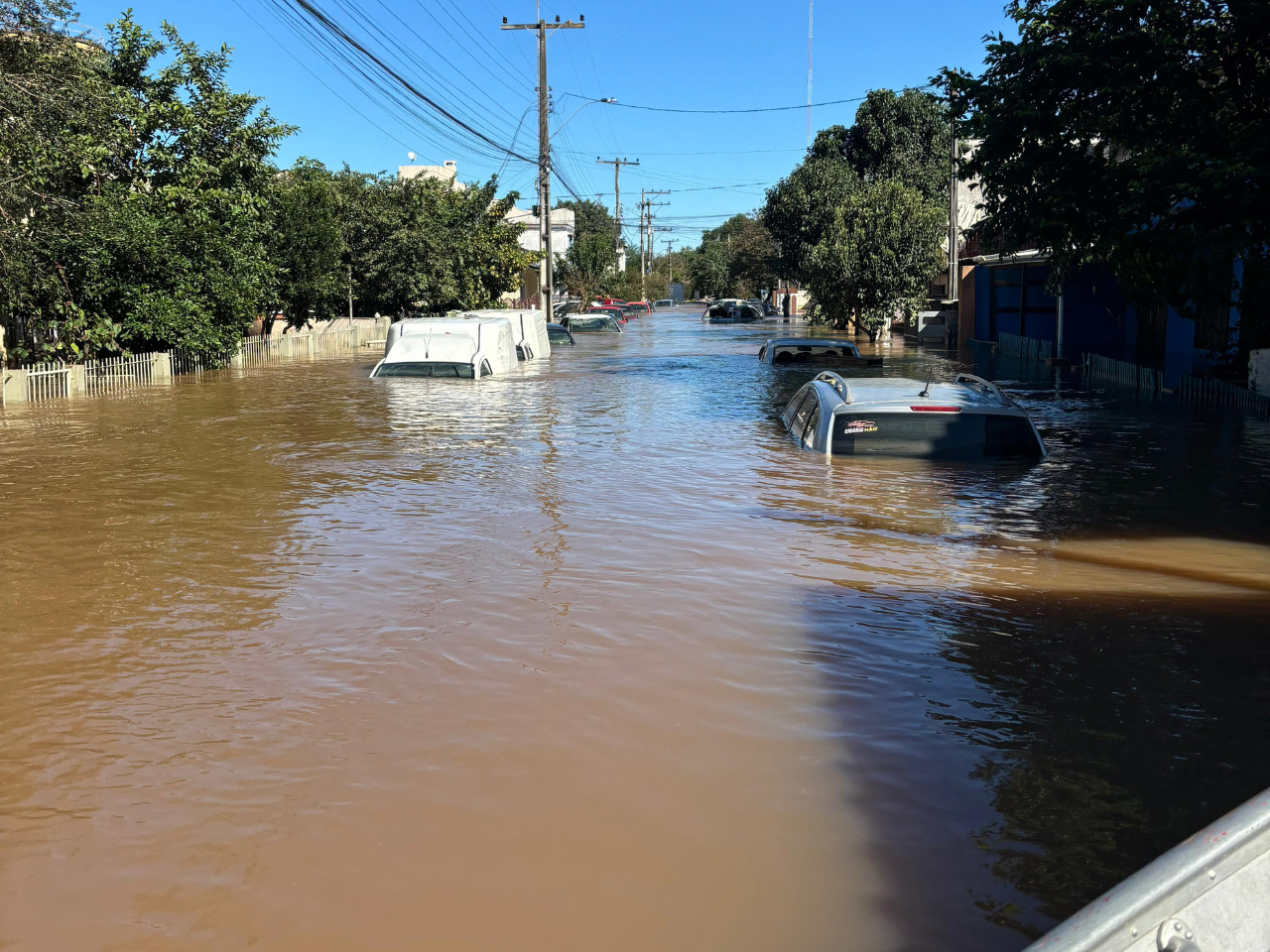
Disaster struck when an ice-avalanche in the mountainous Himalayan region near the northern Nepal-Tibet border triggered a massive surge of water into the Bhotekoshi River. As floodwaters raced downstream carrying mud, rocks, and debris, they destroyed everything in their path.
The Rasuwa district, just north of Nepal’s capital Kathmandu, is among the worst-hit areas. But the devastation has also spread through parts of Nuwakot, Dhading, Chitwan, Tanahun, and Nawalparasi as the floodwaters moved through river systems.
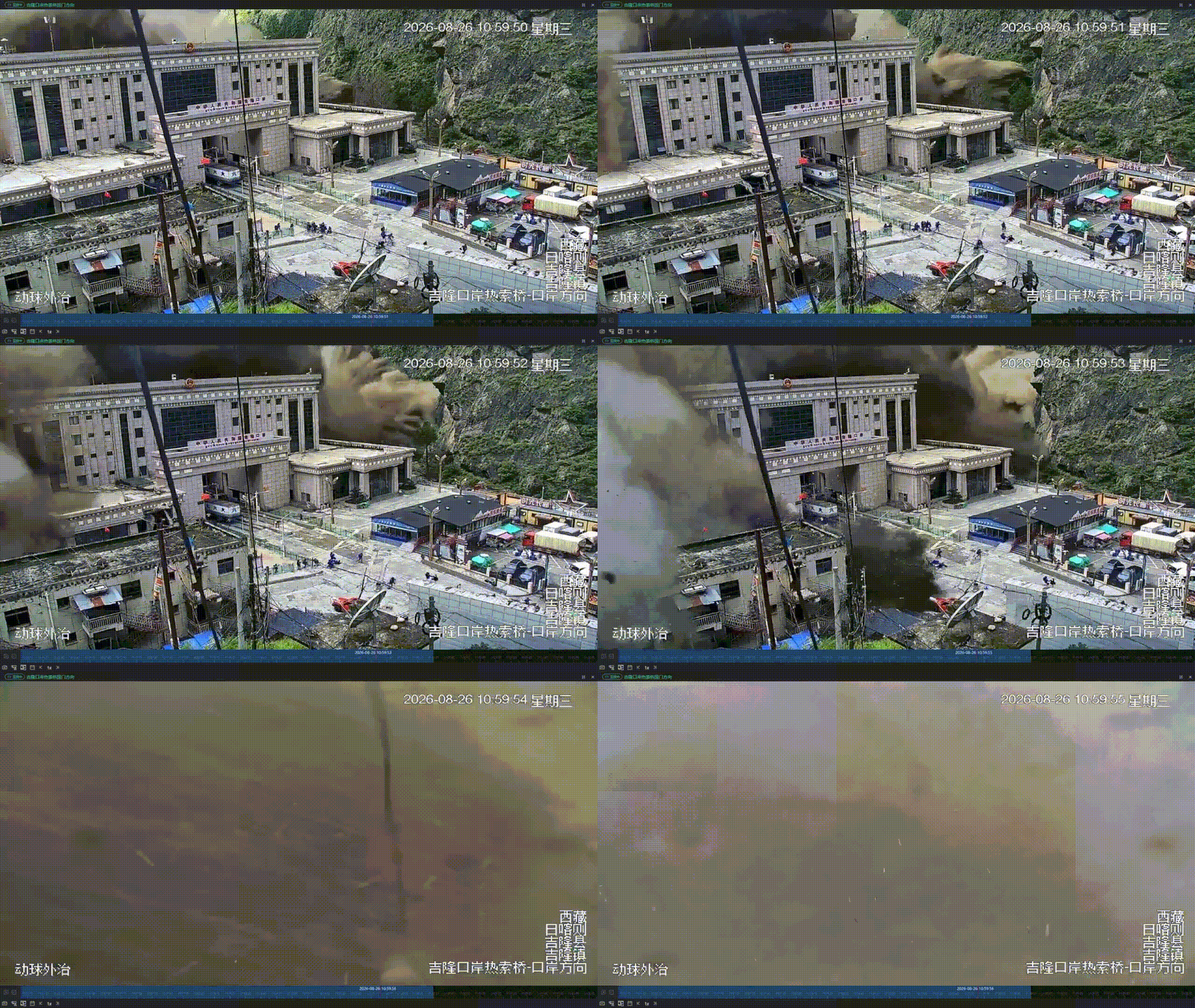
The bodies of hundreds of people have been recovered, but hundreds more remain missing. Among those caught in the disaster were local residents as well as foreign tourists, trekkers, and pilgrims.
I am from the southern Chitwan region, which borders India, but had traveled to the north to join a music program with my friends. We had no idea what was to come. The wall of water arrived violently. People ran for safety. Trees, homes, and small shops were swept away. And then came the bodies.
At first, I wasn’t scared, for we have seen floods and earthquakes in Nepal before. Natural disasters are not new to us. We have grown up knowing that they can happen. But seeing lifeless bodies coursing through the water changed everything.
The search for the dead and missing continues
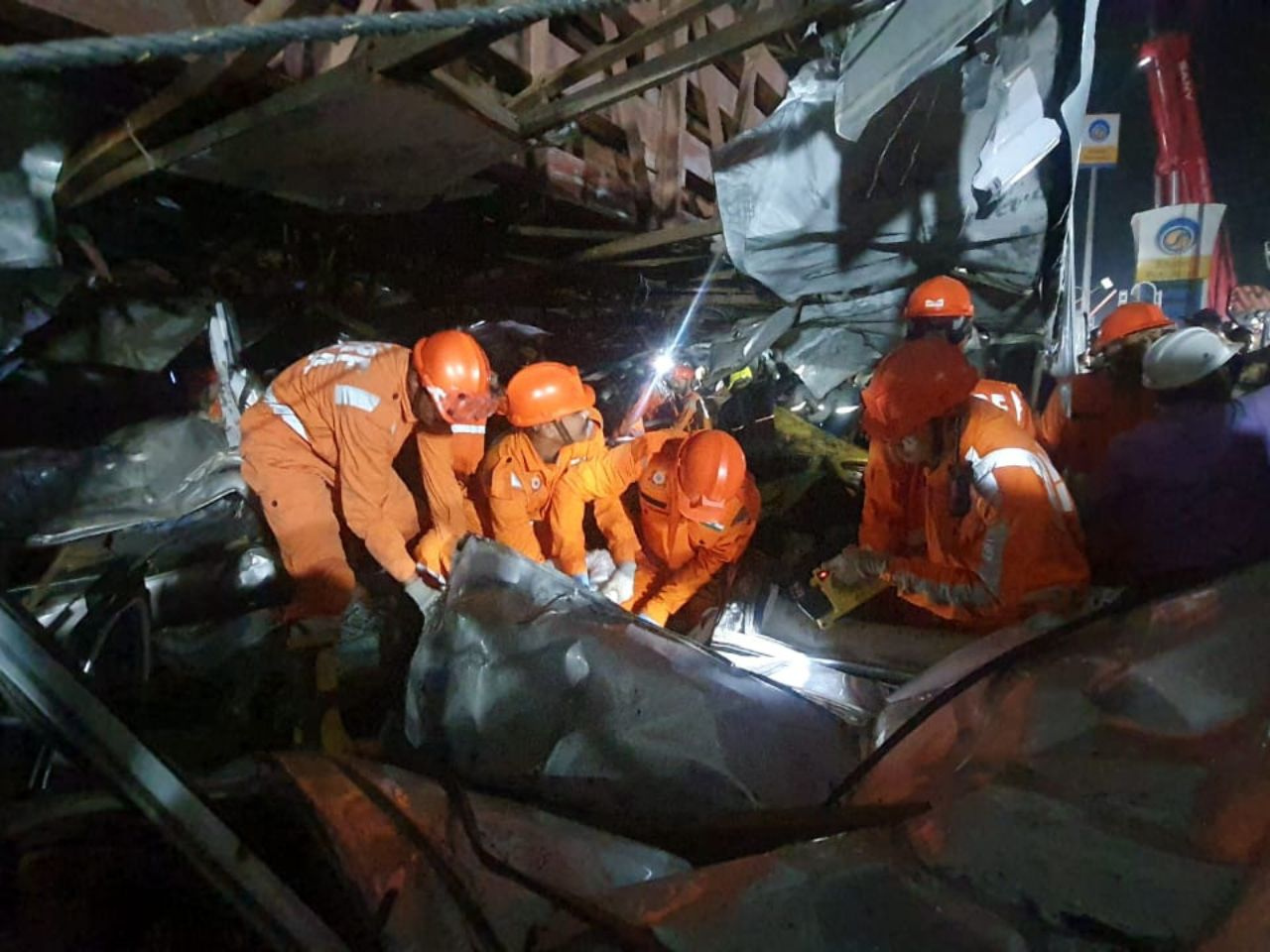
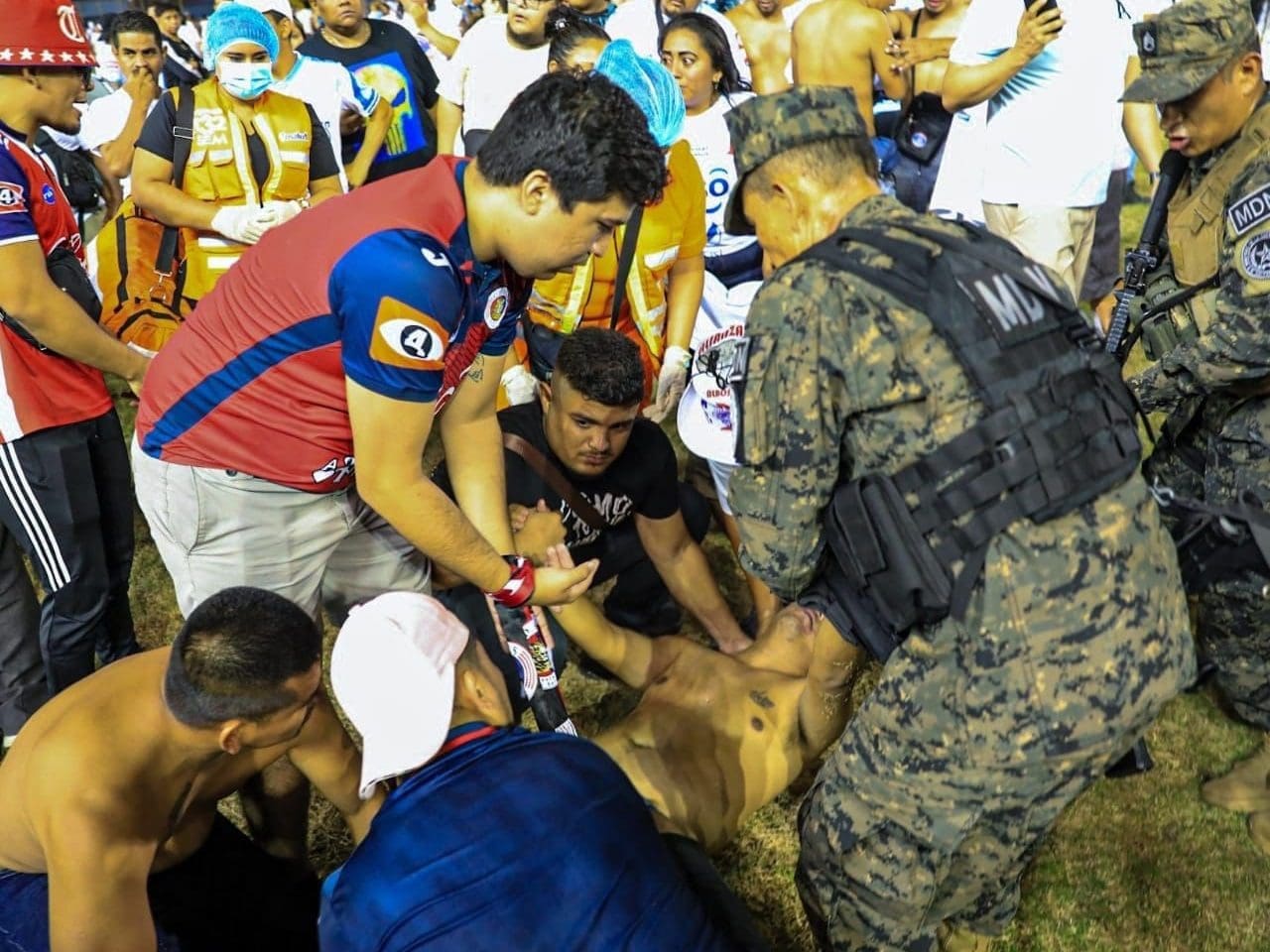
As the threat of more flooding hampered recovery efforts, I joined the search for victims. Nepal Army personnel, police officers, rescue teams, and many ordinary people like me are doing this work. When I find a body before the authorities can reach the location, I call the police and tell them where the body is. I have made that call several times now.
I pull the body by its hands and move it to a place where it can be easily recovered, and then I wait. I don’t want the body to be alone. In the last few days I have spent long periods sitting beside the dead. It’s a humbling and emotionally overwhelming experience. It helps to remember they are someone’s family member.
Police usually arrive in an hour or two, but sometimes it takes longer. Victims are being uncovered across a large area, and rescue teams are dealing with hundreds of emergencies.
People forget that the dead are real people
There is something that really upsets me. Some people are treating the dead as if they are worthless. There have been reports of people going through the belongings of those who died, even removing jewelry from the bodies of women. That’s so sad. How can we lose our humanity at the time when we need it most?
It was jarring seeing people taking photos and videos of the dead – treating bodies like they were trash and just taking the opportunity to record. But after wrestling with the idea, I began posting what I was seeing in the hope it could help people determine what happened to their loved ones. There is a big difference between disrespecting victims for self interest, and providing closure to what happened to people’s mothers, fathers, siblings, and friends.
When I started posting what I had seen, a lot of people reached out to me. Some sent me names and descriptions of missing loved ones and asked me to help locate them. Two people identified relatives from the images I posted. Others were unsure if a body they saw might be someone they knew, and asked for more information.
In one case, a woman contacted me because she recognized a tattoo on the hand of one of the bodies. Believing it might be her brother’s, she struggled to speak as she asked me for a photograph of the face. I could not provide what she wanted, but gave her a number to contact the police and tried to connect her with the authorities. There was nothing I could say that would make her pain disappear. Sometimes all you can do is help someone take the next step.
Remembering my friends who are missing
The floods have affected almost every family in Nepal, and I am no different. Two of my friends who had traveled north toward China are now missing. Their families have contacted me for help finding them. So when I search for someone else’s loved one, I also think about the two people I am waiting to hear about. That makes it harder.
The last few days have felt like an eternity, spent trying to not think about the enormity of what I am doing. In the beginning, I thought I could handle it because floods are a reality of life in Nepal. Earthquakes happen and life goes on. But then I see what this disaster has done to actual people. Bodies ripped apart by the tremendous force of water. Sometimes different parts of the same person have been found in different places – heads and limbs separated from their bodies.
I now know the true weight of carrying a dead body, both physically and mentally. It is traumatizing. When I saw one badly damaged body, I collapsed. I kept asking myself why these people had to die like this. What have they done wrong? They were simply living their lives or maybe traveling and making memories when the water came. And now some families may never receive the complete remains of their loved ones. I cannot stop thinking about that.
Despite the dangers, I have to carry on
There is catastrophe everywhere. But people are resilient. Nepalis are used to disasters. We console each other, and remind ourselves that this was a natural disaster and there was nothing we could do.
That doesn’t mean we don’t grieve. Families cry, they search, and they wait – the worst part is not knowing whether someone is alive or dead. But they also have to continue on with their own lives. They need shelter, food, clean drinking water, and medicine.
As for me, I am not pretending that I am fearless. I am not. The flood is still dangerous and can strike at any time. We have received warnings to evacuate. I know that I am putting myself in danger by going close to the river.
Friends and family have called me, telling me that I am too young to experience this and should be thinking about music, friends, and the future. My family worries about me, but they also tell me: “If someone needs help, help them.”
FAQs
Investigators believe that a massive chunk of ice snapped off a glacier in the Himalaya region on the Nepal-Tibet border and crashed into the Bhotekoshi River below.
The ice-rock avalanche sent a torrent of rock, ice, and mud through lower-lying areas, washing away infrastructure and entire communities along the Bhotekoshi River.
Nepal’s Rasuwa region was the hardest hit, but as floodwaters continued to rush downstream through the Trishuli and Narayani river systems, disaster reached the districts of Nuwakot, Dhading, Gorkha, Chitwan, Tanahun, and Nawalparasi.
As of August 31, officials in Nepal had reported that more than 900 people had died, and more than 4,240 were still missing. In Tibet, an autonomous region of China, 16 have reportedly died, with more than 540 unaccounted for.