
‘I prayed the bombs would not reach us’: A young Iranian speaks about life and death under US-Israeli strikes
A 25-year-old student from Tehran describes the fear, destruction and uncertainty of living through US-Israeli airstrikes on Iran — from explosions shaking his apartment to fleeing the city and questioning what future remains.

- 4 months ago
 May 19, 2026


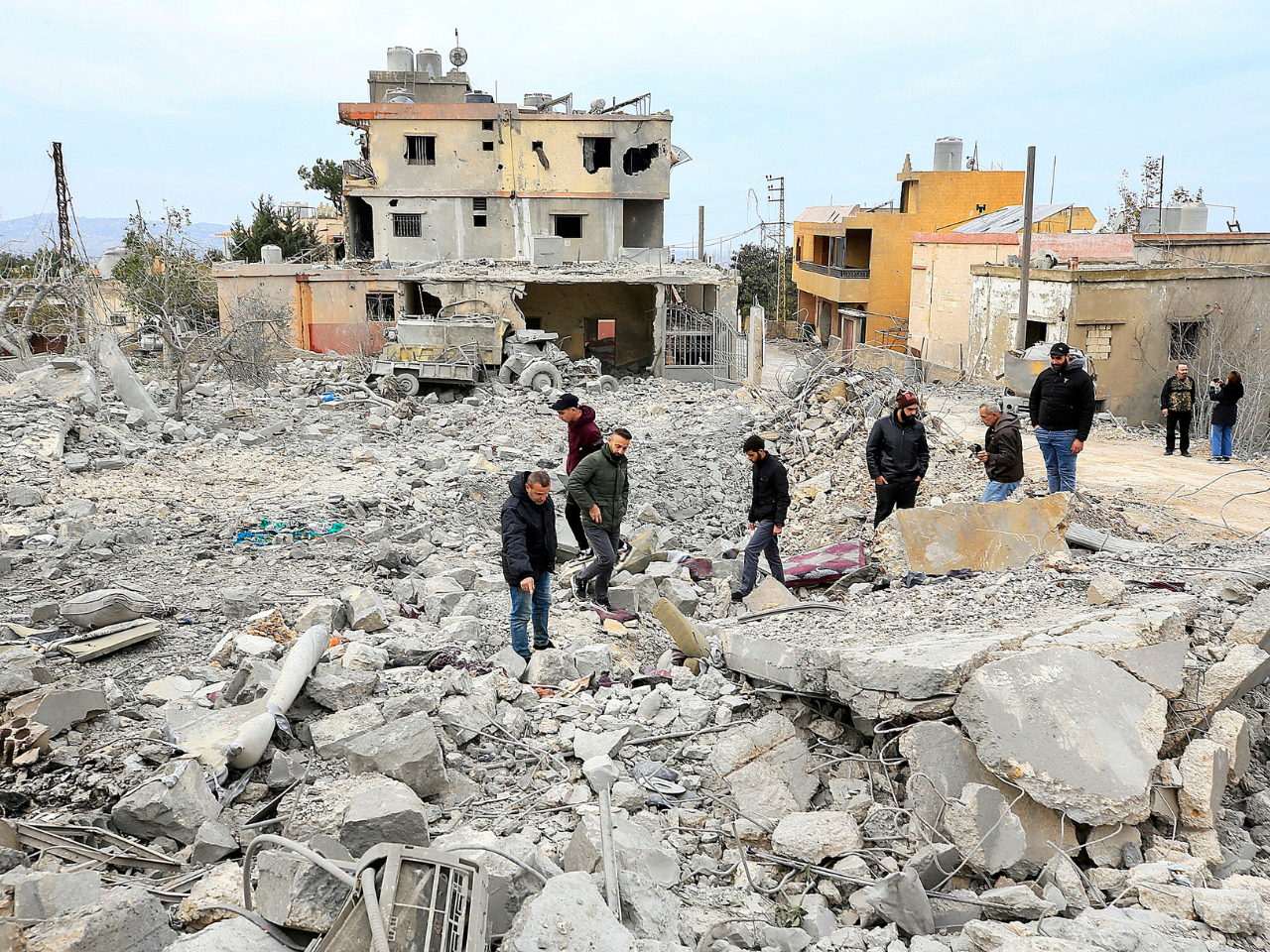
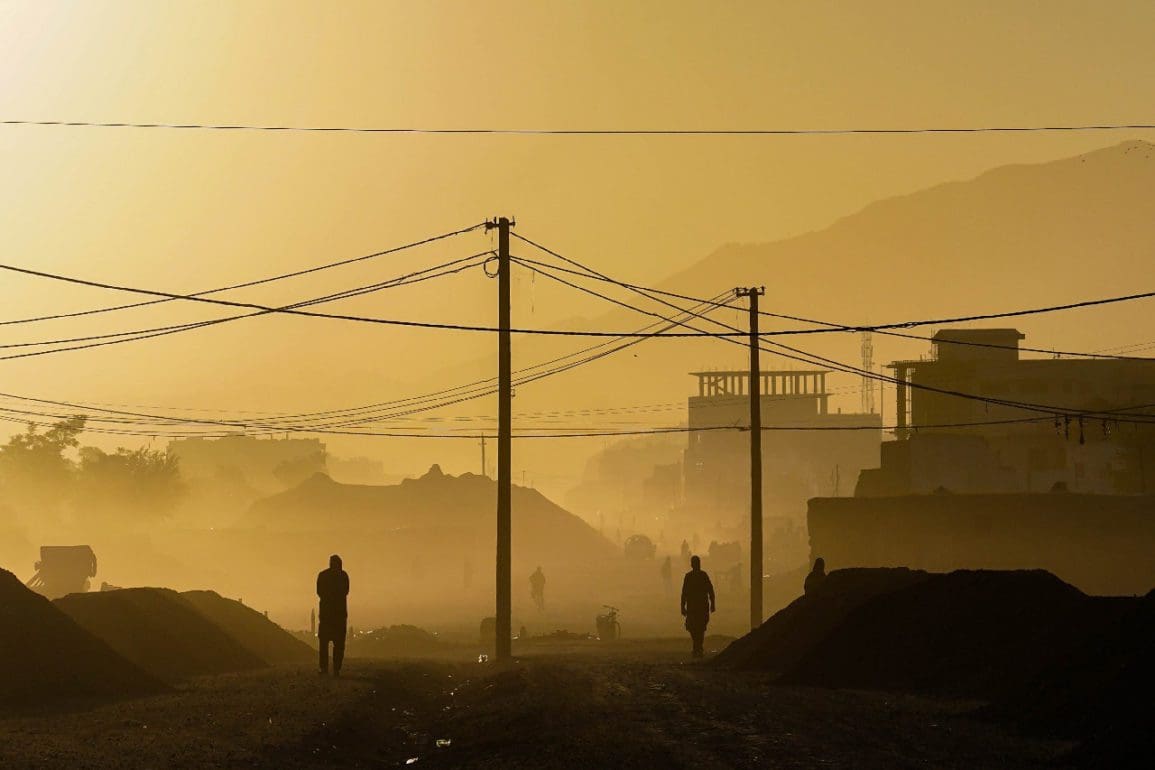
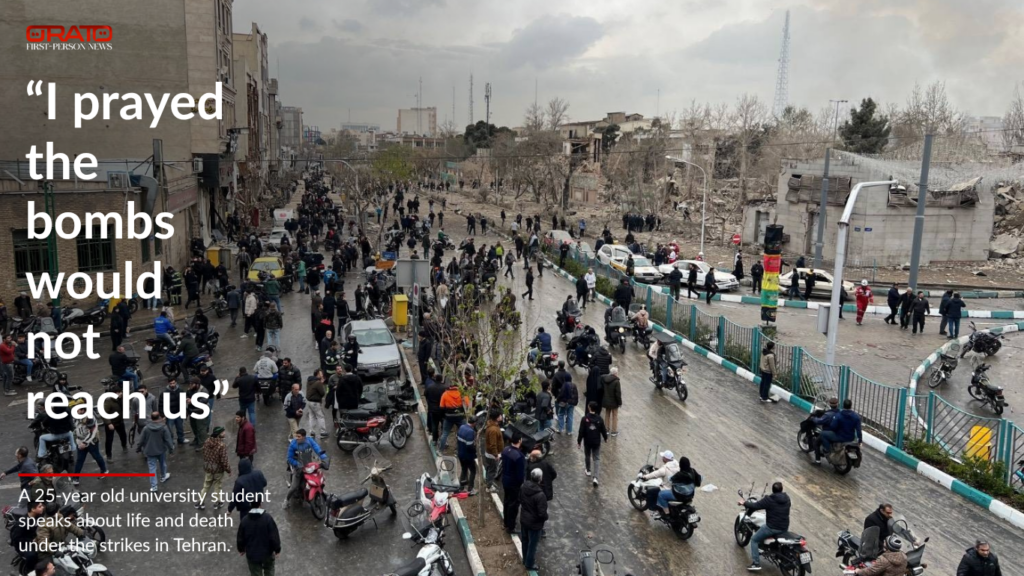 Residents move through a damaged street in Tehran after nearby strikes shook the city.

Feb. 28, 2026: The day panic took over Tehran
Feb. 28, 2026 was a Saturday, but still, I had my studies on my mind. I left for the university around 8:40 a.m. to complete some administrative work and meet my professor to discuss a few academic matters. But by 9 a.m., she texted to say she wasn’t feeling well, so I returned to my friend’s place, where I was staying for the past two days.
Earbuds secured, I walked through the streets. My first indication something was amiss came between 9:30 and 10 a.m., when I saw students, ages 12 to 15 from middle and elementary schools, pouring out from buildings, frantically rushing toward their homes. People ran in every direction, their faces filled with fear.
The scene felt like something out of an apocalypse.
I looked around and then checked my phone. Already there were reports of explosions heard in the city center. I immediately rushed to my friend’s home to wake him and tell him what I witnessed. His first thought was about his family. Worry overcame him, as they were not in Tehran at the time. Strikes were reported everywhere, and the separation made his anxiety worse.
A few hours into the attack, we could hear multiple explosions and the roar of fighter jets cutting across the sky. Unclear whether they were Iranian or Israeli, we only knew they were above us. We also heard the distinct hum of drones, the kind of sound people associate with the Shahed 136, an Iranian weaponized drone with a lawnmower engine, though we knew they were American and Israeli drones.
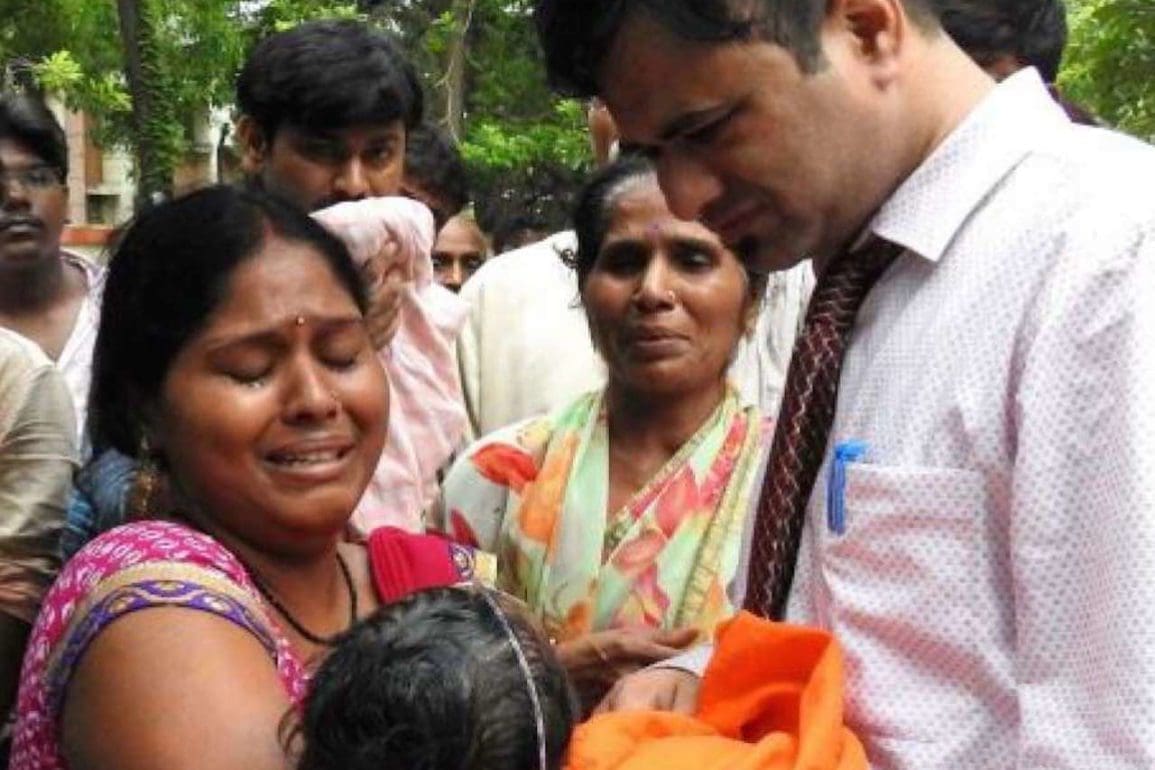
Then we heard that an American missile had struck the elementary school in Minab, more than 1,000 kilometers away, where 120 students, 26 teachers and several parents died. Al Jazeera reported two more students died at a school in Tehran the same day. I believe it was the one I passed. It left us shattered. People sobbed, questioning, “Were they military targets?”
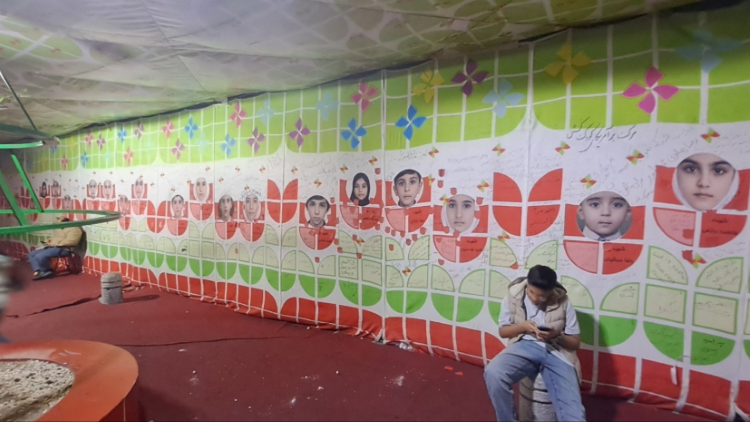
Enghelab Square in central Tehran is the site of a memorial for the 120 children, aged 7 – 12, who died in the bombing of the Shajareh Tayyebeh Elementary School, an all-girls school in Minab.
Leaving Tehran amid the airstrikes
Many Iranians believe that if God intends to take your life, He will do so regardless of where you are or what precautions you take. I held onto that belief during those worst days. As it was Ramadan and I was fasting, it gave me a sense of peace; the feeling that if my time had come, nothing could change it, and if it had not, then I would remain safe.
On the fifth day of the war, around 4 a.m., I was asleep when the U.S. dropped its heaviest bombs, weighing around 2,000 pounds. The explosions were so intense that I felt the entire building shift, swaying left and right beneath me like an earthquake moving through the city. Disoriented, I woke up and walked through the apartment without knowing what I was looking for.
After a few minutes, the shaking stopped. I convinced myself it was over and went back to bed. Twenty minutes later, the strikes came again. I lay there, unsure whether I should run outside or stay home. With earthquakes, sometimes leaving is the more dangerous path, sometimes staying is certain doom. It’s hard to know which to choose. In the end, I stayed, because there was nowhere to go.
On the seventh day of the war, I felt completely drained and desperately needed even a few days of peace. I made a decision to leave Tehran. As I walked out toward the bus station, I looked back at my parents, watching me from the doorway. It could be the last time I would ever see them, I thought. That haunting moment has not faded; it remains with me to this day.
At the terminal, as I waited for the bus, Israeli strikes hit an oil storage facility in the city. The bus station was constructed almost entirely of glass, from floor to ceiling and wall to wall, and when the strikes landed, every pane shook. Surprisingly maybe, none shattered, but the rattling swept through the terminal like a wave. Screaming, we poured out of the building and moved into the open ground outside.
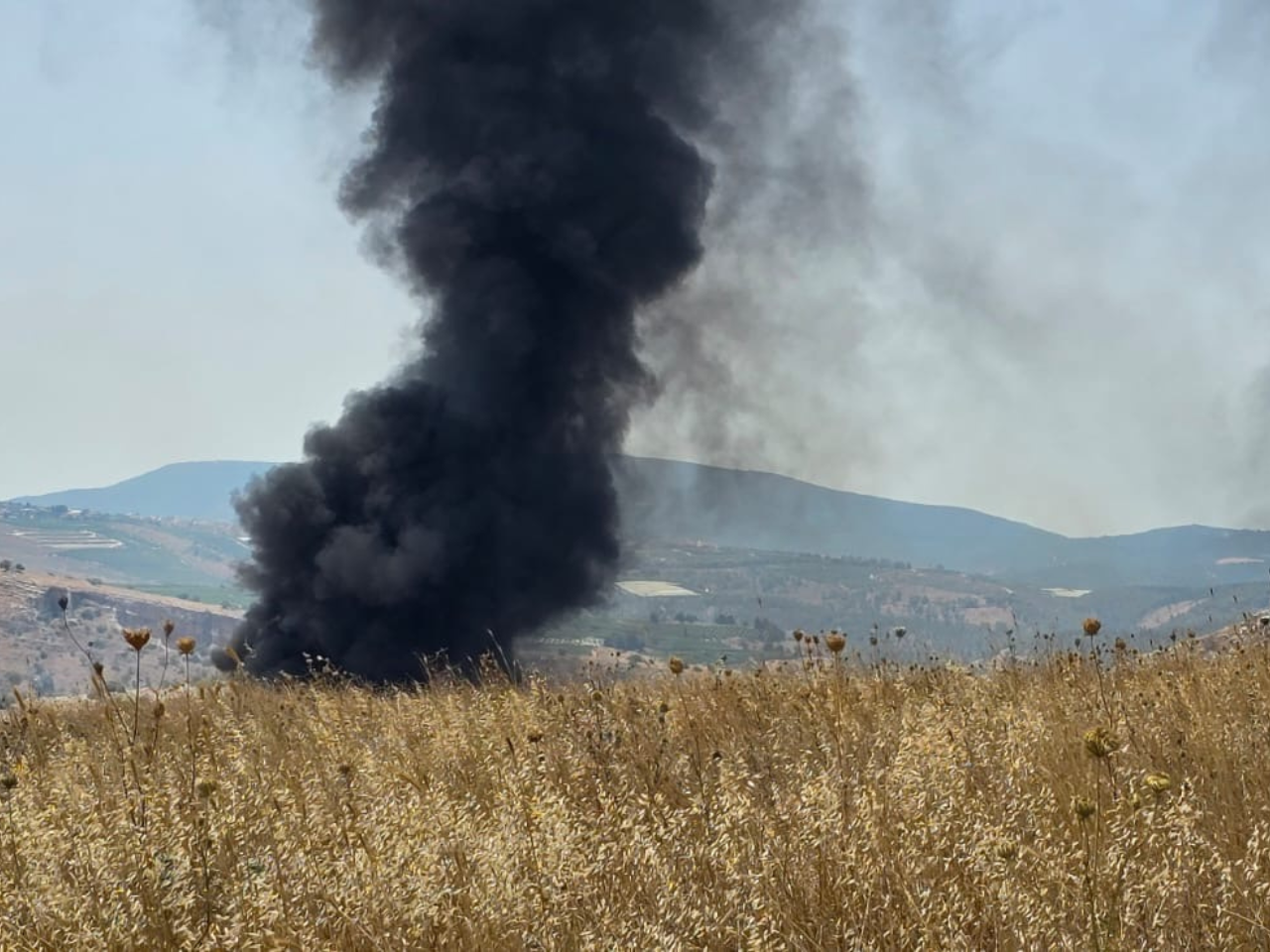
What we saw stopped us cold. Three or four thick columns of black smoke rose from various points across the city’s skyline. We kept watching as the fires burned steadily for about an hour. The smell felt heavy, chemical, and permeated the air for three hours. It’s long since dissipated, and I have left Tehran. Still, that smell also stays with me.
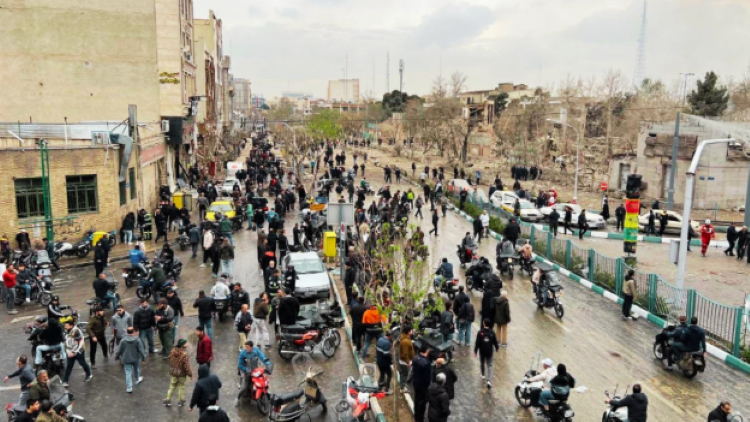
The moment our subject feared that the next strike might hit his home came after a sports complex belonging to the Bargh Ara Engineering Co., which provides electricity across Iran, was targeted in a bombing raid. “The blast was extremely severe and caused significant damage within an approximate radius of 200 meters. A relative described the atmosphere in the aftermath of the attack as one of complete shock—people were neither visibly angry nor crying, but rather stunned and silent for nearly a half-hour. When I later passed through the area, I observed that the windows of many shops had been shattered and goods inside were damaged. Even now, debris, dust, and broken glass remain scattered across the street.”
Immediately, my thoughts turned to my father. He is old and already has lung problems. Imagining him going outside and breathing that air alarmed me deeply. I called him immediately and told him to stay indoors until the smoke cleared.
After three weeks, the strikes began to ease. Some who left Tehran started returning motivated by a simple fact: There was nothing they could do, so they must live their lives amid the bombings.
Returning to Tehran, explosions grew closer
As Nowruz — the Persian New Year marking the arrival of spring — approached, people began their seasonal shopping. Families filled the markets again, moving through the streets and gradually resuming daily life. The city began to breathe once more, though cautiously.
After a few days, I also returned home. It was morning, around 8 a.m., and a genuinely beautiful morning, with soft rain falling and birds chirping through the window. Exhausted from the journey, I fell asleep in no time.
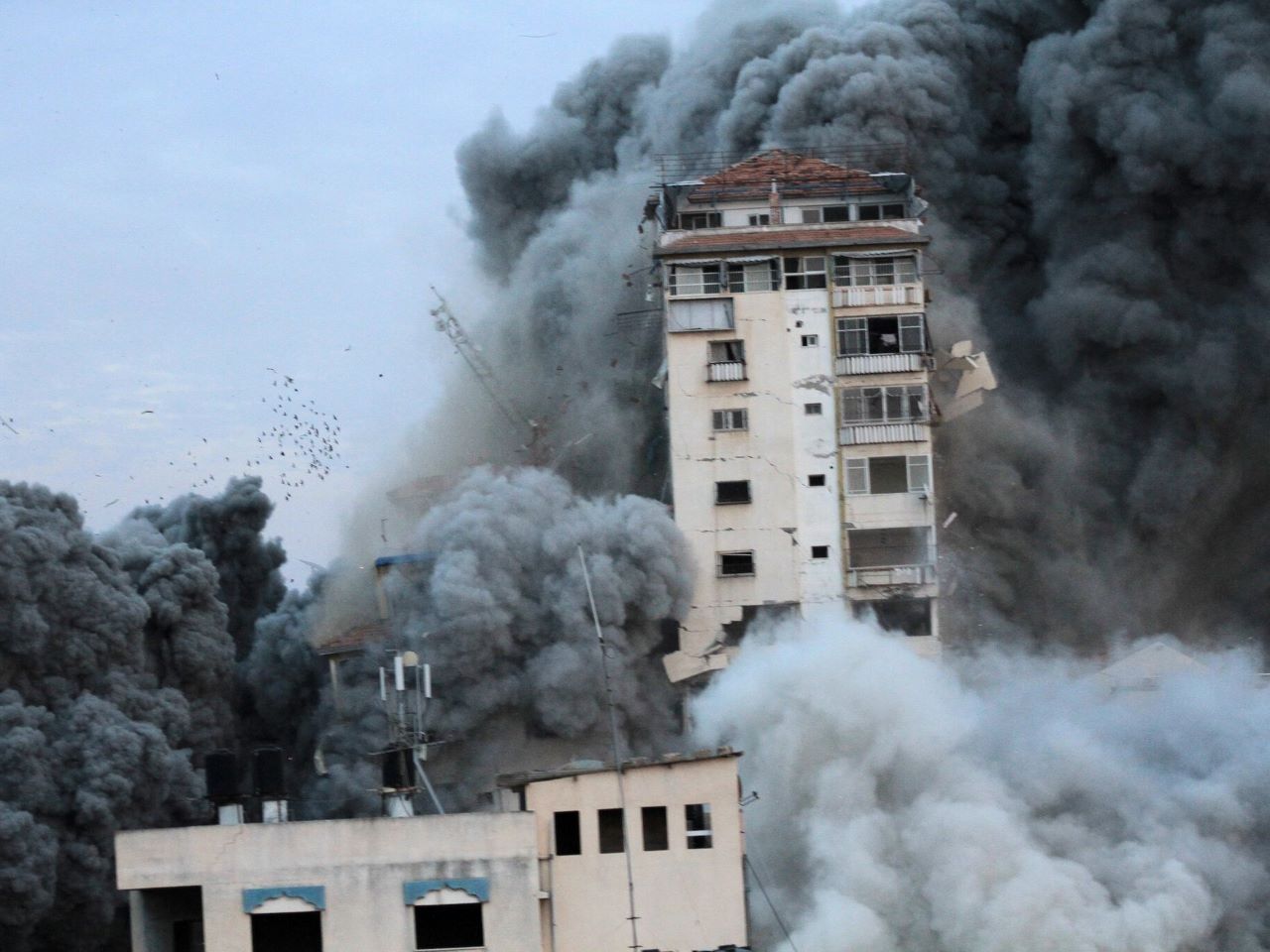
At around noon, the sound of heavy explosions woke me. A building nearly 2 kilometers from our home had been hit. Then another explosion followed. And then another, each one sounding closer than the last. With every blast, the strikes seemed nearer, until I became convinced the next one would hit our apartment directly.
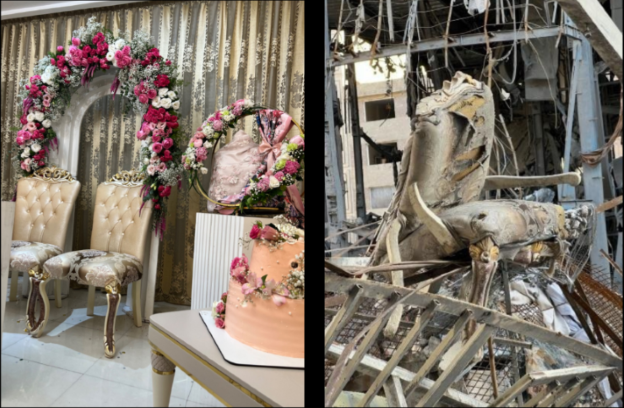
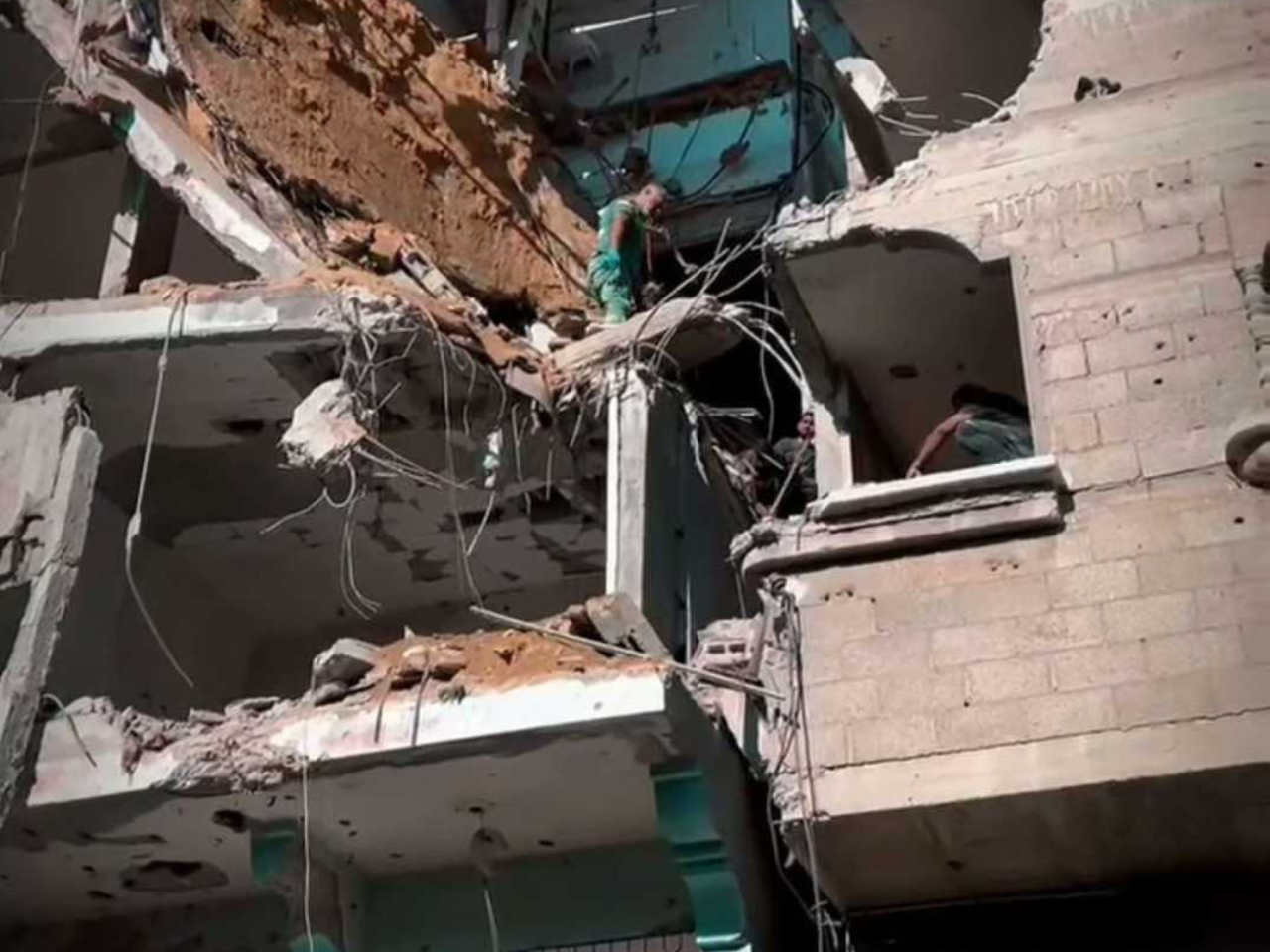
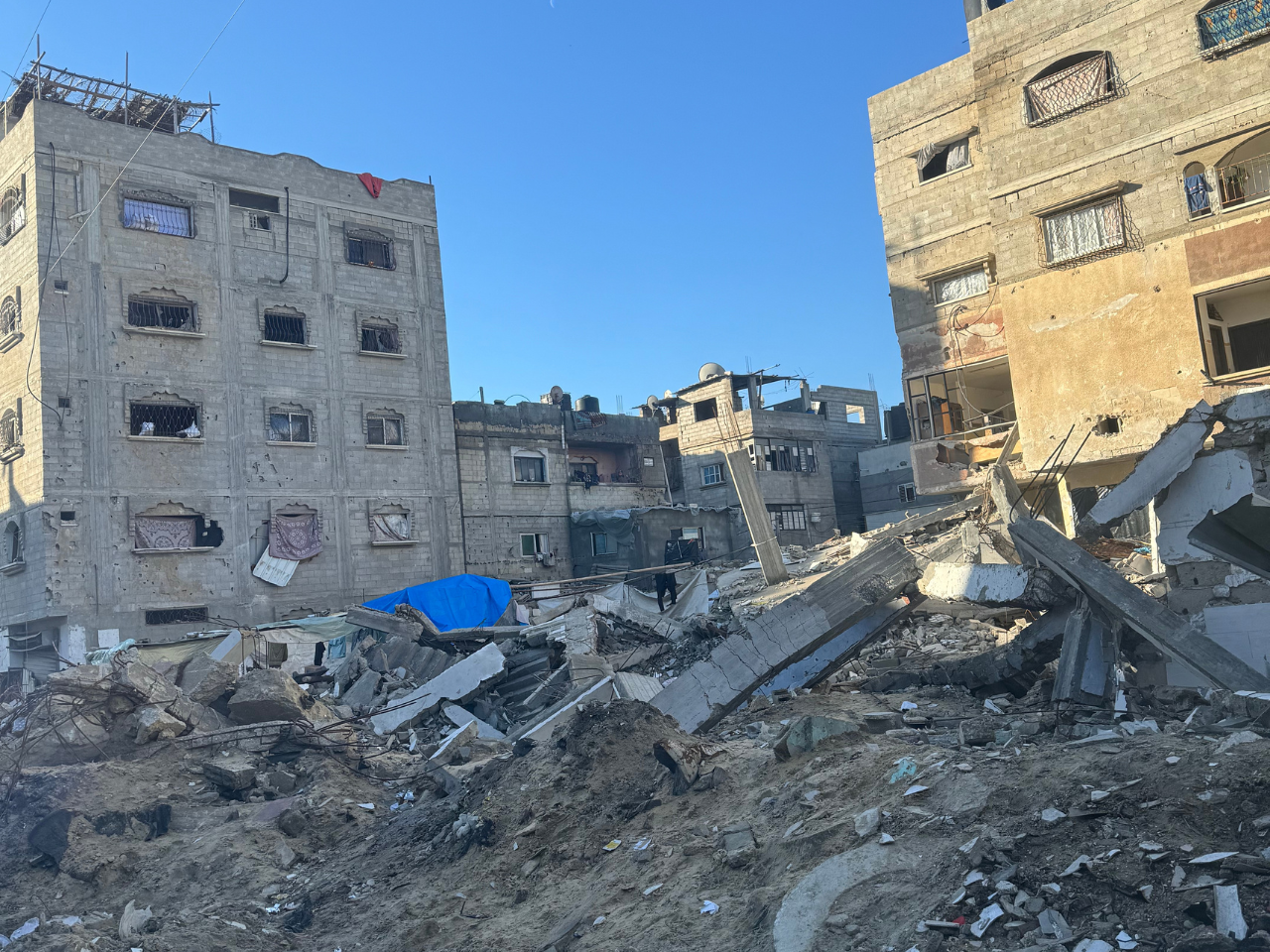
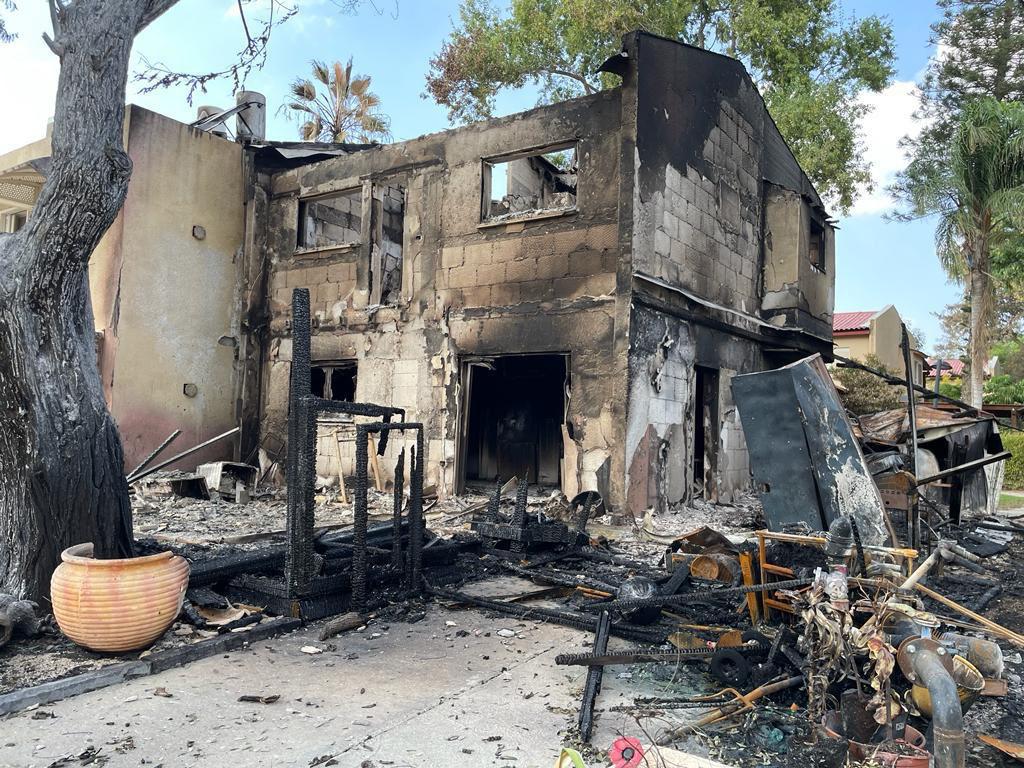
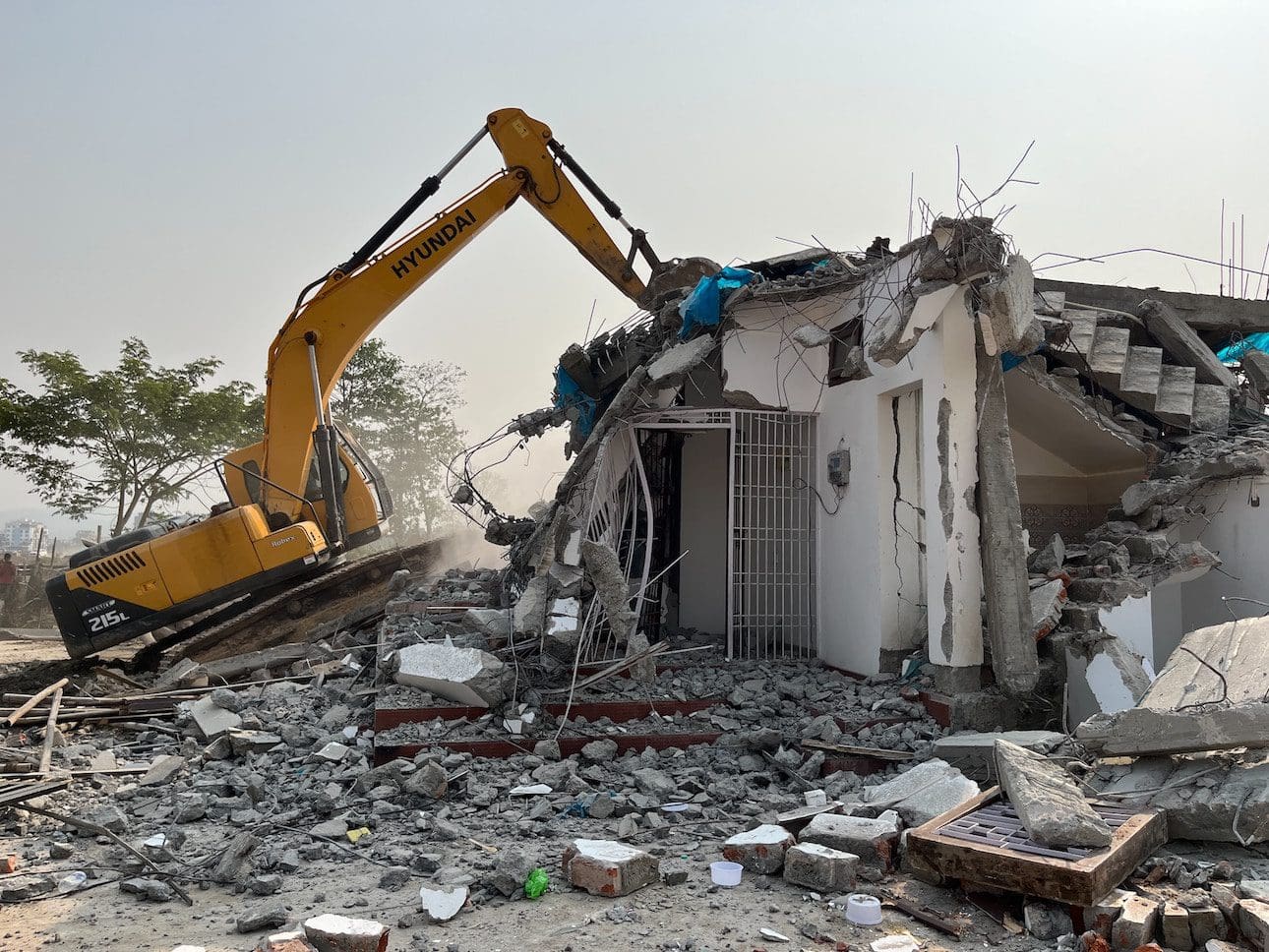
The before and after photo of a house occupied by a family friend turned to rubble after it was struck by Israeli-American bombs. The interior of a house occupied by a family friend turned to rubble after it was struck by Israeli-American bombs.
Unable to act, frozen with fear, I prayed the bombs would not reach us. Fortunately, they did not.
Later, I learned a sports complex near a power plant had been bombed. The explosion tore through everything. Every shop, store and nearby buildings were damaged completely. One of my relatives, who lived near the sports complex, later told me about a painful incident that still lingers in my mind. A rescue worker at the site told her that he found only the head of a woman. The woman was walking through the nearby square when the strike hit. She was close enough that the force of the explosion beheaded her. Her head landed roughly a hundred meters away; nobody ever found the rest of her body.
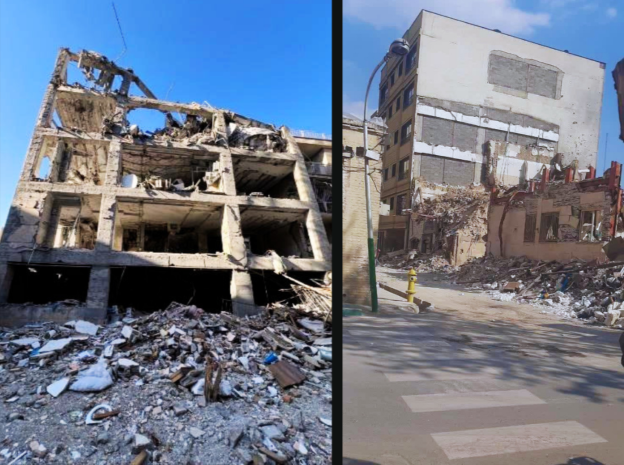
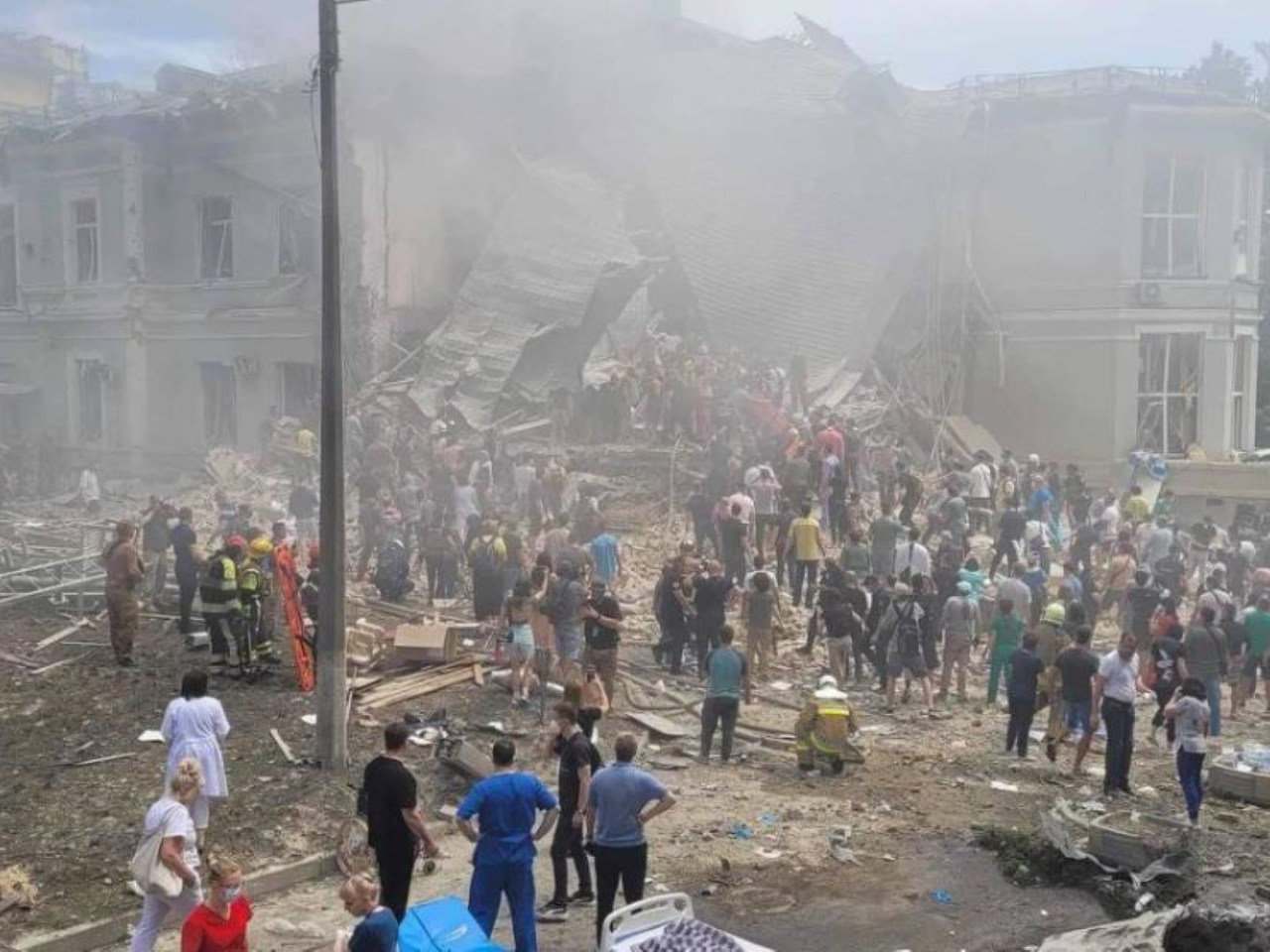
Image 1 (Left): Multiple buildings were destroyed in the bombings that targeted the Resalat neighborhood of eastern Tehran.
Image 2 (Right): A dental clinic, “Mohammad Rasol Allah,” located behind Mujahideen Street in Tehran, is destroyed in the bombing. A relative of the subject, a recent dentistry graduate, had aspired to work in this clinic.
Reaction to Khamenei’s assassination
As soon as Ayatollah Ali Khamenei’s death was reported, many Iranians were overcome with grief, mourning his loss and calling for revenge. Others, however, felt something closer to relief, even happiness. They saw his death as a chance to free Iran as they believed the Islamic Republic only remained because of Khamenei. They assumed that without him, the entire Islamic structure might collapse.
Throughout the war, fake news circulated, claiming that Khamenei hid in a heavily fortified bunker, far away from the danger ordinary Iranians faced every day. Many people believed this story. However, when reports later confirmed that he stayed in his modest home despite repeated warnings about an assassination threat, public sentiment shifted sharply, now supporting Khamenei, as if they had never opposed him.
Let me explain why. Some of Iran’s most powerful modern rulers, including the last two shahs, lost power and died abroad. That history lives in Iranian memory. So, for many, the question of whether a leader stands by his people or runs away carries real weight. When people realized the bunker story was just western propaganda, many of them quietly began to view Khamenei in a different light.
Unity against the U.S. and Israel, taking stock
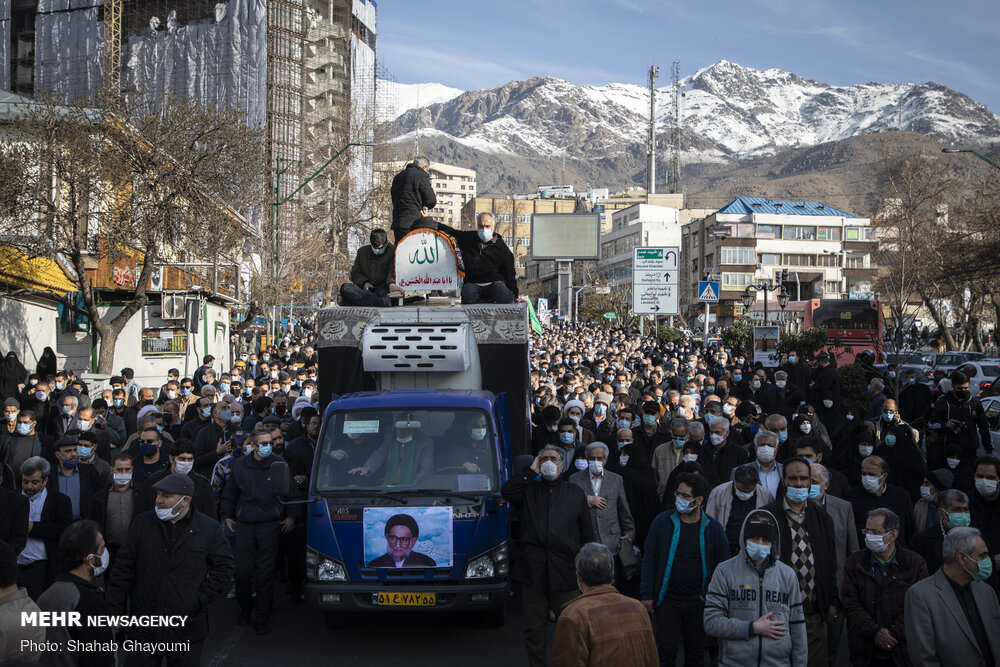
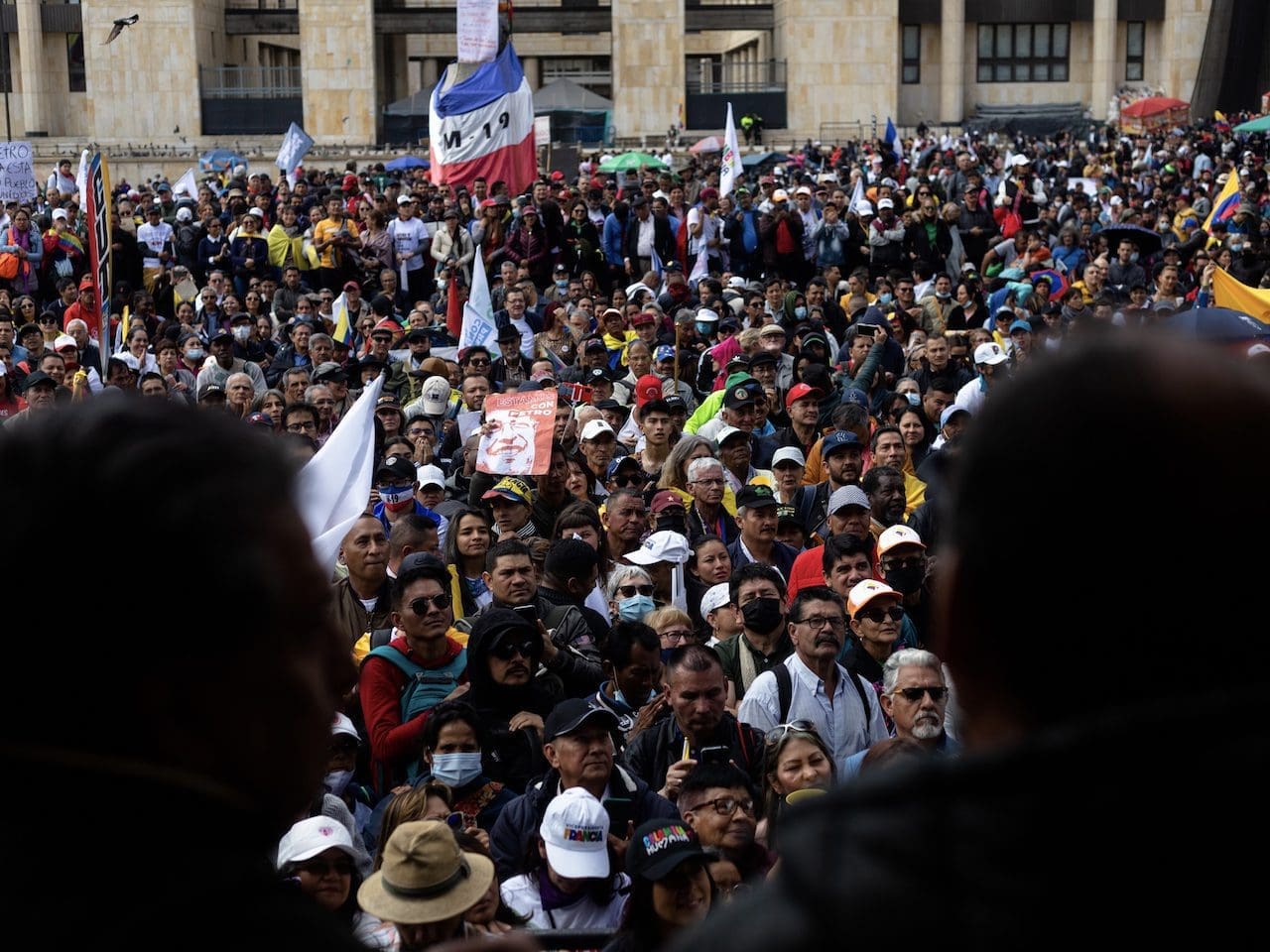
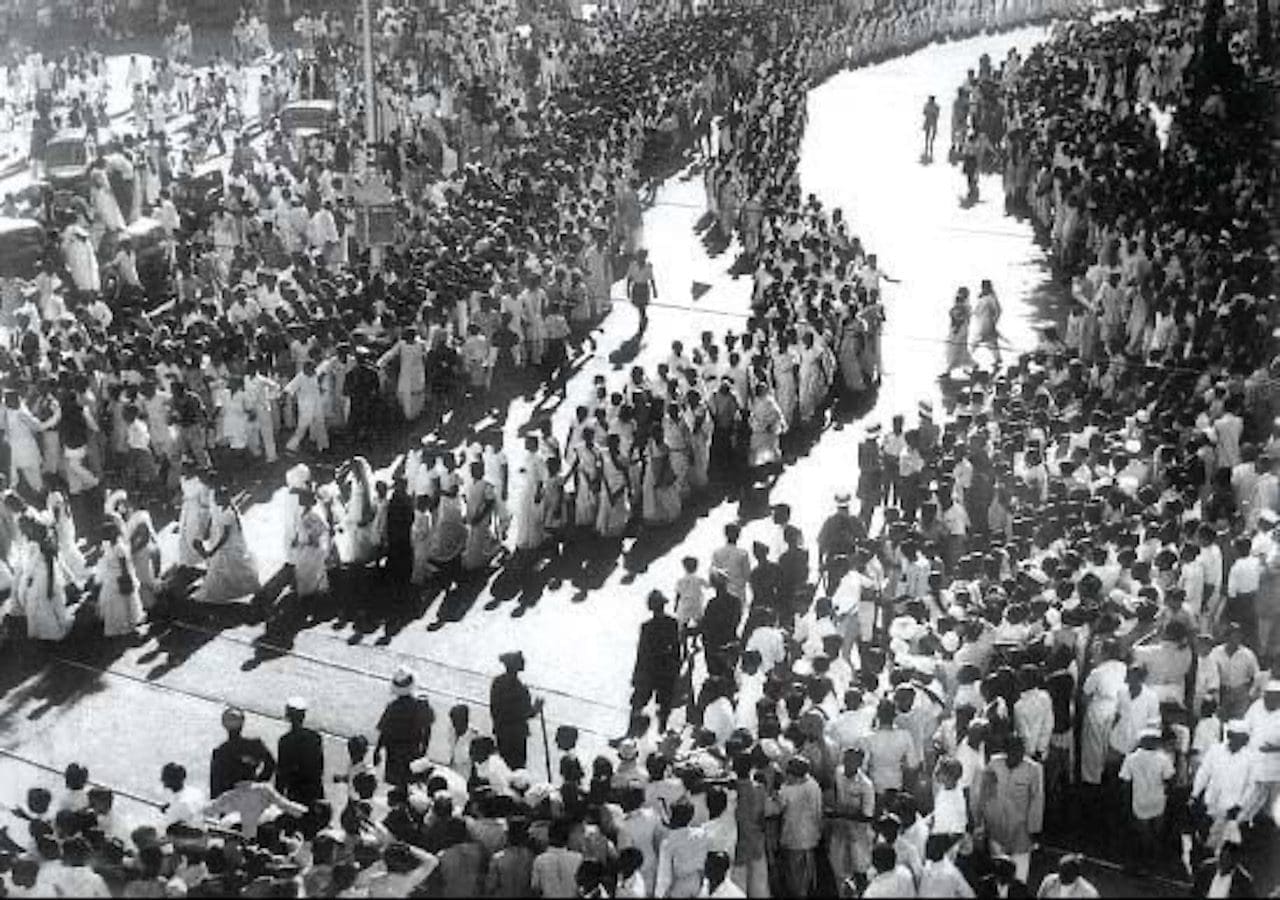
A few weeks into the war, I traversed the city to visit some friends. As I moved through the streets, I saw large crowds gathered at every turn, in squares and at crossroads — people waving Iranian flags and chanting slogans. “Death to America, death to Israel,” they said.
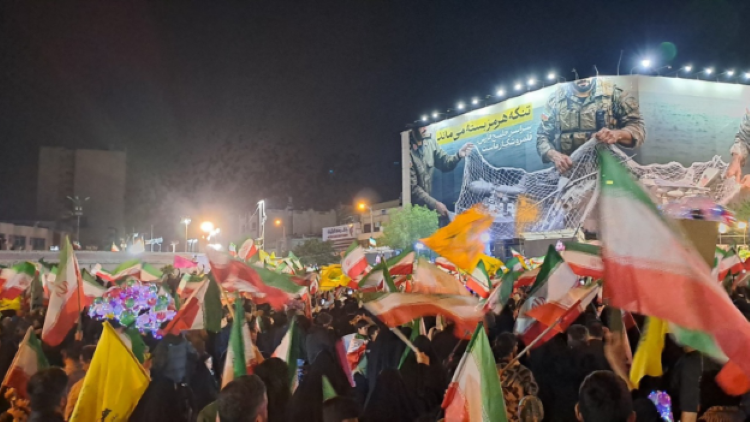
A nighttime gathering in Enghelab Square in central Tehran. These gatherings typically begin around 10 p.m. and continue until midnight, although some participants remain until as late as 4 a.m., waving flags and chanting slogans against the American and Israeli governments, while expressing support for their own country’s military forces. This is only one example among hundreds of such gatherings that take place each night.
In one square, a large crowd stood in support of Iran’s new leader, Mojtaba Khamenei, son of Ali Khamenei, while strikes hit nearby. Instead of running, they were steadfast, chanting, “Allah-o-Akbar,” refusing to back down.
I also want to be clear about where I personally stand, because nothing is simple. I do not take sides between the Islamic Republic and its opponents. However, I condemn the American and Israeli strikes without hesitation. And if there were ever a move toward a ground invasion, I would be willing to take up arms and defend my country myself.
This is not loyalty to the government; I do not support the government’s approach, neither its foreign policy, domestic policy nor anything else.
But my country is my country. This is the voice of many Iranians: As long as a single drop of blood runs through our veins, we will stand against the United States and Israel to defend Iran.
Between faith and uncertainty
Although the ceasefire has been holding, we do not know how long it will last or what will come next. Even after it began, we continue to carry the constant fear in the back of our minds that if it breaks down, strikes will resume and could push Iran into severe economic disaster.
I am a somewhat religious person. I pray and fast, yet the war has affected my faith in contradictory ways. It has both strengthened and eroded it simultaneously. On one hand, when I come close to death, I naturally gravitate toward God. I started thinking if I could die within the next week, why wouldn’t I pray more? Why wouldn’t I do more good while I still can?
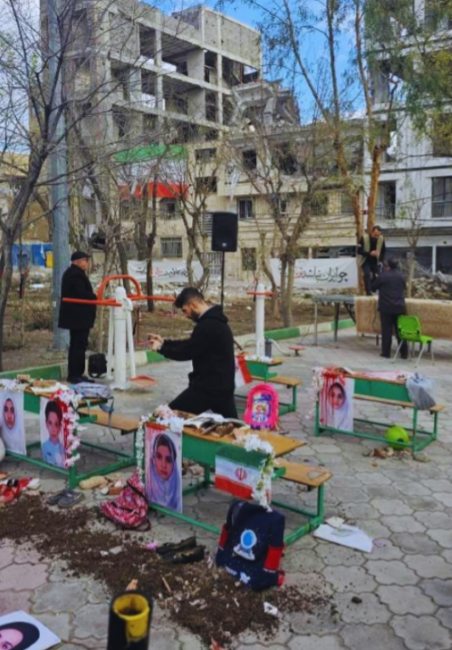
A memorial dedicated to children killed in the Minab school bombing stands in the foreground, framed by a destroyed residential building in the background.
On the other hand, I am confronted with more difficult questions. If God exists, I have to ask why destruction persists and why are so many innocent lives lost? The war has not changed my beliefs, but it has disrupted and unsettled them, leaving me searching for answers I have not yet found.
I do know that war has deeply shaken my sense of the future. I once envisioned a clear path ahead. I had planned to work in Iran — in international affairs of all fields — or possibly move abroad one day. Like the buildings around me, those dreams have crumbled. Now deeply disappointed, I question whether the success I once imagined is still attainable. I am afraid that the war’s destruction in Iran could redefine daily life so drastically that, instead of focusing on building a career, I may have to focus simply on finding food and getting through each day.